How fentanyl and xylazine are deepening Philadelphia’s opioid crisis into a public health emergency
Philadelphia’s drug crisis is no longer defined by a single substance or a single pattern.
It is being shaped by a constantly shifting mix of fentanyl, veterinary sedatives, and synthetic additives that change how overdoses look, how they unfold, and how difficult they are to treat.
A Reddit discussion about fentanyl and xylazine captured attention because it reflected what is now visible across many U.S. cities. The crisis has moved beyond isolated opioid misuse into a volatile drug supply where each batch can carry different risks, effects, and outcomes.
Philadelphia sits at the center of this shift. What began as a fentanyl driven epidemic has evolved into a multi-substance emergency that continues to challenge hospitals, outreach workers, and public health systems.
What people are seeing on the streets is hard to ignore

The Reddit post that sparked attention wasn’t focused on statistics or policy debates. It was driven by what people say they are witnessing in real time: individuals openly struggling in public spaces, showing signs of severe sedation, collapse, and long periods of unresponsiveness linked to fentanyl and xylazine use.
That kind of visibility is what makes the situation different from earlier phases of the opioid crisis. It is no longer hidden or confined to private spaces.
What stands out in reactions to the post is not shock alone, but a sense of exhaustion. Many users describe seeing similar scenes in multiple cities, suggesting this is no longer a localized problem but a widespread urban reality.
The discussion reflects a growing tension between what people observe firsthand and what systems can respond to. On one side is the visible human impact. On the other hand, there is a public health response that is still adapting to a rapidly changing drug supply.
Fentanyl still drives the crisis, but the picture is more complex

Fentanyl remains the primary driver of overdose deaths in Philadelphia. City health data shows it appeared in roughly 80 percent of drug-related deaths, reinforcing its role as the central force behind the ongoing emergency.
The problem is that fentanyl is no longer appearing in a predictable form. Drug-checking efforts have found significant potency differences between samples that look nearly identical. For people using drugs, that means familiarity offers little protection.
A bag that looks like yesterday’s supply can carry a much stronger dose today. That uncertainty turns routine use into a gamble, even for people who believe they understand their tolerance.
This is why Philadelphia’s crisis feels so difficult to control. Public health workers are not responding to one fixed drug threat. They are responding to a supply that changes strength, ingredients, and medical consequences without warning.
Xylazine adds a new layer of danger to overdoses
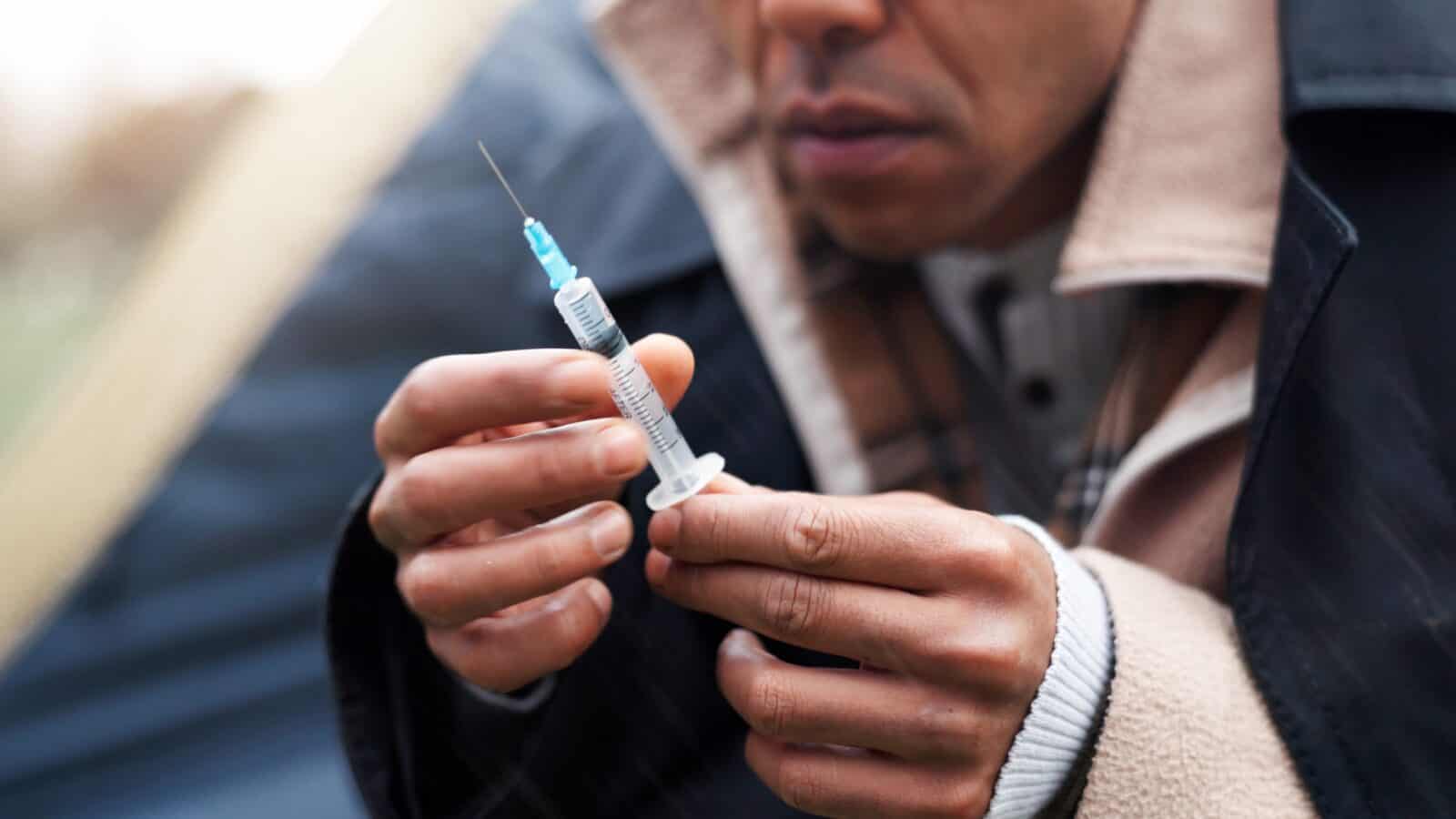
As fentanyl spread, xylazine became one of the most significant additives in Philadelphia’s drug supply. Originally a veterinary sedative with no approved human use, it changed the nature of overdose cases in ways that continue to strain emergency response systems.
A CNN report found xylazine in roughly a quarter of fentanyl overdose deaths, a pairing that is quietly reshaping what an overdose looks like on the ground and making every emergency harder to reverse.
During that time, the risk of complications increases. These include breathing obstruction, low body temperature, and injury while unconscious in public settings. First responders are often left managing a situation that is only partially reversed.
Xylazine has also introduced visible physical harm. Severe skin wounds, tissue breakdown, and infections have become more common among people who inject drugs in Philadelphia. In response, the city created specialized wound care programs to manage long-term injuries linked to the substance.
The overdose crisis has therefore expanded beyond survival. It now includes long-lasting medical consequences that require ongoing treatment.
The drug supply continues to mutate

Substance Use Prevention and Harm Reduction program reports that medetomidine was detected in 78 percent of ‘dope’ samples. Its growing presence signals a broader pattern. The supply is not stabilizing. It is evolving.
This matters because medetomidine brings its own set of medical complications. Reports from hospitals describe severe sedation, unstable heart rate, and withdrawal symptoms that can be more intense and prolonged than typical opioid withdrawal.
Emergency departments now face cases involving multiple overlapping toxicities. A single overdose may involve fentanyl, a sedative-like medetomidine, and stimulants such as cocaine or methamphetamine. Each substance affects the body differently, creating a complex medical picture that requires rapid and layered treatment.
Additional substances have also appeared in the supply, including ultra-potent synthetic opioids and industrial chemicals. These additives increase uncertainty because their effects in humans are not fully understood, yet they are entering the drug supply without warning.
Progress in deaths does not reflect the full reality
Overdose deaths in Philadelphia have shown signs of decline in recent years. The city recorded a drop in 2024, and national trends also point to a broader reduction in overdose fatalities across the United States.
However, the overall burden remains high. Overdose deaths still exceed 1,000 annually in Philadelphia, keeping the crisis among the city’s leading causes of death.
The improvement also hides uneven progress across communities. Declines in overdose deaths have been larger among White residents compared to Black and Hispanic residents, where reductions have been smaller or inconsistent.
This disparity highlights a critical point. Drug supply changes alone do not explain outcomes. Housing stability, access to treatment, trust in healthcare, poverty, and neighborhood conditions all shape who is most affected and who benefits from improvements.
The crisis is therefore not only medical. It is structural, shaped by long-standing inequalities that influence exposure, survival, and recovery.
A public health system trying to keep up with constant change

Philadelphia has expanded its harm reduction response amid the evolving crisis. The city has distributed large quantities of naloxone, increased access to fentanyl and xylazine test strips, and strengthened drug checking programs designed to track changes in the street supply.
These efforts aim to reduce deaths and improve awareness of what is circulating in the drug market. They also help public health officials identify new substances before they become more widespread.
At the same time, the city has developed specialized wound care services for people affected by xylazine-related injuries. Clinical guidance has also been updated to address overdoses involving sedatives like medetomidine, which require different treatment approaches compared to traditional opioid overdoses.
Even with these interventions, the pace of change in the drug supply continues to challenge response systems. Each new substance requires updated protocols, new training, and faster adaptation than many healthcare systems are designed to handle.
Hospitals report growing strain from cases involving multiple substances at once. Treatment is no longer centered on reversing a single overdose. It often involves stabilizing a combination of opioid toxicity, sedative effects, and stimulant-induced complications.
What Philadelphia reveals about the national crisis

Philadelphia has become a clear example of how quickly the overdose crisis can evolve. What began as a heroin epidemic shifted into a fentanyl dominated emergency and has now become a multi-substance public health challenge.
The most important feature of this crisis is instability. The drug supply does not remain fixed long enough for interventions to fully catch up. As one pattern becomes understood, another begins to take its place.
This constant change makes the crisis difficult to measure and even harder to contain. Public health responses that worked in earlier stages must now adapt to a more complex and unpredictable environment.
Philadelphia’s experience shows that the overdose crisis is no longer defined by a single drug or a single solution. But defined by continuous change on both sides of the equation, the drug supply and the systems trying to respond.
The next phase will depend on how quickly treatment systems, emergency care, and harm reduction programs can adapt to a landscape where risks keep shifting while the urgency remains the same.
Disclaimer – This list is solely the author’s opinion based on research and publicly available information. It is not intended to be professional advice.
Like our content? Be sure to follow us