How to Handle Your Penny Collection After the U.S. Ceases Production of the Coin
The penny’s story began in 1792 with the Coinage Act that created the U.S. Mint and established America’s decimal currency system. For more than 230 years, the one-cent coin survived wars, depressions, inflation, and repeated changes in how Americans pay.
Its exit, however, did not come through Congress but through executive action in 2025, when President Donald Trump authorized the U.S. Mint to end penny production. Each penny cost nearly 4 cents to manufacture; its use had collapsed in an increasingly digital economy, and eliminating the coin was projected to save taxpayers tens of millions of dollars annually.
The penny’s retirement coincides with the quiet decline of paper checks, the consolidation of physical cash handling, and a broader shift toward digital payments as the default way Americans move money.As coins and checks fade simultaneously, consumers, businesses, and collectors are being forced to reconsider what role physical money will play in everyday life going forward.
Why the Penny Is Being Retired
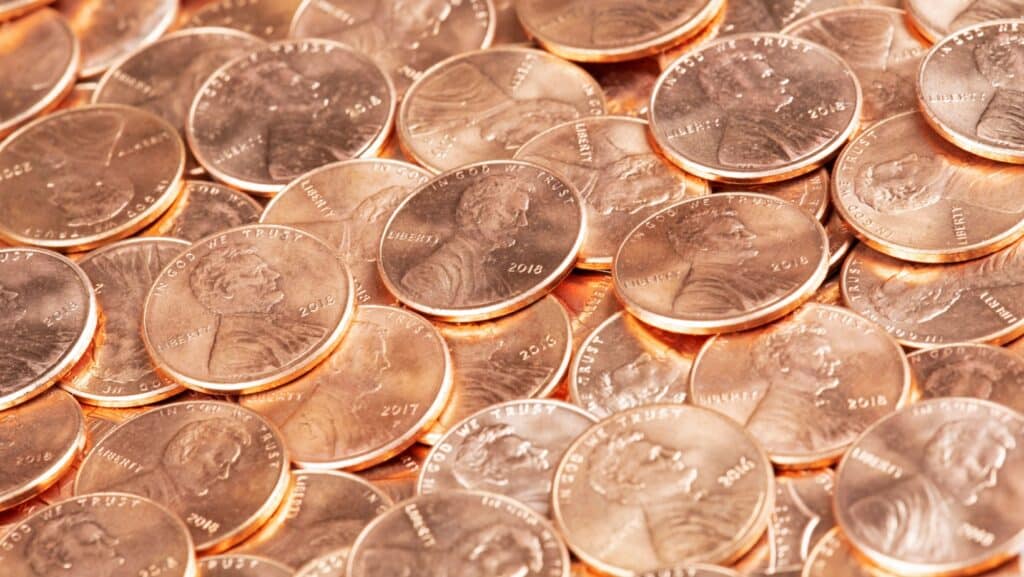
When it was first introduced in 1793, a penny was made of ‘material’. Over time, inflation eroded that purchasing power, and the penny’s relevance in everyday commerce diminished sharply. By the early 2020s, the economics of production had turned deeply unfavorable. It costs about 3.7 cents to manufacture and distribute a single penny, nearly four times its face value. That figure reflects the cost of raw materials (primarily zinc with a thin copper plating), labor, machinery, and transportation.
As a result of these negative returns, the federal government lost tens of millions annually on one‑cent coins. In fiscal 2024 alone, producing roughly 3.2 billion pennies resulted in estimated production losses of $85.3 million. Ending penny production is expected to save about $56 million per year once the existing blanks and inventory run out.
How Many Pennies Are Still in Circulation, and Why It Matters
Some accounts put the figure at around 300 billion pennies, equivalent to about $3 billion in face value, while others cite estimates such as 114 billion pennies actively held in the banking system. Regardless of the exact figure, the scale is enormous and ensures that everyday penny use will persist for years, if not decades.
This vast remaining supply matters for two reasons: transaction mechanics and collector value. Over time, as pennies are lost or hoarded, their practical availability in circulation will dwindle, accelerating adaptations such as rounding to the nearest nickel or a broader shift toward digital payments. Modern pennies from the late 20th or early 21st century with high mintage figures will remain common, even without new production, simply because so many already exist.
Collector Value vs. Face Value

In numismatics, the value of coins is driven by rarity, demand, condition, and historical significance, not merely by scarcity in circulation. Many pennies minted from the 1980s through the early 2000s were struck in the hundreds of millions or even billions. With hundreds of billions of these common coins still in circulation, the end of production does not suddenly make a 1999 Lincoln cent worth more than its face value.
In contrast, pennies that were produced in limited numbers, such as the 1793 Strawberry Leaf cent or the 1944‑S steel wheat penny, are already prized by collectors and have sold for hundreds of thousands to over a million dollars at auction. These values are driven by extreme rarity and collector demand, not by production discontinuation.
Immediate Practical Options for Your Existing Coins
Banks and credit unions generally accept loose change for deposits, and even automated coin-counting machines at grocery stores can convert it into cash, gift cards, or credit. Many retailers have also run penny exchange promotions, such as supermarkets offering gift cards or free items in return for large quantities of pennies, demonstrating that businesses are actively finding ways to move pennies out of circulation, where they no longer serve a transactional purpose.
For cash transactions today, pennies remain legal tender, but with production stopped, their physical supply will only dwindle over time. You’ll still be able to spend them in shops for a while, but as coin shortages spread, businesses will increasingly prefer card or electronic payments where exact cents can still be accounted for without physical pennies.
Storage and Preservation for Collectible Pennies
Collector coins should be stored away from humidity, temperature extremes, and acidic materials that corrode metal. Using archival‑quality holders, acid‑free envelopes, or sealed capsules protects surfaces from oxidation and wear. Maintaining a condition record, noting the year, mint mark, and grading information, helps establish provenance for future appraisal or sale.
Condition matters because coins in “mint state” (uncirculated with no wear) are far more desirable than those that show even light circulation. Specialist grading services like the Professional Coin Grading Service (PCGS) or Numismatic Guaranty Corporation (NGC) can certify a coin’s condition and authenticity, often boosting its market value because collectors pay premiums for professionally verified pieces.
Retail Rounding and the Cashless Transition

Similar to the systems adopted in countries such as Canada and Australia, the U.S. expects cash totals to be rounded to the nearest five‑cent increment. Economists at the Federal Reserve Bank of Richmond analyzed this situation and estimated that rounding could impose a small aggregate cost on consumers, sometimes referred to as a “rounding tax,” amounting to roughly $6 million per year nationwide as cash totals are rounded up or down.
The United States has been shifting toward a cashless society for years, with electronic transactions now dominating the economy. With cash usage declining, the penny’s disappearance accelerates a process that may have happened regardless of coin production policy.
Long‑Term Collector Implications
After Canada eliminated its penny in 2013, the coin remained legal tender and could still be redeemed at banks, but most were gradually removed from circulation and recycled. Everyday cents became rare finds in daily life, even though only certain old coins appreciated in the collector market.
In the U.S., today’s mass‑produced pennies will remain abundant for many years, meaning most coins in jars or drawers won’t suddenly shoot up in worth. The exception will be coins with documented rarity or historical significance, especially those from the earliest years of minting or with production anomalies that collectors prize.
Economic and Social Considerations
While this evolution improves efficiency for many consumers, it carries social equity implications that economists have highlighted. Lower‑income individuals and minorities are statistically more likely to use cash than digital payments, and pricing rounding may disproportionately affect them because they cannot always avoid cash transactions.
For instance, countries that phased out low‑denomination coins find minimal impact on overall inflation rates because rounding effects tend to balance out over large numbers of transactions and because digital settlement remains precise. Nonetheless, perceptions of price increases can influence consumer behavior and sentiment, which adds a psychological layer to the policy discussion.
When to Keep, Sell, or Trade
For casual collections full of modern pennies, converting to cash or credit sooner rather than later avoids holding coins that, while remaining legal tender, will be less convenient to spend as supply dwindles and cash usage continues to decline.
For serious collectors, carefully examine your collection to identify coins with numismatic significance based on year, mint mark, and condition. Pay special attention to early Lincoln cents (particularly those from 1909), rare mint errors, or coins with documented historical relevance. If unsure, consult reputable price guides or reach out to a qualified appraiser for advice before selling or trading.
As the final pennies enter the historical narrative, collector interest could increase for coins tied directly to the end of production, much like the recent multimillion‑dollar auction for the last minted cents.
Actionable Steps to Maximize Your Coin Jar
Separate pennies by year and mint mark so you can spot potentially valuable dates. Researching collector price guides will help identify coins with rarity value. Once you know what you’ve got, casual pennies can be deposited or exchanged through banks or grocery coin machines to generate immediate cash or credits.
Coins identified as significant should be preserved in protective holders and, if appropriate, submitted for professional grading to confirm their quality and authenticity, thereby increasing marketability. Meanwhile, routine monitoring of numismatic market trends helps you anticipate shifts in demand or interest, particularly as the penny era winds down and historical significance grows.
Key Takeaways
- The penny was retired because it costs far more to make than it is worth.
- Hundreds of billions of pennies still exist, so most will not become valuable.
- Ending production does not cause inflation; rounding affects only cash purchases.
- Digital payments bypass rounding and are driving the decline of the penny, not the other way around.
- Only rare, early, or error pennies have real collector potential.
- Most people are better off cashing in ordinary pennies rather than saving them.
Disclosure line: This article was developed with the assistance of AI and was subsequently reviewed, revised, and approved by our editorial team.
20 Odd American Traditions That Confuse the Rest of the World

20 Odd American Traditions That Confuse the Rest of the World
It’s no surprise that cultures worldwide have their own unique customs and traditions, but some of America’s most beloved habits can seem downright strange to outsiders.
Many American traditions may seem odd or even bizarre to people from other countries. Here are twenty of the strangest American traditions that confuse the rest of the world.