My Brain Constantly Replays Moments from My Past. Neuroscience Explained Why
Several times a day, I can be washing dishes, just turning my head, or catching a particular angle of light, and suddenly I am dropped into a one‑second clip from my own past.
It might be the view from my regular seat at the table in my childhood kitchen, or I’m waiting at the light in the intersection in the town my parents moved to, or I am opening the wicker picnic basket from a beach day 50 years ago, or some other random, long past moment that should have no reason to come back now. It is not déjà vu; I don’t feel like I’ve been here before. It is a complete detailed visceral, visual, emotional, physical memory for no more than a second, then it disappears as quickly as it came and I’m right back into the present.
This occurs sometimes as often as 15-20 times a day. Random visual images and emotional pings surfacing throughout my day. I often find myself wondering what it was that I was doing that triggered that memory from that particular random moment from my past – and am more times than not left without any idea – but am often left with an emotional imprint or residue.
For a long time, I wondered if this was some kind of glitch, a wire crossing or chemical misfire. I had never heard anyone else describe it, and the sheer frequency, made it feel possibly unique to just my brain.
But as I dug into the science I found out there is actually a name for this: involuntary autobiographical memories. These are memories of personal events that come to mind spontaneously, without any effort to retrieve them.
The Neuroscience of My “Micro‑Flashbacks”
Researchers describe involuntary autobiographical memories as personal event recollections that arise with no conscious attempt to remember, often cued by everyday sensory details rather than anything obviously meaningful.
In other words, my brain is constantly pattern‑matching incoming input—light, sound, body position, smells—against an enormous archive of past experiences. When the current pattern is similar enough to a stored one, the associated memory network can “light up” automatically.
These memories are not filed away as dry facts. Autobiographical memory is organized in rich, context‑dependent networks that link sensory details, spatial layout, emotional tone, and bodily state. When an involuntary memory surfaces, I am not just recalling that “something happened;” my brain partially, and instantaneously, reconstructs the original scene.
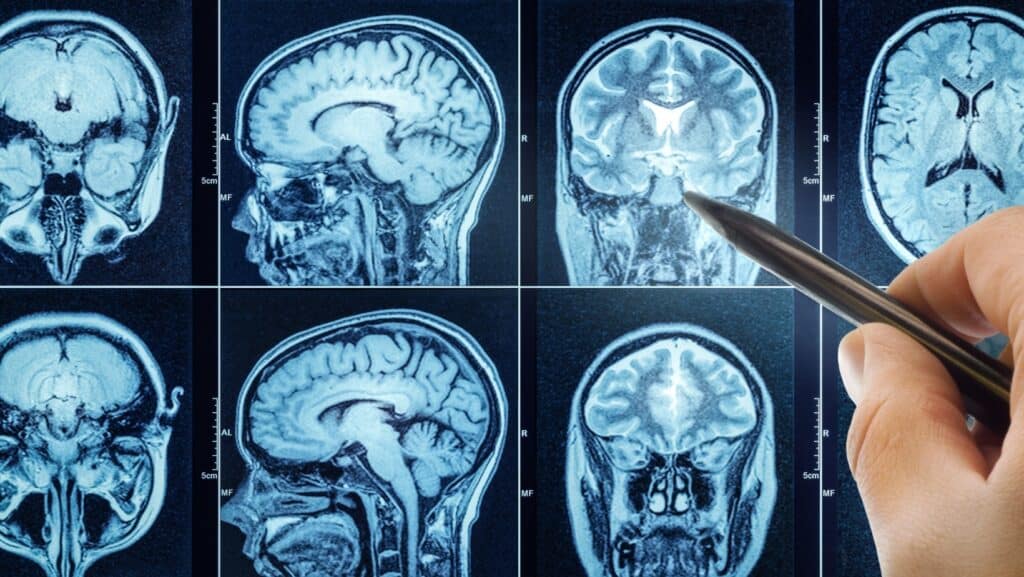
Imaging studies show that remembering vivid personal events reactivate not just memory structures like the hippocampus, but also sensory regions such as visual cortex and networks involved in self‑referential and internal thought. That fits my experience of these moments as tiny, immersive “clips” rather than abstract bullet points.
Why This Shows Up More Now as I Get Older
I first noticed this phenomenon really picking up in my forties and beyond, and I have wondered if that timing matters. Science suggests a few plausible reasons that do not point to anything being broken. Autobiographical memory research shows that involuntary memories are common in everyday life; what varies is how often we notice them and in what context they arise.
With age, several things shift:
- I simply have more life history for the brain to match against, so there are more stored patterns that can be triggered.
- I now work alone at home instead of in noisy, crowded environments, which means there is more room for internal content to reach conscious awareness.
- Memories triggered automatically by sights, sounds, or smells tend to stay strong as we age, even if intentional recall changes. This can make those sudden memory flashes feel more common.
Clinical research does find that very frequent, distressing involuntary memories, especially highly negative or trauma‑related ones, can be a feature of conditions like PTSD and depression. In my case, the content ranges from neutral to pleasant to mildly amusing, and I remain fully oriented, aware that these are memories, not current events. That pattern is closer to the “everyday” involuntary memories described in non‑clinical populations than to pathological intrusions.
My Visual Mind: From Hyper‑Vivid Memories to Lucid Dreams
The other major part of my experience is how visual and immersive my inner life is. I do not just “know” my memories; I see them, often like short film clips, and I can mentally walk through spaces I have not visited in years. My dreams are intense and cinematic, and I often realize I am dreaming and can nudge the narrative when it becomes too stressful, or I want it to go somewhere else. I have been a lucid dreamer since early childhood.
By contrast, when I imagine something fictional, like a red apple on a table, I can see it, but it feels flatter, more like a 2‑D sketch than a lived moment.
Neuroscience now recognizes a spectrum of visual imagery vividness, from aphantasia (no imagery) to hyperphantasia (imagery as vivid as real perception). People on the hyperphantasia end report highly detailed, immersive images when recalling events or imagining scenes, and studies show that they not only experience richer imagery but also tend to score higher on autobiographical memory and imagination tasks. Brain imaging suggests this is linked to stronger connectivity between frontal regions and visual cortex, and to distinct patterns in the visual‑occipital network that support vivid mental images.

My dreams fit into this same architecture. Nearly everyone dreams, especially during REM sleep, but not everyone remembers those dreams or becomes aware within them. This fact has always blown my mind. I have slept alongside partners who go to sleep and wake up 8 hours later without being aware of any dream occurrence, while I have spent the entire night living a full life of drama, emotion, narrative, and physical feelings with a long cast of ever-changing characters. I have often commented that I feel as if I am living two lives.
Dream research shows that during REM, networks involved in internal thought and autobiographical processing, often grouped under the “default mode network,” remain active, while some aspects of prefrontal control are usually dialed down. In frequent lucid dreamers, though, parts of the anterior or dorsolateral prefrontal cortex—regions linked to metacognition and self‑reflection—stay more engaged and more strongly connected to other association areas. That extra metacognitive “online” presence appears to make it easier to recognize, “I’m dreaming,” and sometimes to steer the dream.
Taken together, my vivid, movie‑like memories, strong spatial recall, and frequent lucid dreams look like expressions of the same underlying trait: a highly accessible “scene construction” system that tightly links hippocampal memory indexing, visual and spatial cortex, and self‑aware frontal networks.
So, Is This a Glitch, or Just How My Brain Works?
When I put all of this together, the pattern that emerges is thankfully not one of damage or malfunction but of a particular cognitive style. The literature on involuntary autobiographical memories makes it clear that spontaneous, cue‑driven recall of personal events is a normal and common phenomenon in healthy people. The research on imagery vividness and hyperphantasia shows that some brains naturally generate much more vivid internal scenes, both in memory and in imagination. Studies of lucid dreaming add a layer of evidence that in some of us, self‑aware frontal systems stay more involved during dreaming, allowing insight and control inside those internally generated worlds.
My own experience seems to sit at the intersection of these: a brain that is especially good at re‑activating sensory‑rich memories, constructing scenes, and maintaining awareness while it does so. The result is an inner life that feels crowded with brief, involuntary memory flashes, and intensely visual dreams, but, crucially, one where the line between past and present, dream and waking life, remains clear.
For me, that means I can stop framing these episodes as evidence of a glitch and start recognizing them as part of a well‑described, if not universally shared, way of being wired: a brain that keeps re‑opening its own archive with surprising fidelity and frequency.
Sources
Brown, R., & Kulik, J. (1977). Flashbulb memories. Cognition, 5(1), 73–99. https://doi.org/10.1016/0010-0277(77)90018-X[1]
Baird, B., Castelnovo, A., Riedner, B. A., & Boly, M. (2018). Frequent lucid dreaming is associated with increased functional connectivity between frontopolar cortex and temporoparietal association areas. Scientific Reports, 8, Article 17798. https://doi.org/10.1038/s41598-018-36190-w
British Psychological Society. (2025, September 15). Involuntary autobiographical memories. The Psychologist. https://www.bps.org.uk/psychologist/involuntary-autobiographical-memories
Milton, F., Fulford, J., Dance, C., Gaddum, J., Heuerman‑Rohrer, U., Winlove, C., Macaluso, E., & Zeman, A. (2021). Behavioral and neural signatures of visual imagery vividness extremes: Aphantasia versus hyperphantasia. Cerebral Cortex Communications, 2(2), tgab005. https://doi.org/10.1093/texcom/tgab005
Muse. (2020, November 2). The science of dreams: What happens in the brain when we dream. https://choosemuse.com/blogs/news/the-science-of-dreams-what-happens-in-the-brain-when-we-dream
Oppewal, H., & Zetterqvist, A. V. (2025). Involuntary autobiographical memories as a transdiagnostic factor in psychopathology: A systematic review. Clinical Psychology Review, 101, 102287. https://doi.org/10.1016/j.cpr.2025.102287
Scalabrini, A., & Northoff, G. (2021). Epigenetic repair of terrifying lucid dreams by enhanced brain plasticity during sleep. Frontiers in Psychology, 12, 640848. https://doi.org/10.3389/fpsyg.2021.640848
Svoboda, E., McKinnon, M. C., & Levine, B. (2006). The functional neuroanatomy of autobiographical memory: A meta‑analysis. Neuropsychologia, 44(12), 2189–2208. https://doi.org/10.1016/j.neuropsychologia.2006.05.023
Wegner, D. M. (1994). Ironic processes of mental control. Psychological Review, 101(1), 34–52. https://doi.org/10.1037/0033-295X.101.1.34
Wheeler, M. A., Stuss, D. T., & Tulving, E. (1997). Toward a theory of episodic memory: The frontal lobes and autonoetic consciousness. Psychological Bulletin, 121(3), 331–354. https://doi.org/10.1037/0033-2909.121.3.331
Wimber, M., Alink, A., Charest, I., Kriegeskorte, N., & Anderson, M. C. (2015). Retrieval induces adaptive forgetting of competing memories via cortical pattern suppression. Nature Neuroscience, 18(4), 582–589. https://doi.org/10.1038/nn.3973
Zeman, A., Dewar, M., & Della Sala, S. (2016). Reflections on aphantasia. Cortex, 74, 336–337. https://doi.org/10.1016/j.cortex.2015.08.015
Berntsen, D. (2020). Involuntary autobiographical memories and their relation to other forms of spontaneous cognition. Philosophical Transactions of the Royal Society B: Biological Sciences, 376(1817), 20190693. https://doi.org/10.1098/rstb.2019.0693