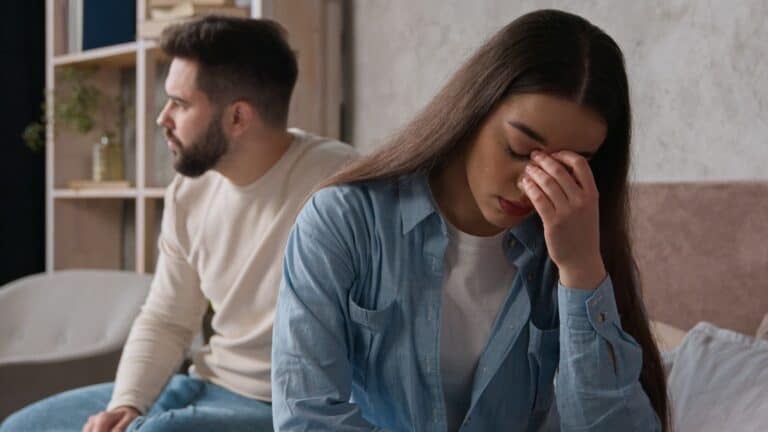
She says she loves me but isn’t attracted to me. Can a relationship survive that?
“I love you, but I’m not attracted to you.” Few sentences are more likely to stop a relationship in its tracks. At first glance, it sounds like a contradiction. If love is present, shouldn’t attraction naturally follow? Yet relationship research suggests the two don’t always go hand in hand.
According to the Pew Research Center, 93% of married U.S. adults say love is “very important” to a successful marriage, 90% say faithfulness is essential, and 61% say a satisfying sexual relationship is very important.
Those findings underscore a reality many couples eventually face: emotional connection and physical attraction are related, but they are not the same thing. That may explain why a simple confession, “I love you, but I’m not attracted to you”, can feel so devastating.
It doesn’t necessarily mean affection has disappeared, but it raises difficult questions about compatibility and intimacy, and about whether a relationship can truly thrive without mutual desire.
The topic has gained fresh momentum across Reddit, TikTok, podcasts, and relationship forums, where thousands of people have shared stories of partners who describe them as kind, dependable, and loving, but admit the physical chemistry never developed or gradually faded.
The conversations reveal a growing tension in modern dating: Is emotional security enough, or does lasting romance require both love and attraction? Behind the viral discussions lies a much bigger question, one relationship experts have debated for decades.
Can love survive without attraction, or does the absence of desire eventually reshape the relationship into something else entirely?
Why This Conversation Is Resonating Right Now

While questions about attraction have always existed, they’re being discussed more openly than ever before. Social media has encouraged people to share deeply personal relationship experiences with strangers, often seeking reassurance that they aren’t alone.
At the same time, modern relationships are expected to fulfill more emotional needs than ever. Couples aren’t simply looking for someone to build a home with; they’re searching for a best friend, confidant, co-parent, financial partner, and romantic companion all in one.
That shift has changed the way people think about compatibility. A partner may be loving, dependable, emotionally available, and supportive, yet one missing ingredient, physical attraction, can leave both people wondering whether the relationship is enough.
Adding to the conversation is the fact that fewer Americans are marrying than previous generations, and those who do often spend years dating before making long-term commitments.
According to the U.S. Census Bureau, the median age at first marriage has risen to 30.2 years for men and 28.6 years for women, giving couples more time to evaluate long-term compatibility before marriage.
As expectations for relationships have grown, so has the willingness to walk away from partnerships that don’t feel emotionally or romantically fulfilling.
Love and Attraction Aren’t the Same Thing

Many people assume love naturally creates attraction, but psychologists have long argued that the two are separate experiences. One of the most influential explanations comes from psychologist Robert Sternberg’s Triangular Theory of Love, which posits that romantic love comprises three components: intimacy, commitment, and passion.
Intimacy refers to emotional closeness, commitment is the decision to remain together, and passion includes physical attraction and sexual desire. Healthy long-term relationships often include all three, but they don’t always develop equally.
Some couples build deep emotional intimacy without experiencing sustained passion. Others begin with intense attraction that fades as emotional compatibility weakens. Understanding that distinction helps explain why someone can sincerely say they love their partner while simultaneously admitting they don’t feel physically drawn to them.
When Attraction Fades, and When It Never Fully Develops

Relationship experts often make an important distinction between attraction that disappears over time and attraction that never existed in the first place. Long-term desire naturally changes.
Career stress, parenting, illness, financial worries, hormonal changes, and mental health challenges can all temporarily reduce sexual desire.
Research published in The Journal of Sex Research has consistently found that relationship satisfaction and sexual satisfaction influence one another. Couples who communicate openly, maintain emotional intimacy, and intentionally prioritize their relationship often report higher levels of both relationship and sexual satisfaction.
But there is another, more complicated situation. Sometimes one partner realizes that, although they genuinely care for the other person, they have never experienced the level of physical attraction they expected to develop eventually.
They stayed because they valued kindness, compatibility, and emotional security, hoping attraction would grow naturally. Sometimes it does. Sometimes it doesn’t. That uncertainty is what makes these conversations so emotionally painful.
Why Those Words Hurt So Much

Hearing “I’m not attracted to you” isn’t simply about appearance. For most people, it strikes at something much deeper. Feeling desired by a romantic partner reinforces confidence, emotional security, and a sense of being fully chosen.
Without that reassurance, many people begin to question not only their appearance but also the authenticity of the entire relationship.
Researchers have found that romantic rejection activates regions of the brain associated with physical pain, helping explain why emotional rejection can feel physically overwhelming.
The pain often comes from wondering whether love without desire is enough, or whether one partner is quietly settling.
You may want to read: 12 reasons some women feel emotionally drained in their marriages
Can Attraction Be Rebuilt?

There is no universal answer, which is why relationship therapists rarely offer one-size-fits-all advice. For couples whose attraction has declined after years together, rebuilding intimacy may be possible.
Therapists often recommend breaking routines, improving communication, addressing unresolved conflicts, and creating opportunities for novelty.
Research by psychologist Arthur Aron, famous for his work on interpersonal closeness, has shown that couples who engage in exciting, unfamiliar activities together often report renewed feelings of closeness and attraction.
Novel experiences appear to stimulate some of the same psychological processes associated with early-stage romance. However, experts also caution that attraction isn’t something that can always be forced.
If one partner has consistently lacked physical attraction from the beginning, despite years together, expecting it to suddenly emerge may be unrealistic. That doesn’t mean either person has failed.
It may simply mean the relationship lacks one of the elements both people need to feel fulfilled.
You may want to read: 12 things men often do when they see a woman they find incredibly attractive
The Debate Isn’t as Simple as the Internet Makes It Seem

Spend a few minutes reading relationship forums, and you’ll find dramatically different opinions. Some insist that a relationship without attraction is already over. Others argue that emotional connection matters far more than physical chemistry and that attraction naturally fluctuates throughout life.
The truth lies somewhere in between. Many long-term couples report periods when desire changes, particularly during major life transitions such as raising children or dealing with health challenges.
According to Gallup wellbeing data from 2009 to 2023, married Americans generally report higher levels of happiness than unmarried adults, but researchers consistently note that relationship quality, not simply relationship status, is what matters most for overall well-being.
A loving partnership built on mutual respect, trust, and emotional connection remains one of the strongest predictors of relationship satisfaction. Yet for many couples, physical intimacy also plays an important role in maintaining that connection.
Neither perspective cancels out the other.
What This Says About Modern Relationships

Perhaps the reason this conversation resonates so widely is that it reflects changing expectations around love itself. Previous generations often viewed marriage as a partnership centered on stability, family, and shared responsibilities.
Today’s couples generally expect much more. They want emotional vulnerability, friendship, mutual respect, personal growth, effective communication, financial teamwork, and lasting romantic attraction.
Those expectations have undoubtedly strengthened many relationships by encouraging healthier communication and greater emotional honesty. They have also made incompatibilities more difficult to ignore.
Instead of staying together simply because a relationship is “good enough,” more people are asking whether they feel genuinely loved, desired, and emotionally fulfilled. That shift may explain why conversations about attraction have become so public and so emotionally charged.
Final thoughts
Love without attraction is not necessarily a sign that a relationship has failed. Some couples successfully redefine intimacy, strengthen their emotional connection, and build deeply satisfying partnerships despite differences in desire.
Others discover that emotional love alone cannot replace the experience of feeling wanted by the person they love most. There is no universal formula for deciding which path is right. Relationship experts generally agree that honesty matters.
Conversations about attraction are uncomfortable, but avoiding them rarely makes the issue disappear. Couples who openly discuss their needs, expectations, and hopes for the future are better equipped to decide whether their relationship can evolve or whether parting ways is the healthier choice.
Ultimately, love may be the foundation of a lasting relationship, but for many people, feeling desired is what transforms that foundation into a fulfilling romantic partnership. The challenge isn’t deciding whether love or attraction matters more. It’s understanding whether both partners feel they have enough of each other to build the future they truly want.
Do you think a relationship can last once attraction has faded?