The 13 places burglars check first in any home
Imagine coming home to find your front door wide open and your most prized possessions gone. It is a nightmare scenario that plays out roughly every 26 seconds in the United States, according to FBI crime data. You might think your clever hiding spot inside the cookie jar fools everyone, but seasoned crooks know exactly where to look. They want to get in and out in less than 10 minutes.
Primary Bedroom
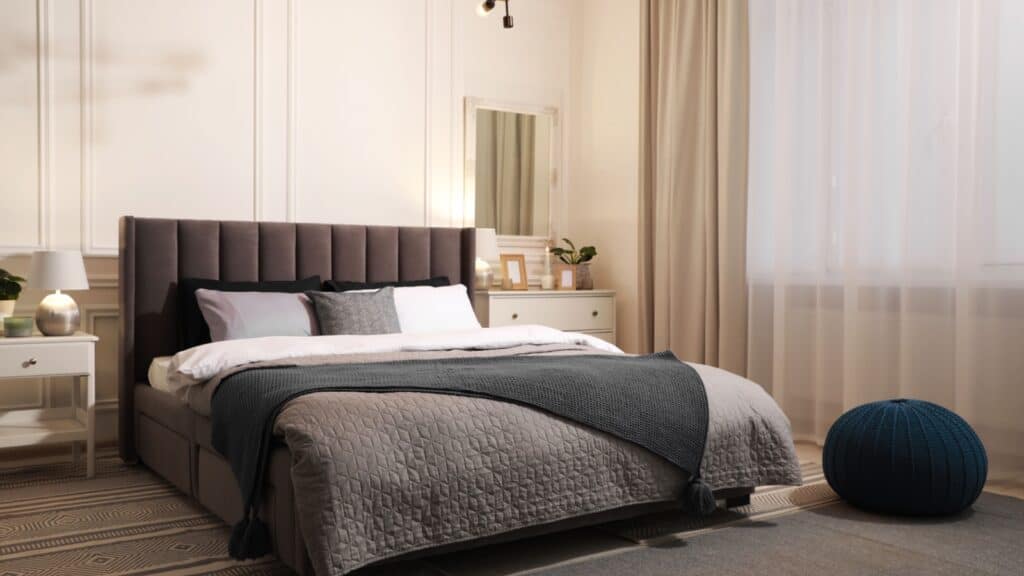
Ethnographic interviews collected by Richard Wright and Scott Decker in Burglars on the Job: Streetlife and Residential Break-Ins describe this room as the psychological center of gravity inside a home, where offenders expect the highest payoff per minute.
NBC New York–reported offender surveys cited by multiple crime analysts found that roughly 75% of convicted burglars identified the main bedroom as their first search location.
The FBI’s 2019 Uniform Crime Reports, which documented more than $3 billion in burglary-related property losses, underscore why offenders gravitate toward spaces where personal assets are stored rather than shared household goods.
The primary bedroom fits that norm so consistently that it becomes a default waypoint in offender search scripts rather than a discretionary choice.
Bedroom Drawers & Nightstands
Drawers and nightstands invite attention because they compress concealment into a small, easily searchable space. In offender narratives analyzed by P. Cromwell in the U.S. Department of Justice, burglars described these compartments as low-noise, high-yield zones that require minimal physical movement.
The attraction lies in tactile efficiency: shallow drawers can be opened, scanned, and closed in seconds. Space, Time, and Crime documents how time pressure within a residence pushes burglars toward furniture that offers quick visual confirmation rather than deeper exploration. This makes bedside furniture a procedural shortcut rather than a personal preference.
Closets (Especially in Bedrooms)
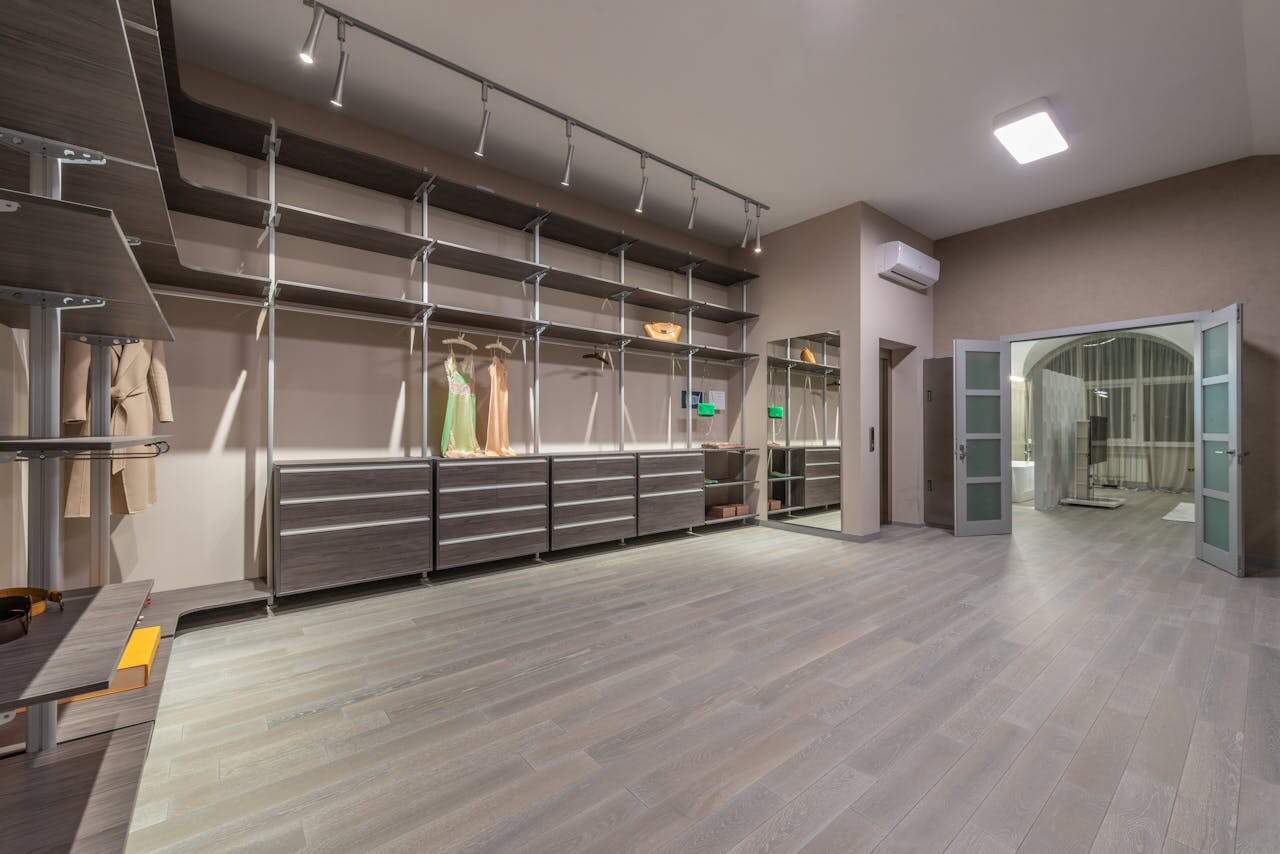
Closets function as liminal spaces, neither fully hidden nor fully exposed, which makes them cognitively attractive to intruders. In Break-ins: Burglary of Private Houses, OJP researchers noted that closets are perceived as storage for items people want nearby but out of sight, a pattern burglars learn quickly through repetition.
Offenders often scan closets not for containers, but for signals of value density such as specialized storage or restricted access. The Psychology of Burglary, as summarized by CrimePsych, explains this behavior through learned household schemas rather than instinct.
Closets promise informational payoff: a single glance can reveal whether the space is purely utilitarian or serving a protective function. That promise keeps closets high on the search hierarchy without requiring prolonged effort.
Home Office or Study
Workspaces are locations where people consolidate productivity tools, records, and devices tied to economic life. Offices reduce ambiguity about what might be present. Unlike recreational spaces, offices imply order, ownership, and routine use, all cues that offenders rely on to estimate payoff.
The FBI’s UCR data underscores why such rooms matter: burglary losses skew toward portable, monetizable assets rather than bulky goods. A study or office signals exactly that category without requiring inference.
Living Room Entertainment Areas

Entertainment centers draw attention because they anchor visibility within a home. Burglars often scan communal spaces immediately after entry to assess household wealth signals and occupancy patterns. Visible electronics serve as quick benchmarks for resale potential and neighborhood targeting accuracy.
Living rooms also provide spatial orientation, helping burglars decide whether deeper exploration is worthwhile. Offenders use such rooms to recalibrate risk rather than to linger. The entertainment area serves both as a target and as a diagnostic tool.
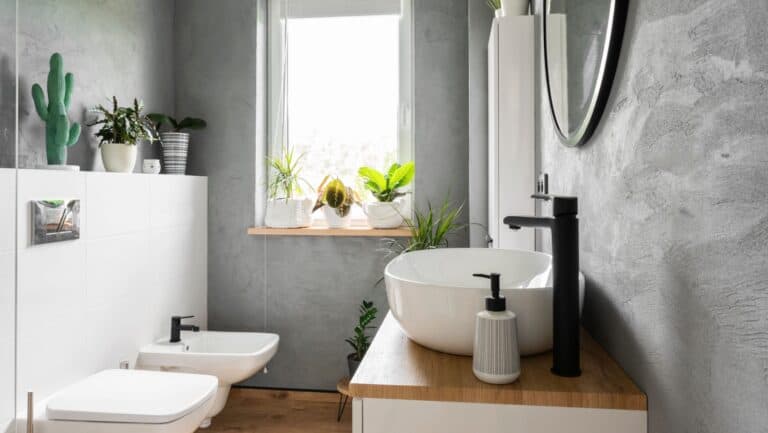
Bathrooms / Medicine Cabinets
Bathrooms occupy a distinct niche in burglars’ search behavior because they offer privacy while allowing routine access. Medicine cabinets, in particular, are identified as locations requiring minimal displacement to inspect.
Rooms where storage conventions are culturally fixed reduce the burglars’ guesswork. Spaces where they can search standing upright, minimizing noise and physical strain, are highly preferable too. Bathrooms consistently meet these conditions across housing types.
Pantry or Utility Storage
Pantries and utility closets attract attention because they combine concealment with mundane legitimacy. A 2019 University of Leicester study on residential burglary found that burglars often check storage rooms that appear functional but might house miscellaneous valuables.
Secondary storage areas are cognitively attractive because they are ambiguous: homeowners rarely expect them to be searched, but burglars know that small items are often stashed there. Ambiguous areas get checked once primary targets indicate potential payoff.
Burglars interpret a pantry as overflow space where low-visibility valuables may accumulate. These rooms offer insight without substantial physical effort, making them strategically valuable.
Kitchen Junk Drawers
Junk drawers act like a small window into a home’s hidden habits. Burglars open them not for valuables but to see how the homeowner organizesor fails to organizeeveryday items.
A mix of receipts, batteries, and loose utensils indicates inconsistent storage, suggesting other areas may also hide overlooked items. Offenders move quickly, scanning the drawer to form a mental map of the house. The drawer communicates more than any locked container because it exposes patterns in seconds. In a few swift motions, it becomes a checkpoint that guides the rest of the search.
Laundry Room or Secondary Storage Rooms
(PMC/NCBI) finds that the number of accessible targets consistently affects the likelihood that an area is chosen for burglary. Visual clutter enables rapid assessment, allowing offenders to judge whether further exploration is worthwhile.
These rooms are rarely searched first; they are late-stage targets assessed after primary zones signal opportunity. Laundry rooms often hide portable goods like electronics or tools, creating unexpected gains for minimal effort. Their appeal lies in maximizing opportunity per second spent.
Garages (Especially Attached Garages)
The National Insurance Crime Bureau reported a significant surge in auto theft in 2020, with 873,080 vehicles stolen, up 9.2 % from 2019. That demonstrates NICB’s role in tracking theft trends and underscores how much vehicle‑related crime the organization documents, but it doesn’t specify the contents of garages.
Garages are lower-risk zones with reduced visibility, where intrusions feel less personal. Its hybrid nature, accessible yet detached, makes it a default location in burglar mental maps.
Entryway Consoles & Coat Pockets
Routine Activity Theory (RAT), a well‑established criminological framework developed by Marcus Felson and Lawrence E. Cohen in 1979, which explains how everyday activities and spatial routines influence where and when crimes like burglary occur by focusing on how offenders encounter suitable targets in the absence of capable guardians.
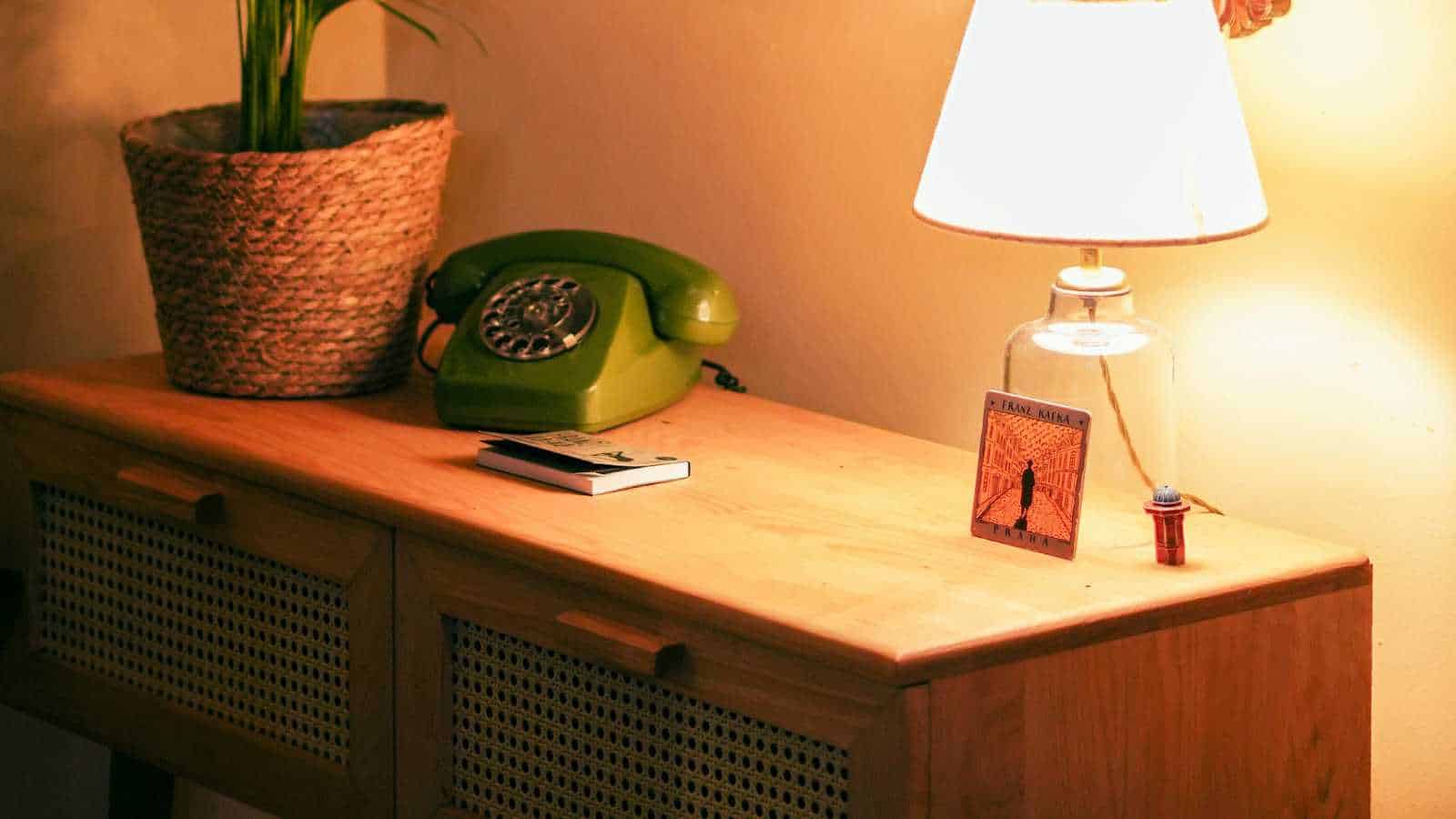
A coat pocket or console tray reveals both habit and opportunity: homeowners store cash, wallets, or keys in predictable proximity to doors. The entryway becomes a strategic staging ground that informs the remainder of the search.
Under Beds & Furniture
Spaces beneath beds and large pieces of furniture draw attention because they offer concealment without requiring much effort. Burglars slide a quick glance under the bed, hoping to spot purses, small electronics, or overlooked documents.
These areas can be scanned with minimal movement, reducing noise and exposure. They provide immediate feedback on what the homeowner keeps hidden and how well.
Experience teaches intruders that these low-clearance zones often yield results, making them a reliable stop on a search route. Under-bed spaces function as efficient checkpoints, combining certainty with speed.
Visible Safes or Lockboxes
A visible safe immediately changes how burglars approach a home. Its presence signals concentrated value, drawing attention and altering priorities. Intruders often spend extra time examining it to determine whether it can be opened or removed quickly.
Even when a safe cannot be accessed, it still guides behavior, prompting movement and checking of nearby areas. The container acts as both a target and a cue, shaping the search strategy in real time. Visibility alone is enough to make it a focal point in a burglar’s sweep.
Key Takeaways
- Burglars follow patterns, not randomness. They scan homes systematically, prioritizing areas that offer high payoff with low effort.
- Subtle signals matter. Lighting, clutter, and small household habits act as cues that can guide a burglar’s attention before a single object is touched.
- Accessibility drives search order. Objects and rooms that are easy to reach, visible, or loosely organized are checked first.
- Predictable hiding spots are vulnerable. Low-clearance spaces, junk drawers, and visible safes attract attention because they align with common concealment behavior.
- Awareness is the first line of defense. Understanding how burglars read patterns, routines, and household cues allows homeowners to reduce risk through simple, strategic adjustments.
Disclosure line: This article was written with the assistance of AI and was subsequently reviewed, revised, and approved by our editorial team.
Like our content? Be sure to follow us