Why tulips signal more than spring after a hard winter
Tulips feel hopeful in January not because winter is ending, but because something quietly dares to change before it does.
Tulips feel hopeful in January not because winter is ending, but because something dares to change before it does. By mid-January, winter stops feeling temporary and starts feeling like an environment. The shock of cold fades, replaced by sameness: darkness, limited movement, shrinking social lives. What people experience is not failure or lack of motivation, but quiet depletion caused by reduced light and sensory variation. Tulips matter because they arrive too early. They appear while winter still holds power, offering reassurance rather than celebration.
Tulips Do Not Announce Spring, They Interrupt Winter

Tulips are often described as harbingers of spring, but that description flattens their real psychological role. Tulips do not announce arrival. They interrupt stasis. There is a crucial difference between the two. Announcements assume readiness. Interruptions simply change the rhythm.
When tulips appear in January, they do not pretend winter is over. Snow may still be falling. Temperatures may still be brutal. But tulips introduce a contradiction. Color appears where color has been absent. Organic curves reenter a landscape dominated by straight lines, heavy fabrics, and rigid layers.
This contradiction matters deeply to the human brain. After long periods of sameness, even small disruptions can restore a sense of movement. Tulips do not fix winter, but they fracture its dominance. They insert a reminder that the season is not static, even if it feels that way day to day.
Winter tells a particular story. It suggests containment. It encourages waiting. It rewards stillness. Tulips do not argue with that story outright. They simply refuse to let it be the only one. That refusal is subtle, but it is powerful.
Why Tulips Feel Different From Other Flowers
Not all flowers operate the same way emotionally, especially in winter. Roses arrive with expectation. They are coded with romance, obligation, and performance. They are meant to impress or communicate something specific. Lilies often signal ceremony or gravity, moments of significance that carry emotional weight.
Evergreens symbolize endurance, but they are static. They do not change in ways that signal progression. They simply persist.
Tulips sit in a different emotional category. They are transitional. They do not celebrate what is, nor do they fully represent what will be. They exist in the space between. That positioning makes them uniquely suited to late winter, when people are not ready to celebrate but are desperate for evidence that time is still moving forward.
Tulips are not demanding. They do not insist on joy. They allow for cautious hope. They acknowledge uncertainty without amplifying it. This emotional flexibility is why tulips resonate so strongly when other symbols fall flat.
Winter Fatigue Is Emotional Before It Is Physical
By mid-January, most people have adapted physically to winter. They own the coats. They know how to layer. They have adjusted routines. What lingers is emotional fatigue. Reduced daylight affects mood regulation. Limited outdoor exposure narrows sensory input. Even small decisions can feel heavier when the environment offers little reward.
This fatigue often presents as numbness rather than sadness. People describe feeling unmotivated, uninspired, or disconnected. These feelings are not failures of willpower. They are signals from a nervous system operating in a low-stimulation environment.
Tulips counteract this in subtle but meaningful ways. Their colors activate visual pathways that winter suppresses. Their shapes contrast with the hard geometry of buildings and winter clothing. Their presence reminds the brain that softness and variation still exist.
This sensory input does not solve winter fatigue, but it interrupts it. That interruption can restore a small sense of vitality without demanding effort or emotional investment.
Memory Is Why Tulips Work So Reliably
Tulips are not abstract symbols for most people. They are tied to lived experience. Many people can recall a specific moment involving tulips that carried emotional significance. A bouquet bought during a difficult week. A pot of forced bulbs blooming on a kitchen windowsill while snow piled up outside. A childhood memory of spotting tulips pushing through cold ground, proof that the season was turning.
These memories give tulips emotional authority. They have shown up before in moments of waiting. They have marked transitions people survived. When tulips appear in January, they do not just represent hope in theory. They recall hope in practice.
This recall often happens subconsciously. The comfort people feel around tulips is not always something they can articulate. It is felt rather than analyzed. That immediacy is part of their power.
Tulips Are Ordinary Enough to Be Trusted
Tulips are not rare or exclusive. They are widely available and familiar. That ordinariness is not a weakness. It is a strength. Hope that feels extravagant often fails to comfort people who are already depleted. Tulips do not require a special occasion or a significant investment.
They can be encountered casually during routine errands. A grocery store. A corner florist. A neighbor’s yard in an unseasonably early thaw. These casual encounters make tulips feel honest. They are not staged. They are not performative.
Because tulips are familiar, their message feels believable. They do not ask people to change their emotional state. They simply coexist with it.
Imperfection Makes Tulips Relatable
Tulips do not strive for visual perfection. Their stems bend toward light. Their petals open unevenly. They change shape from day to day. They do not maintain a fixed presentation.
In a season when people often feel pressure to reset habits, meet goals, and demonstrate progress, tulips offer a gentler model. Growth can be uneven. Change can be gradual. Progress does not need to be polished to be real.
This imperfection makes tulips feel relatable rather than aspirational. They mirror the uneven energy many people experience in January, when motivation fluctuates and expectations collide with reality.
Tulips and the Human Need for Timing
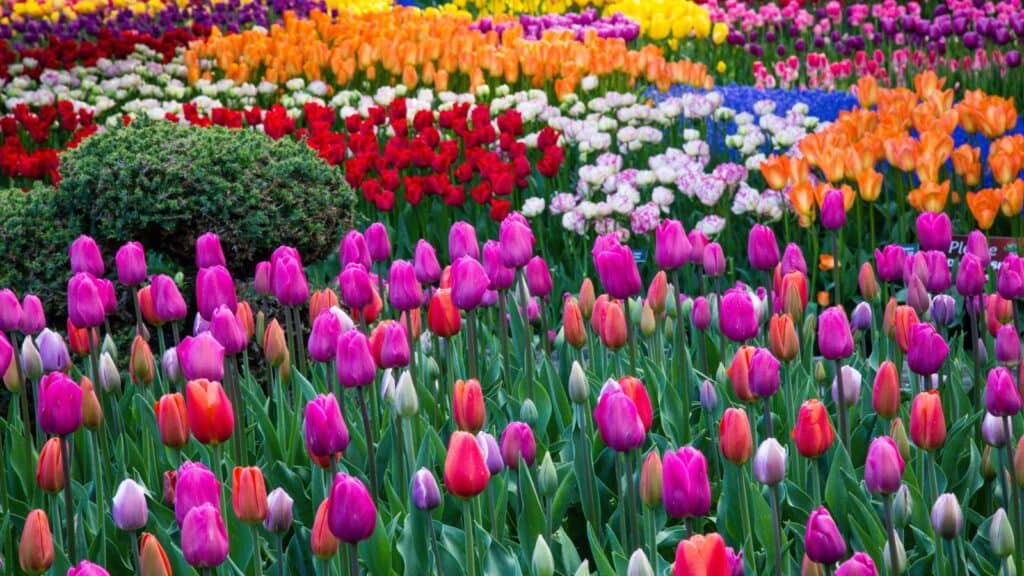
One reason tulips resonate so deeply is that they respect timing. They do not bloom year-round. They do not rush themselves into visibility. They emerge when conditions allow, not when external pressure demands it.
This biological truth carries metaphorical weight. In a culture obsessed with immediacy, tulips model patience without passivity. They wait, but they do not stagnate. Beneath the surface, preparation is happening.
For people navigating midwinter fatigue, this model can be reassuring. Rest is not failure. Waiting is not wasted time. Timing matters.
Why Tulip Day Belongs in January
Tulip Day does not celebrate abundance or arrival. It celebrates persistence and possibility. Its placement in mid-January aligns with an emotional truth many people experience but rarely articulate. This is when reassurance is more valuable than excitement.
Honoring tulips at this moment reinforces the idea that endurance has value. That waiting is part of progress. That hope does not need to arrive with fanfare to be meaningful.
Tulips do not announce the end of winter. They remind us that winter does not own the future.
Hope Does Not Have to Be Loud to Matter
Tulips do not promise outcomes. They promise movement. They do not guarantee warmth, ease, or resolution. They offer evidence that the season is still unfolding.
In the deepest part of winter, that evidence is enough. Sometimes hope does not look like joy or excitement. Sometimes it looks like a quiet reminder that the story is still moving forward, even when the days feel long and indistinguishable.
Tulips show up exactly when that reminder is most needed.