12 things women’s bodies respond to differently from men’s
For most of medical history, the default human body was male. Clinical trials enrolled men. Drug doses were calculated on male physiology. Diagnostic criteria were drawn from male symptom presentations.
Pain scales, cardiac protocols, and neurological benchmarks are all calibrated against a body that roughly half the population doesn’t have. When women were eventually included in research, the working assumption was that the biology was close enough that findings would translate. In many cases, it didn’t.
They moved into emergency rooms, where women having heart attacks were sent home. Into pharmacies, where standard doses were quietly overwhelming female metabolism. Into pain clinics, where women reporting higher intensity were told they were anxious. Into sleep studies that missed apnea because it didn’t sound like a man snoring.
The twelve differences below are not outliers or edge cases. They are consistent, well-documented, and in several instances, life-threatening when ignored. What they share is a single throughline: women’s bodies are not a variation on the male baseline. They are a baseline of their own: one that medicine is, slowly and unevenly, beginning to take seriously.
Alcohol enters the bloodstream faster and stays longer

Men carry an enzyme called alcohol dehydrogenase (ADH) in both their stomach lining and liver. That stomach-level ADH alone reduces the amount of alcohol that ever reaches the bloodstream by up to 30%.
Women have almost no ADH in the stomach; the gene is there, but it isn’t expressed at the same functional level. So alcohol moves through the stomach wall largely unprocessed, flooding the bloodstream in greater concentrations.
While women actually have higher hepatic (liver) alcohol dehydrogenase (ADH) activity than men, women are more sensitive to alcohol due to significantly lower gastric (stomach) ADH activity, reduced body water, and higher body fat percentages.
Women develop alcohol-related liver damage (including hepatitis and cirrhosis) faster and at lower consumption levels than men. Older women face an even sharper edge here. With age, total body water decreases further, slowing metabolism and lowering tolerance.
Pain is not a shared experience

Fibromyalgia affects women at a rate of eight or nine to one compared to men. Migraines are three to one.
Women report higher pain intensity across nearly every condition studied. Critics have historically argued that this gap reflects social conditioning; women are more willing to admit pain, and men are taught to suppress it. That interpretation carries some weight, but it cannot account for the neurological evidence.
Brain imaging shows that men and women activate different regions during pain: men show stronger responses in the prefrontal cortex, which handles rational processing; women show higher activation in the amygdala and emotional arousal circuits, producing a more visceral, whole-body experience.
Hormones add another layer. Estrogen modulates pain pathways directly, meaning a woman’s pain threshold shifts across her menstrual cycle: highest around ovulation and lower during menstruation.
Male rodents have consistently stronger analgesic responses to mu-opioid receptor agonists than females. Many pain medications were developed and dosed primarily against male physiology. A woman prescribed standard-dose opioids may receive inadequate relief not because her pain is less severe, but because the medication was calibrated for a different nervous system.
A heart attack in a woman can look nothing like a heart attack

Crushing chest pain. Left arm numbness. Sweating. These are the textbook signs — written in textbooks built largely around male patients. A woman having a heart attack may feel none of those things. She may feel nauseated. Jaw discomfort. Fatigue is so severe that she assumes she has the flu. Back pain. Indigestion that doesn’t go away. These are the symptoms that land her in the emergency room with the wrong diagnosis.
The claim rests on a large University of Leeds analysis of nearly 600,000 heart attack cases across 243 NHS hospitals over nine years, published in European Heart Journal: Acute Cardiovascular Care and funded by the British Heart Foundation. It found women were 59% more likely than men to be misdiagnosed in STEMI cases and 41% more likely in NSTEMI cases, averaging to about a 50% higher overall misdiagnosis risk. Those initially misdiagnosed also faced around a 70% higher 30-day mortality rate than patients correctly identified at first assessment.
Women under 55 were found to be seven times more likely than men of the same age to be discharged from emergency rooms without proper cardiac testing, according to research in the Journal of the American Heart Association.
The immune system is both armor and liability

Women fight off infections faster than men at every age – including before birth. Across viral and bacterial challenges, female immune responses mount faster, produce stronger antibody counts, and clear pathogens more efficiently. Vaccines work better in women.
Eighty percent of autoimmune disease cases are diagnosed in women. Not a majority – four in five. Lupus affects women at a ratio of 9:1. Sjögren’s syndrome sits at 19:1.
The reason lies in the same immune aggression that provides the advantage. Women carry two X chromosomes, one of which carries genes related to immune regulation. When those genes escape their normal silencing process – X inactivation – certain immune responses become dysregulated, mounting attacks on the body’s own tissue. The Stanford University researcher Chang identified that Xist ribonucleoproteins, which are central to regulating the second X chromosome, contain autoantigenic components that likely drive sex-biased autoimmunity.
Women’s more powerful immune systems help fend off illness, but the same reactivity increases the likelihood that the system will turn inward. Strength and vulnerability share a single origin.
Stress produces a different behavioral chemistry

In 1915, physiologist Walter Cannon proposed the fight-or-flight response as the universal reaction to stress – a surge of adrenaline, a primed body, a readiness to act or escape. For the next several decades, thousands of studies documented and mapped this response. Nearly all of them used male subjects.
In 2000, UCLA psychologist Shelley Taylor and colleagues proposed an alternative: tend-and-befriend. Under acute stress, women were more likely to seek social connection, to nurture dependents, and to build alliances rather than fight or flee. During stress, women release more endorphins than men do and, through the interaction between estrogen and oxytocin, are more inclined toward affiliative behavior. Androgens, more prevalent in men, suppress oxytocin release, which is one reason the male stress response tilts toward physical aggression or withdrawal.
Women under chronic stress tend to ruminate longer, to process threat through interpersonal frameworks, and to carry a higher total cognitive load, because social maintenance itself becomes a stress-management strategy.
The mind that copes by connecting is also the mind that can’t easily disengage. Prolonged elevated stress hormone levels in women are more likely to translate into mental health disorders over time, partly because estrogen-serotonin interactions make the female brain more reactive to sustained hormonal load.
Medication was built for men, and women pay for it

Up until 1993, women were routinely excluded from clinical drug trials in the United States. For decades, drug dosing, safety profiles, and treatment protocols were built entirely on male data, then extended to female patients without adjustment. The consequences are still unfolding.
Compared with men, women face a 50% to 75% increased risk of adverse drug reactions. A 2020 analysis by Zucker and Prendergast reported 86 FDA-approved drugs showing statistically significant sex-based pharmacokinetic differences. In most cases, women receiving identical doses exhibited higher blood concentrations and slower drug clearance. The authors further reported that in 96% of these drugs, higher exposure in women aligned with higher rates of adverse drug reactions.
The body weight explanation, that women are simply smaller and therefore need smaller doses, doesn’t hold up.
Women also respond differently at the mechanism level. They show greater sensitivity to beta blockers, opioids, and SSRIs, meaning therapeutic effects arrive at lower concentrations but so do adverse effects. The FDA now mandates sex-specific analysis in drug trials. Whether the field has fully caught up is another question.
The gut is slower, more hormonally sensitive, and more easily disrupted
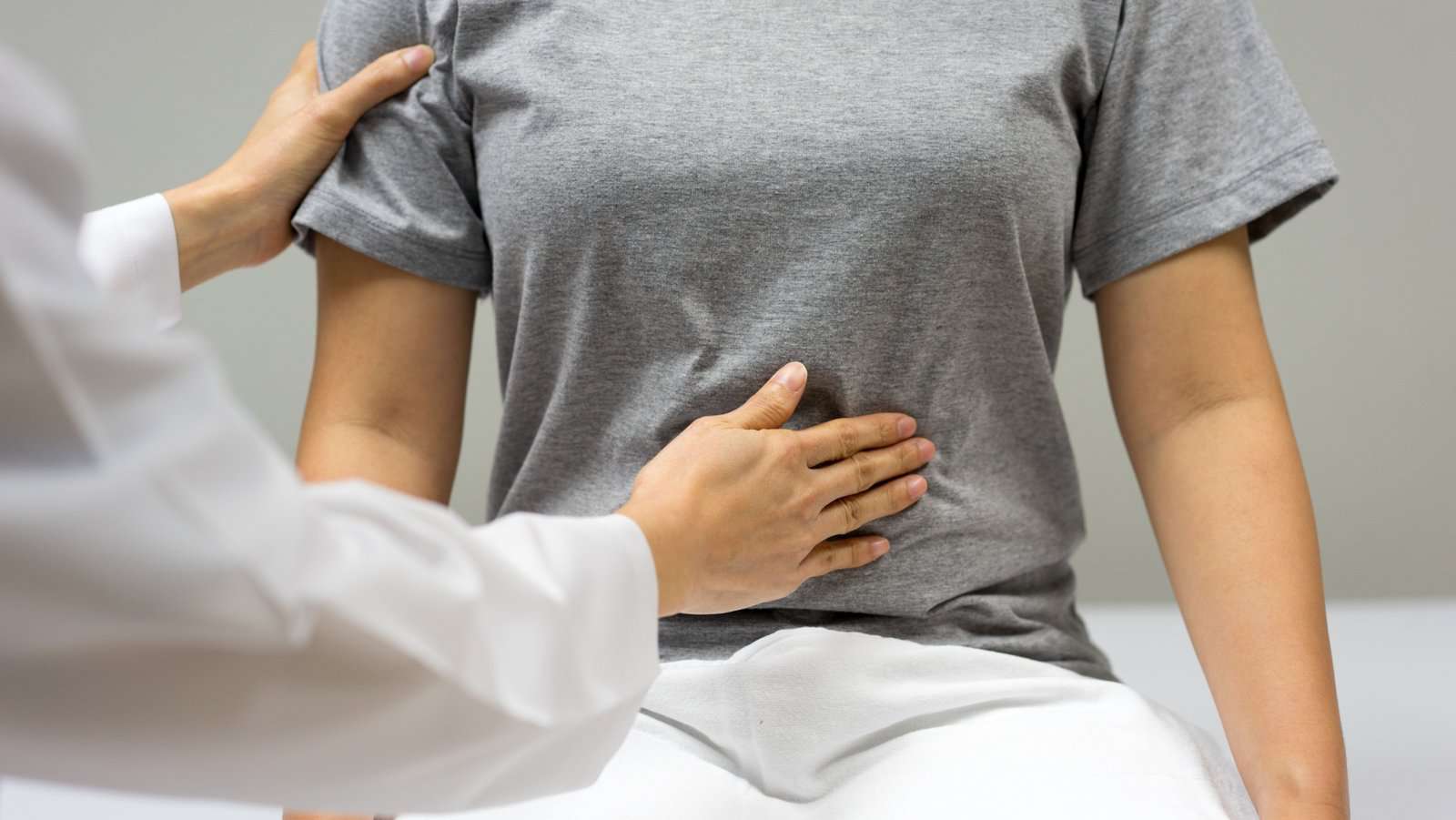
Nobody has fully explained why the intestinal nerve cells in women are less motile, but the functional consequences are measurable. Women account for two-thirds of IBS diagnoses globally and are significantly more likely to develop gastroparesis, a condition where the stomach empties too slowly to prevent nausea and vomiting.
Women’s bowels also sit in a more anatomically complex environment. Packed into a smaller abdominal cavity alongside reproductive organs, the colon is more convoluted in women, which can lead to slower transit and more pronounced bloating. The gut also carries significantly more estrogen and progesterone receptors than men’s – and women with IBS appear to have even more of these receptors than those without the condition, making their digestive systems acutely reactive to hormonal fluctuation.
During menstruation, prostaglandins released to trigger uterine contractions appear to also affect the bowel, producing increased rectal sensitivity, pain, and changes in stool consistency. During perimenopause, declining estrogen creates another wave of GI disruption. The timing of these shifts maps directly onto IBS flares, making the gut a kind of hormonal barometer that men’s systems, operating on a more stable hormonal baseline, simply don’t have.
The brain takes longer to recover from a concussion

Female athletes who sustain concussions in comparable sports have a higher incidence rate and, on average, more severe symptoms than male athletes.
The structural reason lies partly in the corpus callosum, the band of neural fibers connecting the brain’s two hemispheres. Men have a larger corpus callosum with a greater cross-sectional area than women. Females tend to use both brain hemispheres simultaneously for most tasks, a more distributed processing style. A blow to the head generates strain at the corpus callosum, and because women’s interhemispheric communication is more widely distributed, that strain disrupts a broader network of functions, producing more diffuse and sustained symptoms.
The menstrual cycle adds another variable. Preliminary research suggests concussion risk and post-injury outcomes may vary with cycle phase, tied to fluctuations in progesterone and estrogen – hormones that influence both inflammation and neural resilience. Standard return-to-play protocols were not built with this in mind.
Sleep is worse than it looks and better than it feels

Here is the paradox: when researchers measure women’s sleep with objective sensors in controlled sleep lab settings, women generally display better sleep quality than men. More time in non-REM deep sleep, more stable circadian rhythms, more consistent sleep architecture. By the numbers, women are the better sleepers.
Rates of insomnia are higher among women across both measures, with self-reports approaching double those of men and diagnoses about 40% more common. Also, up to four times more likely to develop a sleep-related eating disorder. Restless legs syndrome is 25% to 50% more prevalent in women.
Sleep quality deteriorates across:
- The menstrual cycle
- Pregnancy
- Perimenopause and menopause
Sleep apnea in women is chronically underdiagnosed. Men are three times more likely to receive a sleep apnea diagnosis, despite women frequently having the condition, because women present with fatigue, insomnia, and depression rather than the loud snoring and breathing pauses associated with male presentations.
Depression and anxiety operate on a different biological schedule
Depression occurs twice as often in women as in men. Generalized anxiety disorder affects women at two to three times the male rate. Social conditioning contributes, but it doesn’t account for what the biology is doing on its own schedule.
Estrogen modulates serotonin directly. When it drops – premenstrual, postpartum, perimenopausal- mood regulation becomes less stable, and depressive episodes follow. Research consistently shows the menopausal transition raises depression risk two to four times compared to premenopausal status. The brain registers hormonal withdrawal up to five years before physical symptoms appear.
Neuroimaging sharpens the picture. Under identical stressors, the female brain generates a more emotionally sustained response, and that pattern, running alongside chronic hormonal fluctuation, creates compounding risk for both anxiety and depression.
Treatment adds another layer. Women respond better to SSRIs than tricyclic antidepressants, particularly younger women, who show consistently poor response to tricyclics. For too long, that gap was attributed to compliance rather than biology.
Muscles fatigue more slowly but build differently

Ask most people who tire faster in the gym, and they’ll say, women. The data disagrees.
Women are less fatigable than men during sustained isometric contractions and recover strength faster once the effort ends. Published in Scientific Reports in 2021, a study testing 26 participants on isokinetic knee extension at three contraction speeds found that women recovered faster than men at moderate velocities, with the sex difference in fatigability proving task-dependent rather than uniform across all conditions.
Estrogen pulls additional weight here. Higher levels are associated with attenuated muscle damage and faster regeneration.
Men’s edge sits in raw power output and the stretch-shortening cycle, the elastic rebound that makes explosive movement more mechanically efficient, allowing more total reps in a full session. Neither profile is superior across the board. Both are specialized.
Stroke symptoms get lost in translation

Facial drooping. Arm weakness. Slurred speech. These are real stroke signs, and they appear in both sexes. Women more commonly present with non-focal symptoms: confusion, generalized weakness, and mental status changes.
A Johns Hopkins analysis of 187,188 patients, published in the journal Diagnosis, found women were 33% more likely than men to have a stroke misdiagnosed in the emergency department. Women also arrive later, a significant proportion more than 24 hours after symptom onset, because the symptoms don’t match the cultural image of a stroke, for patients or clinicians.
Diagnostic protocols were built around patient populations that over-represented older white men. Women presenting with confusion or generalized weakness enter a framework that reads those symptoms as anxiety or the flu.
The missed diagnosis is often the predictable outcome of a tool applied to a patient it was never designed for, with mortality and long-term disability outcomes that remain worse for women as a direct result.
Key takeaways
- Women’s bodies process alcohol, medication, and pain signals through different biological mechanisms than men’s – same dose, different outcome.
- A stronger immune system is also a more self-destructive one: women fight infection better but carry 80% of all autoimmune disease diagnoses.
- Women’s heart attacks, strokes, and concussions frequently present with symptoms that fall outside male-calibrated diagnostic frameworks, delaying life-saving treatment.
- Hormonal fluctuation across the menstrual cycle, pregnancy, and menopause reshapes sleep, gut function, mood, and brain chemistry in ways that men’s more stable hormonal baseline does not replicate
- Most clinical research was built on male subjects: the gaps in women’s healthcare are not accidental oversights; they are the structural consequence of that decision.
Disclaimer – This list is solely the author’s opinion based on research and publicly available information. It is not intended to be professional advice.
Like our content? Be sure to follow us