12 key insights on payment methods and credit card fees
That quick tap for a $4 coffee is not as quiet as it looks. Behind the tiny green checkmark is a busy little toll road of banks, card networks, fraud screens, processors, wallet apps, and fees. The customer gets caffeine and keeps walking. The merchant loses a few cents, then a few more, then watches those cents grow into a real cost by year’s end.
The Federal Reserve’s 2025 Diary of Consumer Payment Choice found that in 2024, credit cards accounted for 35% of U.S. consumer payments by number, debit cards accounted for 30%, and cash accounted for 14%. And according to Nilson Report data, U.S. merchants paid $172.05 billion in card processing fees in 2023, up 7.1% from $160.66 billion in 2022. A payment may feel instant, but its cost can keep ringing long after the receipt fades.
That is why checkout has become more than a final step. It is a money decision for shoppers and a profit decision for business owners. The Federal Reserve also found that U.S. consumers made an average of 48 payments per month in 2024, and that adults ages 18 to 24 accounted for 45% of all mobile payments.
At the same time, digital wallets, Buy Now, Pay Later, ACH, open banking, card surcharges, and cash discounts have turned the payment screen into a crowded little stage. Every option brings a promise. Every option brings a price. And every tap, swipe, scan, or bank transfer says something about trust, speed, risk, and what customers now expect.
Cards Still Dominate, Even Inside Digital Wallets
Digital wallets may get the shiny headlines, but cards still sit under many of those smooth phone taps. Worldpay’s 2026 small-business payment guidance says U.S. credit cards accounted for 32% of online transaction value and 40% at the point of sale, with debit cards adding 16% of e-commerce value and 28% of in-store value.
PCMI also reports that Worldpay found 56% of consumers globally fund digital wallets with cards, and that card funding rises to about 70% in card-heavy markets such as the U.S. and Australia. That is why Worldpay’s line lands so well: “The card doesn’t disappear.” It just often moves behind the phone, the watch, or the checkout button.
So when a customer taps a wallet, the experience feels sleek and new, but the old card rails may still be carrying the money quietly beneath the glass. For merchants, that means accepting wallets does not always mean escaping card economics. The form changed. The fee structure may still be standing right there in the room.
Credit Card Processing Fees Quietly Eat Profits

Credit card fees are the kind of cost that can look harmless one sale at a time, then grow teeth at the end of the month. Nilson Report data shows U.S. merchants paid $172.05 billion in processing fees in 2023, tied to $11.240 trillion in purchase volume on U.S.-issued credit, debit, prepaid, and private-label cards.
By 2024, merchant processing fees had climbed to $187.20 billion. Forbes Advisor says credit card processing fees often range from about 1.5% to 4% of the charged amount, made up of interchange fees, association fees, and a processor’s markup.
That means a small shop processing $500,000 a year could lose roughly $7,500 to $20,000 before rent, payroll, supplies, shipping, or taxes are factored in. For a neighborhood bakery, that is not spreadsheet noise. That is butter, bags, wages, repairs, and a few sleepless nights baked into every card reader beep.
Not All Pricing Models Are Created Equal

The way a processor prices fees can matter almost as much as the fee itself. Forbes Advisor breaks the basic card fee into three parts: interchange fees, association fees, and processor markup. But merchants often see that math packaged in different ways.
Interchange-plus pricing shows the card-network cost and the processor’s markup more clearly. Flat or blended pricing gives a single rate that can feel clean but may lump cheaper debit transactions into the same bucket as more expensive rewards cards.
Tiered pricing can sound tidy, with labels like qualified and non-qualified, but those labels can turn into a fog machine if the merchant doesn’t know what pushes a transaction into a higher tier.
The difference matters because a business with lots of rewards cards, online orders, keyed payments, or cross-border sales may pay more than the headline rate suggests. A simple bill can be comforting, but a clear bill is often more useful. In payments, pretty packaging can cost real money.
Interchange and Network Fees Are Still Rising

Even tiny changes in card-network fees can sting, since payments are processed at such high volume. Stax, citing Nilson Report data, notes that of the roughly $172 billion U.S. merchants paid in card processing fees in 2023, about $170 billion came from interchange and assessment fees.
Stax also reports that in 2025, Visa raised its Misuse of Authorization Fee from $0.09 to $0.15, and Mastercard increased its Excessive Authorization Attempts Fee from $0.30 to $0.50.
Those numbers look small enough to ignore until a business runs subscriptions, retries failed cards, or handles thousands of declined transactions. Then pennies start acting like rain. A gym, software platform, meal-kit company, or streaming-style membership business may see failed authorizations as routine friction, but the networks can still charge for messy attempts.
The quiet lesson is that approval rates, retry timing, and payment hygiene are now part of profit protection. A failed payment is no longer just a missed sale. Sometimes it also sends a small bill.
Regulation and Compliance Are Now a Cost Center

Security is the locked door every payment system needs, but locks cost money, too. The PCI Security Standards Council says PCI DSS v3.2.1 was retired on March 31, 2024, and PCI DSS v4. x became the active standard.
Its 2024 guidance also states that PCI DSS v4.0 added 64 new requirements, 51 of which are future-dated and effective March 31, 2025. Michael Aminzade, vice president of compliance and risk services at VikingCloud, told the PCI Security Standards Council that PCI DSS v4.0 brought “a lot of updates” and “a lot of new requirements.”
For a big retailer, that may mean teams, audits, vendors, and tools. For a small online store, this may mean stronger password rules, monitoring of the payment page, vendor checks, staff training, and cleaner handling of card data. None of that feels poetic when a merchant is paying invoices, but it can prevent fraud, fines, breach fallout, and customer trust from cracking like thin ice.
Tech Upgrades Can Actually Lower Effective Fees

A merchant may not be able to rewrite Visa or Mastercard’s rate tables, but better payment tech can lower the true cost of getting paid. The Federal Reserve’s 2025 Diary shows mobile phone payments have become a normal part of U.S. life, with adults ages 18 to 24 using phones for 45% of all payments in 2024.
Better checkout tools can reduce declines, cut chargebacks, and lift the share of clean, approved sales. Tokenization can protect stored card data. Address verification can flag risky orders. Account updater services can refresh subscription cards that have expired or been replaced. Contactless card-present payments can carry less risk than keyed-in transactions.
The trick is to stop staring only at the sticker rate. A 2.8% payment that approves smoothly, avoids fraud, and keeps customers happy may beat a cheaper route that fails, delays, or starts disputes. The real payment cost is not just the fee on paper. It is the cost of a sale that actually lands and stays landed.
Alternative Payment Methods Are Growing
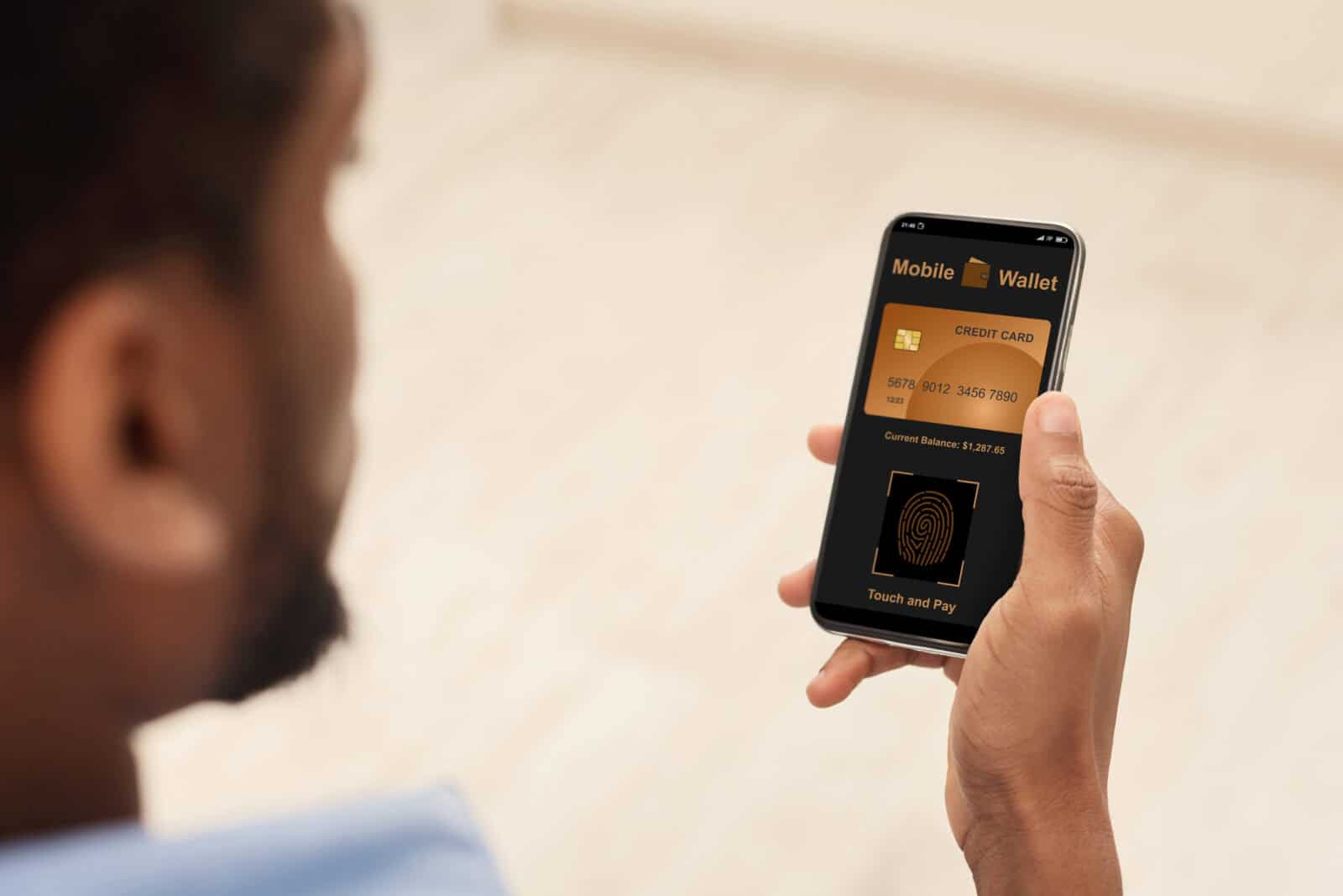
Digital wallets, ACH, open banking, QR payments, and BNPL are no longer side characters. Worldpay reported that digital wallets represented 53% of global e-commerce transaction value and 32% of global point-of-sale spend in 2024.
It also reported that BNPL online spending grew from $2.2 billion in 2014 to $342 billion in 2024. Adobe’s January 2026 holiday report adds a fresh U.S. snapshot: BNPL drove $20.0 billion in online spending during the 2025 holiday season, up 9.8% year over year, and smartphones drove 82.2% of BNPL purchases. That sounds like a merchant’s dream until the fee math shows up.
Some bank-based payments can cost less than cards. BNPL may cost more, but it can help shoppers say yes to higher-ticket items. So the choice is rarely clean. A cheaper rail may lose a sale if the customer does not trust it. A more expensive button may pay for itself if it boosts conversion. The payment method has to earn its spot.
Bank Transfers Are Cheap, But Not Always Frictionless

Bank transfers can look like the quiet hero of payments because they often avoid the card-network toll booth. The Federal Reserve’s 2025 FEDS Notes by Brendan H. Hwang defines Pay-by-Bank as a payment routed from a customer’s bank account to a merchant’s bank account through ACH or instant payment rails.
Hwang writes that Pay-by-Bank can offer merchants an “arguably cost-efficient and secure alternative” to cash and cards. That sounds great for rent, tuition, insurance premiums, B2B invoices, subscriptions, and other high-value payments where a 2% or 3% card fee feels painful. The catch is human behavior. People know cards. They know chargebacks. They know the rewards. They know the comfort of a familiar button.
Bank transfers can feel slower, less forgiving, or too close to the checking account for shoppers who want a little distance. Saving money matters, but checkout trust matters too. A low-fee option that scares customers away is not really low-cost.
Debit Often Costs Less Than Credit
Debit and credit cards may look like siblings in a wallet, but merchants often feel them very differently. The Federal Reserve’s 2025 Diary found that debit cards made up 30% of U.S. consumer payments by 2024, close behind credit cards at 35%. Debit can cost less in many cases because it often carries lower interchange, especially for regulated debit cards, but merchants still need to read the rules.
Visa’s U.S. merchant surcharge guidance says merchants cannot add a surcharge to Visa debit or prepaid card purchases, even if the customer selects credit at the terminal. Mastercard’s merchant guidance also says surcharging is permitted only on Mastercard credit cards, not debit or prepaid cards.
That detail matters because a “card fee” sign can get a business into trouble if it treats all plastic the same. Customers may not know the difference between a debit run and a credit card transaction. The merchant has to know, because the networks do.
Surcharges and “Cash Discounts” Are Spreading

As fees climb, more merchants are asking customers to help carry the load. Visa’s U.S. surcharge Q&A says merchants may surcharge credit card purchases only under certain conditions, cannot surcharge Visa debit or prepaid cards, and must cap the surcharge at the merchant discount rate or 3%, whichever is lower.
Visa also says the surcharge disclosure must appear at the point of entry, the point of sale, and on the receipt. Retailer groups have pushed this issue hard because the dollar amounts are huge. The Merchants Payments Coalition said credit and debit card swipe fees reached $187.2 billion in 2024, up from $172 billion in 2023.
To a restaurant, salon, corner store, or contractor, a cash discount can feel like a lifeline. To a customer, a surprise 3% fee can feel like a little ambush at the counter. The same policy can protect a thin margin and annoy a loyal shopper. That is why clear signs, fair pricing, and plain language matter.
Consumers Are Using More Payment Methods Than Ever

The old checkout question was cash or card. Now it feels more like a tiny menu: credit, debit, wallet, BNPL, ACH, app, QR code, gift card, store card, or cash if someone still keeps bills folded behind a phone case.
The Federal Reserve’s 2025 Diary found consumers made an average of 48 payments per month in 2024, with 23% of purchases and peer-to-peer payments made remotely. It also found that cash stayed at 14% of payments, still third behind credit and debit.
McKinsey’s 2025 Global Payments Report describes a massive global payments industry, with payment flows spanning trillions of transactions and large revenue pools. The human side is simple: people now expect the payment method to match the moment.
A teen may tap a phone for almost half of purchases, according to the Fed’s age data. An older adult or lower-income household may still lean more on cash. A merchant serving everyone has to build a checkout that feels easy without turning the back office into a fee swamp.
The “Cheapest” Method Isn’t Always the Smartest

The cheapest payment method on paper can become expensive in real life if it slows checkout, loses trust, raises disputes, or sends shoppers away. Digital wallets, BNPL, cards, and account-to-account payments are all part of the modern payment mix, and the Federal Reserve’s 2025 Diary shows credit and debit cards still make up nearly two-thirds of U.S. consumer payments by number.
That means the best payment setup is not always the one with the lowest posted rate. It is the one that balances cost, speed, fraud risk, customer comfort, approval rates, and settlement time.
A bank transfer may be great for a $4,000 invoice. A card may be better for a nervous first-time shopper. BNPL may help sell a $900 appliance, but it can end up costing more. Cash avoids card fees, but fewer people carry it as their main payment tool.
Payments have become part of the sale, not the last step after the sale. The smartest businesses treat checkout like a bridge. If the bridge feels shaky, people turn around.
A Short Reflective Close

Every payment has a shadow. Behind the soft beep of a terminal, there may be a card fee, a fraud screen, a bank rail, a network rule, a compliance deadline, a surcharge cap, or a customer habit that refuses to change.
The Federal Reserve’s 2025 Diary found that Americans averaged 48 payments per month in 2024, which means these tiny choices are not tiny at all. They shape prices, profit, convenience, and trust, one transaction at a time. The question is no longer just how people pay. It is what each payment quietly costs after the screen says approved.
Key Takeaways

Cards still anchor much of U.S. payment life, even as wallets grow. The Federal Reserve found that credit and debit cards accounted for 65% of U.S. consumer payments by number in 2024, and Worldpay data shows many wallets still rely on card funding behind the scenes.
Merchant fees are big enough to shape prices and business survival. Nilson Report data shows U.S. merchants paid $172.05 billion in card processing fees in 2023, rising to $187.20 billion in 2024.
Alternative payments can help, but none are magic. Adobe says BNPL drove $20.0 billion in U.S. online holiday spending in 2025, while the Federal Reserve says Pay-by-Bank may appeal to merchants as a cost-efficient bank-based option. Each method brings a trade-off.
The best payment mix balances cost, trust, speed, and customer comfort. A low fee is useful only if the customer completes the purchase, the payment clears, fraud stays low, and the business keeps enough margin to make the sale worth it.
Disclaimer – This list is solely the author’s opinion based on research and publicly available information. It is not intended to be professional advice.
Like our content? Be sure to follow us