Trump Regime Keeps Stealing Kids Entertainment for ICE Ad Campaign. Companies are Clapping Back.
While thousands of kids are suffering in ICE prisons like Dilley, and immigrant children are about to be shipped to a new ICE facility in Louisiana, the Trump regime keeps stealing kids entertainment properties to promote its racist ICE deportations scheme.
I’m the author of a four-book series about a peacenik pug dog named Wilson. My books, starting with “The Tao of Pug,” were first published by Penguin starting in 2003, (now in paperback by Skyhorse).
I told my husband the other day, “If I die, and the government steals my books to promote ICE deportations, please get very loud.”
So last month, when I saw that the White House had appropriated the beloved kids book “The Magic School Bus” to promote ICE deportations, I could not be silent. I could not remain neutral.
You see, the Trump regime has been on a tear, appropriating the IP (intellectual property) of several prominent kids entertainment brands to promote its racist ICE deportations scheme. And some companies are clapping back (but not all of them).
I spent my career working in and around large corporations, starting as a cub recruiter at American Express corporate headquarters in the 1980s. I’ve been delving into shareholder voting on DEI (diversity, equity and inclusion) and corporate social responsibility for years.
Most recently, I’ve been covering for-profit prison companies contracted by ICE. As I reported last month for the Queen Zone, the regime plans to open a new ICE facility for kids in Louisiana. The facility is set to be run by the “nonprofit arm” of a notorious for-profit prison company.
Rachel Maddow reported on the facility last month: “The Trump administration [is] building a big new Trump prison camp for kids in Alexandria, Louisiana. They’ve already in Alexandria got the country’s largest hub for deportation flights. Now they want to add a huge new Trump prison camp for children and families adjacent to that site.” And, “Louisiana’s interchurch conference is trying to get the local airport authority to cancel its contracts with ICE to reject the construction of this big new Trump children’s prison camp.”
While thousands of kids are suffering in ICE prisons like Dilley, and immigrant children are about to be shipped to Louisiana, the Trump regime keeps using kids entertainment IP to promote its racist ICE deportations. Some companies have had enough.
Hasbro pushes back against DHS
This week, Hasbro Corporation (NASDAQ: HAS) issued a statement after DHS (U.S. Department of Homeland Security) appropriated its “Optimus Prime” character, from its “Transformers” series to promote the Trump regime’s racist anti-immigrant campaign. A day after Hasbro posted a statement, DHS removed one of its racist ICE (U.S. Immigration and Enforcement) posts.
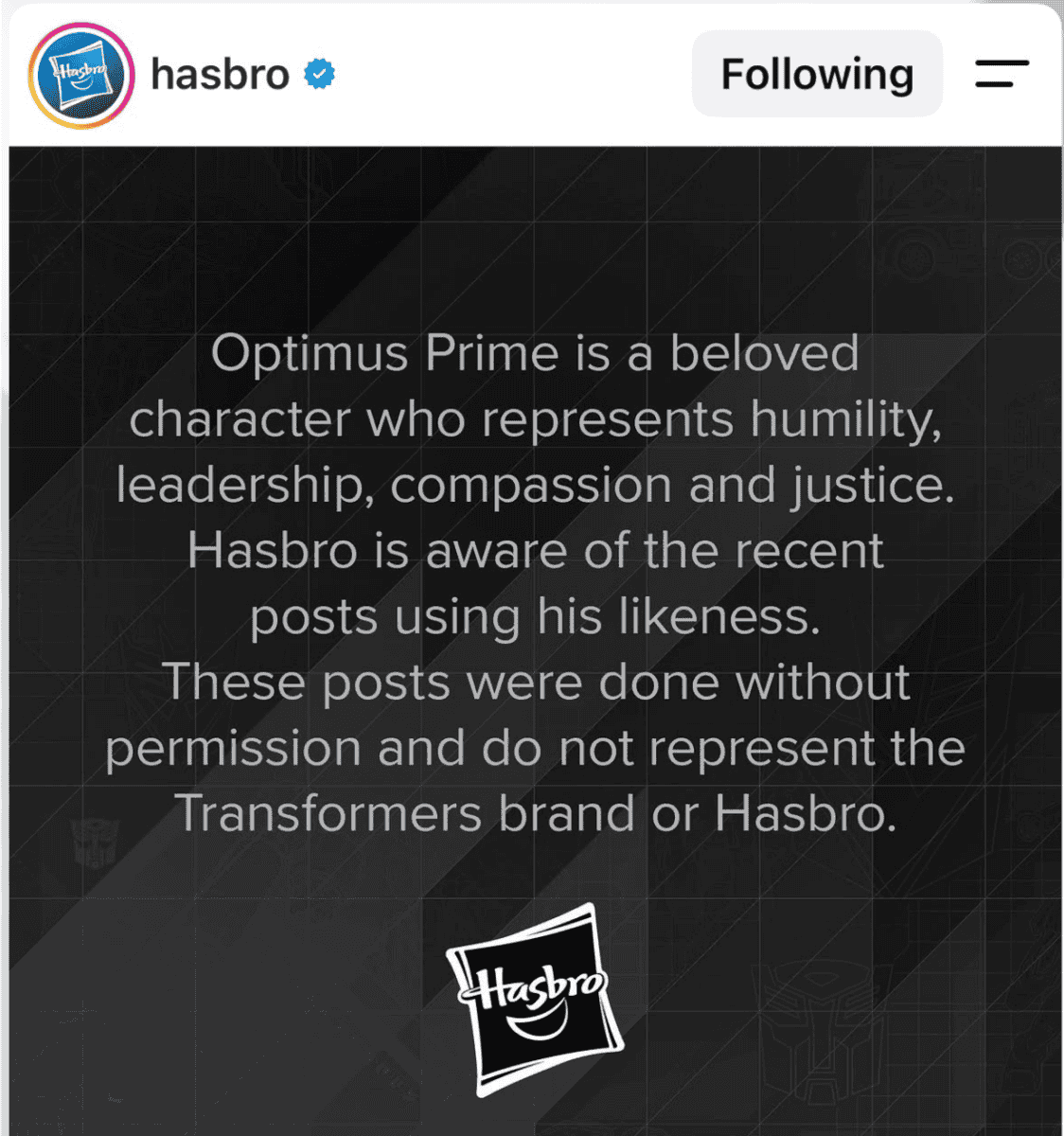
Hasbro posted a statement on its social media, saying:
“Optimus Prime is a beloved character who represents humility, leadership, compassion and justice. Hasbro is aware of the recent posts using his likeness. These posts were done without permission and do not represent the Transformers brand or Hasbro.”
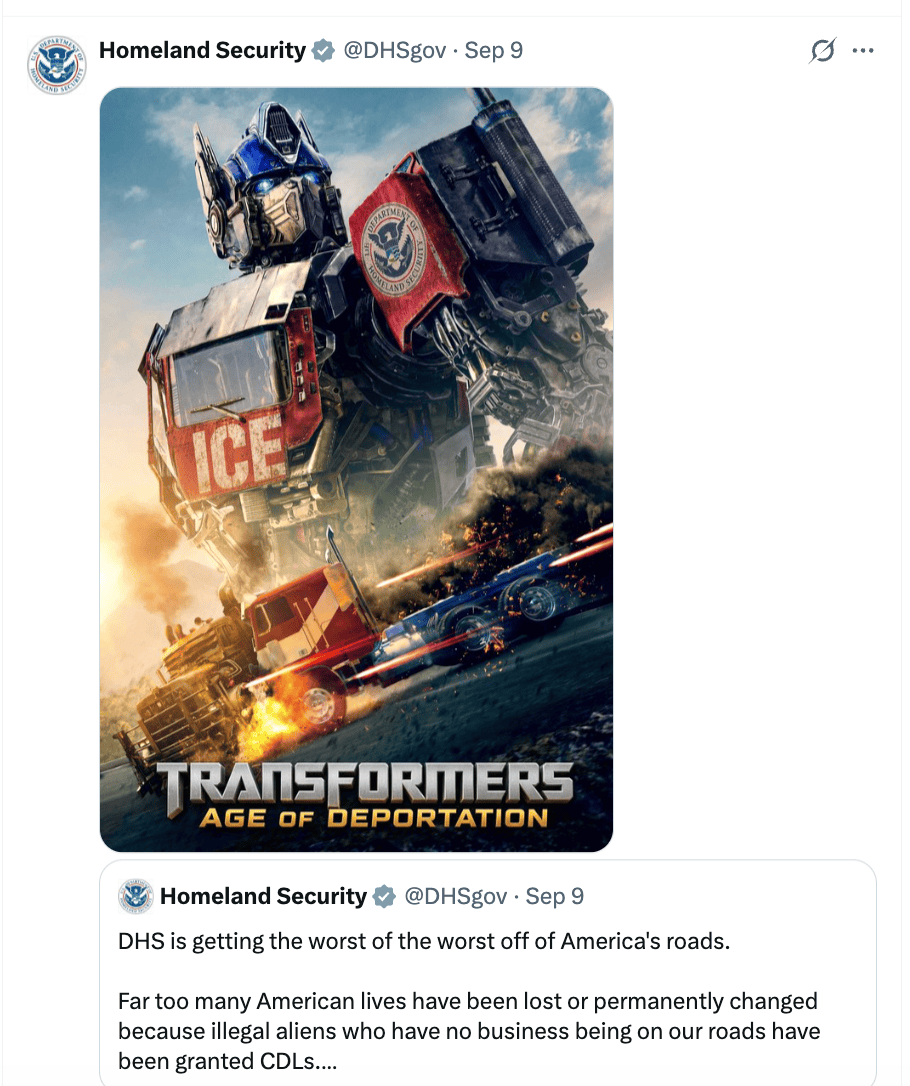
DHS subsequently removed one of its racist posts that used the Optimus Prime character. As the New York Times reported:
“The Department of Homeland Security removed a social media post on Thursday morning depicting a Sikh man and saying, ‘Get off our roads, you don’t know how to drive Mr. Singh.’
“The post, which went up on Wednesday, showed a bearded man with a bandanna on his head facing off against Optimus Prime, a character from the Transformers franchise, depicted with the seal of the Homeland Security Department on his armor.”
However, this bastardized image of Optimus Prime with ICE badge is visible on the DHS X account, as of this writing:
Ohio lawyer Elliot Forhan spoke with me about the White House appropriating IP of kids’ entertainment brands. He told me, “They are stealing intellectual property,” and the regime’s posts to promote ICE “are absolutely doing brand damage.” He urged companies to say, “This is our IP. This is our brand. Cut it out.”
I’ve seen a number of people on social media call for Hasbro to sue the Trump regime for appropriating their IP. While litigation is complex and costly, there is inherent value in speaking up.
Marla Stone, professor and department chair of history at Occidental College, specialist in the history of fascism, dictatorship and genocide in Europe, told me in an interview, “These regimes look for consent of the population. And so, if people are quiet, it looks like they’re consenting to it.”
Hasbro made it clear they do not consent to DHS using their IP. And they’re not the only company to do so.
Tetris tells the White House: Not with our brand
Video game maker Tetris also made it loud and clear that the company is not consenting to the regime appropriating its IP.
The White House removed a racist MAGA-themed video game from its website this week, days after the Tetris Company issued a statement online warning about copyright infringement, as NBC News reported.
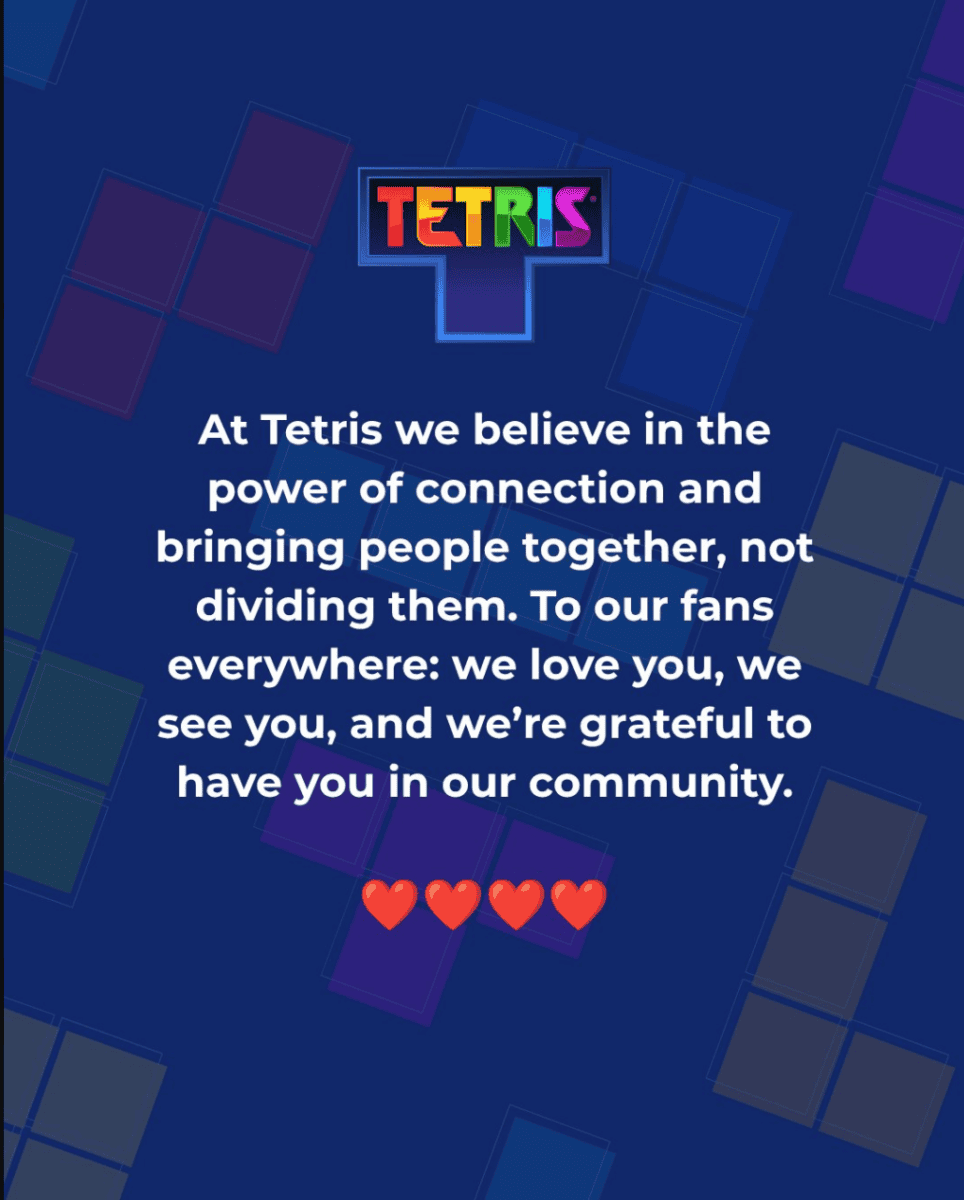
The White House launched a racist video game arcade that used a Tetris clone for its “Build the Wall” video game. But Tetris clapped back at the White House in a statement posted on social media, saying: “The Tetris Company was not involved in the creation of ‘Build the Wall’,” and “We take copyright infringement very seriously.” In a meme, the company said:
“At Tetris we believe in the power of connection and bringing people together, not dividing them. To our fans everywhere: we love you, we see you, and we’re grateful to have you in our community.”
Why children’s characters make powerful propaganda
The regime’s use of kids entertainment to promote racist violence is not new – and not random.
Professor Stone told me about the regime selecting kids properties: “They make an aesthetic choice to give the message this way. This is outright propaganda. And they’ve chosen that kind of thing that evokes childhood.” She added, “It’s not random. They do it on purpose. This is a strategy. They’re trying to build consent.”
Franklin the Turtle says no
The publisher of “Franklin the Turtle” books also made it clear they do not consent to the regime using their IP.
Last year, Defense Secretary Pete Hegseth appropriated the IP of beloved children’s books “Franklin the Turtle” in a social media post to promote shooting at boats in the Caribbean. The regime’s campaign has been identified as “Killing spree: Extrajudicial executions in the U.S. boat strikes campaign,” as human rights group WOLA (the Washington Office on Latin America) outlined in a July report.
Last year, the publisher of “Franklin the Turtle” books, Kids Can Press, fired back at the Trump regime for using its IP to promote the regime’s attacks on boaters. In a statement posted on social media, Kids Can Press said:
“Franklin the Turtle is a beloved Canadian icon who has inspired generations and stands for kindness, empathy, and inclusivity. We strongly condemn any denigrating, violent, or unauthorized use of Franklin’s name or image, which directly contradicts these values.”
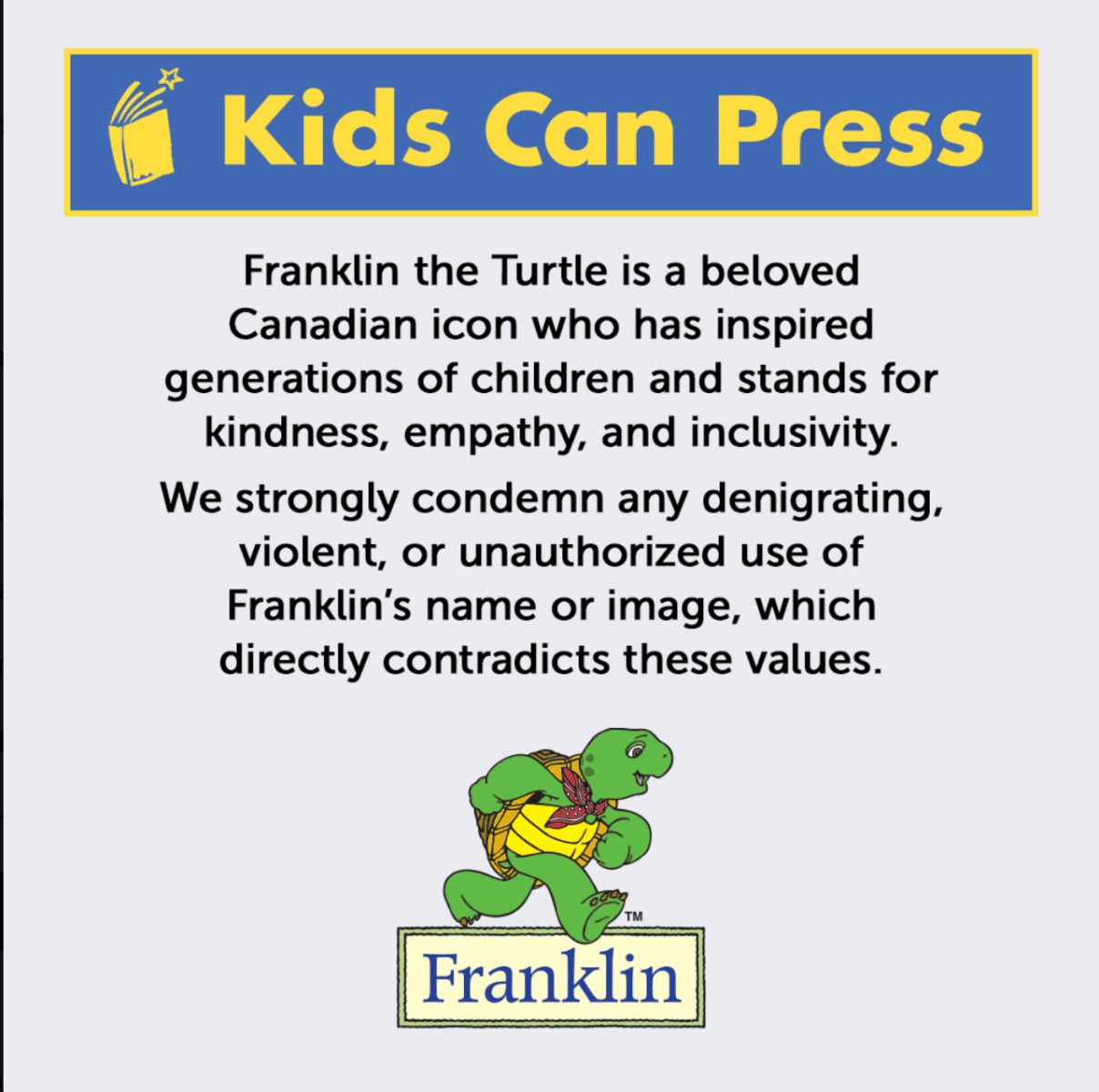
Franklin’s publisher showed there is value in speaking up, regardless of whether a company decides to pursue legal recourse.
“The Franklin precedent demonstrates what a responsible response can look like,” Ryan Berg told me in a message. Berg is the author of “End Times Fascism: How Power Learns to Govern Through Collapse.”
He continued, “Kids Can Press did not need to resolve every legal and military question surrounding the boat strikes before speaking. It affirmed that Franklin represented ‘kindness, empathy, and inclusivity’ and condemned violent, denigrating, or unauthorized uses that contradicted those values. That response denied the government unopposed access to Franklin’s moral meaning.”
Some companies remain silent
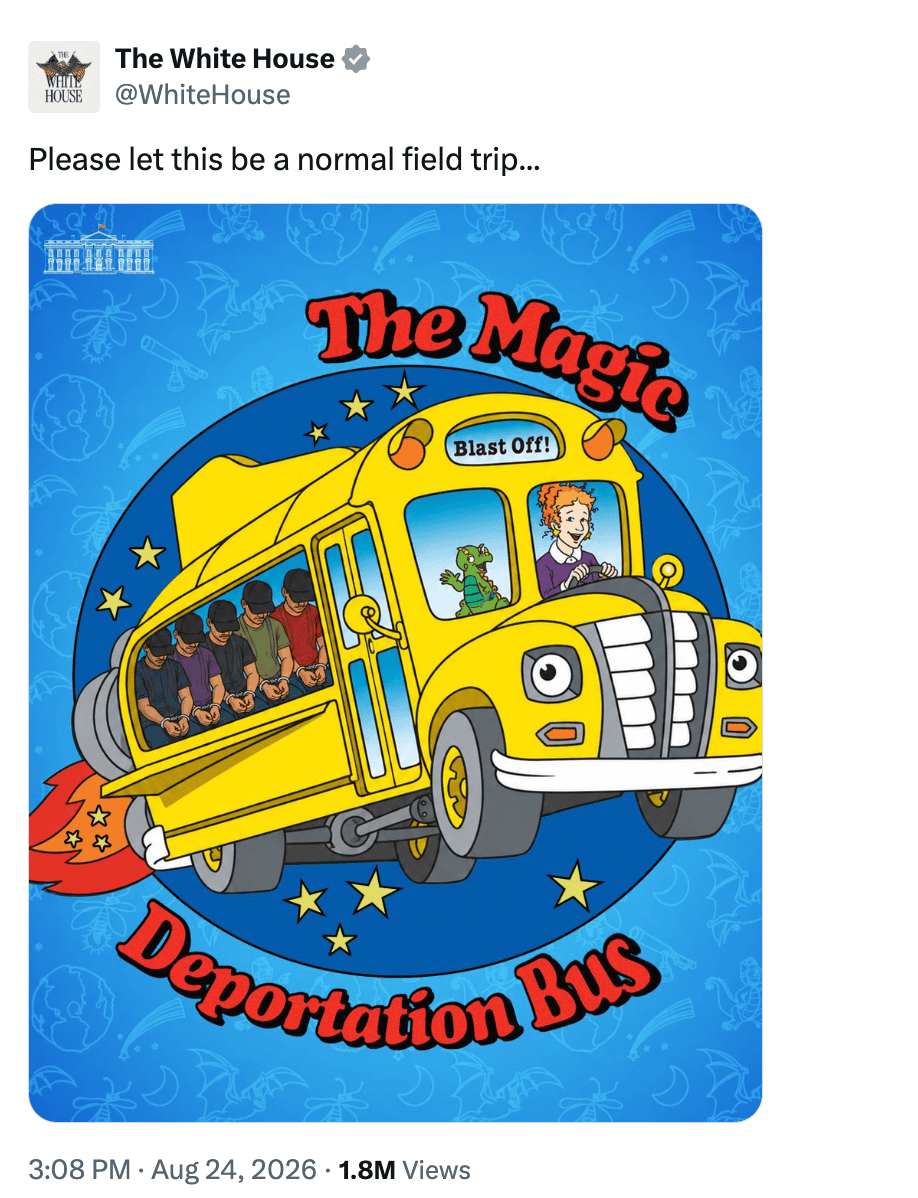
The White House bastardized an image of children’s book “The Magic School Bus,” published by Scholastic Corporation, in a social media post last month. With the book cover shown as “The Magic Deportation Bus,” the meme depicts brown men in shackles on the bus. The post uses an iconic quote from the book: “Please let this be a normal field trip.”
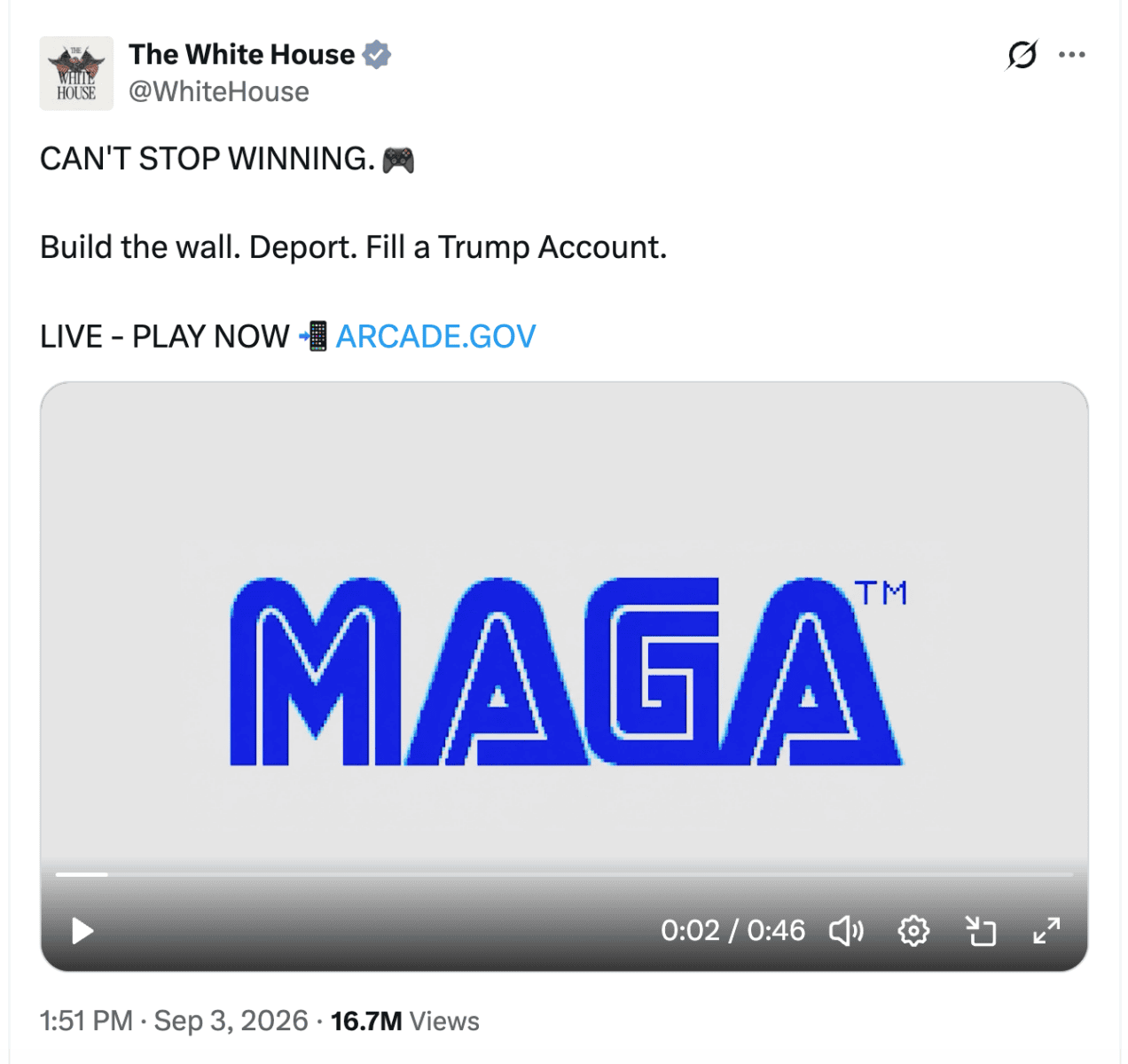
Ten days later, the White House altered video game maker SEGA’s logo in a social media post to announce the launch of its racist arcade games on the official White House website. The post featured a MAGA logo in the style of SEGA’s logo. One of the arcade’s five video games incentivizes players to deport immigrants. As the New York Times reported:
“A social media video accompanying the White House games also invoked Sega, the creators of Sonic the Hedgehog. The intro to the video includes an image mimicking the company’s logo, a recording of the company’s name being sung and a copyrighted song from the Sonic games.”
On social media, I again noticed people calling for SEGA to sue the regime for stealing its IP. However, doing so is not a simple nor straightforward undertaking.
Louise Nemschoff, a Los Angeles entertainment, copyright and trademark lawyer told me in a message: “I think that SEGA, as a Japanese-based company, is unlikely to get itself involved in litigation in the U.S., which is known and feared worldwide as a costly and grueling endeavor, especially over what SEGA is likely to view as an American domestic political dispute.”
But speaking out, even without entering litigation, is critically important. As attorney Mitch Jackson wrote in an essay directed to business leaders: “I’m raising [my voice] because silence is complicity, and too many good people have been sitting on the sidelines while chaos takes the wheel. If you run a business or lead a team, your voice matters.”
No one from Scholastic or SEGA has responded to my multiple inquiries. Other voices also remain silent.
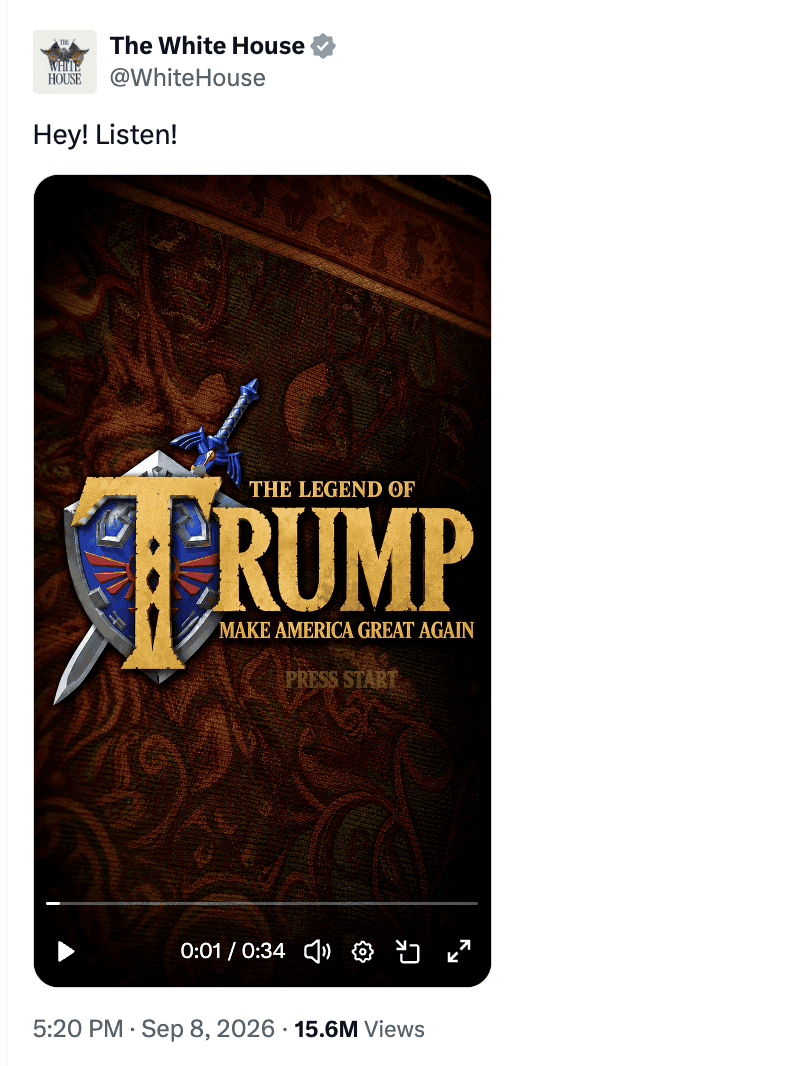
On Tuesday, the White House copied Nintendo’s “The Legend of Zelda,” appropriating the company’s IP to promote MAGA and “The Legend of Trump” on its X account. As NBC News reported:
“On Tuesday, the White House also released a video on its X account mirroring the Nintendo game “The Legend of Zelda.” The introduction screen read “The Legend of Trump” and “Make America Great Again,” featuring the Nintendo game’s logo and font. The video also uses a song from the game.”
Also on Tuesday, Nintendo and Sony Pictures Entertainment announced they are co-producing a live-action version of “The Legend of Zelda,” set for April 2027 release. Actress Bo Bragason will star.
The Trump regime’s appropriation of three kids entertainment properties that have recently announced the release of movie versions – “The Magic School Bus,” “The Legend of Zelda,” and “Optimus Prime: Awakenings” – raises questions about whether the regime is tracking entertainment news to maximize visibility of its propaganda.
But ICE is brand poison for IP owners.
Alison Taylor is clinical associate professor at New York University Stern School of Business and author of the book “Higher Ground: How Business Can Do the Right Thing in a Turbulent World (Harvard Business Review Press, 2024). I asked her whether SEGA should speak up about the White House using its IP to promote its racist video game arcade. “Yes!” she messaged, adding, “ICE is incredibly controversial and overall unpopular. I assume brands like this want to remain politically independent. Overall, [there’s] mounting risk going into the midterms, and everyone should be scenario planning a few years out right now. This all may age very badly.”
Speaking up fights fascism. Silence enables fascism.
The creators of “The Magic School Bus,” authors Joanna Cole and illustrator Bruce Degen, are deceased. I was not able to reach their family members.
Scholastic Corporation, publisher of “The Magic School Bus” book series is also co-producer of a “Magic School Bus” movie in development, set to star Elizabeth Banks. The actress is also listed as a co-producer of the film, according to Variety.
Banks “called out the white women who voted for Donald Trump over Kamala Harris in the 2024 presidential election. While the actor can’t understand how one could make that decision, she did evoke her ‘Hunger Games’ character Effie Trinket while sharing her wish for Trump voters to renounce fascism,” Variety reported in April.
“‘Effie for me is one of the characters that has the greatest arc that I’ve ever played because obviously she props up this fascist regime that she benefits from,’ Banks explained. ‘I wish more of us were becoming revolutionaries!’ she added.”
But neither Banks, Scholastic, nor any of the co-producers of the “Magic School Bus” movie are becoming revolutionaries. None of the co-producers has responded to multiple inquiries about the White House appropriating the “Magic School Bus” to promote its racist ICE deportations.
Anat Shenker-Osario, communications advisor and host of the podcast “Words to Win By,” reflected on Banks’ reticence in a post on Bluesky:
“Any and every time we refuse to denounce fascism with any perch or power we’ve got, we tacitly help it along. Fascism relies upon the pillars of society – media, academia, business, legal system and yes entertainment – continuing to prop it up.”
Unique responsibilities of publicly traded corporations
Scholastic (NASDAQ: SCHL), and Japanese companies SEGA SAMMY Holdings (TYO: 6460), the parent company of Sega of America, Nintendo (TYO: 7974.T), and Sony Group (NYSE: SONY), parent company of Sony Pictures Entertainment, are publicly traded corporations, so their decision-making process is different from privately owned companies like Tetris or Kids Can Press.
John Hasnas, professor of business at Georgetown’s McDonough School of Business and a professor of law (by courtesy) at Georgetown University Law Center and executive director of the Georgetown Institute for the Study of Markets and Ethics, told me in an interview, “I know the ‘Magic School Bus’ books, and being on the White House’s website in the form it’s in is not helpful and is damaging. So there’s certainly damage being done to the product. And plus, it’s being used for a political message that’s completely inappropriate for something that’s designed for kids.”
Professor Hasnas said, “I’ll give you an analogy. Imagine if the Trump administration created an AI version of Mr. Rogers to support the war in Iran.”
But Professor Hasnas also explained that publicly traded corporations have a primary mandate to optimize shareholder value. So a publicly traded corporation like Scholastic should only speak up if social justice is part of their stated mission – part of the company’s representation to shareholders.
I asked Professor Hasnas about Scholastic’s credo, which declares:
“• Respect for the diverse groups in our multicultural society.
• The right of each individual to live in a wholesome environment.
• High moral and spiritual values.
•The democratic way of life, with basic liberties — and responsibilities — for everyone.
•Representative government and even-handed justice that maintains equality of rights for all people.”
Upon review of Scholastic’s commitments, Professor Hasnas messaged, “Its credo provides room to speak out against the Trump administration.”
Should companies be concerned about risk of brand damage?
Richard Eidlin, founder of nonprofit the Business Response to Authoritarian Threats (BRTAT) said in a message:
“The Scholastic company faces a choice in how it responds to its ‘Magic School Bus’ property being used by ICE. Company leadership must ask: Are we being true to our purpose of standing for kindness and inclusivity by staying silent? And, if they do object – publicly or privately – they must acknowledge they face retaliation or retribution. They need to have a clear policy in place about how their IP is used, along with being able to defend their choice citing market principles.
“We encourage executives at Scholastic to politely, but firmly tell ICE that their IP is not available for policy or political purposes. Their customers and broader public will support this decision.”
Like Scholastic, SEGA SAMMY Holdings, the Japanese parent company of Sega of America, espouses its values to its shareholders. The company explains on its website:
“The entertainment business we engage in is a ‘peace industry,’ as it requires the world to be at peace for us to be needed.” And: “At the SEGA SAMMY Group, we aim to create a society overflowing with such empathy through the products and services we develop, adding ‘color’ and vibrancy to people’s lives around the world.”
Last year, company announced in a press release: “SEGA® Teams up with the International Olympic Committee on a New Multi-Year Licensing Agreement Celebrating the Olympic Brand and Sonic the Hedgehog™: The New Licensing Agreement Unites the Olympic Brand and Sonic the Hedgehog in a Celebration of Speed, Sportsmanship and Global Unity”
“‘We’re committed to fostering respectful and inclusive communities across the globe at SEGA,’ said Shuji Utsumi, President and COO, Representative Director of SEGA CORPORATION,” according to the release.
These days, I’m thinking about this line from “The Tao of Pug,” excerpted from the Tao te Ching, the ancient Chinese book of wisdom:
“When the country falls into chaos, politicians talk about ‘patriotism.’”
Dissent is patriotic. Silence is complicity.
No one from Scholastic, SEGA SAMMY / Sega of America, Nintendo, or Sony Pictures Entertainment has responded to my inquiries about the Trump regime using their IP to promote MAGA and its ICE deportation scheme.
You may want to also read:
- Exclusive: Top Senate Dem Responds to Christian Faith Group’s Plea for Oversight of New ICE Facility for Kids
- A private prison company will run new ICE children’s facility–and IRS pros have questions
- Trump Hijacked America’s 250th Birthday. Corporate America Helped.