U.S. judge blocks Trump’s order affecting USPS handling of mail ballots
A federal judge has blocked the United States Postal Service (USPS) from implementing proposed changes to how it handles mail ballots that were issued in response to President Donald Trump’s executive order while a legal challenge to the policy moves forward.
The ruling represents a significant legal setback for the administration and adds another chapter to the ongoing legal disputes surrounding election administration and mail-in voting in the United States.
At the center of the case is whether the USPS can lawfully implement the proposed mail-ballot policy under existing federal law and a prior court-approved settlement governing the handling of election mail.
The court found that the proposed USPS policy likely conflicted with the agency’s existing legal obligations under that settlement, preventing the Postal Service from moving forward with the changes while the lawsuit continues.
Court Halts USPS Mail-Ballot Policy Pending Lawsuit
In its ruling, the federal court determined that the Postal Service’s proposed actions under the executive order went beyond the scope of its lawful authority.
The judge emphasized that election administration is governed by a complex framework of federal and state laws, and any federal directive that alters ballot-handling procedures must strictly align with that framework.
The blocked plan was intended to modify how mail ballots are processed during election periods, with critics arguing it could introduce delays or inconsistencies in delivery timelines.
The court’s decision underscores a long-standing principle in U.S. election law: changes that materially affect voting procedures must be clearly authorized by Congress, not unilaterally imposed through executive action.
The Legal Clash Over Mail-In Voting Rules
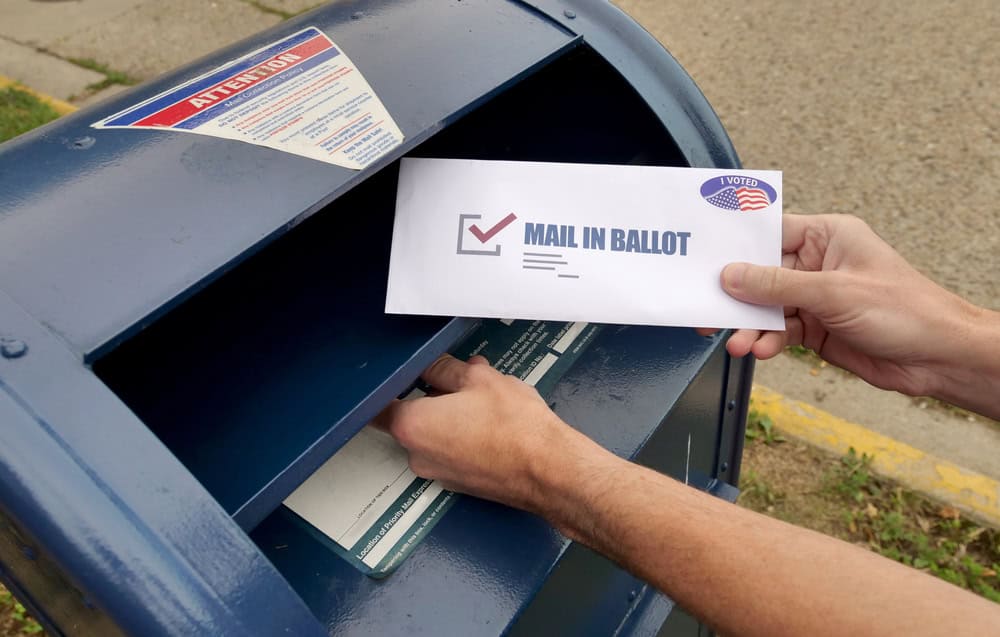
Mail-in voting has been one of the most contested issues in recent U.S. elections, and this ruling adds another chapter to an ongoing legal and political struggle over how ballots are handled and counted.
The Trump administration has repeatedly argued for tighter controls and standardized federal oversight of mail ballot distribution, citing concerns about fraud prevention and ballot integrity.
Opponents, however, have warned that such measures risk undermining access to voting, particularly for elderly, rural, and overseas voters who rely heavily on mail-in systems.
The court’s intervention reflects the judiciary’s continued role as a check on executive efforts to reshape election procedures without legislative approval. Legal experts note that similar disputes have consistently ended up in federal court, where judges have often emphasized the importance of maintaining established election safeguards.
USPS Caught in the Middle of Political and Legal Pressure
The United States Postal Service, an independent federal institution, now finds itself at the center of a politically charged legal battle. While the USPS is responsible for delivering election mail efficiently and securely, it does not set election policy itself.
The blocked order would have required operational adjustments to the prioritization and processing of mail ballots during peak election periods.
Postal officials have previously warned that sudden policy changes tied to election cycles could strain logistics, especially in densely populated and rural delivery networks.
The court ruling temporarily relieves the agency from implementing the directive, but it also highlights the broader tension between executive authority and institutional independence in federal governance.
Election Integrity vs. Access

The dispute reflects a deeper national divide over how to balance election security with voter accessibility. Supporters of stricter mail ballot rules argue that tighter controls reduce the risk of errors, delays, or potential fraud.
Critics counter that additional restrictions often create barriers that disproportionately affect certain voter groups.
This legal clash illustrates how the U.S. electoral system continues to evolve under competing pressures: ensuring integrity while maintaining broad participation.
Courts have increasingly been asked to arbitrate these tensions, especially in cases involving executive orders that intersect with established election law.
Constitutional Questions at the Core of the Ruling

The court’s decision rests on foundational constitutional principles regarding the separation of powers. While the president can influence federal agencies through executive directives, those powers are not unlimited, especially when they intersect with areas traditionally governed by Congress and state governments.
Election administration, in particular, has long been shared between federal oversight and state-level control. The ruling reinforces the idea that any substantial changes to voting procedures must be rooted in legislation rather than executive action alone.
What Happens Next in the Legal Battle

The ruling does not end the dispute but instead pauses implementation while higher courts review the case. The administration is expected to appeal, setting the stage for a broader judicial examination of executive authority over federal postal operations and election-related procedures.
Legal analysts anticipate that the case could eventually reach higher appellate courts if it continues to raise unresolved constitutional questions. For now, the USPS remains barred from acting on the executive order, and existing mail ballot procedures remain in place.
Disclaimer – This list is solely the author’s opinion based on research and publicly available information. It is not intended to be professional advice.
Like our content? Be sure to follow us