Why I refuse to lower my standards after breakups as a Gen Z woman
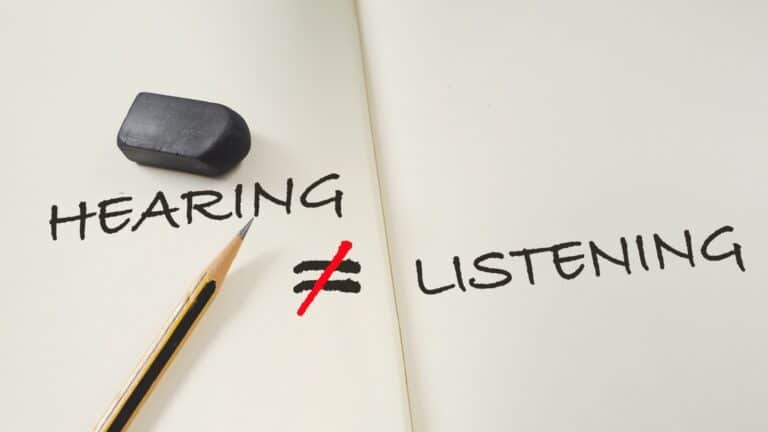
Chemistry never equals compatibility: my ultimate standard as a heterosexual woman born in 2000, forged by lessons from the complex dating market.
Emotional unavailability, incompatible life goals, or mismatched values slip under the radar during the early thrill of dating. Pew Research indicates that younger adults, particularly Gen Z, are more willing than older generations to leave relationships that fail to meet their emotional or practical standards. Recognizing that butterflies don’t equal alignment became a tool not just for discernment but for protecting energy and mental health.
Misreading chemistry as compatibility leads to settling for worse, to lowering standards for temporary comfort. That distinction forms the foundation for my approach to relationships: understanding what I truly require versus what I simply desire. With that clarity in mind, the conversation naturally shifts to the first principle for maintaining boundaries after a breakup: expectations versus standards.
Expectations vs. Standards

The public uses expectations and standards interchangeably, but there’s a meaningful difference. Expectations are often situational: assumptions about texting frequency, who pays for dinner, or how someone shows up emotionally.
Standards, by contrast, are values rooted in identity, things like mutual respect, emotional maturity, and aligned life goals. In social psychology, this difference resembles the matching hypothesis, which argues people tend to pair with mates of roughly similar desirability rather than reaching too high or dipping too low on core traits.
Where expectations can be disappointed without necessarily breaking a relationship’s foundation, violated standards often signal deeper misalignment. When we mistake hopes for non‑negotiables, we muddle compatibility with wishful thinking, leading to self‑blame rather than clarity. A heterosexual woman’s standards are not wish lists; they are the boundaries that preserve dignity, agency, and emotional energy.
I’m Not Scared of Loneliness
For many women of my generation, loneliness isn’t a threat; it’s a mirror. The first weeks and months after a breakup are not a void to be feared but a space for recalibration. A peer‑reviewed psychological scale developed in 2025 specifically measures romantic loneliness, the emotional experience of being without a meaningful romantic connection. Importantly, it distinguishes this from the fear of being single by choice, recognizing that solitude can be intentional and grounded in self‑direction.
Embracing this period strengthens clarity and confidence. Choosing solitude while cultivating depth signals intentionality and self-respect rather than avoidance.
The Universe Is Abundant

When I believe in abundance, I reject scarcity. Nearly all major theories of relationships, from attachment theory to evolutionary psychology, agree that humans do not have a single path to love. What limits connections is unconsciously lowering one’s threshold for emotional reciprocity.
A 2025 survey suggests that younger Gen Z daters now prioritize emotional intelligence over physical appearance, with many openly discussing deal‑breakers early on rather than glossing over issues for short‑term comfort.
Low‑Vibrational Men Need Mothering and Nurturing
Relationships with emotionally immature partners often mirror caretaking patterns rather than equal partnerships. In sociology and psychology, emotional labor, the invisible work of managing a partner’s feelings, moods, and social coordination, is disproportionately carried out by women, especially in heterosexual contexts.
This dynamic exacts a cognitive and emotional cost most men rarely acknowledge. As scholar Arlie Hochschild has long argued, emotional labor is not “helping out,” it’s a gendered burden rooted in social conditioning. For women who have experienced this imbalance, lowering standards feels less about flexibility and more like surrendering to an unfair burden.
Male Gender Double Standards

In mainstream dating discourse, it’s common to hear men cite their past experiences as credentials or leverage. While it’s true that men and women experience social desirability differently, a 2025 study published in PLOS One found that men often exceed their own social desirability on dating apps, while women, with more swipes and choices, pursue partners closer to their own desirability level.
If dating is a marketplace of mutual evaluation, women have long been expected to fit into pre‑existing hierarchies. I refuse to absorb that logic uncritically. If men use their past to justify selecting partners of a certain caliber, then women can also use their history, standards, and self‑work as a legitimate baseline for what’s acceptable and what isn’t.
Syphoning Energy Is Real
Some critics dismiss the notion of emotional energy as vibe talk, but cognitive science and relationships research point to genuine mental load. Partners who drain your focus, trigger insecurity, or require disproportionate emotional support deplete your capacity for self‑growth.
Studies on interpersonal relationships show that inequality in emotional labor is associated with lower relationship quality and satisfaction. Leaving these relationships restores psychological bandwidth, allowing you to reclaim energy for pursuits aligned with your personal growth and values.
I’m a Big Fan of Male Loneliness and Ready to See Its Depths

Heterosexual men often socialize differently from women, and research increasingly shows that men’s social connections can be narrower and less emotionally communicative.
I observe male loneliness not as a judgment but as context: what happens when emotional education is devalued, and vulnerability is pathologized? Understanding its depths without attacking it is essential to evaluating compatibility.
I’m Replaceable, Match Me or Move On
Confidence is not arrogance. A heterosexual woman who knows she’s replaceable is one who knows value isn’t static or imposed but is earned mutually. Standards are not ultimatums but equivalence conditions: you give what you expect back.
If someone can’t meet those conditions, that’s reality. Relationships thrive when both partners elevate each other. I’d rather be replaceable in terms of respect than irreplaceable because I compromised.
Where Were You While I Leveled Up?

Meticulous self‑improvement is the result of introspection, effort, and perseverance. I didn’t arrive at my boundaries; I impulsively built them. From emotional literacy to communication skills to accountability habits, I worked on myself before entering the marketplace of relationships. As Brené Brown put it: Clear is kind. Unclear is unkind. Standards are announcements of the terrain you’ve mapped for yourself.
Growth Over Approval
At the end of the day, the measure of a standard isn’t how many people accept it, but how deeply it reflects who you are. Approval is temporary; growth is ongoing. A heterosexual woman may choose a partner out of desire, but she chooses herself first.
Decades of feminist writers, social psychologists, and feminist theorists have argued that the ability to connect without losing self matters more than conformity to outdated scripts.
Key takeaways
- Chemistry ≠ Compatibility: Initial attraction doesn’t predict long-term relational success.
- Standards Protect Energy: Clear boundaries prevent settling for temporary comfort or mismatched partners.
- Loneliness Can Be Strategic: Solitude allows reflection, growth, and self-alignment.
- Gen Z Prioritizes Emotional Intelligence: Younger adults leave relationships that fail to meet emotional or practical standards.
- Discernment Over Infatuation: Recognizing deal-breakers early safeguards mental health and preserves self-respect.
Disclosure line: This article was written with the assistance of AI and was subsequently reviewed, revised, and approved by our editorial team.
Like our content? Be sure to follow us