10 Biblical Villains Whose Stories Are Darker and Stranger Than Most People Remember
Jezebel knew the man coming for her probably wasn’t bringing good news. Her husband was dead, her family’s dynasty was collapsing, and Jehu—the newly anointed king—was approaching the city.
So what did one of the Bible’s most notorious women do?
According to 2 Kings, she painted her eyes, arranged her hair, and looked down from a window.
What happened next was brutal. Jezebel was thrown from the window, trampled by horses, and left outside while Jehu went inside to eat. By the time servants returned to bury her, dogs had eaten almost everything except her skull, feet, and hands.
That’s considerably stranger—and darker—than the version of Jezebel most people remember.
She’s not alone. Some of the Bible’s most famous villains have become so familiar that their stories have been reduced to a few simple details: Delilah cut Samson’s hair. Pharaoh wouldn’t let the Israelites go. Judas betrayed Jesus. Goliath was a giant.
Go back to the biblical text and the stories become much more complicated. Villains become victims, powerful kings behave bizarrely, famous details turn out to be different from what many people remember, and several characters meet endings almost too strange for Hollywood.
Here are 10 biblical villains whose actual stories are far stranger than their reputations suggest.
1. Jezebel’s Death Was Even More Gruesome Than Her Reputation
Few biblical names have become insults quite like Jezebel.
She was a Phoenician princess who married King Ahab of Israel and is portrayed in the books of Kings as promoting the worship of Baal, opposing prophets of the Lord, and helping orchestrate one of the Bible’s most infamous abuses of royal power.
That last episode involves a man named Naboth.
Ahab wants Naboth’s vineyard, but Naboth refuses to sell his ancestral property. Ahab returns home miserable, lies on his bed, turns his face away, and refuses to eat.
Jezebel takes over.
She arranges for false accusations of blasphemy and treason to be made against Naboth. He is taken outside the city and stoned to death, clearing the way for Ahab to seize his vineyard.
The prophet Elijah responds with a chilling prediction about the royal family, including a declaration that dogs will devour Jezebel.
Years later, that’s essentially what happens.
When Jehu arrives in Jezreel during his bloody overthrow of Ahab’s dynasty, Jezebel puts makeup around her eyes, arranges her hair, and appears at a window. Jehu orders people inside to throw her down. Her blood splatters against the wall and horses, and she is trampled.
Then Jehu goes inside and eats.Only afterward does he tell servants to bury her because, despite everything, she was a king’s daughter.
They’re too late. The dogs have left only parts of her body behind. Jezebel didn’t merely die. Her death became the horrifying fulfillment of a prophecy made years earlier.
2. Pharaoh Keeps Changing His Mind While Egypt Falls Apart
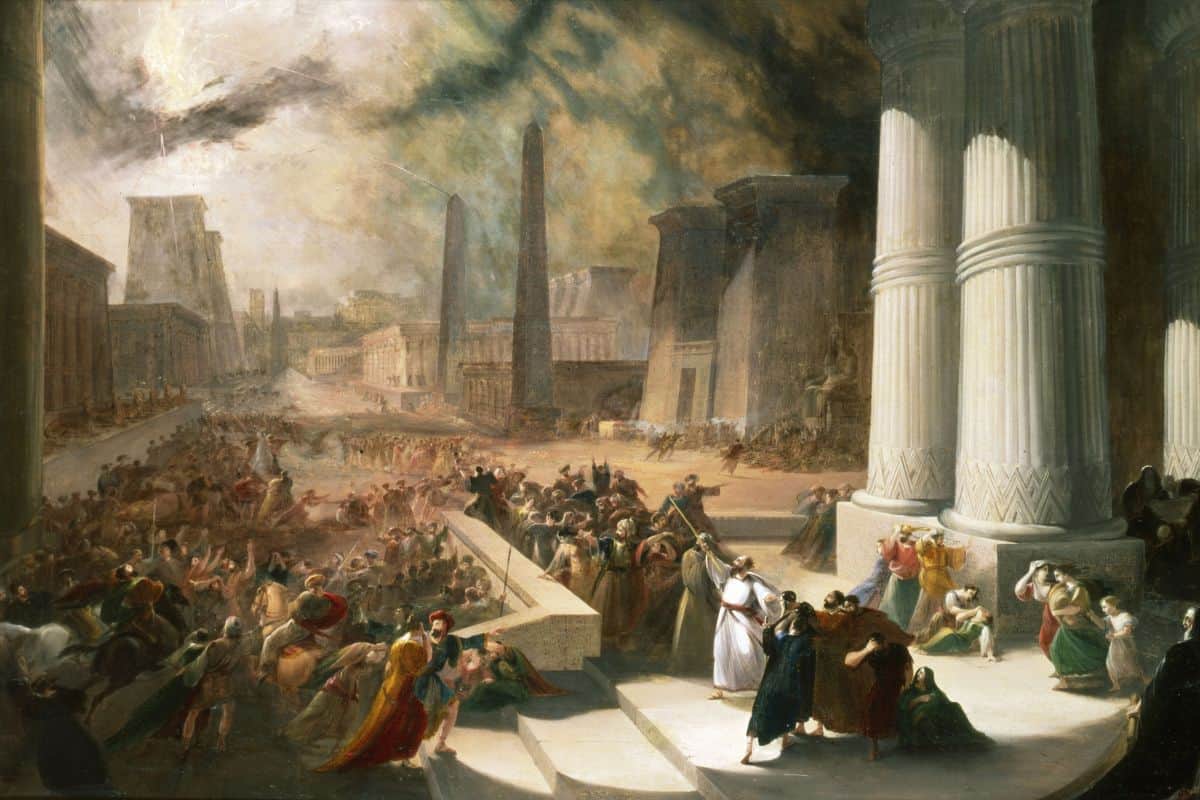
Everyone remembers the basic story: Moses tells Pharaoh to let the Israelites go, Pharaoh refuses, and Egypt is struck by plagues.
What gets lost in the simplified version is how strange Pharaoh’s behavior becomes as the disaster escalates.
Water turns to blood. Frogs invade Egypt. Gnats and flies follow. Livestock die. Boils appear. Hail devastates the land. Locusts consume what remains. Darkness falls.
Again and again, Pharaoh appears to relent or asks Moses to intervene. Then he changes his mind.
Exodus also makes the story more theologically complicated by alternating language about Pharaoh hardening his own heart with statements that God hardens Pharaoh’s heart.
By the later plagues, even Pharaoh’s own officials are pleading with him to give in. “Do you not yet realize that Egypt is ruined?” they ask him.
He still refuses. After the death of Egypt’s firstborn, Pharaoh finally allows the Israelites to leave.Then he changes his mind again.
He sends chariots after them and pursues them to the sea, where the biblical account says the waters return over the Egyptian forces.
Pharaoh’s story isn’t simply about one stubborn refusal.
It’s a repeated cycle of catastrophe, concession, reversal, and escalation in which a ruler watches his country being destroyed and keeps choosing confrontation anyway. (Sound familiar?)
3. Delilah Probably Didn’t Cut Samson’s Hair Herself
Everyone knows what Delilah did to Samson. She cut his hair. Except Judges doesn’t actually say she did.
Delilah is recruited by Philistine rulers to discover the source of Samson’s extraordinary strength. They promise her an enormous payment if she succeeds.
She asks Samson directly. He lies.
First he tells her that seven fresh bowstrings will make him weak. She tries it. It doesn’t work. Then he says new ropes will restrain him. Wrong again. Next he claims that weaving his hair into a loom will do it.
That fails too.
At this point, Samson has already been given multiple reasons to realize something is very wrong. He eventually tells Delilah the truth: his uncut hair is connected to his Nazirite dedication to God.
Delilah gets Samson to fall asleep on her lap. Then comes the detail popular retellings often change. Judges 16 says she calls for a man to shave off the seven locks of Samson’s head. Delilah doesn’t necessarily wield the blade herself.
More importantly, the text doesn’t actually say Samson’s hair works like a magical battery. After his head is shaved, Judges says he doesn’t realize that the Lord has left him.
The Philistines capture him, gouge out his eyes, imprison him, and force him to grind grain. And then the story adds an ominous little detail. His hair begins growing back.
4. Goliath’s Height Isn’t the Same in Every Ancient Version
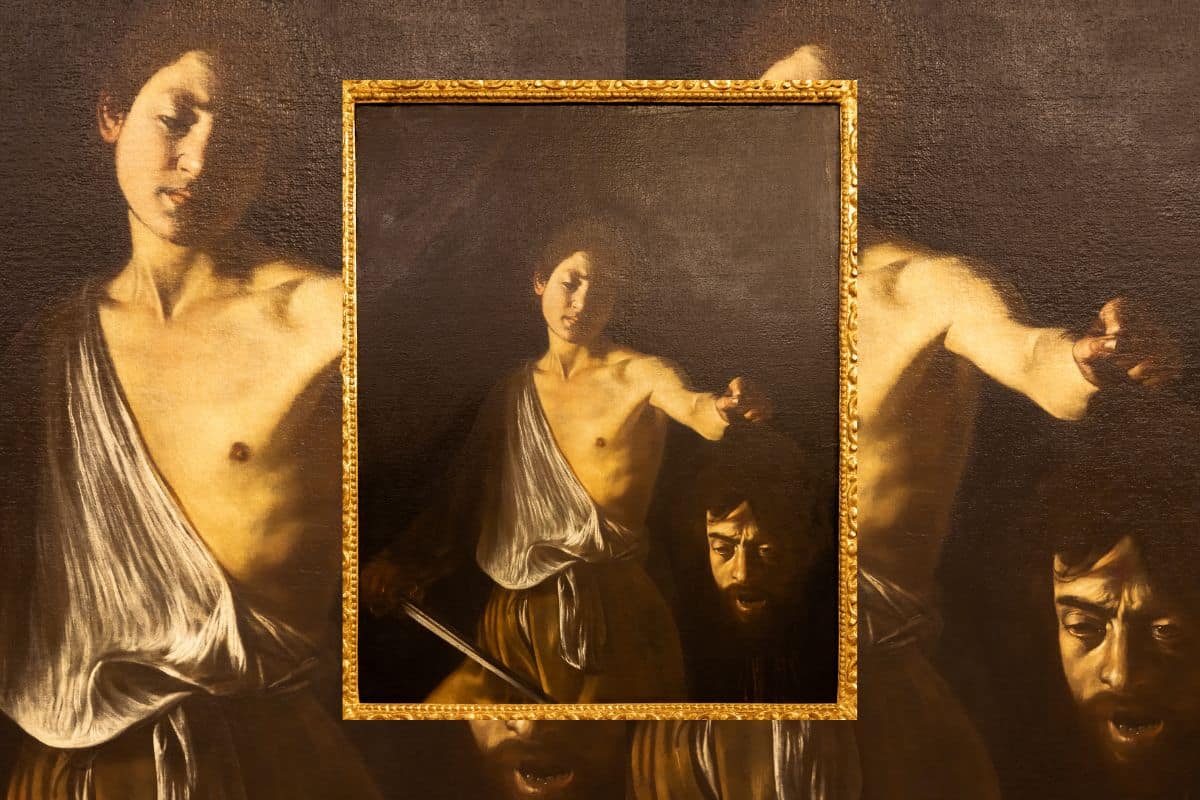
Goliath may be the most famous giant in history. Even people who rarely read the Bible know what “David versus Goliath” means.
But exactly how tall was he? That’s where the story gets unexpectedly complicated.
Many familiar English Bibles, following the traditional Hebrew text, describe Goliath as “six cubits and a span,” which would make him somewhere around nine feet tall depending on the measurement used.
But some ancient textual witnesses, including a major ancient Greek version and evidence from the Dead Sea Scrolls, give his height as four cubits and a span.
That would put him closer to the six-and-a-half-foot range—still exceptionally imposing in the ancient world, but considerably less gigantic than the Goliath many readers imagine.
There’s another surprise. David doesn’t kill Goliath with the sword.
He strikes Goliath in the forehead with a stone from his sling, and the Philistine falls face down. David then takes Goliath’s own sword and cuts off his head.
Later, the Bible even contains another puzzling reference involving Goliath. In 2 Samuel 21, a warrior named Elhanan is described in the traditional Hebrew text as killing Goliath the Gittite, while 1 Chronicles describes Elhanan as killing Goliath’s brother. The discrepancy has generated extensive textual discussion.
The world’s most famous biblical giant turns out to have a surprisingly complicated textual history.
5. Haman Ends Up on the Execution Device He Prepared for Someone Else
Haman’s downfall is almost too perfectly constructed. In the book of Esther, Haman rises to an extraordinarily powerful position in the Persian court. Everyone is expected to bow before him.
Mordecai refuses.
Haman doesn’t simply decide to punish Mordecai. After learning that Mordecai is Jewish, he develops a plan to destroy Jews throughout the empire. But Mordecai’s relative Esther has become queen, and Haman doesn’t initially realize she is Jewish too.
Meanwhile, Haman becomes so obsessed with Mordecai that he prepares an enormous wooden structure on which he intends to have him executed. Older English translations often call it a gallows, although the Hebrew wording can also suggest a stake or pole used for impalement or public display.
Then everything reverses. Esther reveals Haman’s plot to the king.
Haman realizes he’s doomed and begs Esther for mercy. As he falls onto the couch where she is reclining, the king returns and interprets the scene as an attack on the queen.
Then one of the king’s attendants points out that Haman has conveniently prepared an execution structure for Mordecai. The king’s response is essentially: use it on Haman.
The man who plotted Mordecai’s death dies on the device he had prepared for him. And Mordecai eventually receives Haman’s position.
6. King Ahab Is More Complicated Than the Weak Villain People Remember
Ahab is often remembered as Jezebel’s weak and wicked husband.
The Bible certainly condemns him, but his story contains some surprisingly complicated moments.
Ahab is a powerful king who repeatedly clashes with the prophet Elijah. He participates in the Naboth scandal, embraces religious practices the biblical writers condemn, and becomes a symbol of disastrous leadership.
But he isn’t portrayed as a cartoon villain in every scene. After Elijah announces judgment against Ahab and his family following Naboth’s death, Ahab tears his clothes, puts on sackcloth, fasts, and humbles himself.
Then something unexpected happens.
God notices.
According to 1 Kings 21, because Ahab humbled himself, the announced disaster will not come during his own lifetime but during his son’s. Even Ahab’s death contains a bizarre twist.
Before going into battle, Ahab disguises himself while telling his ally King Jehoshaphat to continue wearing royal robes. The enemy has specifically ordered its forces to target the king of Israel, so the disguise appears to work.
Then an enemy soldier draws his bow “at random.” The arrow hits Ahab between sections of his armor.
He remains propped up in his chariot while the battle continues, eventually dying from the wound. His blood collects in the chariot, and when it is washed at a pool, dogs lick up the blood—fulfilling another grim prophetic detail.
Ahab tries to hide from his enemies. A random arrow finds him anyway.
7. Herod’s Story Ends With an Angel, Worms, and a Very Unusual Death
There’s an immediate complication with “Herod” in the Bible.
There isn’t just one.
Herod the Great is the ruler associated in Matthew with the birth of Jesus and the massacre of children in Bethlehem. His son Herod Antipas later appears in the stories of John the Baptist and Jesus. Acts introduces another ruler from the dynasty, Herod Agrippa I.
And it’s Agrippa who receives one of the strangest deaths in the New Testament.
Acts 12 portrays Herod Agrippa persecuting the early Christian movement. James, the brother of John, is executed, and Peter is imprisoned.
Later, Herod addresses a crowd while wearing royal robes. The people shout that they are hearing the voice of a god rather than a man. Herod apparently accepts the praise.
Then, according to Acts, an angel of the Lord strikes him because he failed to give glory to God, and he is “eaten by worms” before dying.
Interestingly, the Jewish historian Josephus also records Agrippa’s sudden death after appearing publicly in magnificent clothing and receiving extravagant praise, although his account differs in important details and doesn’t describe the death in exactly the same theological terms.
The New Testament version is particularly unforgettable. A king accepts divine praise.
Then worms get the final word.
8. Judas’s Death Is Described Differently in Matthew and Acts
Everyone knows how Judas Iscariot’s story ends.
Or at least it seems that way. Judas betrays Jesus for thirty pieces of silver and later dies.
But the New Testament gives us two accounts whose details are difficult to line up neatly.
In Matthew, Judas regrets what he has done, returns the thirty pieces of silver, throws the money into the temple, and hangs himself. The chief priests use the returned money to purchase a potter’s field, which becomes associated with burial and blood.
Acts tells the story differently.
There, Judas is associated with acquiring a field with the reward of his wickedness. He falls headlong, his body bursts open, and his intestines spill out. The field becomes known as the Field of Blood.
Christians have proposed ways to reconcile the two accounts—for example, suggesting Judas hanged himself and his body later fell—but neither text itself supplies that combined narrative.
There’s another detail often lost in the familiar story.
Matthew doesn’t merely portray Judas as a cold villain who disappears after the betrayal. He experiences remorse, declares that he has betrayed innocent blood, returns the money, and then kills himself.
His story remains one of the New Testament’s darkest precisely because the betrayer seems to understand what he has done only when it’s too late to undo it.
9. Nebuchadnezzar Goes From Destroying Jerusalem to Living Like an Animal
Nebuchadnezzar II was no minor villain.
The Babylonian king conquered Jerusalem, destroyed the First Temple, and became one of the most feared foreign rulers in biblical memory.
But the book of Daniel gives him a much stranger story. Nebuchadnezzar repeatedly encounters the God of the Israelites through dreams, miraculous events, and Daniel’s interpretations. He praises God at certain moments, only to return to his enormous sense of royal power.
Then he has a disturbing dream about a gigantic tree being cut down.
Daniel interprets it as a warning.
Nebuchadnezzar will be driven away from people and live like an animal until he recognizes that his authority ultimately depends upon God.
According to Daniel, that’s exactly what happens.
The king is driven from human society. He eats grass like an ox. His body becomes wet with dew. His hair grows like eagles’ feathers and his nails like birds’ claws. Eventually, Nebuchadnezzar looks toward heaven, his reason returns, and he praises God.
Then his kingdom is restored.
The historical Nebuchadnezzar is well attested outside the Bible, but historians don’t have independent confirmation of this particular episode. Scholars have also debated how Daniel’s account relates to traditions involving later Babylonian rulers.
Within the biblical story, however, the reversal is extraordinary. The king who conquered nations loses control of himself.
10. Cain Isn’t Quite the One-Dimensional Monster People Remember
Cain commits the Bible’s first murder.
That alone guarantees his place among its darkest characters.
But Genesis gives his story more complexity than the simple image of an evil brother killing the good one. Cain and Abel both bring offerings to God. God regards Abel and his offering favorably but does not regard Cain and his offering in the same way.
Genesis doesn’t explicitly say Cain brought rotten produce or deliberately offered God something inferior, despite later retellings sometimes trying to explain the rejection that way. Cain becomes angry.
God warns him that sin is “crouching at the door” and that he must master it.
Then Cain takes Abel into the field and kills him.When God asks where Abel is, Cain responds with one of the Bible’s most famous questions: “Am I my brother’s keeper?”
God condemns Cain to a wandering existence. But then the story takes an unexpected turn. Cain fears someone will kill him.
Instead of simply leaving Cain to his fate, God places a mark on him to prevent others from murdering him and announces vengeance against anyone who kills him.
The infamous “mark of Cain” is therefore not originally presented simply as a curse.
It also protects Cain. The Bible’s first murderer receives judgment and mercy in the same story.
Biblical Villains Are Rarely as Simple as We Remember
Time has a way of flattening stories.
Jezebel becomes the wicked queen. Delilah becomes the woman with the scissors. Pharaoh becomes the stubborn king. Goliath becomes the giant. Judas becomes the betrayer.
Those descriptions aren’t necessarily wrong. They’re incomplete.
The biblical writers often give these characters stories filled with reversals, irony, gruesome deaths, unexpected moments of remorse, textual mysteries, and details that rarely survive into children’s Bible stories or popular culture.
Some villains receive exactly the ending readers expect. Others don’t.
Ahab humbles himself and receives a temporary reprieve. Cain murders his brother and then receives divine protection. Nebuchadnezzar behaves like an animal before having his kingdom restored. Judas betrays Jesus and then appears horrified by what he has done.
And Jezebel?
Her story ends exactly as brutally as Elijah had predicted.
Sometimes going back to the Bible doesn’t change who the villain is. It changes how strange the story becomes.
You may want to also read:
- 10 Christian Beliefs That Developed Centuries After Jesus Died
- Why Christianity Has Thousands of Denominations if Christians Follow the Same Bible
- Bible verses that still spark fierce debate today