10 biological complexities that challenge the theory of evolution
Beneath the calm surface of life’s timeline lies a storm of sudden, unexplained leaps that challenge everything we thought we knew.
Biology class often leaves us with the impression that life’s history is a smooth, gradual ramp, but the fossil record looks more like a sudden staircase. We assume simple organisms slowly morphed into complex ones over eons, yet the physical evidence buried in the earth tells a much more chaotic story.
While Darwin provided a framework that changed science forever, discoveries are highlighting sticky puzzles that the standard theory struggles to solve. We are going to look at ten biological hurdles that make even the most dedicated researchers stop and scratch their heads.
The Cambrian Explosion Paradox
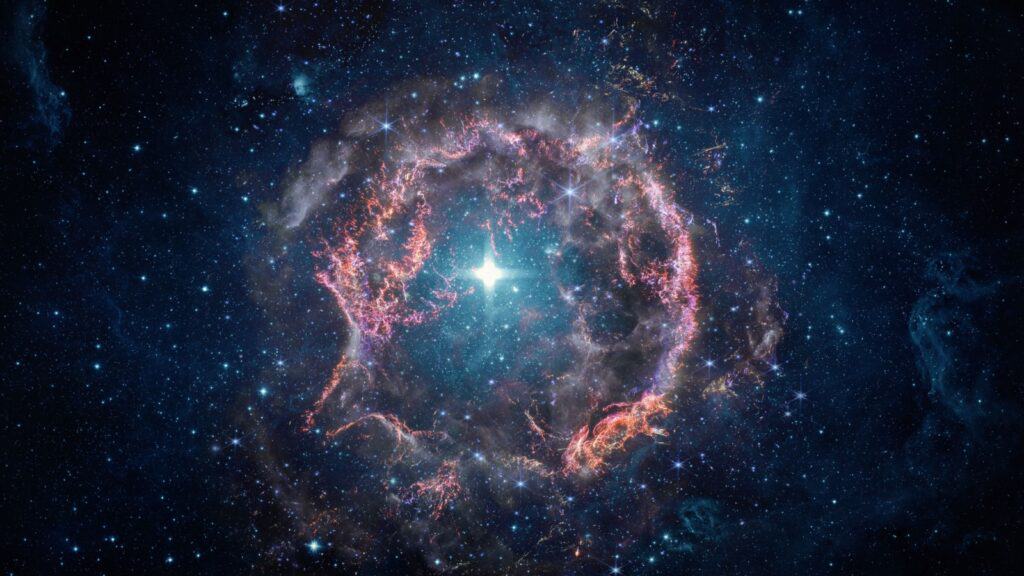
Imagine an empty football stadium suddenly filling with every type of fan in a matter of seconds; that is basically what happened during the Cambrian period. Most major animal body plans appeared in the fossil record within a narrow window of roughly 20 million years, defying the idea of gradual, step-by-step change.
Paleontologists have wrestled with this “biological big bang” for decades because it lacks the intermediate fossils we expect to find in the rocks. An analysis published in Lumen confirmed that over half of known animal groups appear during this short burst, leaving little time for slow evolution.
The Mystery Of The First Cell
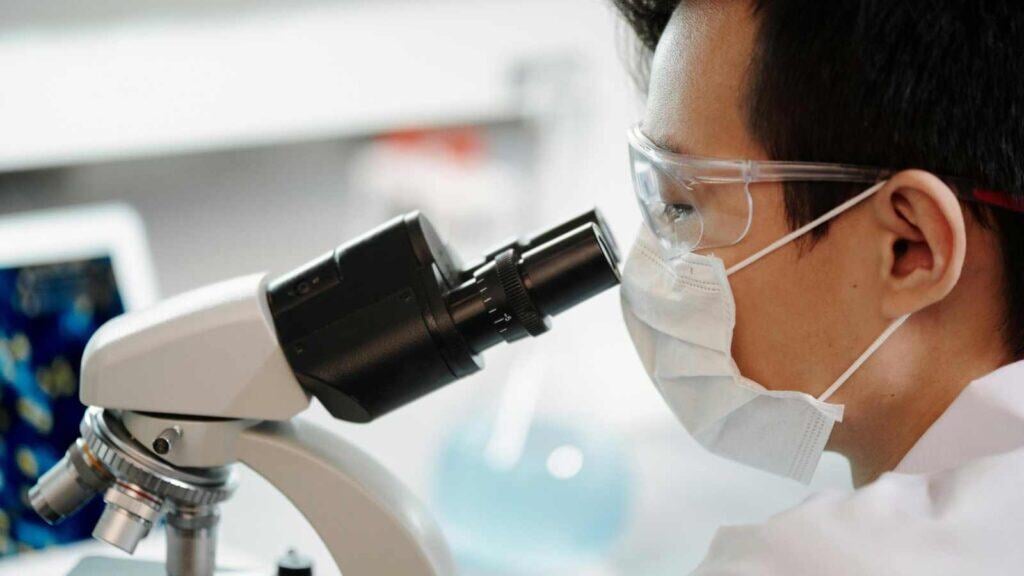
Evolution explains how life changes after it exists, but it hits a brick wall when trying to explain how life actually started from non-living chemicals. The probability of a functional cell assembling itself by chance is astronomically low, like a tornado swirling through a junkyard and accidentally building a working Boeing 747.
Scientists call this abiogenesis, and despite decades of lab work, creating a self-replicating cell from scratch remains elusive. The simplest theoretical cell needs about 473 genes, a level of intricacy that is hard to explain without a preexisting designer.
Irreducible Complexity In Tiny Motors

Some biological systems, like the bacterial flagellum, work exactly like a microscopic outboard motor complete with a clutch, stator, and rotor. If you remove just one tiny part of this engine, the whole thing fails to spin, which challenges the concept of piecemeal evolution.
This concept, known as irreducible complexity, suggests that half an eye or half a motor provides no survival advantage to the organism to keep it around. Michael Behe popularized this puzzle, arguing that these systems must arise all at once, which natural selection has a difficult time explaining.
The Information Density Of DNA
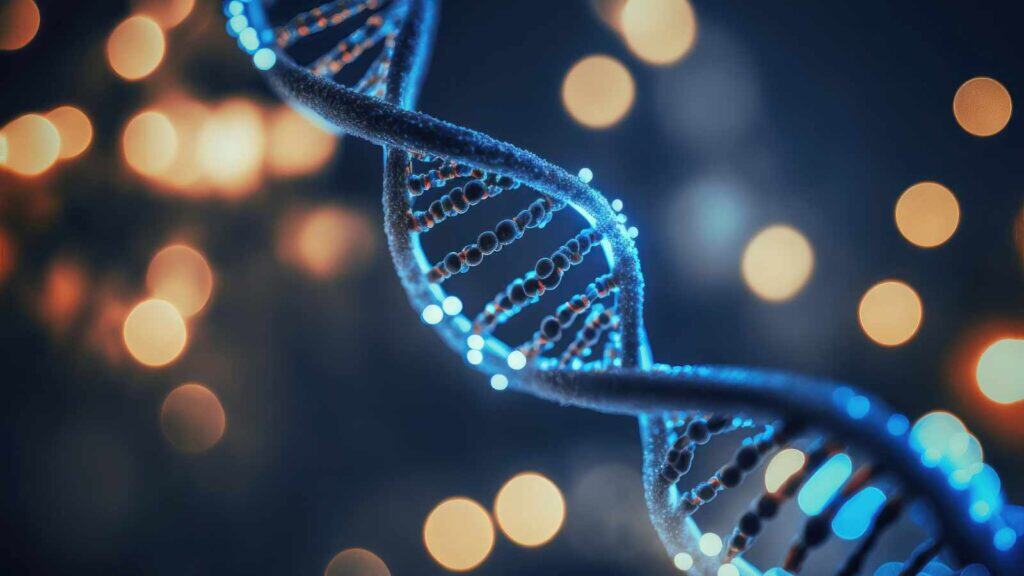
DNA is not just a chemical molecule; it is a sophisticated language that stores instructions with more density than any hard drive in Silicon Valley. A single gram of DNA can theoretically store 215 petabytes of data, a statistic that highlights the incredible efficiency of biological coding.
The real head-scratcher is where this information came from, as codes usually come from a mind, not random physical processes. It is like walking into a desert, finding a perfect encyclopedia lying in the sand, and assuming the wind wrote it rather than an intelligent author.
Orphan Genes Without Ancestors
Geneticists expect to see a family tree for every gene, tracing it back to an ancestor, but “orphan genes” break this rule completely. These genetic sequences appear suddenly in a specific species without any recognizable cousins in other lineages, seemingly popping into existence.
They are specific to humans or other organisms and often provide essential functions right from the start of that species’ history. NIH research identified hundreds of these genes in the human genome that have no match in chimpanzees, complicating the common ancestry model.
The Built-In Autocorrect System

Your cells possess an intricate system to fix errors in your DNA, which creates a “chicken and egg” paradox for evolutionary theory. If the repair mechanism evolved to protect the code, the code had to exist first, but the code degrades rapidly without the repair mechanism.
This circular dependency makes it difficult to pinpoint which system came first in the primordial soup of early Earth. Without this immediate protection, early life forms would have likely mutated themselves out of existence before they really got started.
Epigenetics And Inheritance

We used to think DNA was the only thing passed down to your baby, but epigenetics shows that environmental factors can flip switches on genes without changing the code. An NIH study found that environmental stress can alter sperm and affect offspring for three generations.
This layer of intricacy sits on top of the DNA and directs how the code is read, almost like a software engineer tweaking a program in real-time. It suggests that life is far more adaptable and pre-programmed for response than a simple “survival of the fittest” mutation model implies.
The Limits Of Random Mutation
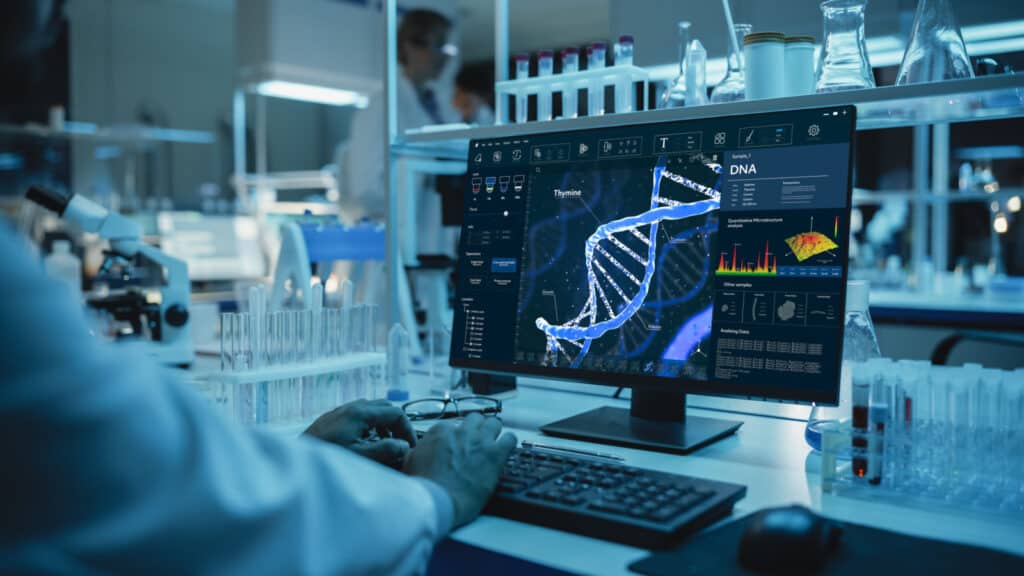
The standard theory relies on random mutations to build new features, but math suggests this process is far too slow to produce complex life. Simulations show that waiting for just two specific, coordinated mutations to happen in humans could take over 100 million years 403.
Most mutations are harmful or neutral, breaking things rather than building shiny new organs or features. This “waiting time problem” suggests there simply has not been enough time in Earth’s history for random chance to build a human brain.
Convergent Evolution Puzzles

It is strange enough that the camera-like eye evolved once, but evolutionary history claims it evolved independently multiple times in unrelated species. Bats and whales both developed echolocation using the same genetic mutations, despite being on completely different branches of the mammal tree.
This implies that evolution somehow “knows” the best solution and hits the same target repeatedly, which looks less like randomness and more like design. A ScienceDirect analysis 403 revealed that widespread convergent evolution occurs at the molecular level much more frequently than previously believed.
The Hard Problem Of Consciousness
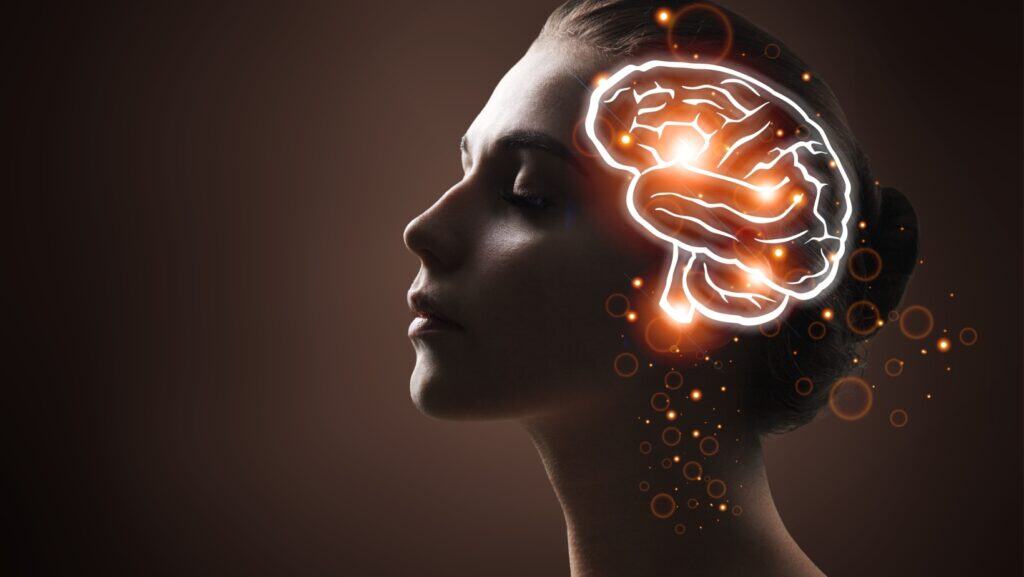
Biology can explain the brain’s hardware, but it hits a hard stop when trying to explain the software of subjective experience. There is no evolutionary survival advantage to understanding “why” we exist or appreciating a sunset, yet humans do it deeply.
Consciousness remains the “hard problem” because matter shouldn’t theoretically be able to produce the feeling of being alive. Despite mapping the brain, neuroscience has yet to find the mechanism that turns electrical signals into the feeling of love or sorrow.
Like our content? Be sure to follow us