10 outdated habits older people keep doing because no one corrects them
You’ve definitely seen it happen: a sweet grandmother signs her text message “Love, Grandma,” or an older colleague hits “Reply All” to say “Thanks!” to the entire company. We witness these quirks daily, yet we rarely say a word. Why? Because we love them, and frankly, correcting them feels like kicking a puppy.
This “behavioral lag” occurs where 20th-century muscle memory grinds against 21st-century digital speed. While 98% of Americans own a mobile device, according to a Pew Research Center report, the way a Boomer uses it differs wildly from the way a Gen Z native uses it. We accept these habits as charming eccentricities, often acting as silent IT support rather than behavior correction officers. Let’s explore ten of these enduring habits that persist simply because we don’t have the heart to stop them.
Calling without a warning text

For older generations, the phone represents a direct line of connection, but for younger cohorts, an unscheduled call feels like a demand for immediate attention. Research highlights a massive shift here: 80% of calls to mobile phones now go straight to voicemail. While younger people view a “cold call” as an intrusion, and 76% of Gen Z report anxiety when the phone rings unexpectedly, older adults see it as a warm, human effort to connect.
We don’t correct this because we know they crave the dopamine hit of a real voice. Experts note that older adults derive a sense of nourishment from voice interaction that text simply cannot replicate. So, we stare at the ringing phone, wait for it to stop, and then guiltily listen to the voicemail they inevitably leave, a habit only 20% of callers still practice.
Typing two spaces after a period

If you see wide river-like gaps flowing through a paragraph, you are almost certainly reading something written by someone over 45. This habit is a relic of the typewriter era, when monospaced fonts required two spaces for visual separation. Despite the American Psychological Association (APA) officially changing its guidelines to one space in 2019, the muscle memory of the “two-spacer” remains unbreakable.
Typographers argue that this practice actively harms readability in modern digital fonts, yet we let it slide. Why? because correcting someone’s typing feels petty. We silently “Find and Replace” their double spaces before publishing the document, preserving their dignity while saving the graphic design from chaos.
Writing paper checks
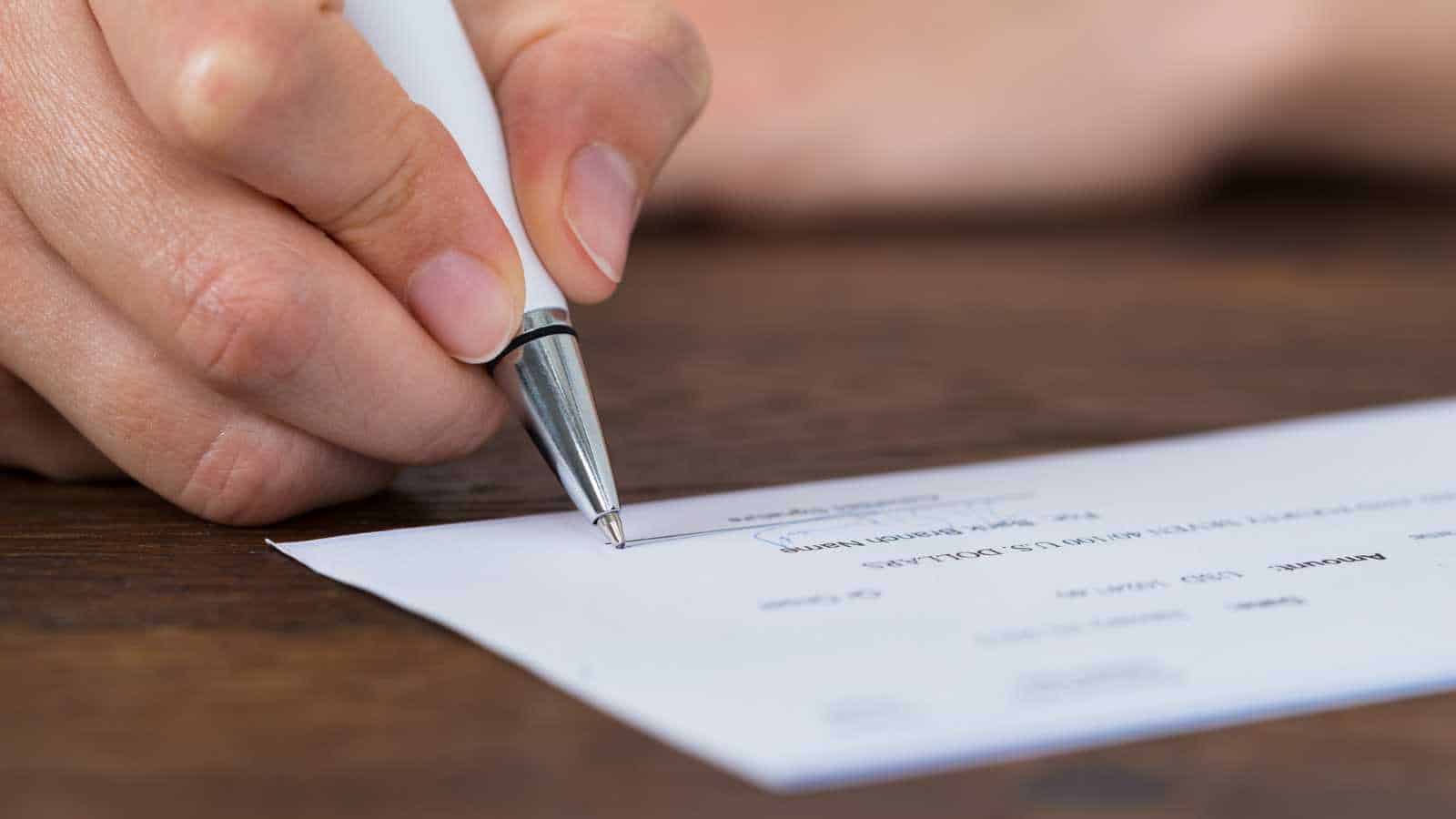
While the rest of the world taps their phones to pay, a distinct demographic still reaches for the checkbook. Federal Reserve data from 2024 shows that while checks now account for only 2.5% of total consumer payments, they remain a staple for the over-55 crowd. This group values the “paper trail” and physical proof of payment that a digital confirmation code just doesn’t satisfy.
We avoid correcting this habit because it links directly to their sense of financial autonomy. Taking away the checkbook feels like taking away control. Even though processing paper checks costs the economy billions in efficiency, we wait patiently in the grocery line while they write out the date, amount, and signature, just to keep the peace.
Printing out the internet
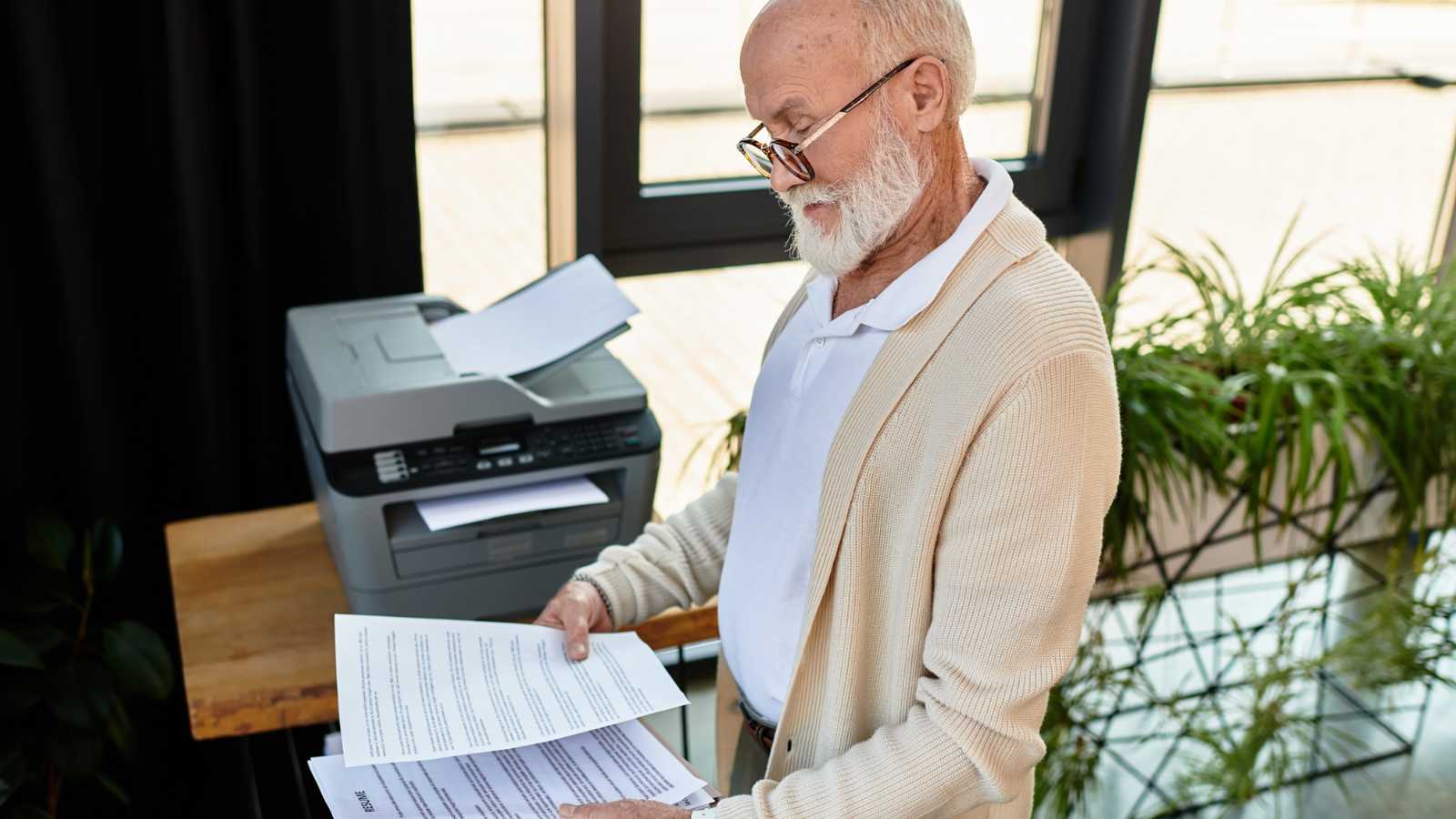
Visit a Boomer’s home office, and you will likely hear the rhythmic churn of an inkjet printer. Despite cloud storage and smartphones, the average office worker, heavily influenced by older habits, still prints around 10,000 pages a year, with 17% of those pages never actually used. This “hard copy” security blanket extends to travel, where 43% of travelers (mostly older) still prefer printed boarding passes over digital ones.
They print emails, maps, and receipts because they view digital information as ephemeral and liable to vanish. We don’t correct them because the anxiety they feel without that paper in hand is worse than the environmental cost. We simply recycle the paper later and accept that for them, if it isn’t printed, it isn’t real.
Hitting reply all unnecessarily

Nothing unites a workplace in frustration quite like the “Reply All” storm. This usually happens when an older employee receives a company-wide email and feels the polite need to respond with a public “Received” or “Thanks.” Research on email disasters shows that these storms often follow a predictable pattern: a few innocent “Reply Alls” trigger a wave of angry “Please remove me from this list” responses, which are also sent to everyone.
We hesitate to correct this because they genuinely think they are being polite and engaged. They treat email like a physical meeting room where speaking up proves you are present. Telling them to stop feels like silencing their voice, so we just mute the thread and roll our eyes.
Signing text messages

One of the most endearing outdated habits is the tendency to structure text messages like formal 19th-century letters. You’ve definitely received a text that starts with “Dear Mark” and ends with “Love, Mom” or “-Dad.” Psychology suggests this stems from a lifetime of writing formal letters, where the signature was a necessary marker of authenticity.
To younger generations, this looks hilarious because the interface already identifies the sender. But we don’t say, “Mom, I know it’s you, my phone says your name.” We cherish the “Love, Mom” sign-off because it adds a layer of deliberate care to a medium that often feels too casual. It’s a “boomer texting faux pas” that we secretly love.
The unannounced drop-in

Decades ago, stopping by a neighbor’s house unannounced was the gold standard of community building. Today, however, 65% of Americans admit they hide from their neighbors, and unannounced visits are often viewed as boundary violations. The older generation, operating on a value system of “open door” availability, often misses this cultural shift entirely.
We endure the “pop-in” because rejecting a physical visit feels incredibly rude to someone who drove over just to say hello. While Millennials and Gen Z value scheduled privacy, older adults prioritize spontaneous connection. We smile and open the door, even if we were just in the middle of a Netflix binge in our pajamas.
Holding onto the landline

While 71.7% of U.S. adults have gone wireless-only, a stubborn 50% of people over age 65 still pay for a landline. They cite call quality, safety during power outages, and familiarity as their primary reasons. For them, a house isn’t a home without a phone jack in the wall.
We don’t push them to cut the cord because that landline represents a lifeline to emergency services, or at least they believe it does. Even though they pay monthly for a service they rarely use, it provides psychological safety. Plus, it’s the only number the telemarketers call, which keeps their cell phones slightly quieter.
Using cash for everything

In an era of Venmo and Apple Pay, the older generation keeps cash alive. Federal Reserve findings from 2024 reveal that adults aged 55 and older use cash for 22% of their payments, compared to just 12% for those younger than 55. They often fear “surveillance capitalism” and prefer the privacy and tangibility of physical currency.
We don’t correct this because arguing about payment methods at a restaurant table is awkward. When they throw a wad of bills on the table to “split the bill,” we just put it in our pocket and pay the full amount on our card. It’s easier than explaining how to link a bank account to an app.
Fearing the QR code menu

The post-pandemic world brought us QR code menus, and older adults absolutely hate them. Data from sources like DataSassential shows that 78% of Boomers have never used a QR code to pull up a menu, preferring to wait for a physical one. They find the technology impersonal, difficult to navigate on small screens, and frustratingly dependent on internet connection.
We don’t force the issue because, honestly, they have a point; physical menus are often better. Instead of teaching them to scan the square, we usually just scan it ourselves and read the options out loud to them. It’s a small act of service that saves everyone from a tech-induced headache.
Key Takeaway

These habits aren’t just “mistakes”; they are a defense mechanism against a world that is moving faster than ever. While they might slow us down, they also preserve values like tangibility, formality, and human connection. The next time you see a double-space or get a voicemail, let it slide. You aren’t just tolerating a habit; you’re honoring their history.
Disclosure: This article was developed with the assistance of AI and was subsequently reviewed, revised, and approved by our editorial team.
20 Odd American Traditions That Confuse the Rest of the World
20 Odd American Traditions That Confuse the Rest of the World
It’s no surprise that cultures worldwide have their own unique customs and traditions, but some of America’s most beloved habits can seem downright strange to outsiders.
Many American traditions may seem odd or even bizarre to people from other countries. Here are twenty of the strangest American traditions that confuse the rest of the world.
20 of the Worst American Tourist Attractions, Ranked in Order

20 of the Worst American Tourist Attractions, Ranked in Order
If you’ve found yourself here, it’s likely because you’re on a noble quest for the worst of the worst—the crème de la crème of the most underwhelming and downright disappointing tourist traps America offers. Maybe you’re looking to avoid common pitfalls, or perhaps just a connoisseur of the hilariously bad.
Whatever the reason, here is a list that’s sure to entertain, if not educate. Hold onto the hats and explore the ranking, in sequential order, of the 20 worst American tourist attractions.