12 American social norms that start family fights
That innocent family get-together with potato salad and small talk has a funny way of blowing up over things no one agreed to, but everyone expects.
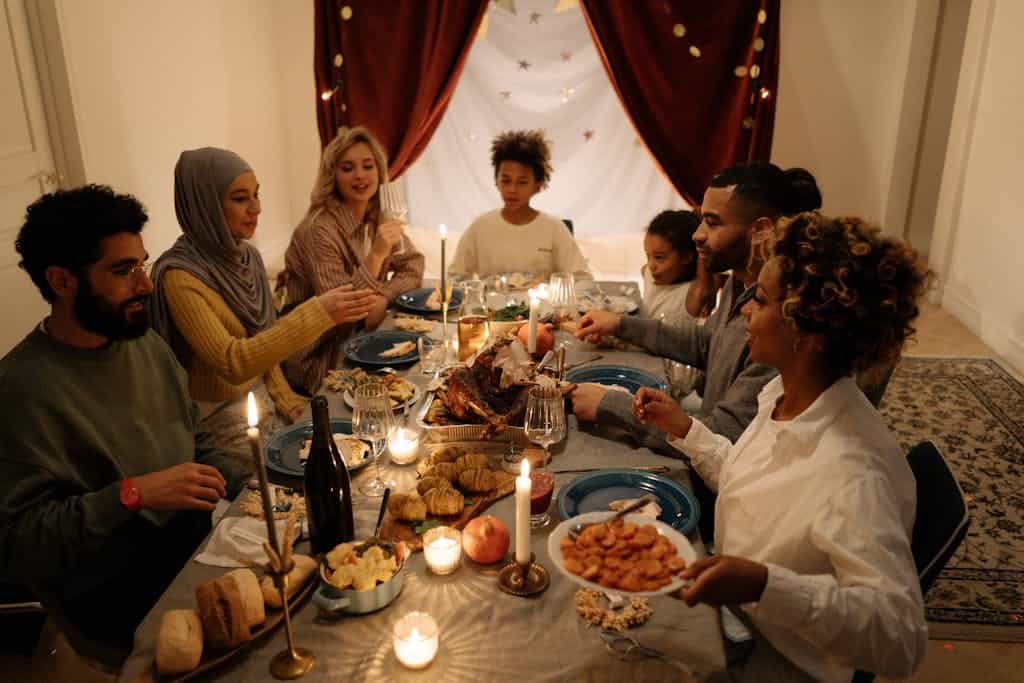
Family gatherings often feel like a high-stakes obstacle course where you try to dodge conflict while holding a plate of salad. You may love your relatives, but different generations and lifestyles can turn a simple dinner into a battlefield of unspoken expectations. The pressure to conform to traditional norms often clashes with modern realities, leaving many feeling stressed before they even walk through the door.
These tensions usually bubble up from deeply ingrained social habits we assume everyone shares, only to find they do not. Whether it is arguing over who picks up the check or how to discipline the kids, these friction points are as American as apple pie. Understanding these common triggers might save your next holiday get-together from turning into a shouting match or an awkward silence.
The Unspoken Expectation Of Hosting

Many families still believe that hosting duties should rotate naturally, yet the burden often falls on the same person every year. It is easy to assume that the relative with the biggest house or the best cooking skills actually enjoys taking on the stress and expense of feeding everyone. When guests show up without offering to help clean up or bring a side dish, resentment starts to simmer right alongside the green beans.
The cost of feeding a crowd is not insignificant, especially with grocery prices climbing higher every month. If you are always the guest and never the host, simply offering to arrive early for prep work can change the entire dynamic. Breaking the cycle of “assumed hosting” requires open communication, but that is often the one ingredient missing from the family recipe book.
Discussing Politics At The Dinner Table

Bringing up political opinions at the table used to be seen as a minor faux pas, but now it is often the quickest way to clear a room. A Pew Research Center study found that 75% and 64% of Americans say they get angry at Democrats and Republicans, respectively, making civil discourse harder than ever. Americans have moved past simple disagreements into a territory where your vote is seen as a reflection of your morality and personal character.
The urge to convince Uncle Bob that he is wrong is strong, but it rarely leads to a productive conversation or a changed mind. Most families find that setting a strict “no politics” rule while eating is the only way to keep the gravy flowing smoothly. Ignoring the elephant in the room might feel fake, but it beats ruining a perfectly good roast beef dinner over a debate that no one is going to win.
Asking When You Are Having Kids
For young couples, the interrogation about their reproductive plans is a ritual as reliable as the setting sun. According to a Pew Research Center survey, 57% of non-parents ages 18 to 49 say it is not too or not at all likely they will have children, a shift that baffles older generations. Grandma often sees asking “When is the baby coming?” as polite interest, while the couple on the receiving end feels judged and pressured.
This question ignores the very real struggles of infertility, financial instability, or the simple choice to remain child-free. What seems like innocent small talk can actually be a painful reminder of private challenges that a couple is facing. It is a social norm that desperately needs updating, shifting the focus from what might happen later to what is happening in people’s lives right now.
Lending Money To Family Members

The mixing of blood and finances is a classic recipe for disaster that plays out in living rooms across the country. Bankrate reports that 25% of adults who lent money to family or friends lost money, and 17% said the relationship was damaged. The awkwardness of asking for repayment creates a tension that hangs over every subsequent interaction until the debt is settled.
The borrower often feels the lender is being stingy or controlling, while the lender feels taken advantage of when they see the borrower buying new things. Financial experts usually suggest that if you give money to family, you should consider it a gift rather than a loan to avoid future fights. If you cannot afford to lose the cash, you probably cannot afford the risk of blowing up your relationship with your cousin.
The Drop-In Visit Culture

In some families, an open-door policy is a sign of love, but for others, an unannounced visit is a major invasion of privacy. The clash between “pop-in” people and “call-first” people creates significant friction, especially when boundaries are not clearly defined. One side sees a surprise visit as a spontaneous joy, while the other sees it as a disrespectful disruption of their schedule and personal space.
This is often a generational divide, as younger adults accustomed to scheduled interactions find the “just passing by” mentality stressful. Setting boundaries about visiting hours can feel hurtful to parents who grew up in neighborhoods where doors were always unlocked. Finding a middle ground usually involves a quick text message warning, which saves face and sanity for everyone involved.
Unsolicited Parenting Advice

Grandparents often feel their experience gives them a license to comment on how their grandchildren are being raised. The C.S. Mott Children’s Hospital National Poll found that 57% of parents have clashed with grandparents over discipline, highlighting a major source of intergenerational stress. Comments about screen time, sugar intake, or bedtime routines can quickly sound like criticism of a parent’s competence.
New parents often try to follow modern guidelines that contradict how they were raised, leading to defensive reactions. The phrase “well, you turned out fine” is frequently used to dismiss safety updates, driving a wedge between the generations. Respecting the parents’ rules, even if they seem fussy, is the best way to maintain a healthy relationship with the grandkids.
Tipping Etiquette Disagreements

Going out to eat with family can turn awkward the moment the check hits the table, and everyone reaches for their wallets. Arguments over whether to tip 15%, 20%, or more can reveal big differences in values and financial philosophies. Watching a relative tip poorly can be mortifying, leading others to secretly throw extra cash on the table to make up the difference.
This conflict often stems from differing views on service work and current tipping standards. Generational habits play a huge role here, as older relatives might stick to outdated percentages while younger ones are more aware of service wage issues. It is a small moment that speaks volumes, often leaving a sour taste at the end of a sweet meal.
Screens At The Dinner Table

The glow of a smartphone face is now a common guest at family dinners, much to the annoyance of traditionalists. Common Sense Media reports that 42% of children have their own phone by age 8, meaning the battle for attention starts earlier than ever. Older family members often view checking a phone during a meal as the ultimate sign of disrespect and disengagement.
On the flip side, younger family members might be using their devices to share photos or fact-check a debate, seeing it as part of the conversation. Establishing a “tech-free zone” for the duration of the meal is a simple fix, but enforcing it can feel like herding cats. When eye contact is replaced by scrolling, the connection that defines family time starts to erode rapidly.
Religious Observance Versus Secularism

As religious affiliation shifts, the expectation to say grace or attend services together can become a flashpoint. Recent data shows the “nones”—those with no religious affiliation—are a rapidly growing group, creating a gap between devout parents and secular adult children. The refusal to participate in religious rituals can be interpreted as a rejection of family heritage rather than a personal choice.
Navigating this requires a delicate balance of respect for tradition and respect for individual belief. Simple compromises, like standing respectfully during a prayer without participating, can sometimes bridge the gap without causing a scene. However, when one side insists on compliance, it often leads to hurt feelings and valid reasons to skip next year’s gathering.
Alcohol Consumption Norms

The presence of alcohol at family functions is a double-edged sword that cuts different ways for different families. For some, a glass of wine is essential for tolerating the chaos, while for others, any drinking is seen as inappropriate or dangerous. Watching a relative indulge too much can trigger past traumas or simply make everyone else uncomfortable.
Conversely, a family member who chooses not to drink might face pestering questions or accusations of being a “party pooper.” Respecting someone’s choice to stay sober without demanding an explanation is a basic courtesy that is often forgotten. The liquid courage that helps one person relax might be the very thing that makes another person tense up.
The Success Comparison Game

Nothing ruins digestion quite like the subtle or overt comparison of career and financial achievements. LendingTree studies show that 36% of Americans took on debt to pay for holiday gifts last year, driven partly by the pressure to keep up appearances. Parents bragging about one sibling’s promotion while ignoring another’s struggles creates a toxic environment of rivalry.
This dynamic turns a reunion into a performance review where love feels conditional on your tax bracket. We often forget that everyone is running their own race, and external markers of success do not always equal happiness. Celebrating small wins and avoiding the temptation to measure worth by a paycheck can keep the peace.
15 Things Women Only Do With the Men They Love

The 15 Things Women Only Do With the Men They Love
Love is a complex, beautiful emotion that inspires profound behaviors. We express our love in various ways, some universal and others unique to each individual. Among these expressions, there are specific actions women often reserve for the men they deeply love.
This piece explores 15 unique gestures women make when they’re in love. From tiny, almost invisible actions to grand declarations, each tells a story of deep affection and unwavering commitment.