12 ancient prophecies that seem to reflect modern life
Ancient prophets somehow managed to describe several modern anxieties without ever seeing a smartphone, skyscraper, nuclear submarine, or social media comment section. That strange overlap still fascinates Americans, and Pew Research Center found that 30% of U.S. adults consult astrology, tarot cards, or fortune tellers, even though most participants treat them as entertainment rather than serious guidance.
Another Pew Research study found that 79% of Americans believe something spiritual exists beyond the natural world. I find these prophecies fascinating, but I treat them as cultural mirrors rather than airtight proof that ancient writers watched the twenty-first century through a mystical security camera.
Daniel’s surge of knowledge sounds like the internet age

The Book of Daniel describes people searching widely as knowledge increases near a decisive turning point. Many readers connect that language with global travel, scientific growth, and instant access to information, although biblical scholars often interpret the passage as a search for understanding within Daniel’s sealed message rather than a literal preview of Google, airports, and artificial intelligence. Still, the modern parallel grabs your attention.
The International Telecommunication Union estimated that 5.5 billion people used the internet in 2024, equal to 68% of humanity, while 2.6 billion people remained offline. ITU Secretary-General Doreen Bogdan-Martin called the situation “a tale of two digital realities,” which neatly captures the strange combination of extraordinary knowledge and stubborn inequality that Daniel’s imagery now brings to mind.
Revelation’s buying and selling rule echoes digital access
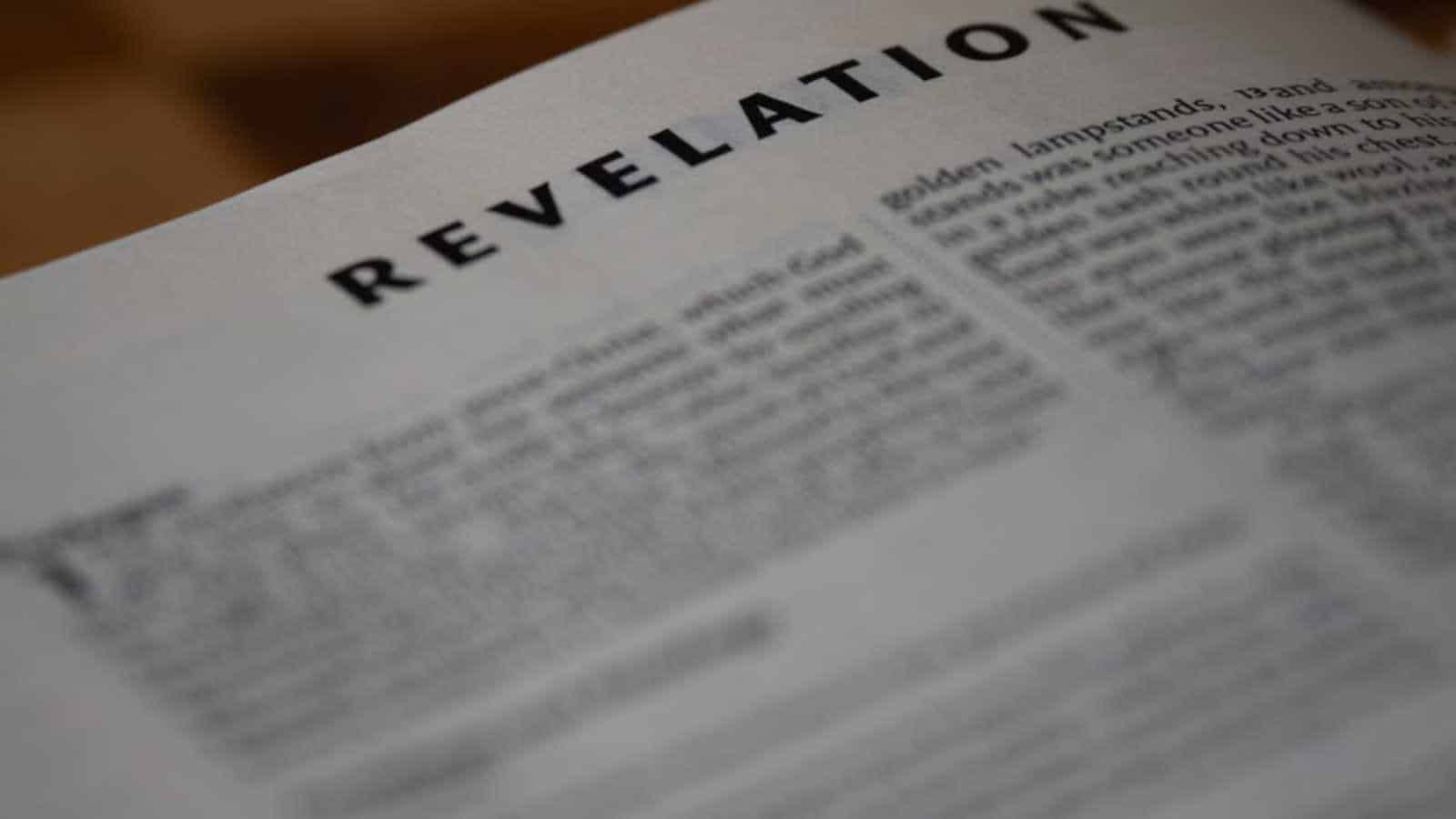
Revelation 13 pictures an authoritarian power that prevents people from buying or selling unless they carry its identifying mark. The original audience likely connected that image with Roman power, imperial loyalty, and economic pressure, not contactless cards or facial recognition. Even so, modern readers understandably raise an eyebrow when governments, banks, platforms, and digital identification systems increasingly control access to everyday transactions.
The World Bank reported that nearly 80% of adults worldwide owned a financial account in 2024, up from 50% in 2011, while 42% of adults in lower and middle-income countries made digital merchant payments. World Bank President Ajay Banga said, “Digital finance can convert this potential into reality,” but the same systems also create concerns about surveillance, exclusion, fraud, and technical shutdowns. The prophecy does not specifically predict Apple Pay, thankfully, but it asks a remarkably current question: Who controls your ability to participate in the economy?
Matthew’s wars and disease warnings feel painfully familiar
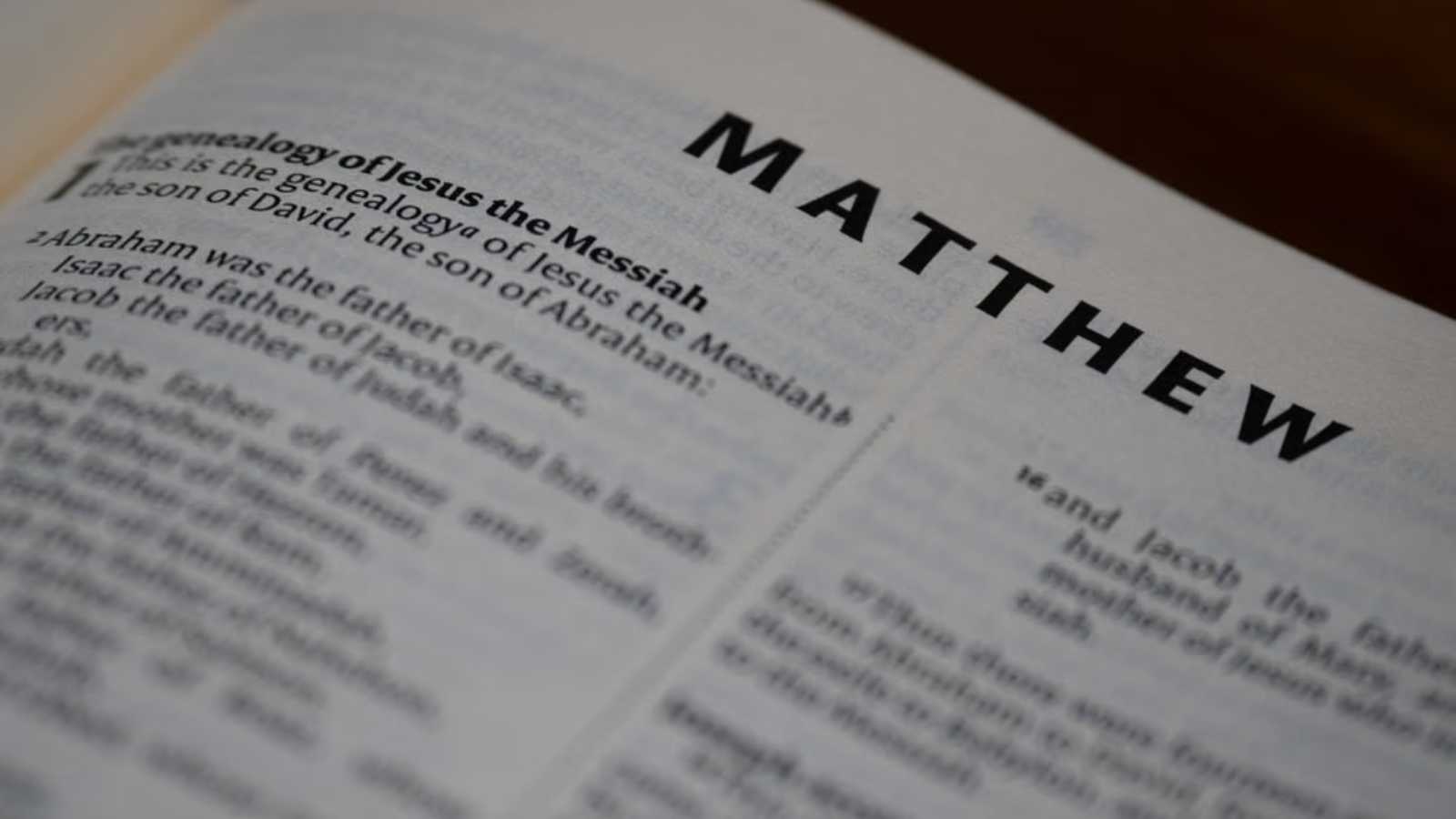
Matthew 24 warns about wars, rumors of wars, famines, earthquakes, and, in some ancient manuscript traditions, pestilences. People in the Roman world already knew war and disease intimately, so Jesus did not describe rare human experiences. Yet the combination still reflects modern headlines with uncomfortable accuracy when international conflict, displacement, epidemics, and food insecurity arrive together instead of politely taking turns.
Global military spending reached $2.887 trillion in 2025, according to the Stockholm International Peace Research Institute, which marked the eleventh consecutive annual increase. The World Health Organization also recorded 614,828 suspected or confirmed cholera cases and 7,598 related deaths across 33 countries during 2025. Those numbers do not prove that an ancient timetable reached its final page, but they explain why readers keep returning to this warning whenever history decides to repeat its least charming habits.
Matthew’s false prophets resemble the misinformation economy

The same chapter warns that false prophets will appear, deceive large audiences, and use impressive signs to strengthen their claims. Ancient teachers often worried about charismatic figures who manipulated frightened communities, and social media now gives that old problem high-speed internet, video editing software, and a global mailing list. Ever watched a confident stranger explain a major conspiracy in 40 seconds while dramatic music plays underneath? Apparently, research and humility missed the upload deadline.
Pew Research Center found that 90% of U.S. adults encounter news they consider inaccurate at least sometimes, while 42% encounter it often or extremely often. Another 51% struggle to separate truth from fiction when consuming news, and trust in national news organizations fell to 56% in September 2025, down 20 percentage points from 2016. The prophecy’s modern resemblance lies less in supernatural performance and more in a marketplace that rewards certainty, outrage, and spectacle.
Second Timothy’s self-obsession fits the attention economy
Second Timothy predicts difficult times when people will love themselves, chase money, boast, reject gratitude, and value pleasure over spiritual depth. Every generation can point at the next one and shout, “That verse describes you,” which makes the passage dangerously convenient. Still, influencer culture, personal branding, luxury displays, rage posting, and endless status comparisons make the description sound less like an ancient letter and more like notes from a particularly exhausting group chat.
Pew found that 84% of American adults used YouTube in 2025, 71% used Facebook, 50% used Instagram, and 37% used TikTok. Another Pew analysis reported that 41% of Americans use the internet almost constantly, which gives self-promotion more reach than any ancient ruler could have imagined. Social media also spreads kindness, education, and genuine community, so the technology itself does not fulfill anything; human choices give the warning its familiar shape.
The Vishnu Purana links status to wealth in the Kali Yuga

The Hindu Vishnu Purana describes the Kali Yuga as an age when wealth determines social status, people pursue money dishonestly, and individuals spend accumulated riches on showy homes and personal gratification. The text uses moral and spiritual symbolism rather than economic forecasting, but its criticism of materialism sounds remarkably fresh. Who needs character when your kitchen island has imported marble and its own social media account?
Federal Reserve data reveal a sharp American example of concentrated financial power. In the first quarter of 2026, the wealthiest 10% of households held about $48.15 trillion in corporate equities and mutual fund shares, while the bottom 50% held roughly $590 billion. The prophecy’s strongest modern connection does not come from wealth itself but from the belief that money proves intelligence, virtue, importance, and even personal worth.
The Cakkavatti Sutta connects neglected poverty with violence

The Buddhist Cakkavatti Sutta tells a striking social story: a ruler fails to support people who lack resources, poverty spreads, theft rises, punishment grows harsher, and society eventually falls into severe violence. The text does not blame struggling people for social collapse; it traces disorder back to leadership that ignores material hardship. That argument sounds surprisingly close to modern debates about welfare, wages, housing, healthcare, crime prevention, and social investment.
The World Bank reported that two billion people in lower- and middle-income countries still lacked adequate social protection, while 80% of that group received no coverage at all. The bank also found that social protection helped Sahel households avoid a 24% drop in consumption during droughts and made them 25% less likely to cut health and education spending. The ancient message feels direct: societies cannot punish their way out of conditions that neglect helped create.
Völuspá imagines climate chaos, conflict, and world fire

The Norse poem Völuspá describes a brutal final period marked by severe winters, family conflict, collapsing loyalties, warfare, environmental disorder, and flames that engulf the world. The poem later pictures the earth rising green again, which adds renewal to the destruction rather than ending everything with permanent darkness. I love that detail because even Viking apocalypse poetry apparently understood that audiences need at least a tiny emotional refund after Ragnarök.
Modern climate data make the imagery feel disturbingly vivid. The World Meteorological Organization found that 2015 through 2025 formed the hottest eleven-year period on record, while 2025 reached roughly 1.43 degrees Celsius above the 1850 to 1900 average. WMO Secretary-General Celeste Saulo said high land and ocean temperatures “helped fuel extreme weather,” including heat waves, intense rainfall, and powerful tropical cyclones.
A famous hadith pictures shepherds competing in tall buildings

A well-known hadith in Sahih Muslim lists signs of the Hour and describes formerly poor shepherds competing in the construction of tall buildings. Muslim scholars approach such passages through theological traditions, historical context, and different interpretations, so nobody should reduce the hadith to a social media meme about one particular skyline. Still, the image fascinates readers because several regions once associated with pastoral life now feature extraordinary towers and ambitious megacity projects.
The Council on Tall Buildings and Urban Habitat counted 2,590 buildings at least 200 meters tall worldwide through 2024, including 255 supertall structures that exceeded 300 meters. The organization expected at least 135 more buildings above 200 meters to reach completion during 2025. Humanity has always built upward to display wealth, power, faith, or engineering skill, but the speed and scale of today’s vertical competition give this ancient saying undeniable visual punch.
Isaiah describes an earth polluted by its inhabitants
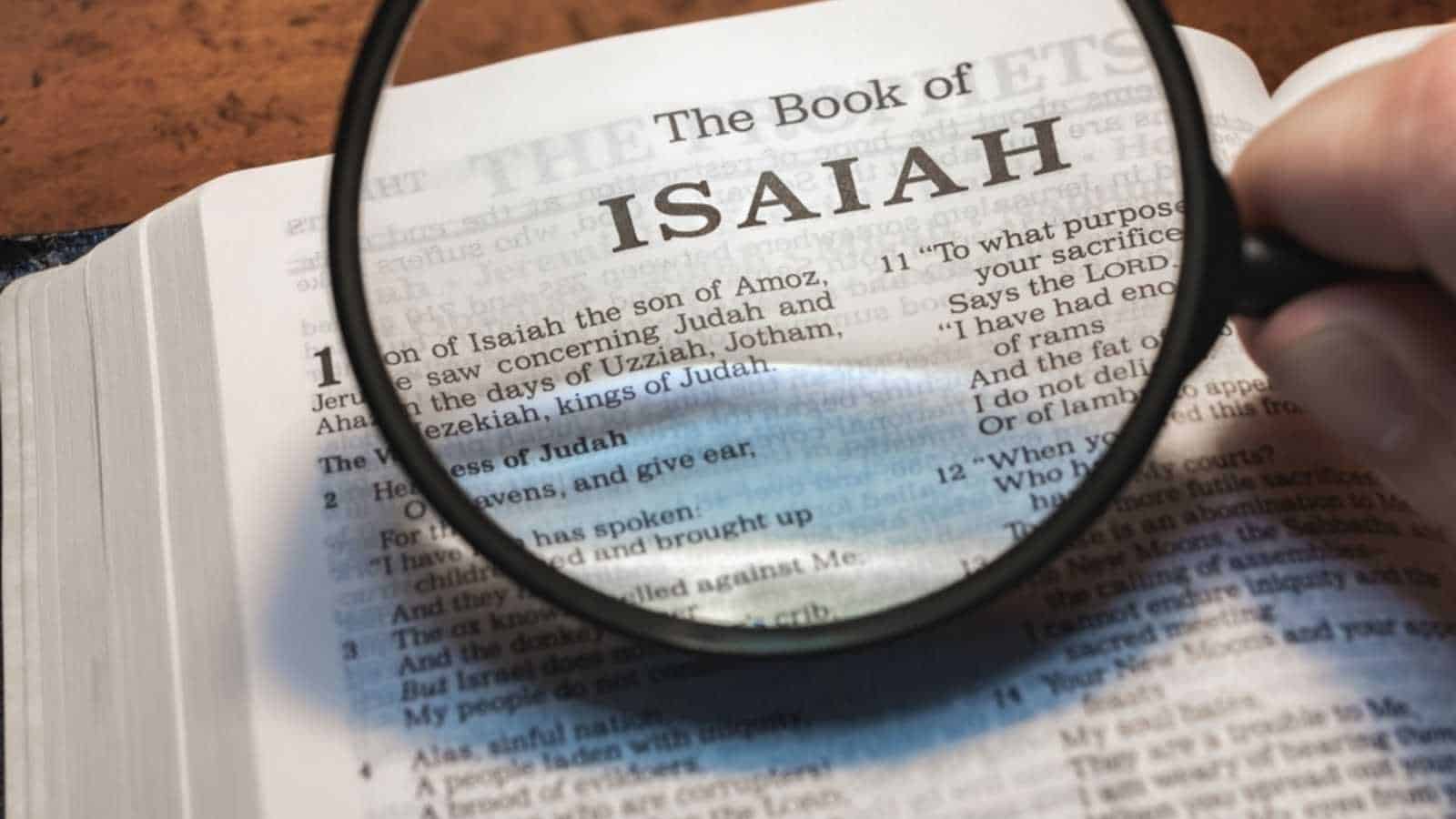
Isaiah 24 portrays an earth that mourns, withers, and suffers pollution because human beings violate moral and sacred boundaries. Ancient authors did not understand carbon emissions, microplastics, synthetic chemicals, or industrial waste, so readers should not turn the passage into a modern environmental science report. The text nevertheless connects human misconduct with damage to the land, a relationship that now sits at the center of climate and sustainability debates.
The United Nations Environment Program expects municipal solid waste to rise from 2.1 billion metric tons in 2023 to 3.8 billion by 2050. UNEP also warns that pollution, health damage, and poor waste management could push annual global costs beyond $600 billion. The ancient warning feels relevant because it refuses to separate moral choices from environmental consequences, and frankly, the planet cannot keep serving as humanity’s oversized junk drawer.
Hesiod’s Iron Age predicts fractured families and crooked justice

The Greek poet Hesiod described a future Iron Age in which parents and children lose respect for one another, friends abandon loyalty, dishonest people prosper, and leaders twist justice. He wrote from frustration with the society around him, so his prediction also worked as criticism of his own era. That approach still sounds familiar: announce that civilization has collapsed, blame everyone younger than you, and conveniently forget that ancient writers used the same complaint package.
Yet modern trust trends give Hesiod’s warning real weight. Pew reported that only about one-quarter of Americans knew most or all of their neighbors, down from three in ten in 2018, while 54% said fabricated news greatly damaged public confidence in other people. The parallel does not prove inevitable decline, but it shows how weakened relationships, distorted information, and perceptions of unfairness can make a society feel harsher than its economic statistics alone suggest.
Babylonian eclipse omens mirror our hunger for predictive data

Ancient Babylonian scholars recorded lunar eclipses and connected celestial patterns with possible political disasters, military setbacks, crop problems, or the death of a ruler. The British Museum holds tablets that contain eclipse omens and astrological reports written for kings, including reports that linked astronomical observations with public affairs. These scholars gathered data carefully, but they mixed observation with symbolic interpretation because they believed the sky communicated information about earthly power.
Modern society replaces clay tablets with prediction markets, economic models, polling dashboards, weather simulations, risk scores, and algorithms, yet our basic desire remains the same: Tell us what happens next. Pew found that 27% of Americans believed in astrology in 2024, while 30% consulted astrology, tarot cards, or fortune tellers at least occasionally. We possess better scientific tools than the Babylonians did, but uncertainty still makes humanity stare at patterns and whisper, “Okay, but what does it mean?”
Key takeaway

These 12 ancient prophecies that seem to reflect modern life cover information growth, cashless commerce, war, disease, misinformation, inequality, social neglect, environmental damage, towering cities, weakened trust, and our endless desire to predict the future. Their similarities do not prove that ancient writers saw specific technologies or events; broad symbolic language can fit several historical periods, and human societies repeatedly struggle with the same fears, temptations, and power imbalances.
Still, the texts deserve attention because they reveal how earlier civilizations understood social breakdown and renewal. They remind us that technology changes faster than human nature, while greed, fear, ambition, compassion, and hope keep wearing new outfits. Perhaps the real prophecy sounds less dramatic than fire falling from heaven: When people ignore old warnings, history finds remarkably creative ways to repeat the lesson.
Disclaimer – This list is solely the author’s opinion based on research and publicly available information. It is not intended to be professional advice.
You May Also Like: The Most Believable Historical Myths People Still Fall For
Like our content? Be sure to follow us