12 arguments against the existence of free will
The more closely science looks at how decisions form, the harder it becomes to find a place where choice actually lives.
Picture yourself standing in line at your local coffee shop, scanning the menu for your morning caffeine fix. You feel like you are making a deliberate choice between the caramel macchiato and the cold brew, weighing your options before finally placing your order. But what if that entire internal debate was just a biochemical play acting itself out, with the ending written long before you stepped up to the counter?
The idea that we are the captains of our own souls is a comforting narrative that society has clung to for centuries. However, a growing chorus of neuroscientists, physicists, and philosophers suggests that the concept of free will is nothing more than a convincing illusion generated by our complex brains.
The Unconscious Brain Decides First
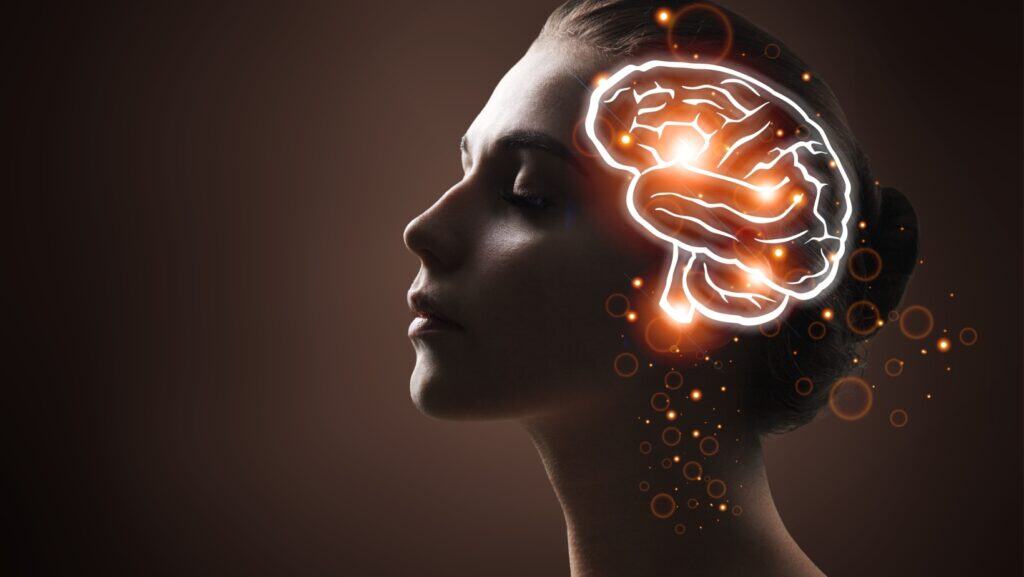
We tend to believe that our conscious mind is in the driver’s seat, making decisions that our body then executes. Science paints a different picture, showing that the brain prepares for an action seconds before we are even aware of our intention to act. This lag suggests our consciousness is less like a captain and more like a spectator who thinks they are steering.
Research from the University of New South Wales in 2019 revealed a staggering gap between brain activity and conscious awareness. The study found that patterns of brain activity could predict a person’s choice between two visual patterns up to 11 seconds before they consciously made the decision. If your brain decides 11 seconds before “you” do, the notion of conscious choice begins to crumble.
The Genetic Lottery
No one picked their parents, their DNA, or the biological blueprint that built their brain. You are the product of a genetic shuffle that occurred long before you took your first breath, influencing everything from your height to your temperament. If your baseline personality is pre-installed, your reactions to the world are largely predetermined.
Recent updates in psychology continue to reinforce how deep this programming runs. According to data updated in 2025 by mental health researchers, the heritability of personality traits—like impulsivity and neuroticism—is estimated to be as much as 80%. This leaves a massive portion of “who you are” completely out of your hands from day one.
The Hungry Judge Effect

We like to think our decisions are based on logic, reason, and a steady moral compass. In reality, our choices are often at the mercy of our biological state, fluctuating wildly based on how much glucose is currently floating in our bloodstream. If a sandwich can change your moral outlook, your “will” is not as independent as you think.
A famous study on judicial rulings highlights this biological tether with frightening clarity. Researchers at the University of Pennsylvania report that the probability of a prisoner being granted parole dropped from roughly 65% at the start of a session to nearly 0% right before a lunch break. Justice, it seems, is not blind; it is just hungry.
The Chain Of Cause And Effect
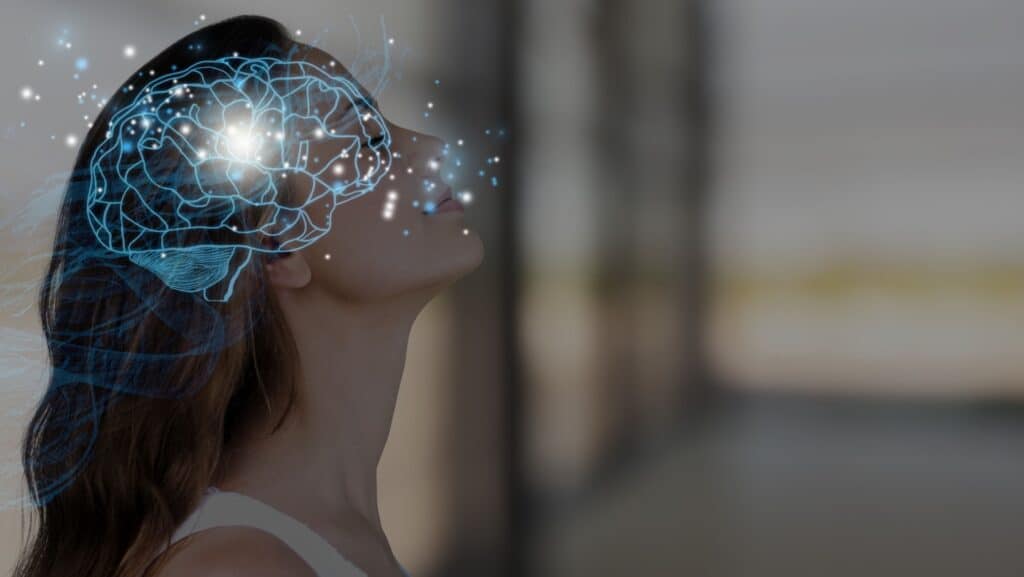
If you accept that we live in a physical universe, you must accept that we are made of physical matter. Atoms and molecules obey the laws of physics, reacting in predictable ways to forces and collisions without any ability to “choose” their path. Since your brain is made of these same atoms, it follows that your thoughts are just physical reactions to prior causes.
This serves as the bedrock of determinism, the idea that every event is the inevitable result of preceding events. Tracing this back, every thought you have right now is the result of a chain reaction that started with the Big Bang. There is no room in the laws of physics for a “ghost in the machine” to intervene and break the laws of nature.
Environmental Conditioning

While genes build the hardware, your environment programs the software, and you didn’t choose that either. Every childhood experience, trauma, teacher, and friendship shaped the neural pathways that you use to process information today. You cannot separate the “decider” from the conditioning that built them.
Robert Sapolsky, a Stanford neurobiologist and author of the 2023 book Determined, argues that we are the sum of our biology and environment. He points out that if you look closely enough at the millions of prior causes—from prenatal hormone levels to what you ate for breakfast—you find zero wiggle room for free will. We are simply playing out the hand we were dealt.
The Myth Of Randomness
Some people point to quantum mechanics or “random” chance as proof that the future isn’t set in stone. But randomness is not freedom; a roll of the dice is just as out of your control as a clockwork gear. If your decisions are merely the result of random quantum fluctuations, that makes them accidental, not free.
Chaos theory teaches us that systems can be unpredictable without being free. Weather patterns are incredibly difficult to forecast, yet no one argues that a hurricane has free will to change its path. Your brain is just a much more complicated storm.
Brain Tumors And Behavior
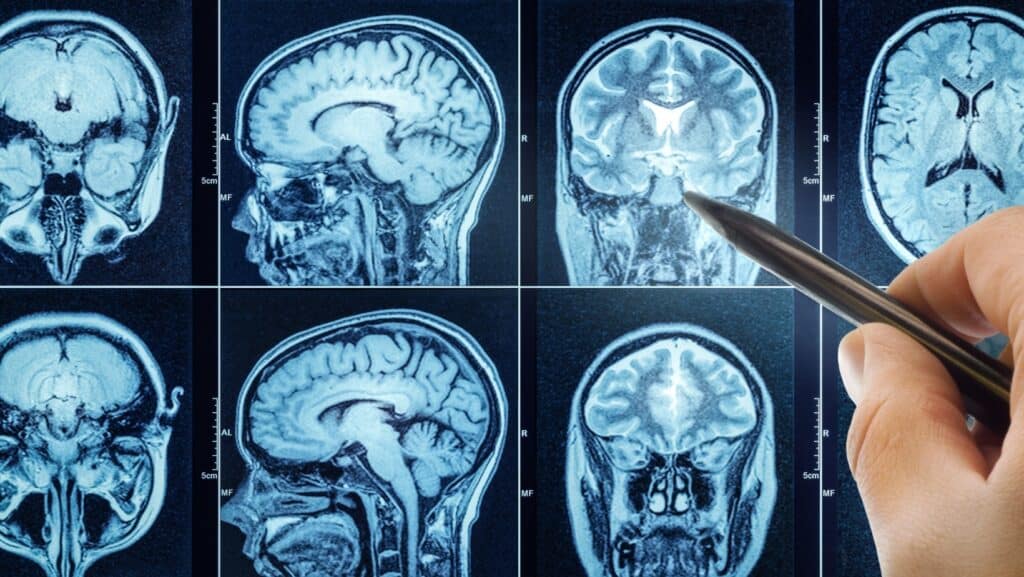
The physical nature of our character is most tragically proven when the brain is damaged. There are documented cases where ordinary, law-abiding citizens suddenly developed dark, violent urges due to a tumor pressing on a specific part of their brain. When the tumor was removed, the behavior stopped; when it returned, so did the urges.
This implies that our moral character is entirely dependent on the physical integrity of our gray matter. If a physical growth can hijack your “will” and turn you into a different person, then your will was never truly independent of your biology. You are your brain, and your brain is a physical object subject to damage and decay.
The Predictability Of AI

If humans were truly unpredictable agents with free will, modeling our behavior should be impossible. Yet, artificial intelligence is getting frighteningly good at predicting exactly what we will do, say, and buy next. As algorithms get better at mapping our inputs and outputs, the “magic” of human choice starts to look like a simple math equation.
In a 2025 ResearchGate study, AI models demonstrated a shocking ability to understand human social dynamics better than we do. The study found that GPT-4.5 outperformed 100% of human participants in accurately predicting collective judgments on social norms. If an algorithm can calculate your move better than you can, you might just be a complicated algorithm yourself.
The Illusion Of Agency
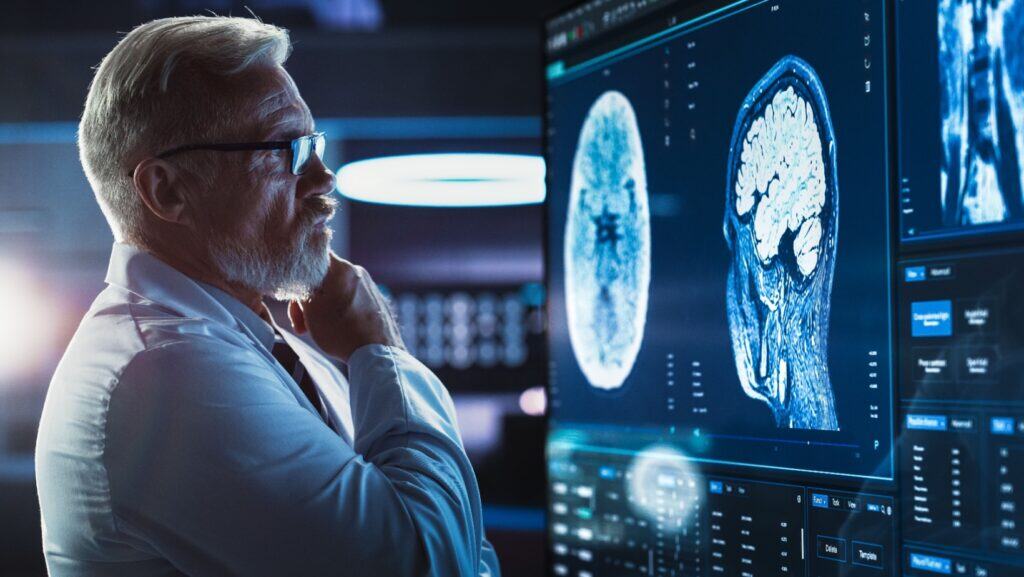
Our brains are storytelling machines designed to make sense of the world. Psychologists have found that we often act on impulse and then invent a logical reason for that action milliseconds later. We convince ourselves we meant to do it, even when we didn’t.
Split-brain patient experiments in the 20th century exposed this “interpreter” module in the brain. When the right hemisphere was secretly given a command, the left hemisphere would instantly invent a fake reason for the resulting action. We are constantly writing a fictional autobiography where we play the hero, masking the automatic nature of our lives.
Limited Menu Options

True freedom would imply an infinite array of choices, but we are restricted by our cognitive horizons. You cannot choose an option that never occurs to you, effectively limiting your “free” will to a tiny slice of reality. Your background, education, and culture act as blinders, hiding vast possibilities from your view.
Think of it like a restaurant menu that only has three items. You might feel free to pick between the burger, the salad, or the soup, but you are not free to order lasagna if the chef didn’t put it on the list. Your brain only serves up options that fit its prior programming.
The Unconscious Autopilot

Analyze your day, and you will realize that the vast majority of your actions happen on autopilot. From brushing your teeth to driving to work, you perform complex tasks without any conscious “choice” involved at all. Consciousness is a high-energy state that the brain uses sparingly.
We only “wake up” to make a decision when we hit a snag or a new problem. For the rest of the time, we are biological zombies following deep-seated routines. If 95% of your day is automatic, the argument for free will hangs on a very thin thread.
The “Self” Is A Construct

Finally, the biggest argument against free will is that the “you” supposedly making the choices doesn’t really exist. Neuroscience has never found a specific center in the brain where the “self” resides; there is no little person inside your head pulling levers. What we call the “self” is just a unified experience stitched together from various brain processes.
This is similar to how a school of fish looks like a single organism moving together. There is no leader fish giving orders; it is just a collective reaction to stimuli. If there is no pilot, there can be no free will—just the flow of the current.
Like our content? Be sure to follow us