12 high school classes from the baby boomer era that no longer exist
Boomer era high school schedules looked like a wild mix of sawdust, stovetops, shorthand pads, and just enough mild danger to keep everybody awake. The funny part is that practical classes did not completely disappear; schools simply changed the packaging. According to NCES, 84.6% of 2019 high school graduates still earned at least one CTE credit, but the biggest areas now sit in information technology, 28.7%, and human services, 28.0%, while manufacturing and transportation each drew only 4.3% of graduates, which tells you exactly how far the menu has shifted.
That change also explains why so many adults keep saying, “Why didn’t school teach me that?” Junior Achievement found that 68% of teens would eagerly take a financial literacy class if schools offered one, but only 31% said they actually had access to one. At the same time, the Council for Economic Education says 39 states now require personal finance for graduation, reaching more than 13 million students, so schools clearly know students want real-world skills; they just no longer teach them in the exact Boomer era format.
Penmanship

Boomer students did not just “work on handwriting” here and there. Schools often treated penmanship like a real class goal, with drills, lined paper, and a teacher who absolutely cared whether your capital Q looked respectable.
Then Common Core skipped cursive, and schools gave that time to other priorities, especially keyboarding and digital work, so penmanship stopped standing on its own in most places. Education Week reports that at least half of the states have now brought cursive instruction back in some form after that earlier drop, which tells you the old skill never fully lost its fan club.
Still, the comeback does not really restore the old class the Boomers knew. Today, schools usually tuck handwriting into elementary literacy blocks, and teachers have to squeeze it in beside typing because both skills compete for the same classroom time. That feels very different from the era when clean script signaled discipline, neatness, and maybe future office respectability, which sounds quaint now but shaped school culture for decades.
Driver education
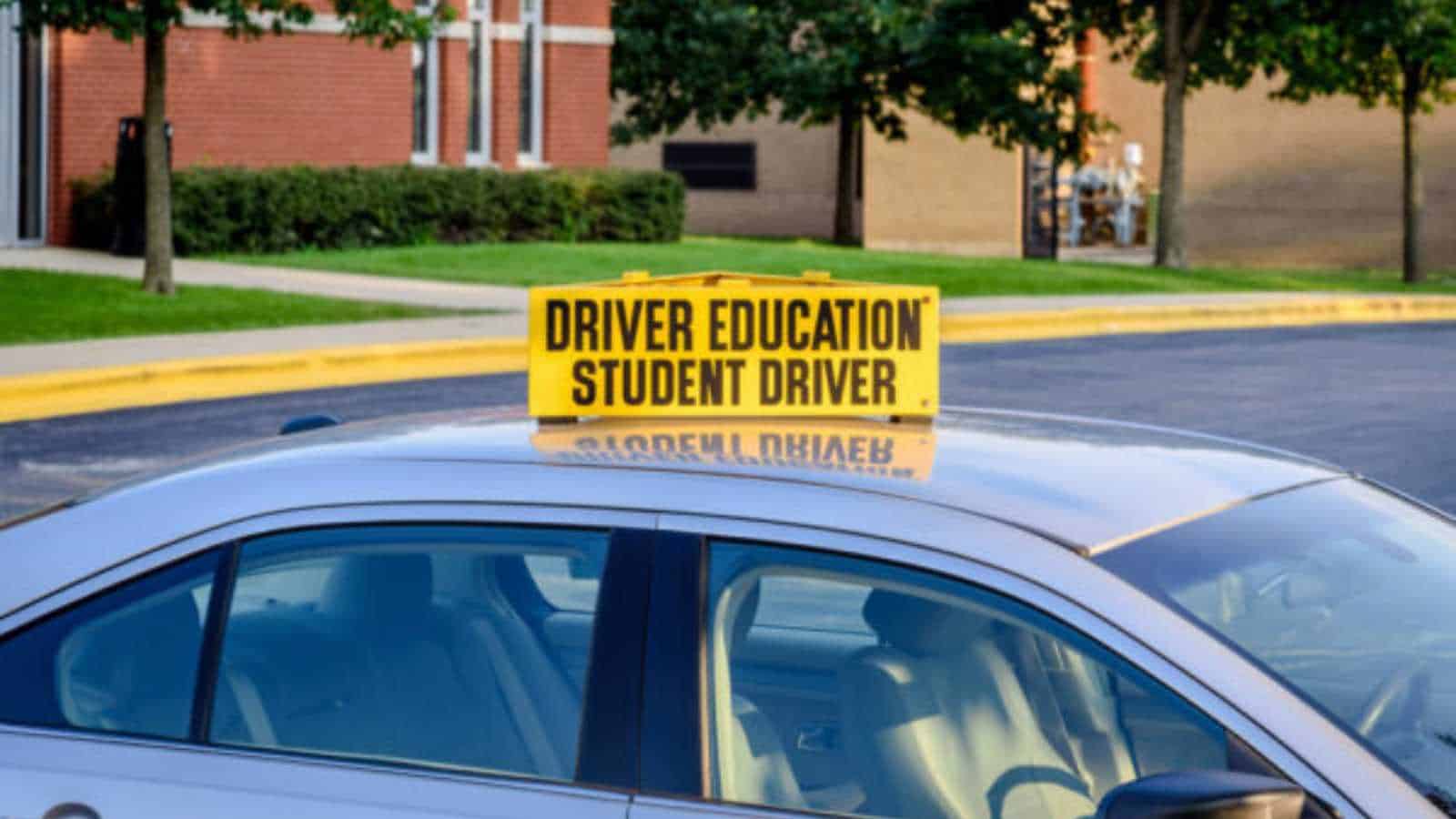
Ask almost any Boomer about high school, and somebody will bring up driver education, because schools used to treat learning to drive like a normal step toward adulthood. Districts often offered classroom instruction, summer programs, and actual behind-the-wheel practice, which sounds almost luxurious now. Education Week reports that schools no longer follow any national consensus on how to teach road safety, and many states now tuck the topic into health or social studies instead of keeping a full school-based driver ed class.
The bigger shift came when states moved responsibility away from schools and toward parents and private driving schools. That change did not happen because teens suddenly mastered parallel parking through vibes alone, obviously. It happened because budgets tightened, licensing systems changed, and public programs shrank, even though every state and Washington, D.C., now uses some form of graduated driver licensing, and federal data cited by Education Week showed that 29% of drivers ages 15 to 20 killed in crashes in 2020 had detectable blood alcohol levels.
Home economics

If any class screams Baby Boomer nostalgia, it is home economics. Students learned cooking, sewing, budgeting, child care, and household management in one place, which sounds suspiciously useful for something schools later shoved aside. A national survey summarized by ERIC found that secondary family and consumer sciences programs still enrolled about 3.43 million students in 2010 to 2012 and employed 27,894 teachers, but enrollment had dropped 38% over the previous decade.
That does not mean the idea died. It changed its name, added career pathways, and expanded its content across human services, hospitality, child development, culinary arts, and now personal finance. The catch is staffing. A 2024 Journal of Family and Consumer Sciences article summary reports that more than half of states struggle to hire qualified FCS teachers, which helps explain why the old all-purpose life skills class faded, even as students still want the material. Frankly, schools did not outgrow home ec. Schools just let it splinter.
General shop

Old school shop class carried a whole identity. It smelled like lumber, oil, and ambition, and it introduced students to tools, machines, materials, and basic industrial logic. NCES course descriptions for old transcript studies listed Industrial Arts 1 under names like Shop 1, Exploratory, and Industrial Arts Orientation, and those courses taught basics in woods, metals, plastics, and occupational orientation.
Then, schools rebranded the whole field. The International Technology and Engineering Educators Association says it began in 1939 as the American Industrial Arts Association, and its focus later shifted toward technological and engineering literacy. That one institutional name change tells the story better than any sentimental reunion photo. Schools stopped selling “shop” as a broad identity and started breaking it into engineering, technology, construction, and specialized CTE strands. In 2019, only 13.6% of graduates took a course in engineering and technology, indicating that the modern version still exists but no longer dominates the course catalog as general studies once did.
Woodshop

Boomer schools loved woodshop because it gave students a tangible payoff. You walked in with a board and walked out with a shelf, a toolbox, or something crooked that your family still kept for emotional reasons. NCES descriptions of early industrial arts courses explicitly included woodworking, making it clear that woodshop sat near the center of the old hands-on curriculum, not off in some elective corner.
Now, schools usually scatter that content into broader architecture and construction or career center programs. NCES reports that just 6.5% of 2019 graduates earned at least one CTE credit in architecture and construction, and overall CTE course-taking dropped from an average of 4.2 credits in 1990 to 3.6 in 2009 as academic credits climbed. So yes, a few schools still let students build things, especially rural ones, but the everyday neighborhood woodshop that Boomers remember has become the educational equivalent of a beloved hardware store that turned into an app.
Metal shop

The metal shop once gave students a direct introduction to cutting, forming, fastening, and surviving sparks without panicking. NCES’s old course descriptions even bundled metalwork into introductory industrial arts sequences, which shows how normal the subject once felt inside a comprehensive high school. Back then, schools treated hands-on industrial familiarity as part of a well-rounded education, especially for boys, and yes, the gender politics there deserve a long side eye.
Today, schools rarely offer metal shop under that plainspoken name. Modern pathways lean toward manufacturing, welding, CNC, or precision metalworking, and those programs usually live in technical centers rather than the classic all-purpose high school wing.
NCES says only 4.3% of 2019 graduates earned a CTE credit in manufacturing, which helps explain why metal shop feels almost mythic to younger adults. It did not vanish because metal lost value. Schools simply stopped giving the average teenager regular access to it.
Auto shop

Nothing captures old practical education better than the auto shop, where students learned engines, tune-ups, tire care, and basic maintenance before a warning light turned into a $900 headache. NCES transcript course listings still show a clear ladder of Auto Mechanics 1, 2, and 3, plus Auto Service and Consumer Auto, which indicates schools once offered both career-track and everyday car-owner versions of the subject. That setup made a lot of sense in a country built around driving.
The modern problem is not demand. It is access. NCES says only 4.3% of 2019 graduates earned a credit in transportation, distribution, and logistics, yet BLS projects 70,000 openings a year for automotive service technicians and mechanics from 2024 to 2034, with 4% job growth and rising demand for work involving computerized diagnostics and advanced safety systems. In other words, the auto shop did not die because cars got simpler. It died for many students as cars became more technologically advanced. Nice timing, schools.
Typing

Boomer students sat through typing because offices ran on typewriters, forms, and speed. Accuracy mattered, rhythm mattered, and nobody wanted to see whiteout all over the page.
The wild twist is that Americans type more than ever now, yet the standalone class almost collapsed. NCES shows the share of graduates earning credit in Keyboarding plunged from 44.1% in 2000 to 2.5% in 2019.
Schools did not stop teaching digital productivity. They simply changed the label. Over the same period, Computer Applications rose from 3.1% to 10.4%, and Business Computer Applications rose from 6.2% to 8.8%.
Modern course descriptions focus on Word, spreadsheets, presentations, databases, and internet skills instead of raw words per minute. That shift makes sense for today’s jobs, but it also means many students never get the structured typing fluency Boomers took for granted. A lot of teens now learn keyboarding the same way people learn to cook scrambled eggs at college, fast, badly, and with unearned confidence.
Shorthand and stenography

This one feels almost surreal now, but shorthand once looked like a serious path to office work. NCES course codes still list Shorthand 1, Shorthand 2, Speed Writing, Transcription, and even Court Reporter-related instruction, which shows how deeply schools once linked high school preparation to clerical and secretarial careers. If you grew up in that era, nobody needed to explain why rapid note-taking counted as employable magic.
Computers changed that world fast. Offices traded dictation pads and stenographic symbols for word-processing software, email, and digital records, so shorthand moved from a mass high-school elective to niche professional training.
BLS still expects about 1,700 openings a year for court reporters and simultaneous captioners through 2034, with a median annual wage of $67,310 in May 2024, but the field now depends on postsecondary certificates, licensing, and specialized technology rather than a common tenth-grade elective. That is why shorthand feels extinct in high school, even though a narrow professional version still survives.
Mechanical drawing

Boomer era schools often taught mechanical drawing because the industry needed people who could read, create, and think through technical plans. Students learned projection, machine drawing, and careful line work by hand, which required patience that today would probably trigger three separate notifications and a group chat complaint. NCES course lists still include Mechanical Drawing 3, Machine Drawing, and Engineering Drawing, so this was not some imaginary throwback class from a nostalgic movie set.
Today, CAD swallowed the old drafting board whole. NCES program descriptions now tie mechanical drafting directly to CAD/CADD, and BLS says drafters face little or no overall employment growth from 2024 to 2034 because CAD and BIM let engineers and architects do many tasks that once belonged to drafters. Even so, BLS still projects 16,200 openings a year, so the skill never loses value. Schools simply stopped teaching the hand-drawn version as a common standalone class and pushed students toward software-based pathways instead.
Print shop

Boomer schools also offered print shop or graphic arts classes, and those classes had serious real-world muscle. Students learned layouts, type, presses, binding, and the physical logic of how information moved from idea to page.
NCES course descriptions for Graphic and Printing Communications and Graphic Arts Technology read like a miniature trade school, covering layout, composition, presswork, lithography, printing materials, and machine maintenance. That is not an elective. That is a production pipeline.
The modern replacement looks much shinier and much less inky. NCES reports that 17.4% of 2019 graduates earned a CTE credit in communication and audio/video technology, and BLS notes that graphic designers now work primarily with computer software as companies continue to expand their digital presence. BLS projects only 2% growth for graphic designers from 2024 to 2034, but still expects about 20,000 openings a year, mostly because the work has shifted toward websites, social content, and digital layouts rather than school-operated presses.
So yes, the spirit of the print shop lives on. It just traded roller ink for Adobe subscriptions.
Office practice

Boomer high schools treated office practice like a direct bridge to employment. NCES course listings include General Office Practice 1, 2, and 3, plus Office Machines, with skills such as filing, collating, answering phones, reception work, using calculators, operating postage meters, and office simulations. Schools basically told students, “Here is how an office works, now go earn a paycheck.” Honestly, that level of blunt practicality has a certain charm.
Today, schools teach the same curriculum through digital tools rather than clerical routines. NCES reports that information technology accounted for 28.7% of graduates in 2019, and business and marketing accounted for 21.3%.
Modern high school business computer application courses teach keyboarding, word processing, presentations, spreadsheets, and soft skills. That change fits the labor market, but it also explains why younger adults know PowerPoint and still freeze when a receptionist asks them to organize paperwork, answer a multi-line phone, and keep a calm face all at once. The old office practice class was trained for workflow. The modern version trains for software.
Key takeaway

The big story here is not that schools abandoned practical learning. Schools reorganized it. NCES data show CTE still reaches most students, but the center of gravity shifted from manufacturing floors, typewriter desks, and sewing labs toward information technology, human services, finance, and digital communication.
That helps explain why Boomers remember school as more tactile and job-specific, and why today’s students still ask for life skills classes in surveys.
Some of those old classes survive in scattered districts and career centers, but the classic standalone versions mostly live in yearbooks, memory, and the occasional garage shelf somebody built in woodshop back in 1968.
If your high school could bring back one of these tomorrow, which one would you pick?
Like our content? Be sure to follow us.