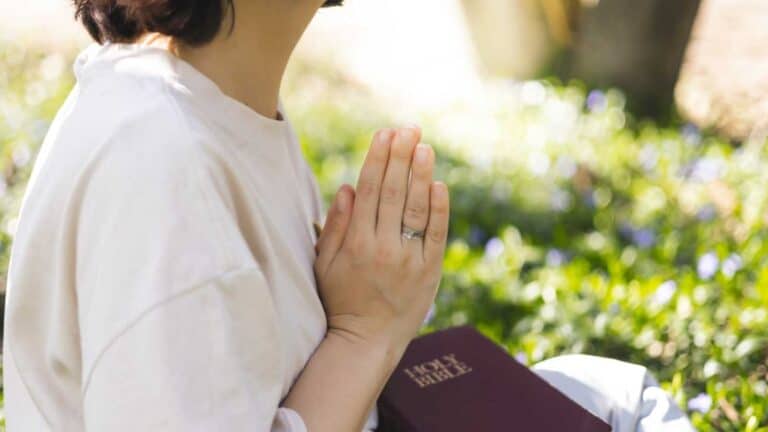
12 quiet signs God is extending you grace (even when you’re struggling to give it to yourself)
Research consistently shows that people are often far harsher toward themselves than they are toward others. Studies on self-criticism and self-compassion have linked chronic self-judgment to anxiety, depression, emotional distress, and burnout, while self-compassion is associated with better mental health and resilience. One 2025 longitudinal study published in Scientific Reports, tracking more than 400 participants over a year, found that self-compassion consistently weakened the connection between self-criticism and poor mental health outcomes.
For many people of faith, this creates a painful contradiction: they believe in grace for everyone else while quietly withholding it from themselves.
They pray, yet still replay old mistakes. They seek forgiveness, yet struggle to feel worthy of it. But grace does not always arrive as a dramatic breakthrough. Sometimes it appears in quieter forms, endurance, tenderness, unexpected peace, or the realization that you are still standing after a season that should have crushed you.
Here are 12 quiet signs God may already be extending you grace, even while you are struggling to offer any to yourself.
You still keep going after days that should have flattened you

You know those days when your soul feels like it ran a marathon in flip-flops? Yet somehow, you still get up, answer one message, make one meal, wash one cup, or whisper one prayer. That tiny movement may look boring from the outside, but grace often hides in ordinary endurance.
The American Psychological Association’s 2024 Stress in America report found that 77% of adults called the nation’s future a significant source of stress, so survival mode has become a very crowded room. If you still move forward with shaky knees, God may already have placed strength under your feet.
I love how unglamorous this sign feels, because nobody makes a movie trailer about folding laundry with a broken heart. Still, grace does not always make you feel heroic. Sometimes it keeps you from quitting before tomorrow gets a chance to tell a better story.
Ever notice how you thought you could not survive something, then somehow you did? That quiet “somehow” may carry more grace than you gave it credit for.
You feel convicted without feeling destroyed

Conviction can sting, but it does not have to crush you. When God extends grace, He can show you what needs to change without handing your inner critic a microphone and a fog machine.
That matters because University of Rochester behavioral health experts describe self-compassion as kindness toward yourself, recognition that humans make mistakes, and mindfulness without harsh judgment. In plain English, grace helps you say, “I messed up,” without adding, “so I am garbage.” Big difference, right?
This quiet sign shows up when you can face the truth and still believe God has not tossed you into the spiritual clearance bin. You may apologize, repair, learn, and grow, but you do not need to punish yourself forever to prove you feel sorry.
That kind of endless self-punishment can look holy from a distance, but it often just looks exhausting up close. Grace gives a correction with the door still open.
You keep finding comfort in small prayers

Sometimes prayer sounds polished. Other times, it sounds like, “Lord, please help me before I say something wild in this group chat.” Both count.
Pew Research Center found that 44% of U.S. adults pray daily, and women pray daily at a higher rate than men, 50% versus 37%. That trend shows that millions of Americans still use prayer as a daily anchor, even as formal religious practice shifts across the country.
Grace may show up when you feel drawn back to prayer after avoiding it. You may not have grand words, scripture-perfect confidence, or a calm candlelit corner.
You may only have one sentence and a tired heart. But if that sentence turns you toward God instead of deeper into shame, take it seriously. A small prayer can act like a window cracked open in a stuffy room.
Scripture starts meeting you right where you are

Have you ever read a verse you have seen a hundred times, only for it to suddenly feel like it walked across the room and sat beside you? That can feel oddly personal, almost suspiciously personal. The American Bible Society’s 2025 State of the Bible research found that people who read the Bible in the past week reported lower stress scores than those who had not, 8.0 versus 9.6, and they also reported higher hope scores, 18.6 versus 16.8.
That does not turn Bible reading into a vending machine, thank goodness, because who has exact change for hope? But it does show a meaningful link between engagement with Scripture and well-being.
Grace may be working when a passage helps you breathe, rather than merely giving you information. Maybe one verse nudges you toward forgiveness. Maybe another reminds you that God has not lost your address.
Maybe a familiar psalm finally hits differently because life has handed you new bruises. When Scripture starts sounding less like homework and more like shelter, pay attention.
You receive help even when pride wants to act busy

Grace can look like a friend bringing soup, a neighbor checking in, a pastor calling back, or a therapist offering one practical next step. Of course, pride may try to say, “I’m fine,” while your eye twitches like a warning light on a used car dashboard.
The U.S. Surgeon General’s advisory on loneliness says that data from 148 studies suggest that social connection increases the odds of survival by 50%. That source also quotes research saying that lacking social connection can raise the risk of early death from all causes.
So yes, accepting help can carry spiritual weight. God often uses people, which feels inconvenient when you would prefer a private miracle with no witnesses. Still, the community can become graceful with shoes on.
If someone safe keeps showing up, you do not have to make them pass a thirty-step emotional background check before you let them care. Maybe receive the casserole, the ride, the prayer, or the honest conversation.
You stop needing to earn love through perfection

Perfection loves a clipboard. Grace throws the clipboard out the window, then politely asks why you carried it for so long.
Harvard Health explains that self-compassion means showing compassion toward ourselves when we suffer, fail, or feel inadequate, and it adds that we “can and should” show compassion to ourselves. That expert framing matters because many faith-filled people can offer mercy to everyone except the person in the mirror.
God’s grace may be extending toward you as you begin to admit that your worth does not rise and fall with your productivity, weight, bank balance, relationship status, or ability to keep everyone pleased. You still grow. You still make wise choices. But you stop treating every flaw like courtroom evidence against your soul. Doesn’t that feel lighter already?
You notice beauty again, even in a hard season

Grace sometimes arrives through small beauty that refuses to wait for perfect circumstances. A sunset catches you off guard. A child laughs in the grocery aisle. A hymn lyric lands just right. A dog puts its chin on your knee like a furry little theologian.
Pew Research Center’s 2025 work on spirituality found that about seven in ten Americans identify with a religion and about seven in ten believe in an afterlife, suggesting that spiritual imagination still shapes how many people interpret everyday life.
This sign matters because struggle can shrink your field of vision. Pain makes everything look gray, and honestly, pain has terrible interior design taste.
When you start noticing beauty again, even for ten seconds, your heart may be remembering that hardship has not become the whole story. Grace does not always erase grief, but it can place one bright thread inside it.
You become gentler with people who are also struggling

A funny thing can happen when grace reaches you. You stop acting like everyone else needs to have their entire emotional garage organized by Friday. Research on self-compassion, as described in Kristin Neff’s 2023 review, defines it as support toward oneself in the face of suffering, personal mistakes, or external life challenges, characterized by greater self-kindness, common humanity, and mindfulness.
That “common humanity” piece matters because grace trains us to see other people as humans, not walking inconveniences.
You may still set boundaries, because grace does not require you to become a doormat with Bible verses. But you start judging less quickly. You remember that someone else’s sharp tone may come from fear, grief, exhaustion, or stress.
You do not excuse harm, but you do make room for mercy. That softening can signal that God has been healing parts of you that once only knew how to defend.
You can rest without calling yourself lazy

Rest can feel suspicious when you have trained yourself to earn every ounce of peace. But grace often whispers, “Sit down,” before burnout screams it.
In a 2025 Frontiers in Psychiatry study, researchers found that a self-compassion intervention uniquely decreased heart-rate response to a stressor among adults with generalized anxiety disorder, and both self-compassion and mindfulness reduced state anxiety and negative feelings. Your nervous system may need mercy, too, not just another motivational quote taped to your forehead.
When God extends grace, you may start to see rest as obedience rather than weakness. You may take a walk, nap, breathe, worship quietly, or silence your phone without drafting a courtroom defense. Does the laundry still exist? Tragically, yes.
But you also exist, and you need care. Grace reminds you that even God built rhythm into creation, so maybe you can stop acting like rest came from a scandalous side hustle.
You feel hope return in small, almost shy ways

Hope rarely barges in wearing a cape. It often tiptoes back. Maybe you can make a plan for next week. Maybe you can apply for the job. Maybe you laugh, surprised that laughter still knows your name.
The American Bible Society’s 2025 findings link recent Bible reading with higher hope and lower loneliness, and Scripture-engaged people also showed far stronger agreement that they find comfort in faith during hard circumstances.
That matters because grace does not always give you the full map. Sometimes it gives you one streetlight. You may not feel wildly optimistic, and no one should pressure you into pretending.
But if a small part of you starts believing that God can still write something good from this chapter, that little spark deserves protection. Hope does not need to roar to count.
You start forgiving yourself one honest layer at a time

Self-forgiveness can feel harder than forgiving other people, which feels rude but true. You may replay the mistake, the missed chance, the harsh words, or the season when you did not know better.
The Mayo Clinic links forgiveness to healthier relationships, improved mental health, reduced anxiety and stress, fewer depressive symptoms, and stronger self-esteem. That does not mean forgiveness feels easy. It means unforgiveness can become heavy furniture in the soul, and nobody wants to drag that thing forever.
Grace may show up when you stop confusing accountability with lifelong self-attack. You can name what happened, make amends where possible, and still release the fantasy that hating yourself will fix the past. God’s mercy does not ask you to deny the truth. It invites you to stop letting one chapter pretend it owns the whole book.
You sense God near without dramatic proof

Some people expect grace to come with lightning, goosebumps, and background music. Lovely, but most Tuesdays do not operate that way.
Pew Research Center’s Religious Landscape Study found that 62% of U.S. adults identify as Christians, and the Christian share has stayed relatively stable between 60% and 64% from 2019 to 2024 after years of decline. That trend suggests many Americans still hold to their faith, even as the cultural shape of religion continues to change.
Grace may feel like quiet nearness, not constant emotional fireworks. You may sense God in silence, in worship, in a verse, in tears that finally come, or in peace that makes no logical sense.
Do you need to feel it every minute for it to count? No. Feelings change with sleep, food, hormones, deadlines, and the tragic price of eggs. God’s presence does not depend on your emotional weather report.
You want to begin again, even softly

The desire to begin again can signal grace more than you think. Maybe you want to pray again, call someone again, attend church again, journal again, apologize again, or simply stop speaking to yourself like an enemy.
American Bible Society data show that Scripture engagement rose to 20% of Americans in 2025, up from 18% the year before, with more than 52 million Americans counted as Scripture-engaged. That shift points to renewed spiritual hunger, and your own small hunger may belong to that same wider movement.
Beginning again does not require a dramatic speech. You can start with one honest sentence: “God, I need help.” You can start by making breakfast, deleting the message you should not send, opening your Bible, or asking for support. Grace loves small beginnings. Apparently, mustard seeds were never trying to impress anyone, and they still made the point.
Key takeaway

God’s grace often arrives quietly, especially when you feel too tired to recognize it. It can look like endurance, conviction without shame, a small prayer, Scripture that meets your pain, help from safe people, honest rest, renewed hope, and the slow courage to forgive yourself.
Current U.S. data on anxiety, prayer, loneliness, Scripture engagement, and self-compassion all point to the same very human reality: people need mercy, connection, hope, and gentleness more than they need another reason to beat themselves up.
So maybe grace has not skipped you. Maybe it has been showing up in quiet ways while you kept looking for something louder.
Look for the tiny signs today: the breath you still have, the help you can receive, the truth you can face, and the God who still welcomes you back. And please, for the love of your nervous system, stop treating yourself like a project God regrets.
Disclaimer: This list is solely the author’s opinion based on research and publicly available information. It is not intended to be professional advice.
Like our content? Be sure to follow us.