12 reasons more Americans are quietly turning away from Christianity
On Sunday morning, the shift is quiet enough to miss. A few more empty spaces in the church parking lot. A few more young adults are skipping the denomination box. A few more Americans still believe in something sacred, but no longer feel at home inside organized Christianity.
Pew Research Center’s 2025 Religious Landscape Study found that 62% of U.S. adults now identify as Christian, down from 78% in 2007, while 29% identify as religiously unaffiliated. That is not a small cultural tremor. It is a change in how millions of Americans think about God, belonging, politics, trust, family, and identity. Yet Pew also found that 86% of Americans still believe people have a soul or spirit, and 83% believe in God or a universal spirit.
So this is not a simple story about America losing faith. It is a story about where people now choose to place it. This article is not here to mock Christianity or treat believers like they missed a memo.
Churches still feed people, comfort grieving families, build community, teach children, and give millions of Americans a moral home. Gallup reported in 2026 that 31% of Americans still attended religious services weekly or nearly weekly in 2025.
Yet the same Gallup report found that 57% seldom or never attended services, a sign that organized religion no longer holds the same weekly grip it once did. The question is not “Why did everyone stop believing?” The better question is more personal: why are so many Americans quietly stepping away from the version of Christianity they inherited?
Generational Replacement

The biggest force behind Christianity’s decline is not a single viral argument or a single bad church experience. It is a generational replacement, slow as rain and just as powerful. Pew Research Center found that adults ages 18 to 24 are far less likely than the oldest Americans to identify as Christian, while younger adults are much more likely to be religiously unaffiliated.
Pew’s 2025 report says 62% of U.S. adults identify as Christian today, down from 78% in 2007, and the age gap helps explain the change. Sociologist of religion Scott Thumma captured the pattern in plain language: “The most religious folks are the ones who are dying and the least religious folks are the ones coming in.” That sounds blunt, but it gets to the heart of the shift.
Many younger Americans did not wake up one day and storm out of church. They simply never developed the same deep institutional attachment their grandparents had. Some grew up with church as a holiday stop, not a weekly rhythm. Others watched faith become tied to politics, gender roles, or culture-war fights and decided the pew did not feel like home.
Negative LGBTQ+ Teachings

For many younger Americans, LGBTQ+ issues are not abstract doctrine. They are about friends, siblings, classmates, children, coworkers, and sometimes their own lives. PRRI’s 2024 Religious Change in America report found that 47% of religiously unaffiliated Americans who left their childhood religion cited negative teachings about or treatment of LGBTQ people.
Among unaffiliated adults under 30, that number rose to 60%, and among LGBTQ unaffiliated Americans, it reached 73%. Those figures explain why this issue sits so high on the list. A church may see itself as defending tradition, but a younger person may hear rejection, shame, or danger.
This does not mean every Christian community treats LGBTQ people the same way, and many churches are wrestling with the issue in different directions. Still, the data shows that for a large share of former members, the message they heard was not “you are loved.” It was “someone you love may not fully belong here.” That kind of wound can become a quiet exit.
Politics
A growing number of Americans say the church has stopped feeling like a sanctuary and has become a campaign stop. PRRI’s 2024 report found that 20% of unaffiliated Americans who left their childhood religion said they did so because their church or congregation became too focused on politics.
This concern is especially tied to the public image of white evangelicalism, conservative activism, and the Trump era, though political frustration can cut across more than one religious tradition. The point is not that faith and politics can never meet. Many churches have long histories of civil rights work, anti-poverty efforts, antiwar activism, and moral debate.
The problem begins when people feel the spiritual center has been swallowed by partisan loyalty. For some Americans, sermons, small groups, social media posts, and conversations in the church lobby started to sound less like a search for God and more like a test of political identity. Once that happens, people who feel politically out of step may not argue. They may simply stop going.
Clergy Sexual Abuse Scandals Erode Trust
Trust is hard to build. PRRI found that 31% of religiously unaffiliated Americans who left their childhood religion cited clergy sexual abuse scandals. Among former Catholics, PRRI found that 45% named church sex scandals as a reason they left, compared with 24% of former non-Catholics.
Those numbers are not just about headlines. They point to a deeper break in moral authority. Many people can survive disappointment in ordinary leaders, but religious leaders often speak in the language of holiness, sacrifice, family, and truth. When abuse happens, and when institutions protect themselves before victims, the damage spreads far beyond one congregation.
Some people lose faith in a leader. Others lose trust in the system that gave that leader power. Many still believe in God, prayer, or grace, but they no longer trust the building, the hierarchy, or the official apology. For them, leaving is not rebellion. It is self-protection.
Mental Health Concerns
For some Americans, leaving Christianity is not about intellectual doubt first. It is about breathing easier. PRRI’s 2024 report found that 32% of religiously unaffiliated Americans who left their childhood religion said they did so because religion was bad for their mental health. The number was higher among LGBTQ unaffiliated Americans at 48%, and among unaffiliated adults ages 18 to 29 at 39%.
That matters because mental health language has become much more common in the last decade. People now have words for religious trauma, shame, anxiety, purity culture, fear-based teaching, family pressure, and spiritual control.
A person may still miss the hymns, the potlucks, the grandparents, and the feeling of being prayed for, yet also remember panic, guilt, or a constant fear of not being good enough. The emotional split can be painful. It is possible to love parts of a faith tradition and still decide that the version you received was harming you.
Decline in Church Attendance
For decades, the church was not just a belief system. It was a calendar. It shaped Sunday mornings, youth group nights, weddings, funerals, volunteer work, friendships, and the way families introduced themselves to a town.
Gallup’s 2026 report on 2025 religious engagement found that 57% of Americans said they seldom or never attend religious services, while 31% attend weekly or nearly weekly, and 10% attend about once a month. Gallup also noted that majorities have reported seldom or never attending since 2018. That means the change has moved from the margins into the mainstream.
Once people stop attending, the church loses more than their presence in a pew. It loses habits, relationships, donations, children’s participation, and the small weekly rituals that keep identity alive. A person can still call themselves Christian, but if church no longer shapes their week, their faith may become more private, less institutional, and easier to loosen over time.
Rising Secularization

The rise of the “nones” may be the clearest sign that American religion has entered a new chapter. Pew’s 2025 Religious Landscape Study found that 29% of U.S. adults are religiously unaffiliated, including atheists, agnostics, and people who say their religion is “nothing in particular.”
Gallup’s 2026 report put the unaffiliated share at 24% in its 2025 data, showing that the exact number varies by survey method, but the direction is clear. The unaffiliated are no longer a small side category. They are a major part of American public life.
Many are not loudly anti-religion. Some pray. Some believe in God. Some meditate, read spiritual books, light candles, spend time in nature, or talk about energy and purpose. What they reject is the label, the institution, the doctrine, or the pressure to belong to a formal church. This is why the story feels so quiet. Millions are not staging dramatic exits. They are checking “none” on a form and moving on with their day.
Christianity’s Decline Is Much Sharper Among Liberals
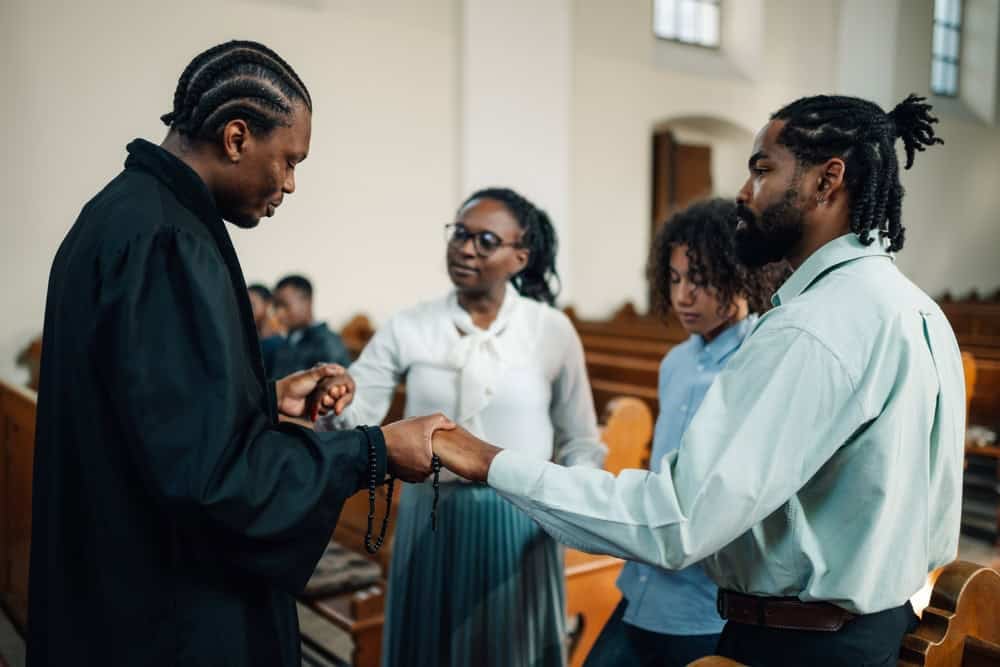
Christianity’s decline is not spread evenly across the political map. Pew’s 2025 study found that among self-described liberals, Christian identity fell from 62% in 2007 to 37% in the 2023 to 2024 Religious Landscape Study.
Among conservatives, the Christian share remained much higher, falling from 89% to 82% over the same period. Associated Press coverage of Pew’s findings also noted that 51% of liberals now claim no religion. That split explains why religion and politics feel so tangled in America right now.
Gregory Smith of Pew told NPR that religious “nones” are “among the most strongly and consistently liberal and Democratic constituencies in the United States.” For many liberals, especially younger ones, Christianity has become linked in their minds with conservative politics, gender hierarchy, anti-LGBTQ policies, and battles over schools and reproductive rights.
That association is not fair to every church or every Christian, but perception has power. If people think a religious identity has become a political identity, some will walk away from both at once.
Faith’s Importance Has Plunged 20 Percentage Points Since 2000

Christian identity tells only part of the story. Intensity matters too. Barna’s 2025 State of the Church data reported that faith’s importance has dropped 20 percentage points since 2000, more than any other Christian commitment measure it tracked.
Barna also found that practicing Christians declined from 46% to 24% of U.S. adults over the past 25 years, and only one in three Christians strongly says they feel responsible to share their faith. Daniel Copeland, Barna’s vice president of research, put it plainly: “Over the past 25 years, the most significant and potentially overlooked change in faith life has been the declining importance of Christians’ faith.”
That means some Americans are not leaving Christianity in name, but Christianity may be taking up less space in their actual lives. It may guide fewer choices, conversations, friendships, routines, and future plans. The label can remain after the fire has dimmed. For churches, that quieter cooling may be just as important as formal disaffiliation.
Young Women Are Disaffiliating Faster

For a long time, women were often more religiously involved than men. That pattern is changing among younger adults. The Survey Center on American Life reported in 2024 that among Gen Z adults who left their formative religion, 54% were women and 46% were men.
It also found that 39% of Gen Z women identify as religiously unaffiliated compared with 34% of Gen Z men, and nearly two-thirds of young women, 65%, said they do not believe churches treat men and women equally. That finding is important because it hints at something deeper than simple boredom with church.
Many young women are looking at leadership structures, teachings on gender, abuse scandals, purity culture, reproductive politics, and LGBTQ issues, and asking if the institution sees them as full moral adults. Some still love faith, scripture, prayer, or Jesus. But they may not want a religious home where their questions feel unwelcome or their equality feels conditional. This is not a small shift. It could reshape church life for decades.
Christians Are Losing More Members
Christianity remains the largest religious identity in the United States, but Pew’s data shows it loses more people than it gains through religious switching. Pew’s 2025 Religious Landscape Study found that 35% of U.S. adults have changed religions since childhood, and the switching patterns create net gains for the religiously unaffiliated and net losses for Christianity.
Pew also found that all three major Protestant strands have declined as shares of U.S. adults since 2007: evangelical Protestants from 26% to 23%, mainline Protestants from 18% to 11%, and historically Black Protestants from 7% to 5%. The institutional pressure shows up in church closure warnings, too.
Axios reported that some analysts projected as many as 15,000 U.S. churches could close in 2025, though Boston University theologian Wesley Wildman cautioned that closure numbers are hard to confirm. So the figure should be treated as an estimate, not a final count. Still, the direction is hard to miss: fewer members, fewer regular attendees, and thinner finances place many congregations under strain.
Spiritual But Not Religious
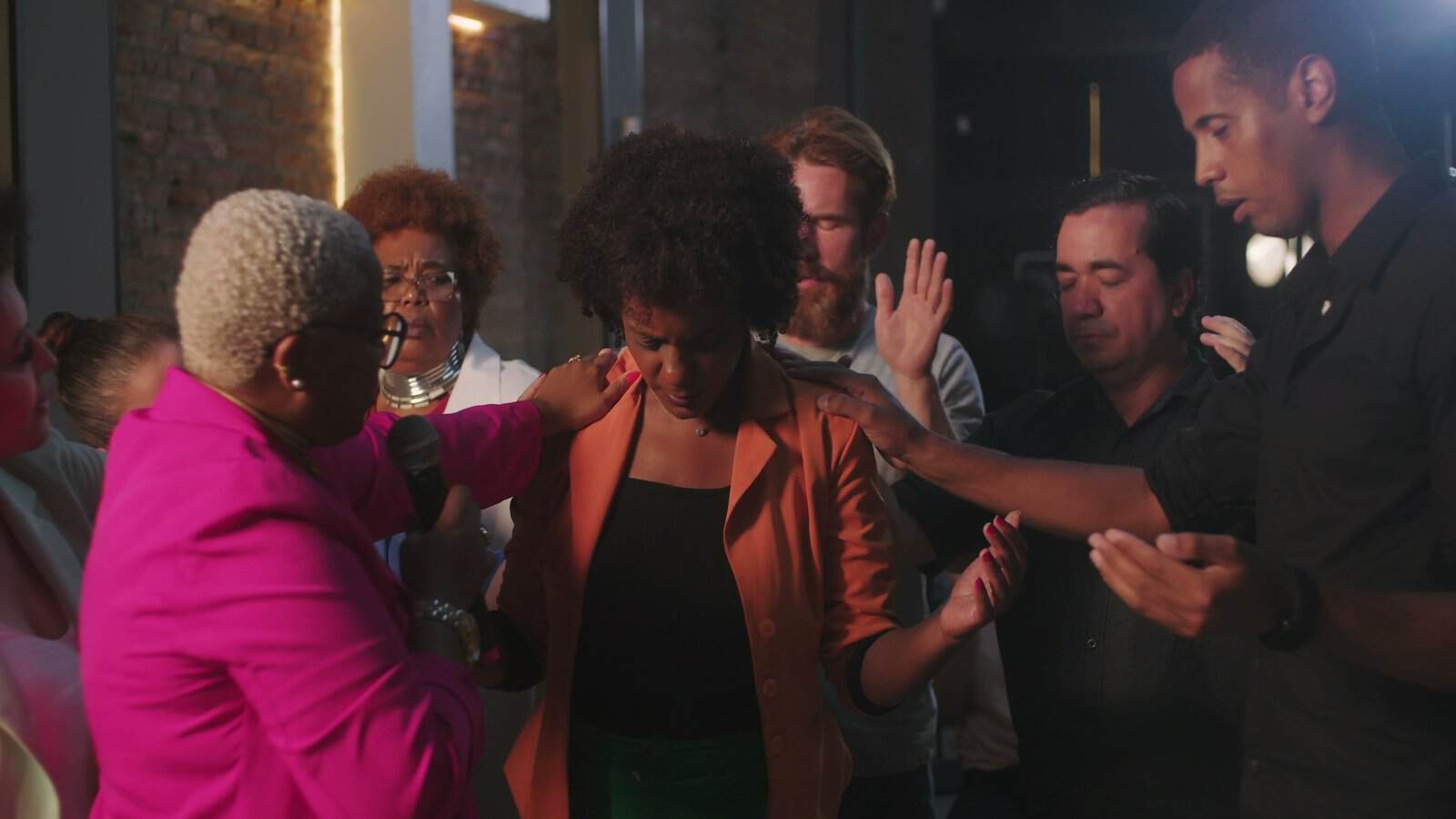
The final reason may be the most revealing. Many Americans are not walking away from wonder. They are walking away from organized religion as the main container for it. Pew’s 2025 study found that 86% of Americans believe humans have a soul or spirit, 83% believe in God or a universal spirit, 79% believe there is something spiritual beyond the natural world, and 70% believe in an afterlife.
Those numbers sit beside the 29% unaffiliated figure like a candle beside an empty pew. They show a country that remains spiritually curious even as church attendance falls. Some people now find meaning through prayer without membership, meditation without doctrine, nature walks, therapy, podcasts, family rituals, music, recovery groups, or small communities outside traditional church walls.
Some are still Christian in belief but tired of institutions. Others are blending ideas that older church leaders may find confusing or too loose. The result is a more private, more customized spiritual life. It may lack the shared structure of a church, but for many Americans, it feels more honest.
A Short Reflective Close

America is not becoming empty of belief. Pew’s numbers show that most Americans still believe in souls, God, or a universal spirit, and some kind of spiritual reality beyond what the eye can see. But the old automatic pathway from childhood church to adult faith has weakened.
For some, the break came through politics. For others, it came through pain, scandal, exclusion, mental health, or a slow fading of habit. Christianity is still woven deeply into American life, but the thread is looser than it used to be.
The next 6 to 12 months will likely bring more debate about young men returning to religion, young women leaving institutions, church closures, and the search for communities that feel honest rather than performative. The pew is not empty everywhere. But in many places, it is asking harder questions than before.
Key Takeaways

The decline of Christianity in America is real, but the most recent Pew data suggests it may have slowed or leveled off since 2019. The strongest verified figures show 62% of U.S. adults identifying as Christian in the 2023 to 2024 Religious Landscape Study, down from 78% in 2007, while 29% identify as religiously unaffiliated.
The reasons people leave are rarely one-note. PRRI data shows that former members cite LGBTQ teachings, politics, clergy abuse scandals, and mental health, while Gallup data shows most Americans now seldom or never attend religious services. That means disaffiliation is shaped by trust, belonging, identity, habit, and personal experience, not just disbelief.
The most important part of the story may be spiritual rather than anti-religious. Pew found that 86% of Americans believe people have a soul or spirit, and 83% believe in God or a universal spirit. Many Americans are not done searching. They are changing where they search, who they trust to guide them, and what kind of faith feels safe enough to call home.
Disclaimer – This list is solely the author’s opinion based on research and publicly available information. It is not intended to be professional advice.
Like our content? Be sure to follow us