12 church practices that just don’t add up anymore
Here’s the awkward truth: a lot of church habits still run on a 1995 operating system in a 2026 country. Pew’s latest Religious Landscape Study says 62% of U.S. adults still identify as Christian, but 29% now identify as religiously unaffiliated, and only 33% say they attend religious services at least monthly. At the same time, 83% say they believe in God or a universal spirit, and 79% say they believe something spiritual exists beyond the natural world, so Americans clearly have not dumped spirituality altogether.
Gallup adds another layer to the story: just 47% of Americans said religion was “very important” in their lives in 2025, and 28% said it was “not very important,” which marks a historic high for that answer. Yet Barna found something churches cannot ignore: younger adults now show up more often than older generations among churchgoers, even though the average churched adult still attends only about 1.6 times per month. In other words, the church has not vanished, but the old assumptions have started wobbling like a folding table at a potluck.
Treating attendance like the whole story
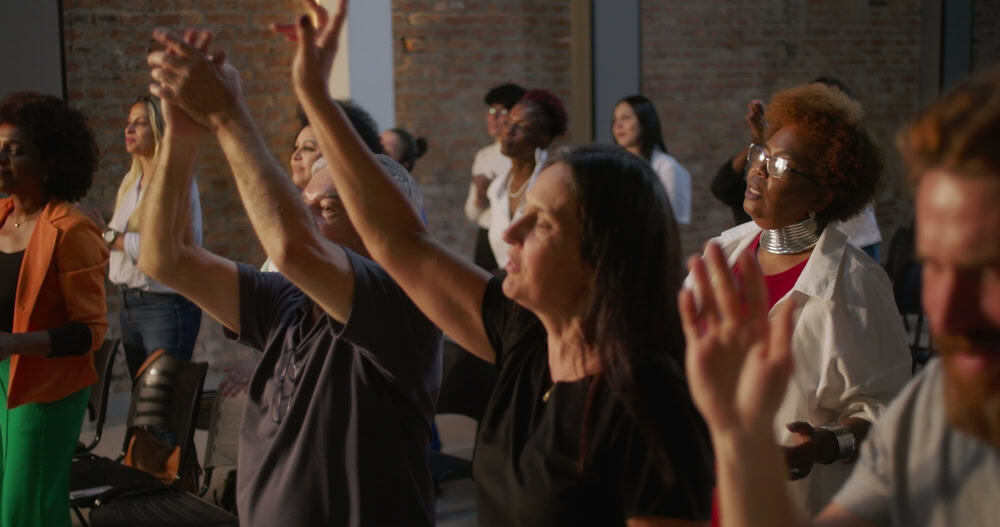
Some churches still treat Sunday attendance like the final exam for spiritual seriousness, and honestly, that math looks shaky now. Barna says the typical Gen Z churchgoer attends 1.9 weekends per month, Millennials average 1.8, and all churched adults average 1.6, which means even “regular” attendance no longer looks like four gold stars on the calendar. I grew up seeing some of the strongest faith show up in hospital rooms, kitchen-table prayers, and quiet acts of care, so the clipboard approach has always felt a little too neat for real life.
Barna researcher Daniel Copeland said “every touchpoint matters,” and that line lands because it matches what pastors and regular people already feel. If churches keep acting like one missed Sunday equals spiritual backsliding, they will keep misreading committed people who juggle work shifts, caregiving, health issues, and plain old exhaustion. Churches need better measures than seat counts because discipleship grows through relationships, service, and formation, not just a weekly headcount.
Shaming people who cannot show up every Sunday

A lot of churches still act like faithful people should appear in the same seat every week, right on schedule, as if nobody works weekends, cares for aging parents, or catches the flu. Pew reports that monthly in-person attendance has hovered in the low 30s since 2020, that 27% of Americans regularly watch services online or on TV, and that 17% now participate both in person and virtually. That pattern does not scream laziness to me; it screams adaptation.
The funny part is that hybrid participation does not kill in-person worship anyway. Among people who regularly do both, Pew found that 76% still prefer attending in person, suggesting most people do not see screens as the ideal but rather as a practical bridge. Churches should stop treating flexible participation like a moral failure, because sometimes a livestream simply helps someone stay connected when life turns messy, and life turns messy a lot.
Treating questions like rebellion

This one really does not add up anymore, because Americans ask more questions about faith, morality, and meaning than churches sometimes want to admit. Pew found that 60% of religiously unaffiliated adults say doubt about religious teachings ranks as an extremely or very important reason they are nonreligious, and 67% cite skepticism or nonbelief in some form as a key factor. When churches punish honest doubt, they do not protect faith; they train curious people to leave quietly.
The age gap makes the problem even clearer. Pew’s 2025 study found that adults ages 18 to 24 are far less religious than adults ages 74 and older: just 46% identify as Christian, 27% pray daily, and 25% attend services at least monthly, compared with 80%, 58%, and 49%, respectively, among the oldest group. Churches should expect hard questions in a country like that, and they should welcome them before YouTube, TikTok, or Reddit answers first with half-baked certainty and zero pastoral care.
Making politics the main event

I know, I know, every church says it “just speaks truth,” but plenty of Americans hear something closer to cable news with a closing prayer. PRRI found that 20% of unaffiliated Americans say they left their childhood religion because their church or congregation became too focused on politics. Barna adds that 25% of people ages 13 and older say they would feel uninterested in hearing pastors or priests discuss social and political issues, making politics the top topic they do not want clergy to cover.
The pressure hurts leaders, too. Barna says that 33% of pastors believe political division has damaged their credibility, and only 20% say they feel equipped to lead on politics and civic engagement. Kaitlyn Schiess put it well when she said churches often act as the sermon serves as the main resource for political formation, when congregational life offers many other, wiser ways to shape people.
Hiding the money and calling it trust

Churches still ask people to “just trust the leadership” about money far too often, and that approach feels especially outdated in an era when transparency shapes trust everywhere else. Church Law & Tax adviser Michael Batts says a well-crafted financial policy can protect the church and build trust among members, while ECFA says the way ministries handle financial transparency and governance can build or irreparably break trust. If a church wants generous giving, it should stop treating budget clarity like classified information.
ECFA offers a useful example here. Even though ECFA is not required to file a Form 990, as many nonprofits do, it voluntarily prepares one and makes it public as part of its commitment to transparency. Its membership now includes more than 2,700 accredited organizations that follow standards for governance, financial accountability, and stewardship.
Churches do not need flashy dashboards or corporate jargon, but they do need plain-language budgets, conflict rules, and honest answers to questions about where the money goes.
Pretending screens can replace community

Some church leaders still swing from one extreme to the other. First, they treat online worship like a fake church, then they act like a polished stream can fully replace embodied community. Pew’s research shows why both extremes miss the point: 52% of people who prefer in-person worship say they choose it for a stronger sense of connection and community, and regular in-person attendees report much stronger feelings of connection than virtual viewers.
Pew found that only 28% of regular virtual viewers feel a strong connection with people attending the same service in person, while roughly two-thirds of regular in-person attenders say they feel a great deal or quite a bit of connection with others there. That does not make online ministry useless; it makes it limited in a very human way. A livestream can carry a sermon, but it cannot hand you a casserole, notice your face, or pull you into a hallway conversation after a rough week.
Assuming younger adults just do not care

This might be the laziest church cliché on the list, because the data already moved on. Barna found that nearly two in three Gen Z respondents, 64%, prayed to God within the last seven days, 37% read the Bible in the last week, and 36% attended a church service in the last week. On top of that, Barna’s 2025 churchgoing data says Gen Z and Millennials now attend church more frequently than older generations among churchgoers, after rising from roughly one weekend per month in 2020 to nearly two in 2025.
The better question is not whether younger adults care, but what kind of church experience they will keep returning to. Kristel Acevedo told Barna that younger generations crave genuine relationships and healthier, supportive environments, and she said plainly, “Authenticity is key.” So no, most younger adults do not need another lecture about commitment; they need churches that feel honest, relational, and less obsessed with pretending everything already works perfectly.
Treating mental health struggles like weak faith

This practice feels cruel, and the numbers make it look foolish, too. PRRI found that 32% of unaffiliated Americans say they no longer identify with their childhood religion because religion was bad for their mental health, and that number rises to 39% among unaffiliated adults ages 18 to 29. Barna also keeps finding that Gen Z carries heavy anxiety, loneliness, and exhaustion, so churches should not act shocked when perfection talk and shame-first ministry drive people away.
Acevedo told Barna that Gen Z needs to hear they are loved and accepted as they are, without chasing perfection, and that insight should sound obvious by now. Churches can pray, offer spiritual care, and still point people toward therapists, doctors, medication, and evidence-based help when needed. Faith and mental health care can work together just fine, and churches that still force people to pick one or the other need to update their playbook.
Equating morality with church affiliation
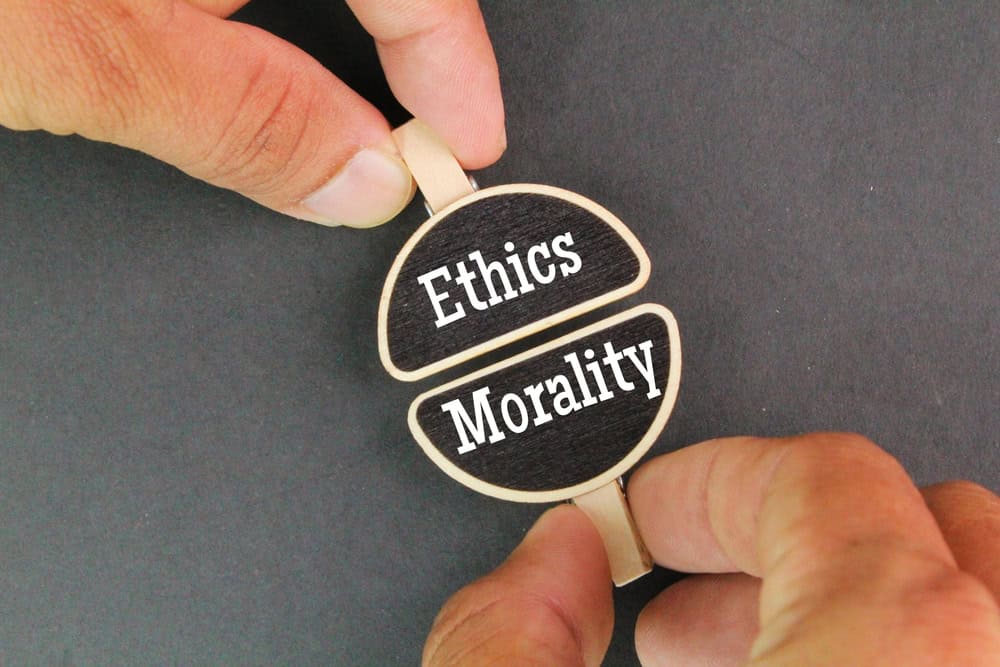
A lot of church culture still talks as if moral character automatically lives inside church walls and wanders around confused outside them. Pew’s latest cross-national survey shows that 68% of Americans say people do not need to believe in God to be moral and have good values, while 31% say they do. That does not erase religion’s moral voice, but it absolutely means churches cannot assume the country still buys the old equation.
Pew’s same 2025 survey found something even more uncomfortable: the United States was the only country studied in which more adults rated their fellow citizens’ morality as bad (53%) than good (47%). Churches do not fix that cynicism by turning morality into tribal branding or insider language. They fix it by modeling integrity, mercy, honesty, and neighbor-love in ways people can actually see without needing a decoder ring.
Picking fights with science for no good reason

Some churches still react to science like it showed up to steal the offering plate, and that reflex makes less and less sense in the U.S. Pew found that 52% of Americans say science does more good than harm for society, while only 7% say it does more harm than good. The same report says 56% of Protestants and 52% of Catholics view science and religion as mostly compatible, which tells me regular people already hold a more grown-up view than some church culture warriors do.
That matters because plenty of Americans live inside medicine, engineering, education, nursing, parenting, and everyday problem-solving. They do not wake up each morning wanting a fake war between microscopes and Scripture. Churches can defend faith and still honor vaccines, therapy, climate data, research methods, and the basic idea that truth does not panic when somebody opens a lab notebook.
Building a church around one family template
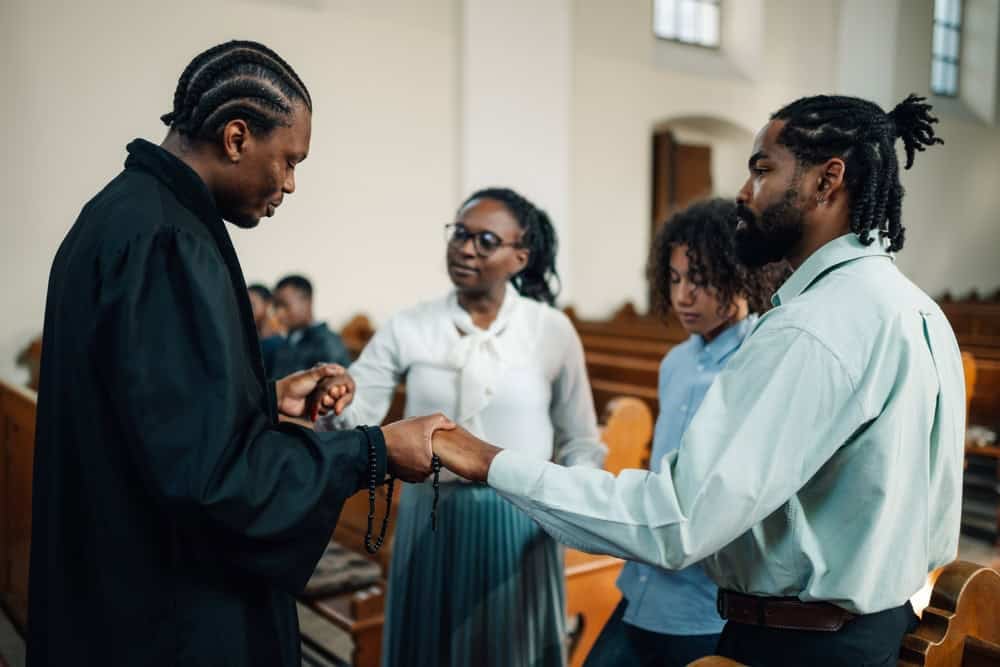
Churches talk nonstop about family, but too many still build church life around one narrow picture: a married couple, kids, a predictable schedule, endless availability, and a smile for the bulletin. Barna’s 2025 attendance data says men now outpace women in regular church attendance, 43% to 36%, and Barna points to work and caregiving burdens, isolation for unmarried women, and a cultural mismatch between some younger women and traditional church structures. When churches act surprised by women’s disengagement but keep designing everything around a single life script, the disconnect becomes pretty obvious.
This one hits hard because churches often claim they care deeply about women and families, yet some still sideline women’s gifts or overload them with unspoken labor. Barna notes that younger women can feel isolated in congregations that cater to nuclear families, and some researchers see a clash between women’s sense of agency and churches that feel rigidly hierarchical. Churches need broader tables, saner expectations, and real room for single adults, caregivers, young professionals, and women who want more than a support role with a casserole assignment.
Using LGBTQ negativity as an identity badge

You do not need to settle every theological debate to notice this pattern. PRRI found that 47% of unaffiliated Americans say they left their childhood religion because of negative teachings about LGBTQ people, and that figure rises to 60% among unaffiliated adults under 30 and 73% among LGBTQ unaffiliated Americans. When churches keep making harshness sound like courage, they should not act stunned when younger adults hear contempt instead of conviction.
Churches can hold beliefs and still speak with humility, warmth, and restraint. What does not add up anymore is turning antagonism into a branding strategy and then calling the fallout persecution. In a country where 29% of adults now identify as religiously unaffiliated, churches that confuse meanness with faithfulness will keep shrinking their own front door.
Key takeaway

Churches do not lose relevance because Americans suddenly stopped caring about spiritual life. Pew says 83% of Americans still believe in God or a universal spirit, 79% still believe in something spiritual beyond the natural world, and 44% still pray daily. But the public has much less patience for practices that feel opaque, punitive, political, rigid, or disconnected from real life.
If churches want to connect in 2026, they need clearer trust, better community, more room for questions, stronger mental health support, and a lot less pretending that the old formulas still solve everything.
Like our content? Be sure to follow us.