When the Doctor Becomes the Patient: What Physicians With Cancer Want You to Know
Doctors who’ve faced the disease themselves share candid lessons about empathy, medical bias, and the humanity of care.
When physicians become cancer patients, they describe a profound shift in how they see illness, communication, and the humanity of care—and they want clinicians and patients alike to rethink what “good care” really means. Their stories underscore how empathy, clear communication, and awareness of bias can matter as much as any drug or scan in shaping a person’s experience of cancer.
Seeing the Other Side of the Stethoscope
Doctors who develop cancer often say that no amount of training prepared them for the emotional free fall of becoming a patient. Many report diagnosing themselves or suspecting the diagnosis before formal testing, yet still needing another physician’s clear, verbal confirmation to truly take it in.
- A 2024 qualitative study of Polish physicians with cancer found that many “doctor‑patients” initially recognized their own symptoms but described the official diagnosis conversation as a pivotal, deeply emotional moment that made the illness “real.”
- General practitioner Paul Coffey, who wrote The Only Book I’ll Ever Write: When the Doctor Becomes the Patient, used his experience of an unexpectedly better‑than‑feared prognosis to reflect on the “medical, human, oncological, and psychological dramas” of being a cancer patient after decades as a clinician.
These dual perspectives often make physicians more attuned to how small details, a phrase, a tone of voice, whether someone sits down, can transform a frightening encounter into one that still carries hope.
What Doctors‑With‑Cancer Say About Empathy
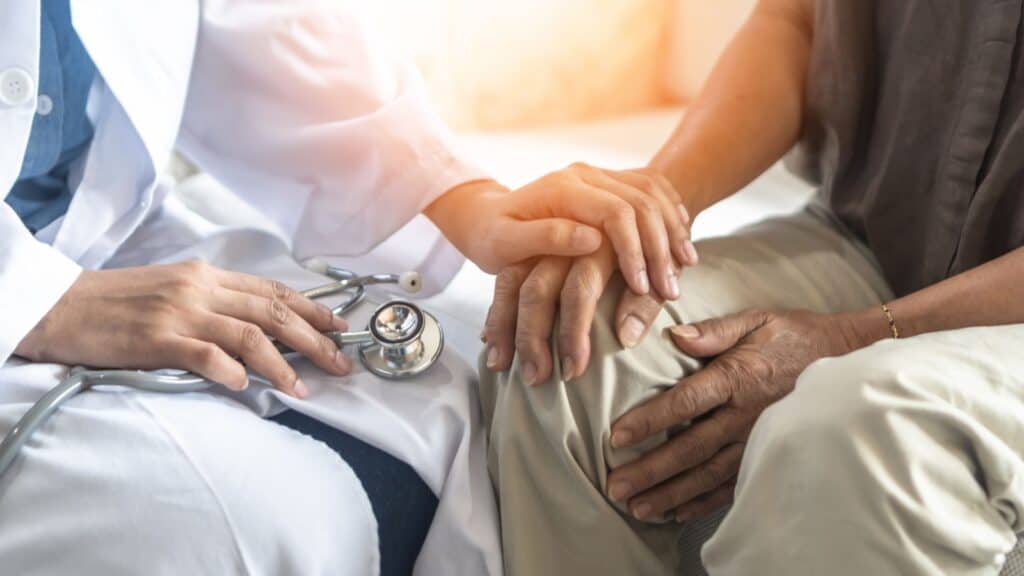
Physicians who have “crossed over” repeatedly emphasize that empathy is not a frill; it is a core part of effective cancer care. Their lived experience aligns with a growing body of research showing that empathic communication improves psychological outcomes and even practical aspects like information recall.
- A meta‑analysis of 55 studies found that patient‑reported physician empathy was significantly associated with better cancer patient outcomes, with a modest but consistent effect size across emotional, functional, and satisfaction measures.
- In advanced cancer consultations, higher patient‑perceived clinician empathy has been linked to reduced anxiety, greater emotional well‑being, and better satisfaction with care.
- Experimental work in oncology settings shows that brief, explicit empathic responses—acknowledging emotion and expressing support—can increase how well patients remember important medical information discussed during the visit.
Doctors who become patients often say they previously underestimated how much it matters when a clinician:
- Names the emotion in the room (“This is a lot to take in, and it’s scary”).
- Affirms that the patient will not be abandoned (“We’ll go through this together”).
- Leaves space for silence instead of rushing to the next task.
As physician‑turned‑patient narratives in the AMA Journal of Ethics describe, telling and hearing illness stories can become an “empathic bridge” that helps physicians see patients less as cases and more as people with complex lives and fears.
The Hidden Biases Doctors Notice From the Bed
Once they are in the hospital gown, many physicians become acutely aware of how bias and assumptions shape their own care—and they worry about what that means for patients without professional status or medical knowledge.
Implicit bias and cancer care
Implicit biases, automatic, unconscious attitudes about race, ethnicity, age, or disease type, have been documented across healthcare, including oncology.
- A 2023 review on implicit bias in oncology concluded that such biases can influence treatment decisions, pain management, and communication, contributing to disparities in cancer outcomes for marginalized groups.
- Studies of racially discordant oncology visits show that oncologists with higher implicit racial bias tend to have shorter visits, talk more than their patients, and demonstrate fewer patient‑centered communication behaviors, which in turn lowers trust and satisfaction among Black patients.
- A 2025 analysis of U.S. survey data found that poor provider communication and experiences of discrimination were strongly associated with lower trust in physicians for cancer information; a single reported incident of discrimination reduced the odds of high trust by about one‑third.
Doctors who become patients often report seeing bias play out in subtler ways: assumptions that they are exaggerating pain, that a younger adult must have a benign condition, or that an older person cannot handle aggressive therapy. Those experiences can make them more vocal about the need to:
- Routinely examine implicit bias in clinical teams.
- Standardize key parts of decision‑making so that access to treatments does not depend on a clinician’s gut feeling about who is “a good candidate.”
- Invite patients to name and discuss experiences that feel dismissive or discriminatory.
From the physician‑patient view, acknowledging bias and actively working against it is part of treating people with dignity rather than simply providing technically correct care.
Communication: What They Wish Colleagues Knew
Doctor‑patients consistently say that communication quality can be as impactful as the staging of the tumor in shaping how they cope. Research on cancer care supports their impressions.
- A 2023 systematic review of “harmful communication behaviors” in cancer care found that patients and caregivers highlighted behaviors such as delivering overly blunt news without sensitivity, offering false reassurance, and ignoring emotional cues as particularly damaging.
- Another study of advanced cancer consultations showed that patients’ perceptions of clinician empathy—not clinicians’ own self‑ratings—were what actually correlated with lower anxiety and better emotional outcomes.
Physicians who have gone through chemotherapy suites, imaging rooms, and surgical recoveries themselves often emphasize:
- Clarity plus pacing: Plain language about diagnosis and options, but delivered in manageable chunks rather than information dumps that overwhelm.
- Repetition and written backup: Understanding that patients under stress forget a significant portion of what they hear, and proactively offering summaries, printed plans, or patient portal messages.
- Checking for understanding: Asking “What are you taking away from this?” rather than “Do you have questions?” which many patients feel intimidated to answer honestly.
A 2024 study of doctors with cancer noted that while they generally praised their colleagues’ technical competence, they were often critical of communication skills, describing a gap between “excellent medicine” and “excellent care.” Their narratives suggest that filling this gap requires deliberate training and culture change, not just good intentions.
How Illness Changes the Way Doctors Practice

Many physicians who survive cancer return to work determined to practice differently. They describe being slower, more present, and more willing to discuss fears and values rather than just lab results and imaging reports.
- In an article reviewing Coffey’s memoir, the British Journal of General Practice highlighted how his experience sharpened his appreciation of continuity of care, the power of seemingly minor interactions with nurses and receptionists, and the central importance of giving realistic hope to people living with cancer.
- A 2023 personal story from a breast surgeon diagnosed with breast cancer described how her own “crazy cancer journey” deepened her understanding of fear, shame, and vulnerability, and made her more deliberate about the way she prepared patients for the speed and intensity of treatment decisions.
These shifts are echoed in broader research on the “inner life” of physicians:
- A classic JAMA article on the care of seriously ill patients argues that unexamined emotions—frustration, helplessness, fear of failure—can lead to disengagement, poorer judgment, and a loss of the sense of the patient as a fellow human being.
- Narrative medicine scholars note that reflective writing and sharing personal illness experiences can help clinicians recognize their own vulnerabilities and sustain empathy over time.
Doctors who have been patients tend to champion reflective practices, peer support, and serious‑illness communication training as tools to make medicine more sustainable and humane, for clinicians and patients alike.
The Toll of Cancer Care on Clinicians
One lesson many physician‑patients stress is that cancer care is hard on clinicians too, and that burnout and compassion fatigue can quietly erode the quality of care unless addressed.
- Oncologists are recognized as being at high risk for burnout, with heavy workload and constant exposure to suffering identified as key drivers.
- A study of oncology professionals found that higher present‑centered awareness (a core element of mindfulness) was associated with higher compassion satisfaction and lower exhaustion, disengagement, and compassion fatigue.
- An ASCO Educational Book article on compassion fatigue emphasized that these states are reversible, and highlighted the importance of self‑awareness, supportive relationships, time away from work, and constructive coping strategies that do not rely on emotional avoidance.
Clinicians who have themselves been seriously ill often argue that looking after the emotional health of the care team is not a luxury; it is a precondition for consistently offering the kind of attentive, empathic care that patients in crisis need.
What They Want Patients and Families to Know
Physicians with cancer often speak directly to patients and families who feel intimidated by white coats and complex systems. Their key messages are surprisingly practical.bcna+1
- Your questions are valid, even if you think you “should already know” the answer; studies show that patients recall more when clinicians invite questions and respond with empathy.
- It is acceptable to ask for clarification, a plain‑language explanation, or a second opinion; serious‑illness communication programs, such as the Serious Illness Care Program, are specifically designed to support conversations about what matters most to you, not just what is technically possible.
- If something feels off—whether it is uncontrolled pain, a dismissive interaction, or a sense of being treated differently because of race, income, or age—it is appropriate to name it and ask for help addressing it.
Many physician‑patients also urge people to bring someone they trust to major appointments, both for emotional support and to help remember details. They stress that even clinicians, with all their training, struggle to absorb complex information while sitting in a gown waiting for life‑altering news.
How the System Is Starting to Change
The experiences of doctors who have lived with cancer are influencing education, policy, and training programs aimed at making care more person‑centered.
- Serious‑illness communication curricula and workshops now exist in many health systems to help clinicians talk about prognosis, values, and goals of care in a structured, humane way.
- Compassion and empathy training programs in oncology departments are being tested to see whether they can reduce distress and burnout among professionals while improving their ability to connect with patients.
- Health humanities and narrative medicine courses, often drawing on physician illness memoirs such as Paul Kalanithi’s When Breath Becomes Air and Siddhartha Mukherjee’s The Emperor of All Maladies, aim to cultivate the skills of listening to and honoring patients’ stories.
Physicians who have “been there” argue that these efforts should not be seen as add‑ons but as essential to high‑quality cancer care—care that recognizes people as more than their scans, and clinicians as more than their roles.
For readers who want to explore these themes further, open‑access articles in the British Journal of General Practice on Coffey’s book, the 2024 study on doctors with cancer in Healthcare, and research on clinician‑expressed empathy and patient outcomes in oncology offer rich primary perspectives and data on what happens when the doctor becomes the patient.