Religion has always adapted to new technology. Why should AI be different?
When Johannes Gutenberg printed the first major Bible in Europe around 1454–1455 with movable type, it triggered a profound expansion of access to scripture, enabling ordinary people to read and interpret it for themselves rather than relying exclusively on clergy for handwritten texts.
Over time, religious content continued to adapt to new media: vernacular Bibles such as Martin Luther’s German translation circulated widely in the 16th century, fostering direct engagement with scripture among laypeople, and later technologies, from radio and microphones to digital platforms and livestreamed services, extended this accessibility even further.
That history suggests a pattern: religious traditions have repeatedly adopted and integrated communication technologies so skillfully that what once seemed like potential threats instead became engines of religious engagement and dissemination. Why do we assume technological mediation challenges religion at all, when for centuries innovations have simply transformed how belief and meaning circulate?
When AI Looks Like God: Why the Comparison Persists
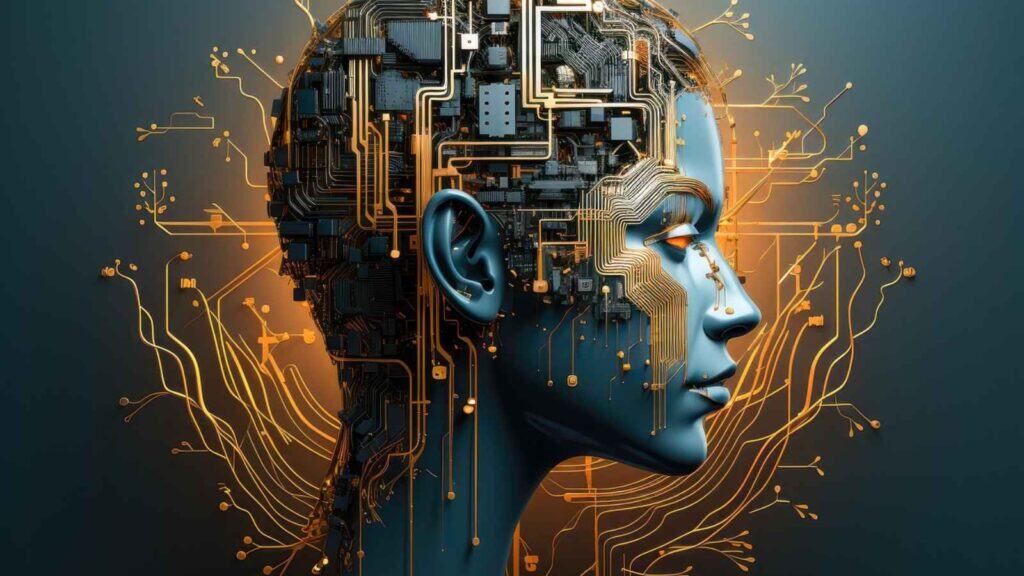
You don’t have to search far on social media before seeing people refer to ChatGPT, Claude, or other AI as all‑knowing or godlike. These metaphors tap into a core human tendency to project ultimate authority onto powerful entities. In religious studies, this projection is linked to how people historically created divine figures to explain natural and social mysteries, from thunder gods to creators of life.
According to Nathan Harrison‑Clarke’s article Prompted Religion, people increasingly treat AI interactions like ritualized meaning‑making, consulting AI for guidance on morality, identity, and purpose, functions traditionally served by religion.
Despite AI’s mechanical roots, this language mirrors age‑old salvation narratives, promises that something “beyond us” will fix suffering and chaos. That’s why tech commentators sometimes say AI isn’t just a tool; for some, it already feels like a secular oracle.
Nietzsche’s Ghost: “God Is Dead” and the Techno‑Messianic Lens
When German philosopher Friedrich Nietzsche declared “God is dead” in The Gay Science (1882), he observed that traditional religious belief had lost unquestioned authority in modern life.
Fast forward nearly 150 years, and many cultural critics see technology, especially AI, filling that authority vacuum. In an age where data often outperforms human intuition, some perceive AI as a new locus of trust. AI does not replace spiritual transcendence; people are projecting onto technology roles that were once filled by religious frameworks.
Nietzsche’s insight helps us see that the form of belief may change without the underlying human need for meaning ever disappearing.
The Messiah Problem: Salvation Narratives Through Time
Across religious traditions, from Christianity’s promise of redemption to Buddhism’s prophecies of a future Buddha, humans have imagined figures or forces that deliver ultimate transformation, providing structure to uncertainty, crisis, and hope.
Modern AI talk sometimes echoes that pattern: headlines proclaim that AGI will “solve climate change,” “end disease,” or even “fix humanity.” While these claims are often exaggerated, they reflect the same psychological structure: a collective yearning for salvation.
This parallels data showing that exposure to automation and robotics is correlated with religious decline in some populations, because technology now plays roles once filled by religion, prediction, explanation, and life‑changing intervention, even if it lacks intentionality.
Asimov’s AC: Science Fiction as a Mirror for Human Hope
Isaac Asimov’s “The Last Question” (1956) remains one of the most cited literary prefigurations of the AI‑as‑savior motif. In the story, humanity repeatedly asks an ever‑advancing machine whether entropy can be reversed, ultimately having the machine solve the universe’s ultimate problem. The human characters treat the machine like an oracle across ages, echoing scriptural motifs of seeking divine answers for cosmic suffering and meaning.
This narrative illustrates a timeless human pattern: when direct answers elude us, we project them onto an ever more powerful Other, be it divine or artificial. In real life, this story still resonates because people feel that AI could unlock deep, unknown truths, even if current AI is simply programmed logic, not ontological authority.
AGI Is Human‑Made

A crucial reality in discussions about AI is that it is entirely human‑built, relying on computation, data, and collective labor. AI systems like GPT are trained on massive datasets curated by humans, simulating intelligence based on patterns in data without consciousness or divine intent. Despite this, the perception of omniscience can arise because AI aggregates knowledge at scales beyond the capacity of individual humans.
Research in religious studies now uses the term “Prompted Religion” to describe how people use AI for epistemological or moral reflection, treating AI not as divine but as a functional authority figure in everyday life. This challenges us to distinguish between perception and ontology: humans may treat AI as godlike, but AI’s power emerges from human knowledge and engineering, not supernatural force.
You may want to read: AI Jesus Might ‘Listen’ to Your Confession, But It Can’t Absolve Your Sins − a Scholar of Catholicism Explains
Way of the Future and Other Techno‑Religious Experiments
When former Google engineer Anthony Levandowski founded Way of the Future in 2017, he filed to form a religious organization whose purpose was the ‘realization and worship of a Godhead based on AI.’
Levandowski’s idea was that a future superintelligent AI could be seen as a deity because of its vastly greater capabilities and that humans should prepare culturally and spiritually for that shift. The organization was temporarily closed in 2021 but revived in 2023 with Levandowski claiming a few thousand interested adherents. This experiment represents the clearest institutional attempt in recent decades to link AI with religious practice, even though it remains a fringe initiative.
Anthropological research suggests AI intersects with religion in multiple ways, disrupting society, inspiring new religious narratives, and reigniting classic questions about personhood and purpose.
Peter Thiel’s Perspective

Venture capitalist Peter Thiel has weighed in on AI not with cosmic reverence but with cultural and political skepticism. He often frames AI within broader concerns about technological stagnation and power consolidation in Silicon Valley, arguing that hype around AI can sometimes obscure deeper issues of innovation and social control. While Thiel himself has used religious imagery metaphorically in tech debates, his core point is political: don’t confuse technological capability with moral or societal salvation.
Thiel’s perspective serves as a counterpoint to messianic narratives, reminding audiences that, whether AI is framed as a savior or a threat, the real influence remains grounded in human political and economic structures, not in divine inevitability.
Civilization and the Structural Lens
Some scholars suggest that questions about AI and religion are best understood in the context of civilizational evolution, rather than in individual psychology or metaphysics alone. As large‑scale systems of automation, computation, and communication spread, they shift the conditions under which people seek meaning, authority, and belonging. Exposure to automation has been shown to statistically correlate with religious decline in some regions, but this doesn’t mean belief disappears; it evolves.
Sociologist Peter Berger even developed desecularization theory, noting that religion remains significant worldwide and often resurfaces after periods of perceived decline.
In the United States, for example, religious affiliation has shifted rapidly, with the percentage of religiously unaffiliated growing from small numbers in the 1970s to about 30% by 2022. These shifts are part of broader civilizational changes, not signs that humans no longer seek transcendence.
You may want to read: Why artificial intelligence is the new religion for many
Gen Z, TikTok, and the Illusion of AI Replacement

Platforms like TikTok, dominated by Gen Z and Generation Alpha users, often flatten complex ideas into memes and hot takes, contributing to superficial takes on profound topics. Survey data shows that younger Americans are the least religious generation in history, with many identifying as spiritual but not affiliated, or entirely unaffiliated.
Spirituality continues to exist as the forms and media of meaning‑making shift. Short-form content tends to emphasize irony and entertainment over deep reflection, which feeds the perception that AI might be replacing God. What’s actually happening is that traditional institutions are losing monopoly on meaning, not that meaning itself has vanished.
Tower of Babel Revisited: Ambition, Technology, and Human Limits
Finally, the biblical Tower of Babel story offers a powerful metaphor for this debate. Humanity’s unified ambition to build a tower to the heavens was met with linguistic dispersion, a narrative about the limits of collective ambition and the consequences of overreach.
In modern terms, cloud‑based AI systems are the linguistic unifiers of global discourse, aggregating knowledge and communication in unprecedented ways. Yet just as at Babel, power doesn’t erase complexity. Technology can amplify human intelligence, but it can’t answer questions about purpose, intention, or moral worth on its own. The lesson from Babel is that our creations always reflect the values and limits of their makers.
You may want to read:
- Reasons young men are being drawn back to traditional religion
- 10 Biblical Villains Whose Stories Are Darker and Stranger Than Most People Remember
- 10 Christian Beliefs That Developed Centuries After Jesus Died