Why the Science on Microplastics in the Human Body Isn’t Fully Settled: New Evidence Illustrates
For the better part of three years, the world has lived under a terrifying new medical dogma: that our hearts, blood, and even our very thoughts are being colonized by synthetic waste.
But in early 2026, the spoonful of plastic’s narrative began to melt away. What high-profile studies hailed as a plastic invasion, a growing group of analytical chemists now calls a chemical hallucination.
It turns out that when you burn human fat at a thousand degrees, it leaves behind a ghost that looks exactly like a plastic bag.
The January 13, 2026, Media Turning Point
The global narrative surrounding human plastic contamination shifted abruptly on January 13, 2026, when The Guardian published an exclusive investigative report by Damian Carrington titled “‘A bombshell’: doubt cast on discovery of microplastics throughout human body.”
This report detailed a growing schism between medical clinicians and analytical chemists regarding the validity of recent high-profile tissue studies. Carrington’s investigation highlighted that many groundbreaking papers had been fast-tracked through peer review to satisfy a public appetite for alarmist health news.
The article featured prominent chemists who argued that the current scientific literature is plagued by a gold rush mentality that prioritizes headlines over rigorous chemical validation. This date marks the official end of the era of unquestioned plastic-detection claims in mainstream media.
Dissecting the 0.5% Brain Weight Claim
In early 2025, a study led by Dr. Matthew Campen of the University of New Mexico (UNM) and published in Nature Medicine (Nihart et al.) sent shockwaves through the medical community. The researchers reported finding a median of 4.8 mg of microplastics per gram of decedent brain tissue, a concentration they colorfully equated to a spoonful of plastic per organ.
At nearly 0.5% of the total brain mass, these figures suggested that human neurological tissue was becoming a synthetic-biological hybrid. However, critics immediately noted that these concentrations were orders of magnitude higher than those found in heavily polluted environmental samples, such as urban sewage sludge.
The sheer mathematical claim, implying 6.5 grams of plastic in a single adult brain, triggered an immediate demand for a methodological audit from the global chemistry community.
How Brain Fat Mimics Polyethylene
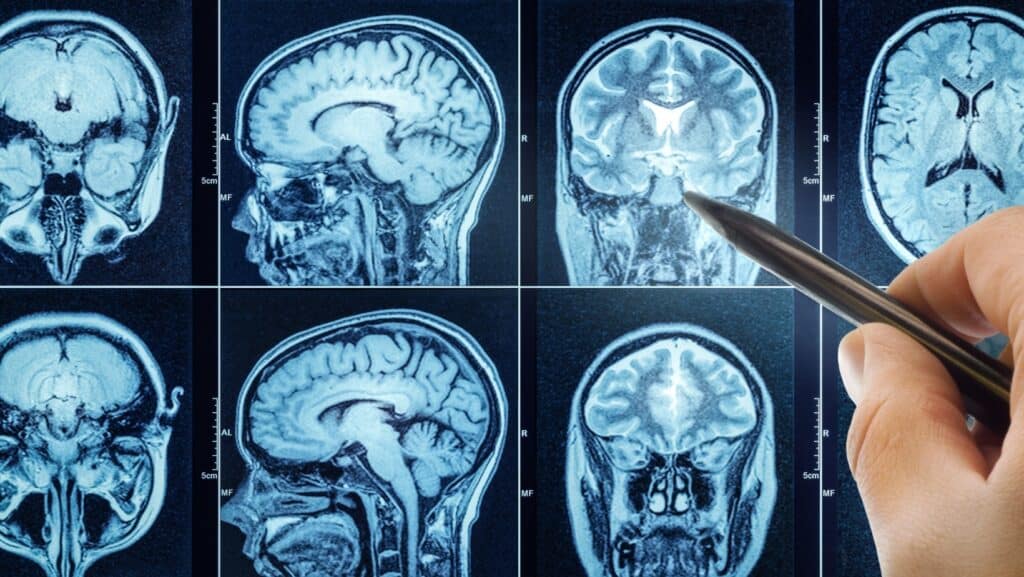
Dr. Dušan Materić,an analytical specialist at the Helmholtz Centre, became the primary whistleblower against the spoonful narrative by identifying a critical flaw in the testing process.
The UNM study utilized Pyrolysis-Gas Chromatography-Mass Spectrometry (Py-GC-MS), a technique that identifies substances by burning them and analyzing the resulting gas fragments. Materić pointed out that the human brain is roughly 60% lipids, specifically myelin, which contains long-chain hydrocarbons that break down into chemical signatures nearly identical to polyethylene (PE).
Because the Nihart study failed to completely digest or remove these biological fats before pyrolysis, the machines likely hallucinated plastic where there was only human tissue. This lipid interference suggests that the reported 75% dominance of polyethylene in brain samples reflected the brain’s own fatty insulation.
Why the 80% Detection Rate is Under Fire
The foundational claim that 80% of humans carry plastic in their bloodstream, originally popularized by Dutch researchers in 2022, was systematically deconstructed in a late 2025 audit.
Dr. Cassandra Rauert and her team at the University of Queensland published a pivotal study in Environmental Science & Technology titled “Assessing the Efficacy of Pyrolysis–Gas Chromatography–Mass Spectrometry for Nanoplastic and Microplastic Analysis in Human Blood.” Rauert’s team discovered that the “Limit of Detection” (LOD) for plastics in a complex matrix such as blood is 20 times higher than in pure water.
Their audit revealed that many previous positive detections were actually noise that fell below the machine’s true ability to differentiate between synthetic polymers and blood proteins. This technical failure suggests that the ubiquitous presence of plastic in human circulation may have been a massive overestimation fueled by inadequate baseline testing.
10 common 1960s kitchen habits that are now illegal or regulated by U.S. law
Why Fame Led to Rushed Review

The rapid proliferation of microplastic studies has been characterized by investigative journalists as a scientific gold rush, where funding and citations are awarded to the most dire findings. Analytical chemist Roger Kuhlman noted that the field was suddenly flooded by medical doctors and toxicologists who lacked the specialized training required for ultra-trace chemical analysis.
This influx created a blind spot in the peer-review process, as medical journals often lacked the expertise to catch errors in mass spectrometry protocols. The pressure to produce high-impact papers led to a systemic neglect of the extreme precautions needed to prevent lab contamination. Consequently, the standard for proof was lowered to accommodate a high volume of sensational results that are now being clawed back.
Institutional Failure
For instance, the NEJM study by Marfella et al., which linked plastic in heart plaques to a 4.5x higher risk of stroke, relied on detection methods that skeptics now call unreliable for biological samples. The failure to require rigorous blank control tests that ensure the plastic didn’t come from the lab’s own air or equipment allowed contaminated data to enter the permanent scientific record.
This institutional lapse has prompted a broader conversation about whether specialized analytical chemists should be required to review all microplastic research.
Plastic vs. Wood Cutting Boards: Which Is The Better Choice?
Why Py-GC-MS is the Wrong Tool
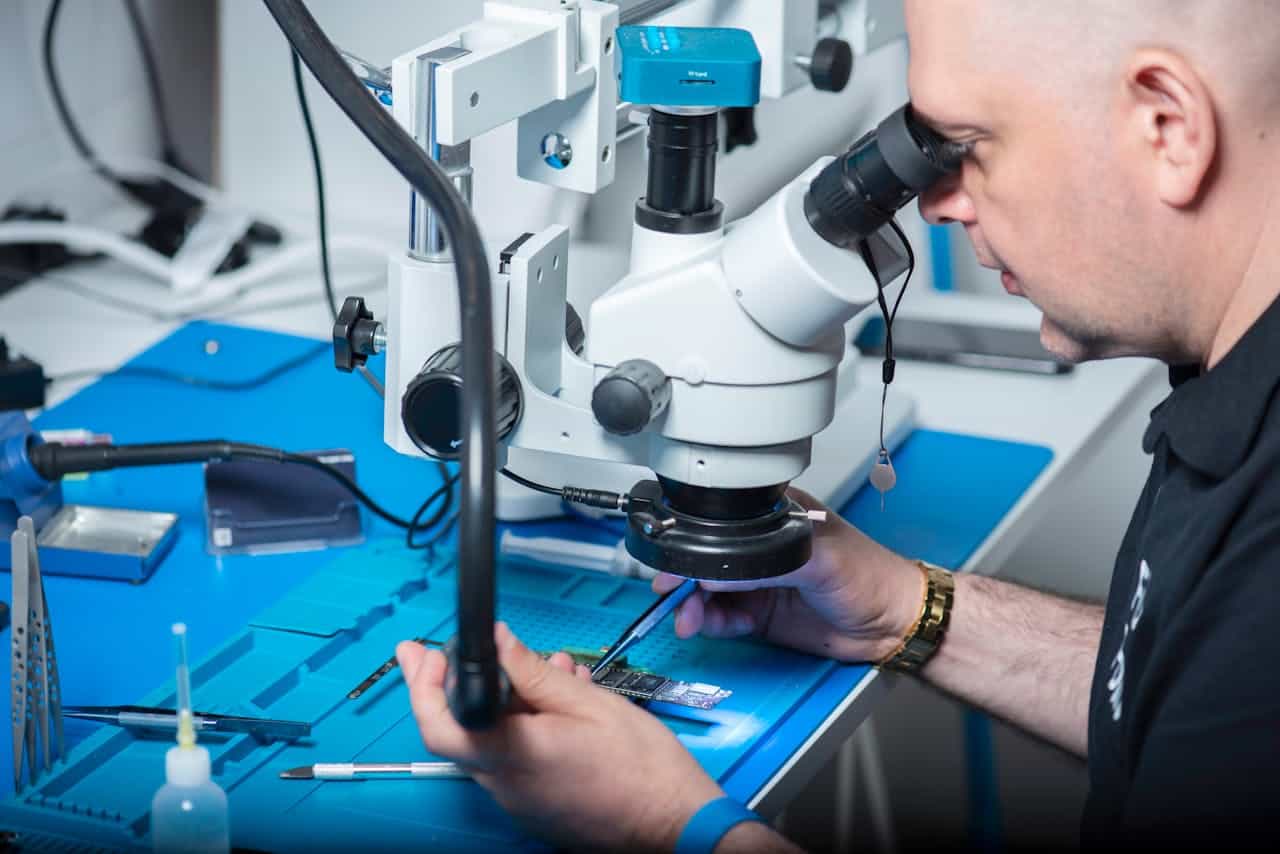
The controversy centers on the misuse of Py-GC-MS, a tool designed for industrial polymer analysis, not for detecting trace particles in human organs. To find nanoplastics, researchers must first digest tissue using Potassium Hydroxide, but studies have shown that KOH often leaves a protein-rich sludge behind.
When this undissolved biological sludge is heated in a pyrolysis chamber, it creates a chemical background that overwhelms the signal from any actual plastic. Dr. Cassandra Rauert’s ES&Tpaper explicitly stated that Py-GC-MS is currently “not a suitable analysis method” for identifying polyethylene or PVC in human tissue due to this interference. Until new, standardized clean-up protocols are developed to separate human carbon from plastic carbon, the results of pyrolysis-based studies remain scientifically suspect.
The Danger of Basing Treaties on Noisy Data
The fallout from these methodological errors extends beyond the lab and into the halls of international governance, including the UN Global Plastic Treaty negotiations. Policymakers have used the spoonful of plastic and testicle plastic studies to argue for radical, immediate bans that could have massive global economic consequences.
If the underlying data is found to be a series of false positives, it risks giving deniers ammunition to dismantle all environmental regulations. Experts warn that basing multi-billion-dollar public health policies on noisy data undermines the credibility of environmental science as a whole. Rigorous science is required to ensure that the eventual regulations target the actual pathways of exposure rather than phantom measurements.
What Remains Solid

Despite the current course correction, the scientific community emphasizes that microplastics have not been debunked. More reliable methods, such as Micro-FTIR and electron microscopy, have successfully confirmed the presence of plastic shards in human lungs, the gastrointestinal tract, and stool.
These visual and spectroscopic methods are less prone to hallucinating fat as plastic because they rely on light-wave signatures rather than burning the sample. While the total mass of plastic in the body is likely much lower than a spoonful, the fact that these particles cross biological barriers at all remains a legitimate medical concern. The presence of trace-level contamination is a settled fact; the debate now centers on the quantity and the specific risks involved.
Moving Toward Clean Lab Standards
The future of microplastics research depends on adopting Clean Lab standards, including the mandatory use of ISO-certified blank controls to account for airborne particles. Dr. Cassandra Rauert and other analytical experts are now calling for a multi-method approach where every pyrolysis result must be verified by a visual spectroscopic technique.
Laboratories must also begin processing samples in metal-only environments to eliminate the risk of equipment shedding its own plastic into the data.
Key Takeaways
- The Tool Problem (Py-GC-MS): The primary tool used to find plastic in humans is a burn test. We now know that when you burn brain fat (myelin) or arterial plaque (cholesterol), the chemical smoke it produces is nearly identical to the signature of plastic bags (polyethylene). Scientists essentially hallucinated plastic where there was only human tissue.
- The Concentration Fallacy: Reports claiming our brains are 0.5% plastic would make the human body more polluted than raw sewage. Critics like Dr. Dušan Materić and Dr. Cassandra Rauert proved that these numbers were physically impossible and were likely due to failing to remove human proteins from the samples before testing.
- The Institutional Gold Rush: By failing to include analytical chemists in the peer-review process, they allowed noisy data to be framed as medical fact.
Disclosure line: This article was written with the assistance of AI and was subsequently reviewed, revised, and approved by our editorial team.
Like our content? Be sure to follow us