What does the 144,000 in Revelation really mean?
Revelation’s mysterious 144,000 may sound like heaven’s strict headcount, but its ancient mathematics points to something far bigger than a literal number.
Few numbers in the Bible have generated as much speculation as the 144,000 described in the book of Revelation. Some Christians understand it as a literal number of people chosen for a special heavenly role. Others see something very different: a carefully constructed symbol meant to represent the completeness of God’s people.
That debate still matters because end-times beliefs remain widespread in the United States. Pew Research Center polling has found that a substantial share of Americans believe humanity is living in the end times, with the belief especially common among some Christian traditions.
But Revelation was written in a highly symbolic style in which numbers, animals, colors, and visions often carry meanings beyond their surface value. In that context, the 144,000 may be less like a heavenly census and more like theological mathematics built from numbers that recur throughout scripture.
So why 144,000? The answer may lie in the number 12, the tribes of Israel, the apostles, the multitude John later sees, and the unusual geometry of the New Jerusalem. Here is why many scholars believe Revelation’s most famous number was never intended to be read as a simple headcount.
The literalist trap and why it fails the math test

Some religious groups, like the Jehovah’s Witnesses, take the 144,000 as a strict, physical headcount of who gets into heaven. They argue that only this exact number of people will rule with Christ from above, while everyone else stays on a paradise earth. This black-letter approach creates major logical contradictions when looking at the rest of the biblical text.
If the number 144,000 is literal, then the other descriptions of this group must be literal too. The passage describes these individuals as unmarried, celibate Jewish men from specific tribes. Taking this literally would absurdly exclude biblical heroes like Moses, Peter, or Mary.
The code of twelve squared

The number 144,000 is actually a beautiful, stylized mathematical equation. In ancient apocalyptic writings, numbers carry symbolic weight instead of strict mathematical values. The number twelve consistently represents God’s covenant people throughout scripture. It points directly to the twelve tribes of Israel and the twelve apostles of Jesus. Squaring twelve (144) symbolizes the perfect union of both the Old and New Testament communities.
The final multiplier of one thousand represents perfect completeness or an immense, uncountable crowd. In the ancient world, ten and its multiples signified global fullness. Therefore, the calculation points to the entire body of the redeemed, leaving no one behind.
The trick of hearing and seeing

The author of Revelation constantly uses a clever design of hearing one thing and seeing another. This stylistic pattern is called expectation versus fulfillment. It’s designed to expand the reader’s view from simple symbols to massive spiritual realities.
John hears the number of the sealed announced as 144,000 from the tribes of Israel. But when John actually turns to look, an uncountable crowd from every nation, tribe, and tongue appears. The two groups are not different; they’re the same crowd described from different angles.
Theologian N.T. Wright explains that the 144,000 represents the complete people of God in symbolic code. The endless multitude represents the physical, glorious reality. This pattern shows that God’s people aren’t limited to a tiny elite but form a massive global family.
The structural alignment with the New Jerusalem
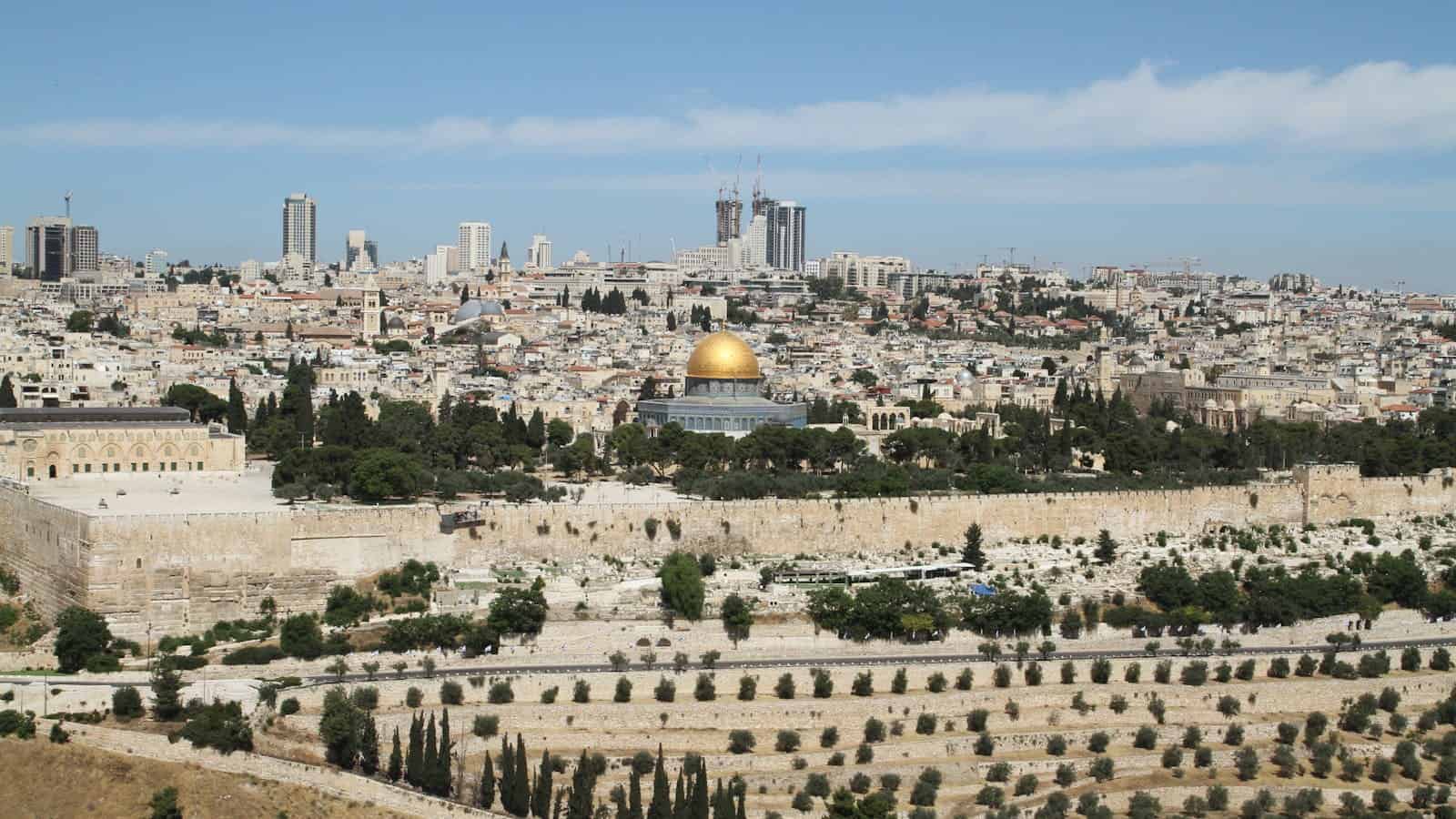
This calculated number lines up perfectly with the blueprints of the afterlife. In Revelation 21, the New Jerusalem is described as a perfect cube measuring 12,000 furlongs on each side with 144-cubit walls. These geometric dimensions mirror the exact mathematical makeup of the 144,000.
Scholar Craig Keener points out that these numbers link the people of God directly to the city of God. Because the Holy of Holies in the ancient temple was also a cube, the city’s shape shows that all believers live in God’s immediate presence. The matching math proves that the 144,000 simply represents the full number of citizens in this eternal home.
America’s shifting beliefs on biblical literalism

Belief in a strictly literal Bible has been in a long-term decline in America. A record-low 20% of Americans now believe the Bible is the literal word of God, down from 40% in the early 1980s. Meanwhile, about 49% of U.S. adults fall into the middle, viewing the Bible as inspired but not entirely literal.
These shifting trends show that fewer people look at ancient apocalyptic numbers as literal counts. Yet, the cultural fascination with the end times remains strong. Viewing the 144,000 as a symbol of divine protection offers comfort to anxious believers rather than a terrifying math puzzle.
Key takeaway

The 144,000 in the book of Revelation is a beautiful symbolic calculation showing that God’s redeemed family is perfectly complete. Instead of representing a tiny elite or a literal headcount, it points to a massive, diverse multitude that no one can number. This math is about divine reassurance, not exclusion.
More articles you might like:
- 12 Ancient Prophecies That Seem To Reflect Modern Life
- 10 Lessons From The Bible That Make Sense Even Outside Religion
- 12 People God Welcomes and Those He Turns Away