How to spot someone wealthy without them saying a word
As Rickie Ho (@maisonrickie) on TikTok highlights, the ultra-wealthy are masters of Pierre Bourdieu’s distinction, utilizing a silent semiotics that effectively gatekeeps their social strata. They aren’t just living; they are executing a choreographed performance of taste that signals legacy to those who know the code while appearing invisible to the masses.
Those within the circle utilize a silent semiotics, a collection of understated codes, that effectively gatekeeps their social strata from anyone who relies on loud branding. To the uninitiated, these individuals appear ordinary, yet to a shrewd observer, their every move is a calculated signal of immense capital.
Here is the anatomy of the ‘Quiet Luxury’ and ‘Old Money’ distinction.
Very selective in friendships for legal reasons

I watched a Family Office manager vet a dinner guest list last week with the clinical intensity of a high-stakes security clearance. These circles fear the legal discovery phase of a messy divorce or a disgruntled partner’s lawsuit far more than social boredom. A simple introduction often requires a background check by a security firm like Kroll to ensure there is no hidden litigation following the newcomer.
Friendships are filtered through the lens of liability, prioritizing those whose assets are already locked in similar trust structures. You’ll notice they only relax around people who have just as much to lose in a courtroom as they do. Proximity is a privilege granted only after the risk assessment confirms your presence will not trigger a subpoena.
Casually having expensive hobbies
Most people brag about their passions, but the ultra-wealthy treat a $100,000-a-year equestrian habit like a casual trip to the gym. I’ve seen men discuss the mechanics of their vintage 1960s Porsche 356 with the same flat affect one might use for a grocery list. They frequent the winter circuit in Wellington, Florida, moving horses across the Atlantic on specialized cargo planes without mentioning the logistics.
Mastery of these expensive crafts is quiet, refined, and entirely devoid of the newbie enthusiasm that usually accompanies high-entry-cost sports. Conversations center on the nuance of a specific polo mallet’s weight or the sea conditions in the Balearics during sailing season. Their participation is a baseline expectation of their social calendar, not a weekend escape.
Customized, well-fitting clothes with no visible branding
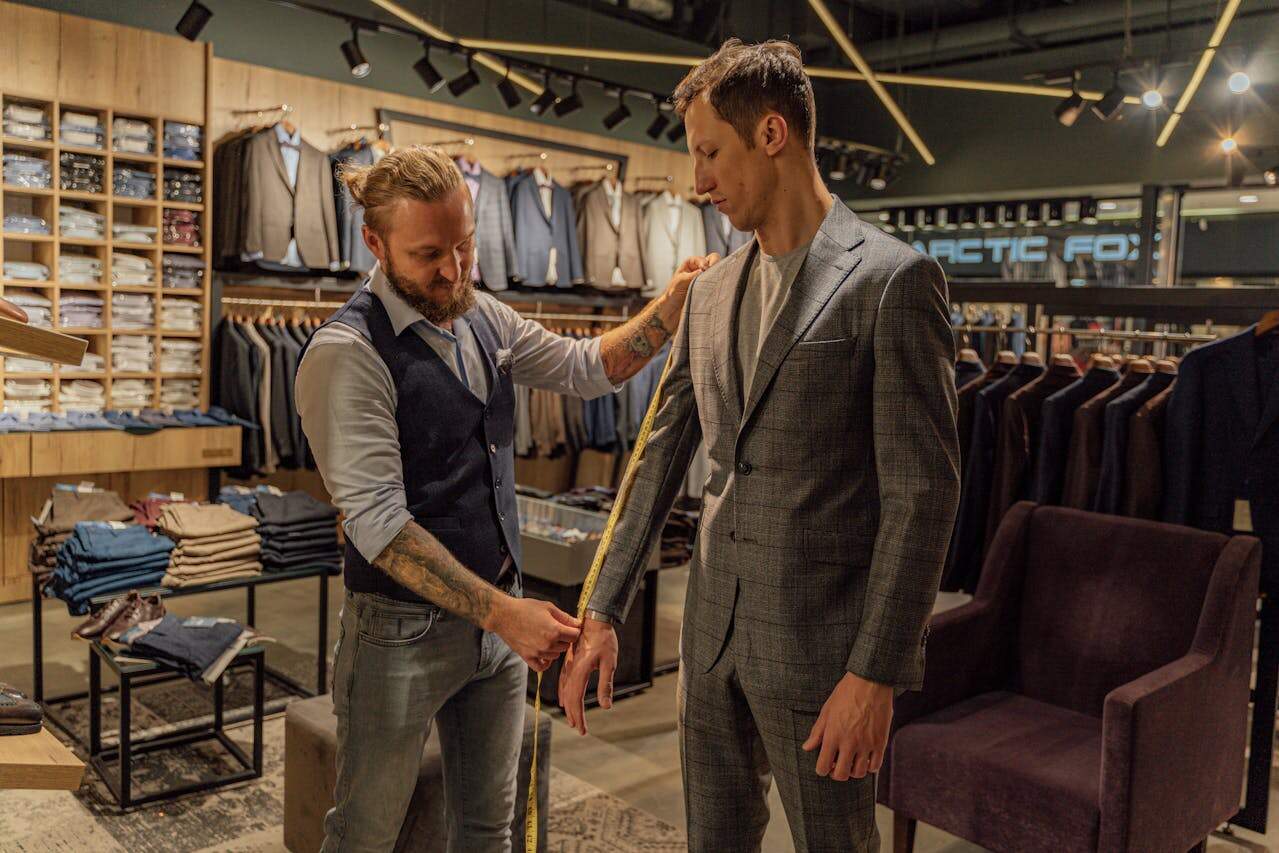
You won’t find a single “G” or “C” on the buttons of a jacket that costs more than a mid-sized sedan. The wealthy favor the matte texture of Loro Piana Vicuña or the architectural shoulder of a bespoke suit from a Savile Row firm like Huntsman. These garments rely on a drape that can only be achieved through three separate fittings and weeks of hand-stitching.
I’ve learned to spot the hand-milled buttonholes and the specific way 12-micron wool moves under the harsh lights of a boardroom. They dress for the tactile comfort of the wearer rather than the recognition of the casual passerby. Real sophistication lies in the secret knowledge that your sweater costs four figures and only three other people in the room know why.
Quiet/deflecting when the cost-of-living is discussed
When the table turns to the soaring price of Manhattan real estate or private school tuition, the truly wealthy suddenly become very interested in their wine. They offer vague, polite nods but never contribute a specific number or a complaint about their own property tax.
Discussing the cost of living is a foreign concept when your primary residence is held in a land trust and managed by a third-party corporation. They view inflation through the lens of macroeconomic charts rather than the price of a gallon of milk.
If pressed, they pivot to the neighborhood’s quality or a recent charitable gala to avoid revealing their insulation from common financial stressors. Their silence is a protective barrier that keeps the mechanics of their wealth behind a curtain of professional courtesy.
No luggage when flying

The ultimate flex at a private terminal isn’t the jet itself, but walking onto it with nothing but a smartphone. I’ve watched families board a NetJets flight at Teterboro, headed for Cabo, with absolutely no luggage. This occurs because every destination they frequent, the Aspen chalet, the Hamptons estate, the London flat, is already stocked with a duplicate wardrobe.
A personal assistant ensures their favorite toiletries and tailored linens are waiting in the dressing room upon arrival. They have outsourced the entire packing process, turning international travel into a frictionless transition between rooms. This lack of baggage signals a life where the logistics of physical objects are handled by an unseen army of staff.
Dental hygiene and smiles
Look closely at a smile in a Mayfair club, and you’ll see the natural perfection that costs $50,000 in preventative maintenance.
These aren’t the blindingly white, blocky veneers seen on reality TV stars; these are subtle, perfectly aligned teeth with the translucency of natural enamel. They benefit from childhood orthodontics, quarterly cleanings with top-tier periodontists, and invisible gum grafts performed in Zurich clinics.
The result is an effortless biological wealth that signals decades of access to the best healthcare money can buy. Their smiles are wide and confident because there is no underlying anxiety about a missing crown or a yellowed edge. This dental pristine is a generational marker, often passed down as a family standard of presentation.
Minimalist homes

In a multi-million-dollar Tribeca loft, the most expensive feature is often the vast amount of empty, unused space. Wealthy homes prioritize negative space, where every square foot costs thousands but remains intentionally unoccupied. You won’t see clutter because everything is hidden behind seamless, touch-latch cabinetry integrated into the walls.
They invest in museum-grade lighting systems and climate-controlled environments to protect a single, mid-century sculpture. Minimalism reflects a sense of total control over one’s environment and the ability to discard anything nonessential. A room with just one $80,000 Pierre Jeanneret chair suggests a level of curation that borders on the monastic.
Too young to be retired, yet doesn’t seem to work
You’ll find them at 10:00 AM on a Tuesday in a Soho coffee shop, looking relaxed while the rest of the world is three hours into a frantic workday.
These individuals are often in their late thirties and hold titles such as “General Partner” or “Board Advisor,” which require only a few hours of high-level oversight per month. They have achieved a post-exit lifestyle where their time is a sovereign asset rather than a billable hour.
I notice they never check their watches or flinch when a phone vibrates, as they have long since delegated the “urgent” to someone else. Their work happens over long lunches or at private retreats, where networking and living are one and the same. This detachment from the 9-to-5 grind is the clearest indicator of a self-sustaining capital base.
Keeps consistently investing even in bad economic times

While the retail market panics over a 20% dip, the quiet wealthy are busy signing capital calls for distressed debt funds. They treat a recession like a clearance sale at a high-end department store, deploying dry powder that they’ve sat on for years.
I’ve sat in rooms where the discussion isn’t about loss, but about the specific yield of an arbitrage opportunity in the European energy sector. Their portfolios are structured to weather volatility, allowing them to remain aggressive when others retreat to cash.
This consistency is fueled by a surplus of liquidity that makes the cost of waiting negligible. They view economic cycles as seasonal changes rather than existential threats to their way of life.
Preplanned and permanent holiday destinations
The ultra-rich don’t book vacations; they simply migrate to their next predetermined zip code according to the social calendar.
From June to July, they are in Saint-Tropez; by Christmas, they have moved to Gstaad, with every detail handled by a permanent household staff. These destinations are seasonal shifts between owned properties that are maintained and staffed year-round. They speak of these places with a sense of boring familiarity, as if the Amalfi Coast were merely their backyard.
There is no frantic searching for the hot new spot, because they value the privacy and security of their established enclaves. This permanence in travel reflects a level of wealth that has transcended the need for novelty or travel agencies.
Key takeaways
- Legal Fortification over Socializing: For the ultra-wealthy, a new friend is a potential liability. Social circles are gated by legal vetting and shared financial risks rather than common interests or vibes.
- The Unbranded Uniform: True distinction lies in the garment’s architecture. Look for the specific drape of a bespoke shoulder and the light absorption of high-end fabrics (like Vicuña) rather than a logo.
- Operational Weightlessness: The ultimate flex is the absence of friction. Flying without luggage and living in minimalist, empty spaces signals an invisible army of staff managing the logistics of physical objects.
- Strategic Financial Detachment: A total lack of price awareness of daily costs, like rent or inflation, reveals a life in which capital is managed by institutional controllers rather than personal checking accounts.
- Sovereignty of Time: The clearest marker of the 0.1% is the absence of urgency. Being too young to be retired yet entirely unhurried on a Tuesday afternoon suggests a “post-exit” life in which time is no longer traded for money.
Disclosure line: This article was written with the assistance of AI and was subsequently reviewed, revised, and approved by our editorial team.
Like our content? Be sure to follow us