12 reasons banks refuse withdrawals without proper identification
To many customers, the request seems unnecessary, especially if they have been banking with the institution for years or are carrying the correct account details. Yet modern banking operates on a principle that overrides familiarity: access to funds must always be tied to verifiable identity.
This approach reflects a broader shift in how financial institutions manage risk. As banking systems became more interconnected and transactions increasingly digital, the physical branch evolved into one of the last checkpoints where a human verification can interrupt fraud before money leaves the system. What may feel like a minor inconvenience to the customer is, for the bank, a critical safeguard designed to prevent errors, financial crime, and costly disputes over who was actually authorized to move the money.
The scale of the threat explains the caution. The American Bankers Association applauds U.S. banks for preventing billions of dollars in attempted fraud each year through layered security controls, many of which rely on identity verification at key transaction points, such as in-branch withdrawals.
Preventing Identity Theft
Identity theft has transitioned from a niche crime into a systemic threat that directly endangers the liquidity of everyday citizens. Data from a landmark study conducted for the Federal Trade Commission reveals that approximately 9.91 million Americans discovered they were victims of identity theft in a single year. That is roughly $47.6 billion in annual losses that businesses and financial institutions face.
The data specifically highlights that 6.68 million of those victims experienced the misuse of their existing accounts, precisely the type of fraud a teller prevents by requiring a physical ID. By verifying the person at the counter, the bank creates a biological circuit breaker that digital passwords simply cannot provide.
This human-in-the-loop verification ensures that the individual standing at the counter matches the account holder’s recorded data points, effectively neutralizing the threat of synthetic identities, fictional personas built from stolen data that are often used to drain life savings.
Regulatory Compliance

Banks do not operate in a vacuum; they are bound by a rigid framework of federal and international laws, most notably Anti-Money Laundering and Know Your Customer regulations.
Under the Bank Secrecy Act and guidelines from the Financial Crimes Enforcement Network (FinCEN), financial institutions are legally required to verify the identity of every person conducting transactions exceeding $ 10,000.
Failure to comply with these Customer Identification Program requirements can result in substantial fines and the revocation of a bank’s charter. These laws are designed to strip anonymity from the financial system, making it harder for illicit actors to move funds.
For the bank, refusing an unverified withdrawal is not just a policy. It is a survival tactic to avoid criminal liability and maintain regulatory good standing in a highly scrutinized global market.
Fraud Prevention
The sheer volume of stolen checks and compromised debit cards in circulation necessitates a secondary layer of defense at the teller window. Even if an imposter possesses a physical card or a signed check, the absence of a matching ID serves as a firewall against fraud.
Check fraud remains a primary threat because of the ease with which signatures can be forged or checks chemically altered. Identifying the person presenting the instrument is the only way to confirm that the chain of custody for the funds remains unbroken.
Interestingly, while the world moves toward contactless payments, the physical bank branch remains a fortress of traditional verification because it is where the highest-stakes, unlimited cash withdrawals occur.
Without an ID, the bank has no way to distinguish a legitimate customer from a sophisticated “social engineer” using stolen information.
Unauthorized Transactions: Protecting the Customer from the Imposter

The primary beneficiary of a strict ID policy is the customer, whose funds are effectively held in a vault accessible only to verified users. If a bank were to release funds based solely on an account number, the structural integrity of the entire financial system would buckle. Modern impostors often utilize New Account Fraud or digital takeover techniques, banking on a teller’s potential desire for speed to slip through the cracks.
The physical presence of an ID remains one of the most formidable hurdles for an imposter to overcome in a face-to-face environment, where social engineering is harder to execute. This creates a vital friction point, or a safeguard, that specifically protects the elderly.
Data from the FBI’s Internet Crime Complaint Center indicates that individuals over the age of 60 lost over $3.4 billion to fraud in 2023, a 10% increase from the previous year. In this context, the nuisance of showing an ID is actually a high-value insurance policy provided by the bank at no cost, ensuring that those who are statistically most vulnerable aren’t stripped of their life savings by a convincing imposter.
Legal Liability

Banks face significant civil liability if they negligently release funds to the wrong person. Case law, such as Singularis Holdings Ltd v. Daiwa Capital Markets, has established that banks owe a “duty of care” to their customers to detect and prevent obvious fraud.
If a teller fails to check an ID and allows a fraudulent withdrawal, the bank is typically held liable for the full amount, plus potential damages for negligence. This legal reality turns every withdrawal into a risk-assessment exercise. To mitigate this risk, banks implement Standard Operating Procedures that leave no room for teller discretion.
For the long-form reader, it is important to understand that the teller is not just being difficult; they are following a script designed by legal departments to protect the institution from ruinous litigation arising from a single lapse in verification.
Account Security Protocols
The shift toward a Zero-Trust security model means that even if a teller recognizes you, the system may still require a formal ID scan to close the audit loop. These protocols are often hard-coded into the bank’s core software; a transaction literally cannot be finalized until the ID type and number are entered into the terminal.
This removes human bias and the potential for insider threats, such as a bank employee colluding with a friend to bypass security. As highlighted in the Federal Reserve’s Consumer Compliance Handbook, internal controls are the backbone of a healthy financial institution.
By standardizing ID checks for every withdrawal, banks ensure that security standards remain consistent across all branches, regardless of whether you are in a small town or a major financial hub like New York or London.
Third-Party Withdrawal Restrictions

One of the most common points of friction occurs when a friend, relative, or business partner attempts to withdraw funds from an account holder’s account. Banks are notoriously strict here: without a formal power of attorney (POA) or a third-party authorization form on file, access is flatly denied.
This is a critical safeguard against financial elder abuse, a growing sociological crisis where family members or caregivers may attempt to siphon off funds. The bank’s refusal to honor a third-party request without specific ID and legal documentation is a legal firewall.
It ensures that only those with explicit, documented authority can touch the principal, regardless of their personal relationship with the account holder or the urgency of the request.
Why Large Amounts Trigger Level 2 Scrutiny
When a withdrawal exceeds a certain threshold, often $1,000 or the daily ATM limit, it triggers Enhanced Due Diligence. Large cash outflows are a major “red flag” for both bank security and government regulators monitoring for structuring or money laundering.
In these cases, a simple driver’s license might be just the beginning; the bank may require a secondary ID or a “manager override.” According to the OCC’s Comptroller’s Handbook, wholesale and large-value payments carry unique operational risks.
The bank must ensure that the withdrawal isn’t being made under duress or as part of a grandparent scam. This heightened verification process is a form of financial triage, ensuring that the most significant assets are protected by the most significant barriers.
ATM Limitations

ATM limits exist to cap potential losses from stolen cards, but they also serve as a nudge toward the teller window for larger amounts. Once you cross the ATM threshold, you enter a higher-risk zone that requires enhanced authentication.
Physical withdrawals via a teller provide the bank with an opportunity to perform a life check, ensuring the person is not being coerced and that their ID is valid. This transition from machine-verified to human-verified is a core part of the bank’s risk management strategy.
While some find this inconvenient, it is the only way to allow large-scale liquidity (the ability to withdraw thousands in cash) without creating a free-for-all that would attract every criminal with a skimmer and a PIN.
Suspicious Activity Detection
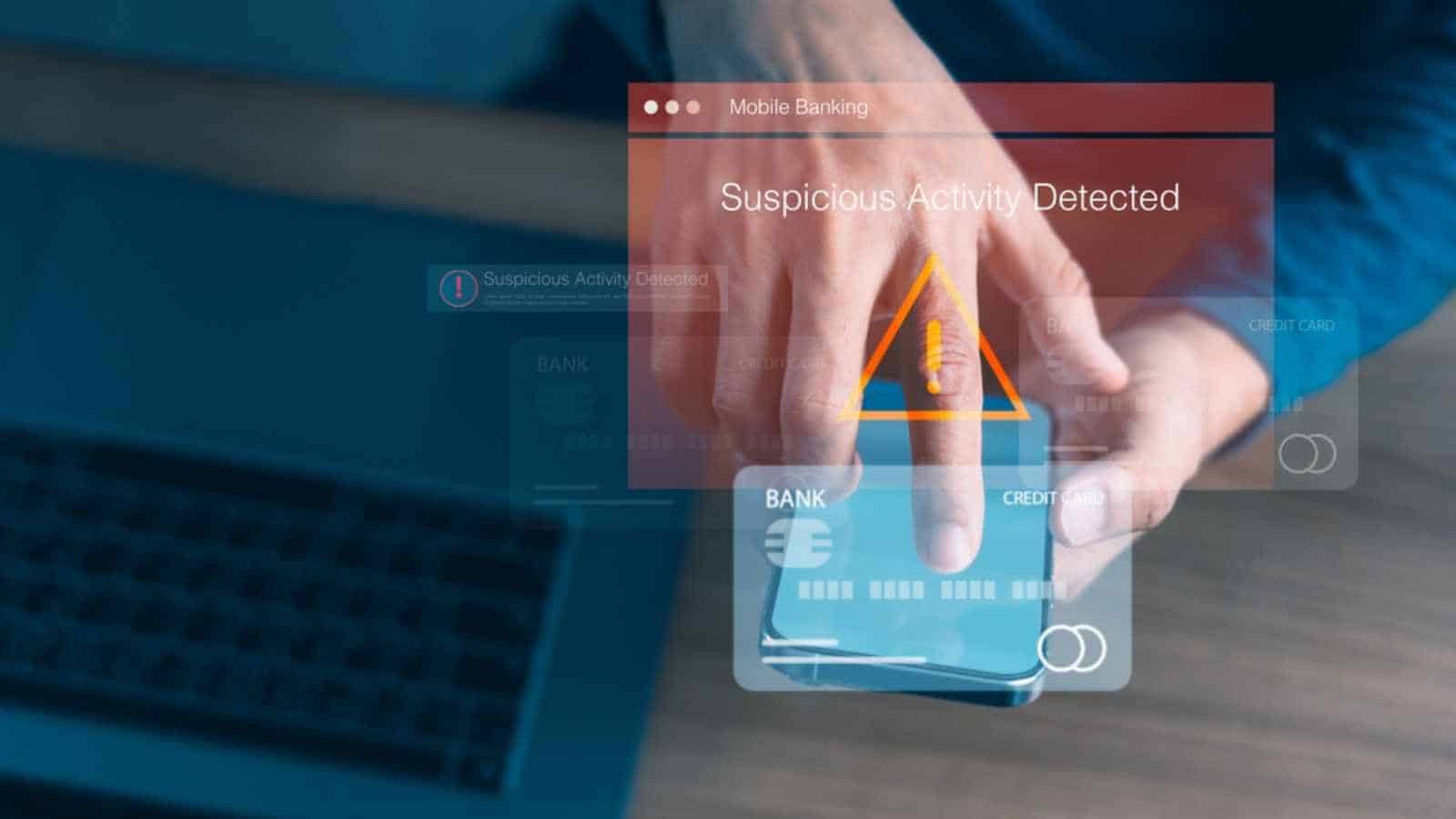
Modern banks use AI-driven Suspicious Activity Detection systems that monitor for anomalies in spending or withdrawal patterns. If a customer who typically only uses ATMs suddenly walks into a branch in a different state to withdraw $5,000, the system will flag the transaction as high risk.
In these moments, the ID check is the only way to resolve the alert and prove that the activity is legitimate. As noted in FinCEN’s red flags for money laundering, reluctance to provide identification is itself a primary indicator of criminal intent.
By insisting on an ID, the bank is verifying the actor’s identity. If the person at the counter cannot or will not provide identification, the bank is often required by law to file a Suspicious Activity Report, even if no money is actually moved.
Check-Cashing Safeguards

Cashing a check, especially for a non-customer, is a high-risk activity for a bank. If the check is stolen, forged, or drawn on an account with insufficient funds, the bank that cashed it is often left holding the bag.
Consequently, ID requirements for check cashing are absolute. Tellers are trained to look for security features, such as microprinting and watermarks, but the most important feature is the person standing in front of them.
The ID allows the bank to re-present the loss to the individual if the check bounces or is later flagged as fraudulent.
Without a recorded ID, the bank has no recourse, making an unverified check-cashing transaction a purely speculative gamble that no modern institution is willing to take.
Internal Audit Requirements

Banks are subject to grueling internal and external audits by organizations such as the FDIC and the Federal Reserve. These auditors review a sample of withdrawal slips to ensure the bank is following its security protocols.
Every withdrawal must have a documented verification attached, usually a record of an ID being sighted and its details recorded. If an auditor finds a missing ID in the records, the bank can be cited for internal control deficiencies, which lowers its CAMELS rating (a measure of a bank’s health).
For the bank, refusing an ID-less withdrawal is about maintaining audit readiness. They cannot afford a trail of dirty, unverified cash movements, as it suggests a breakdown in the institution’s fundamental ability to track the money it is entrusted to safeguard.
Key Takeaways

- Banks require identification to ensure that the person requesting a withdrawal is the legitimate account holder.
- Strict ID policies help prevent identity theft, check fraud, and unauthorized access to funds.
- Financial institutions must comply with regulatory frameworks designed to reduce money laundering and other financial crimes.
- Large withdrawals, third-party requests, and unusual account activity typically trigger stricter verification.
- Identity checks also protect banks from legal liability and help maintain accurate audit trails for regulators.
Like our content? Be sure to follow us