12 bible verses most people misinterpret
Have you ever truly considered the original intent behind a Bible verse you often quote? Many commonly quoted Bible verses are often misunderstood or taken out of context, leading to confusion about their original messages.
In the U.S., many find comfort and guidance in the Bible, but few truly understand it. A Gallup poll reports that only 20 percent believe the Bible is the literal word of God.
Forty-nine percent see it as inspired but not literal, and 29 percent as fables. With less close reading and many interpretations, verses are often quoted out of context.
This causes misunderstandings, reducing verses to slogans. Many use them to support opinions instead of their true meanings, spreading misinterpretation.
Jeremiah 29:11

Ministry commentators who track online engagement, including Christian blogger Lynn Dove, note that Jeremiah 29:11 is consistently among the most searched and shared verses on Bible sites and search engines. It frequently appears in graduation speeches, social posts, and lists of favorite verses, often as a universal promise of individual prosperity. In its original context, however, it addresses Jewish exiles in Babylon facing decades of hardship.
The popular use of this verse as a statement of guaranteed success commonly misses its historical context: it is a promise of hope for a community in exile, not an assurance of personal prosperity.
This verse continues to provide comfort, but it is not a guarantee of personal success. Instead, it serves as a reminder that God has a plan during hardship. In this context, prosperity refers to spiritual well-being and hope for the community.
Romans 13:1

Romans 13:1 is often cited to say people should always obey authorities, but this overlooks its meaning. The Bible teaches Christians to respect rulers, but leaders are accountable to God and must act justly. The verse urges peace under the law, but does not require following rules that contradict God’s commands.
The Bible teaches obedience to law, but ultimate loyalty is to God. Romans 13:1 commands respect for authority while showing that all leaders are under God. Christians should honor rulers, but they should remember that true justice comes from God, and authority that falls short of His standards should be questioned.
John 3:16
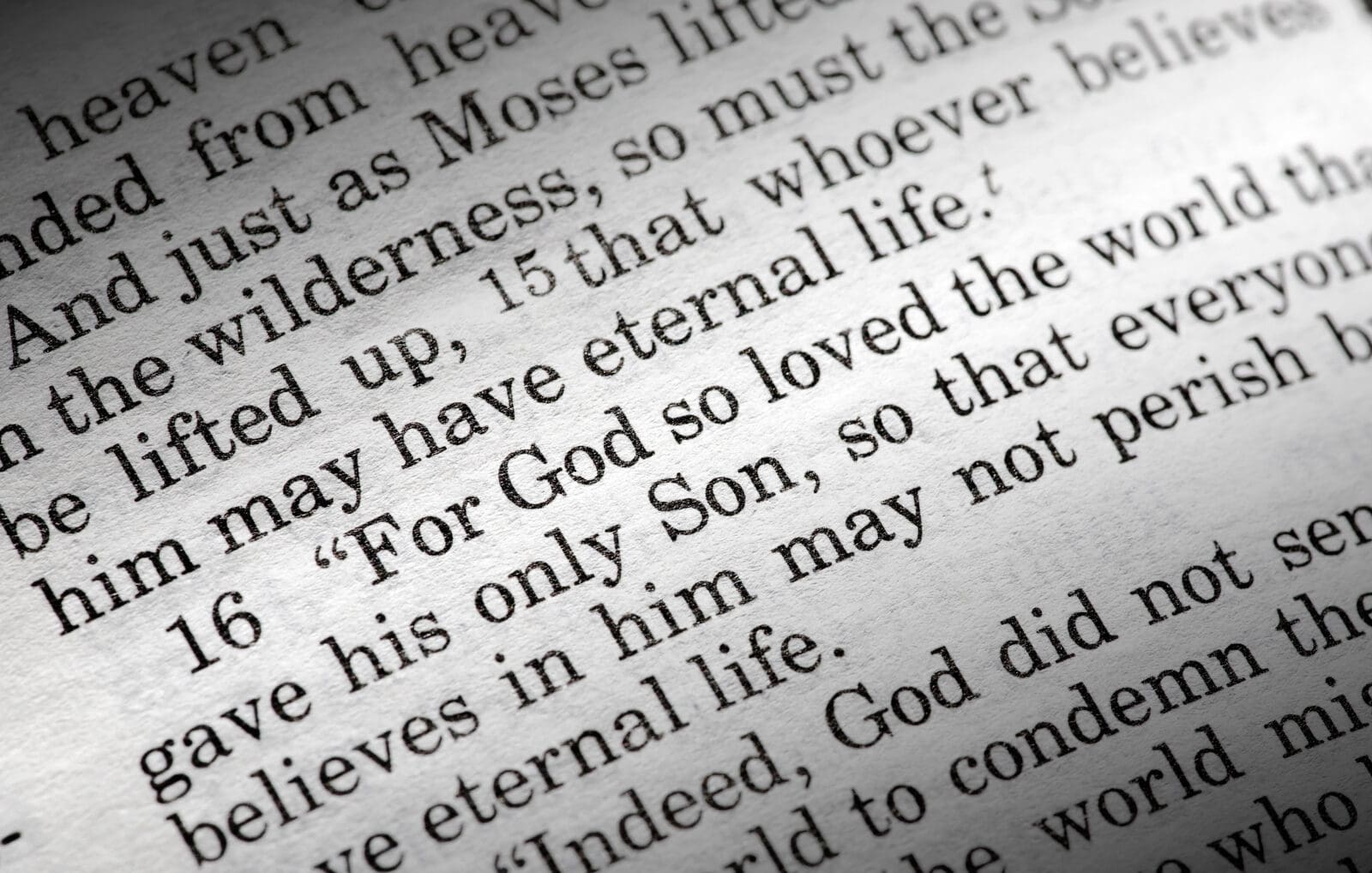
John 3:16 is likely the most quoted Bible verse worldwide, appearing on banners at sports events and on T-shirts. Though often used as a simple statement about God’s love, there is added significance when the surrounding verses are considered.
The context discusses belief, eternal life, and judgment. Without the surrounding verses, we miss Jesus’ teaching on salvation and rebirth. John 3:16 is among the most-shared verses each year, according to Bible app data from Religion Unplugged.
As a result, it is frequently used on its own. Quoting it without its full context of judgment, belief, and eternal life can limit the scope of its meaning.
Philippians 4:13

“I can do all things through Christ who strengthens me” is a common encouragement for motivational speakers, athletes, and others seeking inspiration. However, its context is often misunderstood. Paul’s intent was not to suggest that God guarantees success in everything, but rather to share that Christ gave him strength in abundance, in both struggle and contentment, teaching him to be content in all situations.
Using Philippians 4:13 as a guarantee of success can mislead readers. The verse emphasizes finding peace and contentment rather than expecting victory in every pursuit. God provides strength in every circumstance, but Paul’s main message centers on contentment. Articles from The Down to Earth Christian document frequent misuse of this verse, particularly when it is applied to individual achievements without regard for Paul’s larger discussion.
3 John 1:2

3 John 1:2 is commonly referenced as a promise of prosperity, but it is important to recognize that it is a personal greeting from the apostle John to his friend Gaius. In the letter, John expresses his wish for Gaius to be healthy and to prosper in every area. However, this is not a universal guarantee of wealth or success for all believers. John’s words convey goodwill and encouragement to a specific friend, rather than offering a general doctrine of prosperity.
While the sentiment is appreciated, this greeting is personal, not prescriptive. In this context, prosperity refers to Gaius’ well-being and success, not a promise to all Christians. Wishing others well is appropriate, but elevating this greeting to a universal principle is not supported by the text. The message conveys personal care, rather than a doctrinal statement for all believers.
Romans 8:28

Romans 8:28 is often quoted for comfort in hard times, suggesting things will always turn out well. In context, it means God works for the good of those who love Him and are called to His purpose, not that every situation ends happily.
Here, “good” often means spiritual growth or fulfilling God’s plan, not what we expect. BibleGateway data shows Romans 8:28 is widely shared in times of crisis for reassurance.
Romans 8:28 comforts, but “good” may differ from our hopes. The verse shows God’s sovereignty and ability to bring purpose from pain, even when outcomes aren’t as we wish.
Matthew 18:20

People often cite Matthew 18:20 to support small church gatherings, but it is important to consider the context. In reality, this verse is about church discipline. Jesus is teaching how to address sin and settle disputes among believers, not equating small groups with the entire church. Thus, the main point is to highlight the importance of integrity and unity in the church community.
While it’s true that God is with us when we gather, Matthew 18:20 should not be used to justify small or casual meetings. The verse calls for intentional steps to confront sin and seek reconciliation, highlighting that church gatherings are about addressing important matters. Even in tough situations, it reassures us of God’s presence and guides us through restoration and accountability.
Psalm 23

Psalm 23 is often linked to funerals and hard times, but its message is broader. The psalm depicts trust between people and God, portraying Him as a shepherd guiding them through joys and struggles. God’s guidance is for everyday life, not just loss. In ordinary challenges, as in grief, God remains present.
Believing Psalm 23 is only for funerals misses its bigger message: trust and dependence on God are needed always. From daily stresses to finances, the psalm encourages trusting God in every circumstance. In 2025, the psalm is among the most-read verses, especially during grief, yet its meaning extends beyond grief.
Matthew 7:1

“Judge not, that ye be not judged” is often quoted by those wanting to deflect criticism, often to avoid accountability for actions.
Jesus did not say ignore sin or avoid making judgments. Rather, He warned against hypocrisy, condemning others while ignoring one’s own faults.
According to the Pew Research Center, 49% of Americans think the Bible should influence U.S. laws, with 28% believing it should take precedence over public opinion, showing that despite discomfort with personal judgment, many still turn to biblical teachings as a guide for justice.
2 Chronicles 7:14

2 Chronicles 7:14 is quoted during U.S. crises as a call for repentance. Originally, it referred to God’s covenant with Israel at the dedication of Solomon’s temple, urging Israel to humble itself, pray, and seek forgiveness for national sins.
A feature in The Banner notes this verse is misapplied in U.S. crises. Churches often treat a temple-era promise as a direct pledge for their own country. Though it’s a beautiful prayer, its direct use for modern nations is questionable. It meant something specific for Israel. Its lessons of humility and prayer are timeless, but we should avoid linking them to national politics.
2 Peter 3:16

In 2 Peter 3:16, Peter points out that some of Paul’s letters are difficult to understand, and that people sometimes twist their meaning to suit their own purposes. Many readers miss this warning and assume their own interpretation is always correct, which underscores the ongoing challenge of understanding complex passages and the risk of insisting our interpretation is right, even if it doesn’t fit the full context.
With this in mind, the verse encourages us to read Scripture with humility and care, knowing that some parts are hard to understand. It reminds us not to twist verses to fit our own views, but to look for what God really wants to say. Peter’s warning is thus a call for patience and careful interpretation, so we respect the original context instead of forcing the Bible to match our own ideas.
Genesis 1:1–3

Genesis 1:1-3 is often used in debates between creationism and evolution, with people trying to force the text into modern scientific categories. The creation story was written in a cultural context that understood the world in symbolic and theological terms rather than scientific ones. It’s a theological statement about God’s sovereignty and creative power, not a scientific account of how the universe was formed.
Trying to compare Genesis directly with modern science can distract us from its deeper message. Instead of focusing only on literal meanings, it’s more helpful to see what the passage teaches about God’s character and His role as Creator.
Like our content? Be sure to follow us.