12 ways grocery shopping has changed for Americans
The grocery aisle used to be where Americans picked up dinner. Now it is where many quietly negotiate with the economy.
The cart still holds bread, eggs, cereal, apples, pasta, and maybe one small treat that survives the final price check. But it also carries inflation stress, app coupons, store-brand swaps, pickup slots, loyalty points, and the private math of what can wait until next week.
Food & Wine reported on a 2025 LendingTree survey that 88% of Americans had changed their grocery routines because of inflation, 61% felt stressed about affording groceries, and 59% were eating out less often to manage food costs. Brick Meets Click, and Mercatus also reported that U.S. online grocery sales hit $9.6 billion in December 2024, up 19% from the year before.
Grocery shopping has not vanished as a weekly ritual. It has changed shape. What used to be a simple errand now feels more careful, more digital, and far more emotional, because every cart tells a small story about what American households are trying to stretch, save, swap, and still bring home.
Saving Money Drives Every Decision

Affordability now sits in the cart before anything else. People still care about taste, habit, quality, and convenience, but the first question at the shelf is often, “Can I justify this?”
Food & Wine’s coverage of the LendingTree survey found that 88% of Americans had changed their grocery routines to save money, up from 85% in 2022, with 44% choosing store or generic brands and 38% avoiding impulse buys that were not on the original list.
Matt Schulz, LendingTree’s chief credit analyst, told Food & Wine, “People are pretty brand-loyal when it comes to grocery stores, and they tend to be creatures of habit,” but rising inflation tightens budgets and forces “decisions and sacrifices.”
Purdue University’s December 2025 Consumer Food Insights report adds that 82% of consumers modified grocery shopping behavior in 2025, most often by seeking sales, switching to cheaper brands, and reducing nonessential purchases.
Store Brands Aren’t “Cheap” Anymore

Store brands used to carry a small social whisper, like you were settling for the plain label because the famous one cost too much. That has changed. Private labels now feel less like a fallback and more like a practical household strategy.
Food & Wine reported that 44% of Americans in the LendingTree survey were choosing store or generic brands to save money, and Purdue’s 2025 consumer report found switching to cheaper brands was one of the most common grocery changes of the year. That matters because grocery loyalty is no longer just about taste or childhood habit.
A shopper who once bought the same cereal, pasta sauce, paper towels, and snacks every week may now compare the national brand against the store version item by item. This is not shoppers becoming less loyal for no reason. It is the receipt that teaches them flexibility.
Online Grocery Went to Normal Life
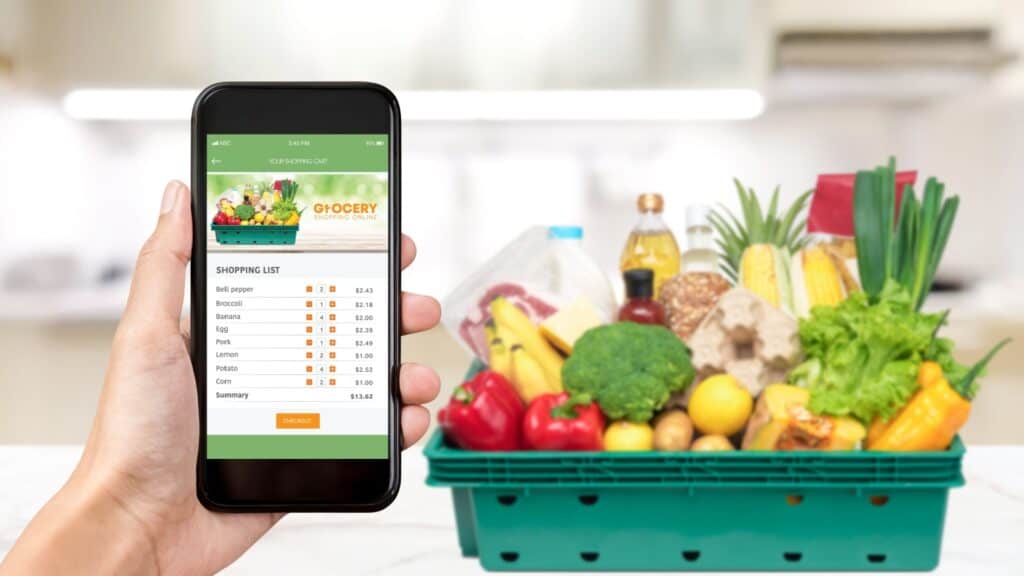
Online grocery is no longer the emergency workaround many families discovered during lockdowns. It has become part of ordinary life, especially for busy households that want to avoid impulse buys, save time, compare prices, or skip the sensory overload of a crowded store.
Brick Meets Click, and Mercatus reported that U.S. online grocery sales reached $9.6 billion in December 2024, a 19% year-over-year increase, and that the month marked the fifth straight month above $9.5 billion. Their five-year forecast projects online grocery sales will reach nearly $120 billion annually by the end of 2028, accounting for 12.7% of total U.S. grocery sales.
The forecast also says online grocery is expected to grow more than three times faster than in-store sales, 4.5% compared with 1.3%. That is no longer a side channel. It is a second front door.
Shopping Less Often, But Planning Harder

The old casual grocery run has gotten more deliberate. Fewer people want to wander aisles and “see what looks good” when every extra item can bruise the budget.
Mintel’s 2025 grocery retailing report summary says 75% of consumers still shop for groceries at least weekly, but shopping frequency has declined since 2024 as people try to make groceries last longer. LendingTree’s 2026 survey found people are making lists, using more coupons, waiting for sales, and shopping at multiple stores to manage higher food prices.
That is the new rhythm: plan harder, waste less, stretch leftovers, and avoid the small unplanned purchases that look harmless until they gather at the bottom of the receipt. The grocery list has become less of a reminder and more of a financial fence. It keeps the week from spilling over.
Multi-Channel Shopping Is the New Normal

Many households no longer have one grocery store. They have a route. A shopper might buy produce at one store, bulk paper goods at a warehouse club, pantry basics through pickup, and a few sale items through an app.
FoodNavigator-USA reported on FMI and NielsenIQ data showing that omnichannel shopping continues to grow, with 56% of omnichannel shoppers visiting retailer websites, mobile apps, and social media to create grocery lists. Almost half of consumers (45.8%) used a retailer app in-store in spring 2024, up from 38.6% in spring 2023.
That means the modern grocery trip often starts before the shopper reaches the parking lot. The aisle is still there, but the phone is now part of the aisle too. Shoppers are not being fickle. They are building a patchwork system to beat prices that no single store can solve on its own.
Grocery Shopping Turned Into a Digital Journey
For younger shoppers, grocery discovery can start on a phone long before it reaches a shelf. A snack shows up in a TikTok video, a protein drink gets reviewed in a vlog, a meal idea moves from Instagram to a store app, and suddenly the grocery list has a social-media footprint.
FoodNavigator-USA reported that 55% of consumers purchase groceries or household items directly from social media or livestream platforms, based on NIQ’s Consumer Outlook survey, and that food and beverage accounted for 14.1% of total TikTok sales in 2024, the second-largest category.
EMARKETER also notes that one-third of Gen Z and Millennial consumers discover brands through social media ads, while Gen Z is 70% more likely than average to use vlogs for product research. Grocery shopping has become part pantry planning, part algorithm, part taste test, and part social proof.
Apps and AI Are Rewriting the Experience

The grocery list is getting smarter, and sometimes a little nosier. Retailer apps now remember past purchases, surface digital coupons, suggest substitutions, and push personalized offers.
FoodNavigator-USA reported that 28.1% of shoppers used retailer apps to make grocery lists in spring 2024, while 14.5% used apps to find coupons. That is, before counting newer AI tools that help shoppers search, compare, reorder, and build baskets with less effort.
The shift is quiet because it does not always look futuristic. It looks like a phone buzzing with a deal on yogurt you bought last week, or an app suggesting a cheaper version of something in your cart.
For shoppers, the benefit is convenience and potential savings. The tradeoff is that grocery shopping now feels tracked, nudged, and shaped by systems that know your habits almost as well as you do.
In-Store Experiences Are Rebuilt Around Value

Stores know shoppers are less loyal than they used to be, so they are trying to earn each trip in real time. The old model was simple: place products on shelves, run a few weekly specials, and count on neighborhood habit. Now the store experience is tied to apps, member prices, personalized coupons, digital shelves, pickup lanes, and targeted promotions.
Brick Meets Click and Mercatus forecast that online grocery will grow much faster than in-store grocery through 2028, and they noted that mass retailers have taken a larger share of eGrocery because comparable baskets can cost more than 10% less than those at traditional supermarkets.
That price pressure changes the physical store, too. A shopper walking down the cereal aisle may also be checking a competitor’s app, scanning a loyalty price, or deciding if pickup from another chain is cheaper. The store is no longer just a place. It is a contest for trust.
Coupons and Loyalty Programs Are Back in a Big Way
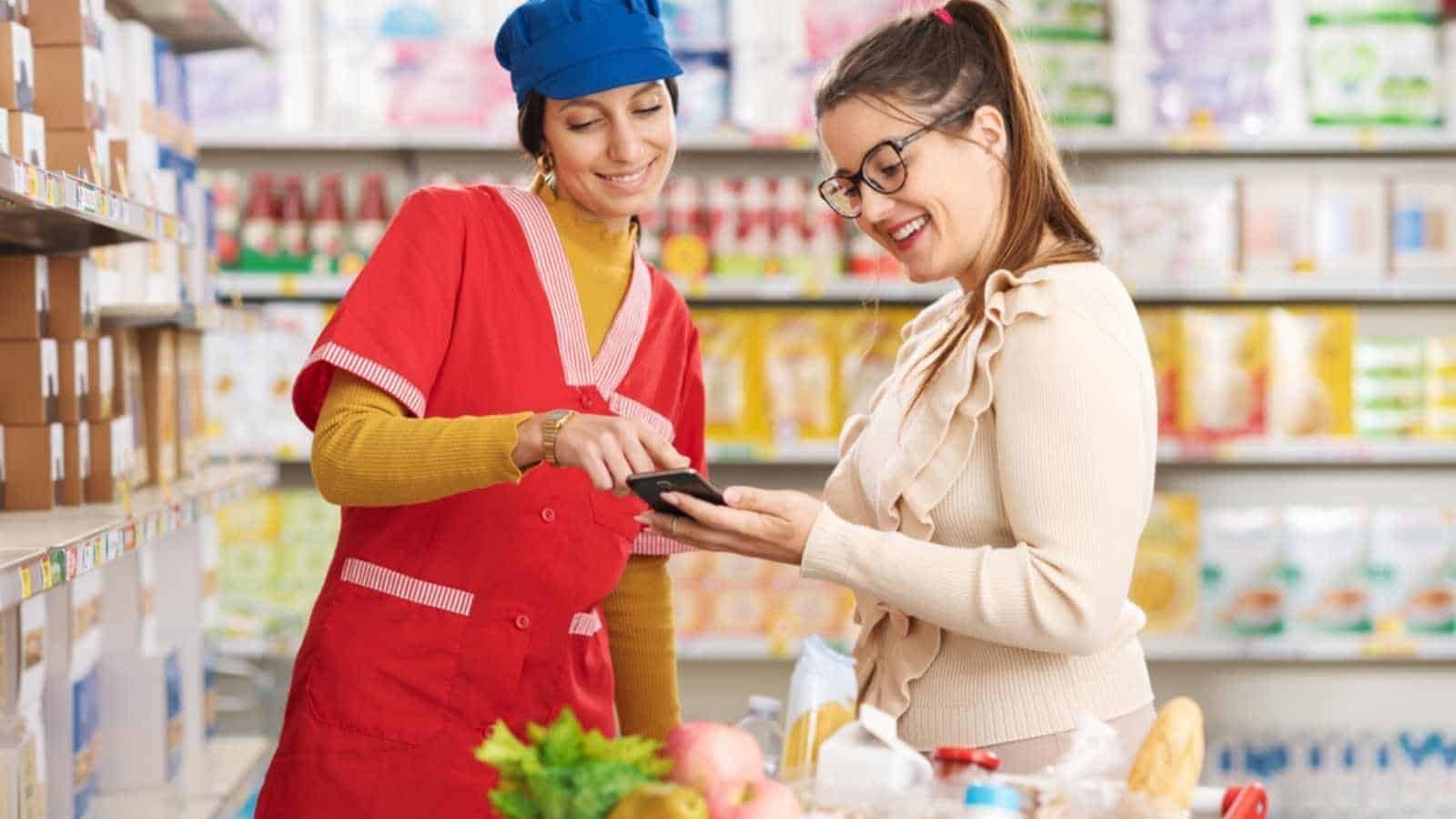
Couponing did not disappear. It changed outfits. Instead of Sunday inserts and scissors on the kitchen table, shoppers now stack digital coupons, loyalty points, sale cycles, store apps, credit-card rewards, and pickup promos.
Purdue’s 2025 Consumer Food Insights report found nearly one-quarter of households sought more sales and discounts or used more coupons as a cost-management strategy in 2025. LendingTree’s 2026 survey found shoppers are creating lists, using more coupons, waiting for sales, and shopping at multiple stores to offset higher food prices.
Caitlinn Hubbell, a Purdue market research analyst, said consumer food purchasing remains driven by taste, safety, and affordability. That last word is doing a lot of work. The modern shopper is not clipping coupons for sport. They are turning savings into a routine because every dollar trimmed from the cart has somewhere else to go.
Shoppers Are Cutting Back on Restaurants

The grocery store does not stop at the supermarket door. It reaches restaurants, takeout apps, coffee runs, lunch breaks, and family nights out. Food & Wine’s LendingTree coverage found that 59% of respondents were dining out less frequently to manage food costs.
LendingTree’s 2026 survey found that 84% of people had cut back on restaurant spending, with 39% eating out less, 25% watching menu prices, and 22% choosing cheaper restaurants or fast food. This matters because every restaurant meal cut often becomes another meal that groceries must cover.
A family may save money by cooking at home, but the grocery cart gets heavier. More dinners, more lunch prep, more snacks for kids, more pantry staples. Groceries are not just groceries now. They are replacing pieces of the restaurant budget, which makes the supermarket receipt feel even more important.
Frequency Is Down
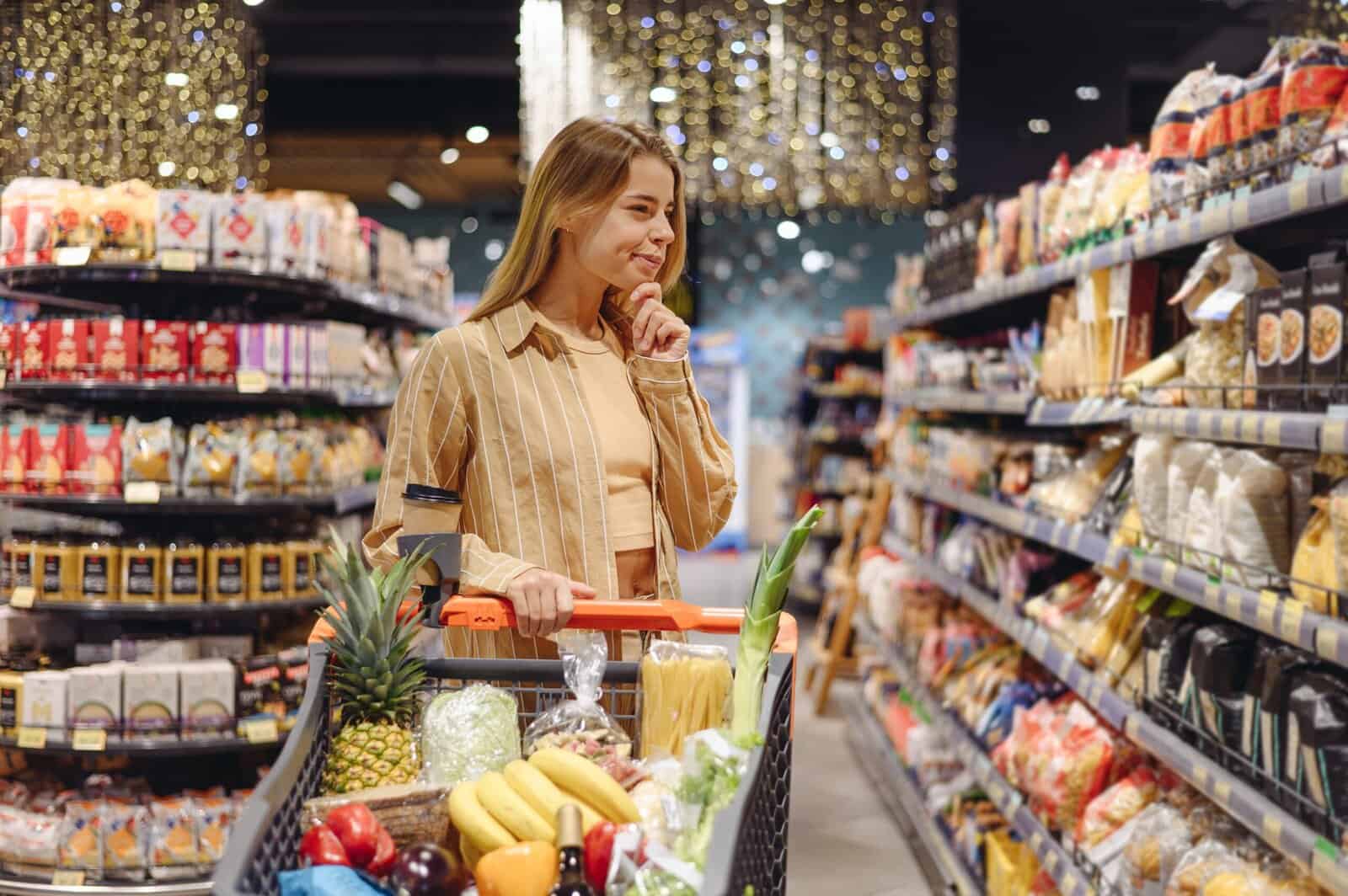
Grocery shopping has become less frequent in some ways and more complicated in others. Mintel’s 2025 report summary says most consumers still shop weekly, yet frequency has declined as households try to make food last longer.
At the same time, Brick Meets Click’s December 2024 online grocery report showed growth across pickup, delivery, and ship-to-home, with December sales hitting $9.6 billion. Put those together, and you get the new grocery maze: one big in-store trip, one small pickup order, one delivery for heavy drinks or forgotten ingredients, one warehouse run, and one app coupon that changes the whole plan.
The weekly shop has not vanished. It has splintered. American households are not just buying food. They are managing channels, fees, timing, substitutions, sale windows, loyalty programs, and the risk of forgetting the one ingredient that dinner depends on.
Groceries Have Become a Source of Stress

The hardest change may be emotional. Grocery shopping used to be routine for many families, sometimes annoying, sometimes pleasant, mostly ordinary. Now it can feel like a little economic referendum every week.
Food & Wine reported that 61% of people felt stressed about affording groceries in LendingTree’s 2025 survey. LendingTree’s 2026 survey found that half of Americans struggle to afford food, and even 57% of households earning more than $100,000 reported concern about paying for groceries in the past month.
An AP-NORC poll reported by Axios found grocery costs were a major stressor for about half of U.S. adults in 2025. That is why the aisle feels heavier. The stress is not just about one carton of eggs or one bag of apples. It is about the feeling that basics keep asking for more, and the paycheck keeps arriving with less room to breathe.
A Short Reflective Close
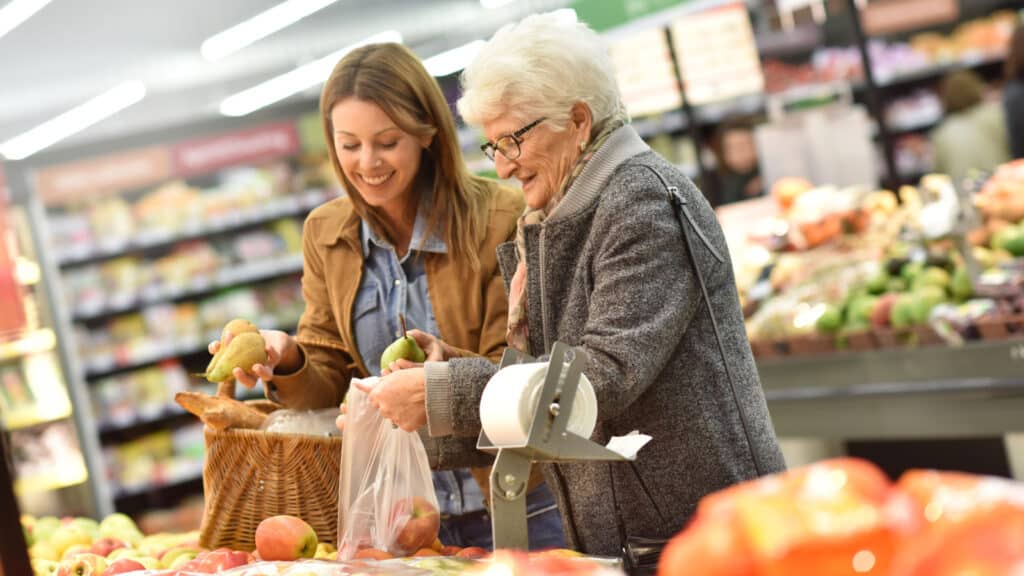
Grocery shopping has always reflected American life, but lately the reflection feels sharper. The cart shows inflation, technology, family routines, wage pressure, loyalty apps, and the small private bargains people make with themselves at the shelf.
None of this means shoppers are failing. They are adapting. They are switching brands, planning harder, using apps, cutting restaurant spending, stretching leftovers, and turning grocery shopping into a weekly strategy session. The old errand is still there. It just has more math now.
Key Takeaways

American grocery shopping has become more value-driven as food costs continue to squeeze household budgets. LendingTree’s 2025 data found 88% had changed grocery routines because of inflation, while Purdue’s December 2025 report found 82% modified grocery behavior during the year, mostly through sales, cheaper brands, and fewer nonessential purchases.
The grocery trip is also more digital. Brick Meets Click reported $9.6 billion in U.S. online grocery sales in December 2024, and Mercatus projects eGrocery will reach nearly $120 billion annually by the end of 2028. Retailer apps, pickup, delivery, social commerce, and AI tools are turning the old grocery list into a connected shopping system.
The emotional burden has changed, too. Shoppers are not just choosing between brands. They are managing stress, tradeoffs, and the fear of overspending on basics. That is why the grocery cart has become one of the clearest places to see how American households are adjusting to a more expensive, more digital, and more calculated way of living.
Disclaimer – This list is solely the author’s opinion based on research and publicly available information. It is not intended to be professional advice.
Like our content? Be sure to follow us