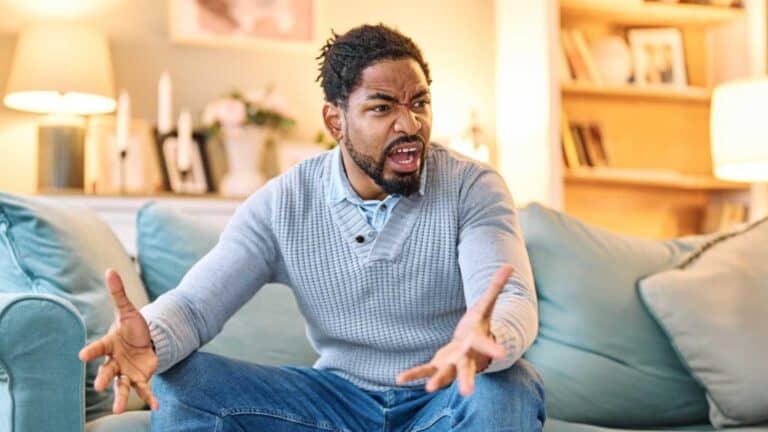
12 reasons men walk away from marriage
Nobody enters marriage expecting it to fall apart. Relationships are meant to withstand every season, yet slight changes often go unspoken until it is too late for intervention. Men who leave marriages they previously believed in describe the decision as a quiet accumulation of unmet needs.
According to USA Today, 41% of first marriages in the U.S. end in divorce, and that figure rises to 60% for second marriages. These numbers reflect how often couples fail to address what is breaking under the surface. To understand or prevent an end, this list offers the honesty most avoid.
Emotional Disconnection That Built Slowly Over Time

Research points to emotional disconnection as the leading reason men cite for leaving a marriage, a reality that surprises many who assume men pull away first. Men want to feel noticed and known. According to the Pew Research Center, communication problems and growing apart are common reasons couples divorce.
When a relationship shifts to logistics, men begin a slow withdrawal. By the time they show a desire to leave, the emotional exit has already happened. Sudden distance almost never is; it is the final step of a long, quiet drift.
Feeling Persistently Unappreciated

Not thanked for showing up or acknowledged for financial and emotional contributions, men commonly face an erosion of value that hardens into resentment. Gratitude is no nicety; research in the Journal of Theoretical Social Psychology shows that appreciation is a top predictor of stability. When it vanishes, a man wonders if the relationship still has room for him.
This isolating uncertainty usually leads to a quiet conclusion long before it is spoken aloud. Most men reach it through a slow, painful process of realizing their efforts go unseen. Left unanswered, that wondering becomes a fixed internal distance. Once the feeling of being valued is gone, the motivation to sustain the partnership often follows.
A Long-Term Absence of Physical Intimacy

Physical intimacy is about feeling desired and chosen. When it disappears for long durations without effort to address it, men feel unwanted. The absence communicates rejection, which is one of the loneliest experiences a marriage can produce. Ignoring this reality never makes a marriage healthier; instead, it compounds every other unmet need in the room.
Most men will carry this specific loneliness in silence far longer than their partners realize, eventually leading to a complete emotional exit. The lack of touch or desire signals that the romantic bond has been replaced by mere logistics. Without that connection, the marriage feels like a hollow arrangement rather than a choice.
Feeling Controlled or Consistently Dismissed

When a man’s opinions lack weight and his judgment is routinely overridden, the foundation of partnership erodes. Men value respect; without it, the marriage feels like a structure where he is perpetually in the wrong. This is not a fragile ego, but a basic human need to matter to one’s partner. Being managed instead of partnered changes a man’s relationship to his home.
He stops sharing, silence becomes withdrawal, and withdrawal becomes the exit because he no longer feels like a peer. When decisions are made without him, he ceases to see himself as a stakeholder. Eventually, the lack of agency makes the environment feel hostile, and leaving becomes the only way to reclaim his say.
The Loss of Individual Identity

Some men reach a point where they cannot define themselves beyond being a husband or father. This loss triggers a crisis; when a man disappears into a role with no space for himself, emptiness follows. Healthy marriages require two evolving people who remain interesting to each other. If one loses themselves, the relationship loses its vitality.
Devotion can accidentally become disappearance, and once that individual spark is extinguished, recovery for the couple is never guaranteed. This internal vacuum often drives a desperate need to leave just to find out who they are again. A marriage that consumes the individual eventually starves the partnership of the very person who made it work.
Unresolved Conflicts That Never Actually Close

While all couples argue, those who stay together resolve issues. When the same conflicts surface for years without change, men experience the marriage as perpetual low-grade stress. This exhaustion leads to a decision to stop engaging, not because of peace, but because the energy to fight ran out. Unresolved conflicts accumulate until they become too heavy to lift.
The saddest endings aren’t dramatic fights, but the calm that follows when people get too tired to keep trying. This accumulation of baggage turns the home into a place of tension rather than rest. When the effort to resolve things feels futile, the exit becomes the only way to find actual quiet and mental relief.
Carrying Financial Pressure Completely Alone

Financial stress is a primary cause of breakdown. According to a 2025 Bankrate survey, 2 in 5 Americans view financial secrets as damaging as infidelity. When a man assumes full responsibility alone, the experience is isolating. If decisions override his judgment without discussion, the marriage stops feeling like a team.
What remains is a solo performance that no one can sustain indefinitely. This isolation breeds a sense that he is merely a utility rather than a person. When the partnership in survival ends, the emotional bond usually follows, leading him to walk away from the burden.
Feeling Like a Project to Be Fixed

Many men feel like “works-in-progress” rather than partners, believing they are only acceptable after enough correction. Love tied to constant renovation does not feel like love; it feels like conditional acceptance. Most men won’t name this directly because they lack the language for it, or it feels like weakness.
Instead, they quietly stop investing in a relationship that makes them feel inadequate. The distance grows without an honest conversation, as the desire to be “fixed” fades away. When a man feels he can never satisfy his partner’s vision of him, he stops trying to satisfy the relationship at all. He eventually leaves to find a place where he is simply enough as he is.
Feeling Like the Marriage Comes Last

When kids, careers, and parents take every ounce of energy, the marriage receives only the leftovers. Relationships require more than shared logistics; they need ongoing investment and the daily decision to choose each other. When a man feels that marriage is at the bottom of the priority list, he feels neglected.
Marriages cannot survive on a common past alone. When one partner stops feeling chosen, they eventually begin to choose themselves differently, a shift that happens all at once. If the bond isn’t nurtured, it becomes a secondary concern that eventually breaks under the pressure of more “urgent” things.
Infidelity, Emotional or Physical

Affairs are often a symptom of deeper fractures. Infidelity is a common reason couples divorce, and often reflects long-lasting problems in the relationship. Emotional affairs, deep connections outside marriage, can be devastating as physical marriage.
A YouGov Survey found that one-third of respondents say they have been the cheater, and half say they’ve been cheated on. Usually, the affair points to something broken long before the betrayal began.
Treating the affair as the primary problem is a common mistake that prevents couples from dealing with the true cause. While the betrayal is the final blow, the erosion usually started years prior. When the outside connection provides the intimacy missing at home, the marriage has already lost its place as the primary source of emotional safety.
Growing in Completely Different Directions

People well-matched at twenty-five have vastly different visions by fifty. This rise reflects couples who grew apart without enough conversation to close the gap. Survival depends on remaining curious about who the other is becoming.
Curiosity is an underrated ingredient; without it, natural divergence becomes a permanent and silent distance. When the shared future disappears, the present feels like a hollow obligation. If the two versions of the future no longer overlap, the marriage becomes a cage that both people eventually want to leave.
Simply Feeling Alone Inside the Marriage

A man can share a bed and a life yet feel inescapably alone. Stanford University research shows women initiate 69% of divorces, a trend highlighted in coverage by the American Sociological Association. For some, the solitude inside a marriage becomes indistinguishable from being single.
When that calculation tips, walking away feels like the first honest breath in years. The loneliness of an empty marriage is a quiet crisis that ends more lives than most admit. It is the strain of being “together” while feeling completely unseen. When being alone outside the marriage seems less painful than being alone within it, the decision to leave becomes a matter of survival.
Disclaimer – This list is solely the author’s opinion based on research and publicly available information. It is not intended to be professional advice.
Like our content? Be sure to follow us