12 Bible Mysteries That Continue to Puzzle Readers
The Bible remains the most widely distributed book in human history, yet many passages continue sparking debate among theologians, historians, archaeologists, and everyday readers. According to data published by the Pew Research Center, millions of Americans still engage with Scripture regularly, though many admit confusion around symbolic visions, missing historical details, and unexplained supernatural events.
Scholars across universities and seminaries continue to publish new interpretations each year, especially as archaeological discoveries reshape understanding of ancient cultures and biblical geography.
Curiosity has always surrounded Scripture. Ancient scrolls describe giants, mysterious heavenly beings, prophetic visions, and disappearances that remain difficult to explain fully. Some mysteries emerge because historical records remain incomplete.
Others persist because symbolic language invites multiple interpretations. Biblical scholars frequently warn readers against forcing simplistic answers onto deeply layered passages written across different centuries, languages, and cultural settings.
Mystery itself plays a major role throughout Scripture because faith often operates beyond complete human understanding.
Book of Revelation and Its Prophetic Symbols

Few biblical texts generate as much fascination and confusion as the Book of Revelation. The final book of the New Testament contains beasts with multiple heads, cosmic battles, symbolic numbers, heavenly scrolls, and vivid apocalyptic imagery that scholars still debate intensely.
Interpretations vary widely among Christians. Some readers believe Revelation predicts future global events literally, while others interpret the book symbolically as spiritual commentary about oppression, endurance, and hope.
Biblical historians frequently emphasize that Revelation was written during a period of Roman persecution under Emperor Domitian. Many symbols may have carried coded meanings recognizable to first-century believers yet appear mysterious to modern audiences.
The infamous number 666 continues to generate theories about political figures, empires, and hidden symbolism. Theologian N. T. Wright has noted that Revelation functions partly as resistance literature written to encourage persecuted Christians rather than merely serving as a future timeline chart.
The Identity of the Nephilim

Genesis 6 briefly mentions mysterious beings called the Nephilim, described as mighty men or giants who existed before the flood. The passage remains one of the Bible’s shortest yet most debated mysteries because details remain extremely limited.
Some ancient Jewish traditions interpreted the Nephilim as offspring produced through unions between fallen angels and human women. Other scholars argue that the passage refers symbolically to powerful ancient rulers or violent warriors.
Interest in the Nephilim exploded in modern culture through documentaries, internet theories, and speculative books that connect them to mythology and extraterrestrial claims. Serious biblical scholars generally caution against sensationalism because the text itself provides minimal information.
Ancient Near Eastern literature, however, contains several stories involving semi-divine heroic figures, which may help explain why Genesis references them so briefly without extended explanation.
The Location of the Garden of Eden

The Garden of Eden stands as one of history’s most famous lost locations. Genesis describes a paradise watered by four rivers, including the Tigris and Euphrates, which has led many historians to connect Eden geographically to Mesopotamia.
Archaeologists and theologians continue to debate the garden’s possible location because river systems shifted dramatically over thousands of years. Some scholars interpret Eden symbolically rather than geographically, viewing the narrative as theological imagery communicating humanity’s relationship with God, innocence, and moral choice.
Others continue searching for historical clues through ancient geography and climate studies. The mystery persists partly because Genesis blends spiritual themes with geographic references, creating tension between literal and symbolic interpretation.
Noah’s Ark and the Global Flood Debate

The account of Noah’s Ark continues to generate enormous debate among scientists, theologians, and historians. Some researchers seek geological evidence of a massive ancient flood that affected large regions of the ancient world.
Others interpret the flood story primarily as theological literature carrying moral and spiritual meaning.
Expeditions near Mount Ararat in modern-day Turkey repeatedly attracted international attention after claims of unusual formations resembling ship structures surfaced. Archaeological evidence remains inconclusive, fueling ongoing speculation.
Ancient flood stories also appear in Mesopotamian literature, such as the Epic of Gilgamesh, suggesting flood traditions circulated widely across ancient civilizations. The overlap raises fascinating questions about historical memory, shared oral traditions, and cultural storytelling.
The Ark of the Covenant’s Disappearance

The Ark of the Covenant represented one of ancient Israel’s holiest objects, believed to contain the stone tablets of the Ten Commandments. Biblical accounts describe the Ark possessing extraordinary spiritual significance during battles and worship ceremonies.
Then the trail suddenly disappears. Historians proposed multiple theories regarding the Ark’s fate. Some believe Babylonian forces destroyed or captured it during the conquest of Jerusalem. Ethiopian traditions maintain that the Ark resides in a guarded church in Aksum, though independent verification remains unavailable.
The Ark’s disappearance fascinated explorers, filmmakers, theologians, and conspiracy theorists for generations because Scripture never clearly explains what happened after the First Temple period.
The Mysterious Fate of Enoch

Genesis states that Enoch “walked with God; then he was no more, because God took him.” The passage contains very little explanation, yet it inspired centuries of theological speculation. Unlike most biblical figures, Enoch apparently avoided ordinary death entirely.
Ancient Jewish literature expanded on Enoch’s story through texts such as the Book of Enoch, which described heavenly visions, angels, and cosmic judgment. Although the Book of Enoch does not appear in most Protestant biblical canons, it significantly influenced early Jewish and Christian thought.
Scholars continue to debate how much later traditions should shape the interpretation of the brief Genesis account.
The Star of Bethlehem

The Gospel of Matthew describes a mysterious star guiding wise men toward the birthplace of Jesus. Astronomers, historians, and theologians spent centuries proposing explanations ranging from planetary alignments to comets or supernatural phenomena.
Scientific modeling software even allowed researchers to reconstruct ancient skies and search for unusual celestial events around the estimated period of Christ’s birth. Some astronomers point to rare conjunctions involving Jupiter and Saturn as possible explanations.
Others argue that the biblical description is unlike that of ordinary astronomical objects because the star appears to move in highly specific ways. The mystery continues partly because ancient cultures interpreted celestial signs differently from modern scientific frameworks.
The Identity of Melchizedek

Melchizedek suddenly appears in Genesis as both king and priest, blessing Abraham before disappearing from the narrative almost immediately. Psalm 110 and the New Testament book of Hebrews later reference him again, giving the figure extraordinary theological importance despite minimal background information.
The mystery surrounding Melchizedek fueled endless interpretation because Scripture never clearly explains his ancestry or origin. Some traditions view him as a symbolic foreshadowing of Christ. Others speculated about supernatural identity or hidden priestly lineages.
Biblical scholars generally agree that the brevity of Melchizedek’s appearance contributes significantly to his enduring fascination.
The Meaning of the “Mark of the Beast”

The “mark of the beast” described in Revelation continues to fuel intense speculation in every generation. Political movements, technological innovations, identification systems, and financial systems repeatedly become linked to theories surrounding the mark.
Public anxiety often rises during periods of rapid technological change or political instability. Theologians frequently caution against sensational interpretations disconnected from historical context.
Many scholars believe the imagery originally carried coded references understandable to Christians living under Roman imperial pressure. Symbolic readings often connect the mark to allegiance, worship, or moral compromise rather than a single future technology.
Debate persists because Revelation’s imagery remains intentionally layered and symbolic.
The Lost Years of Jesus
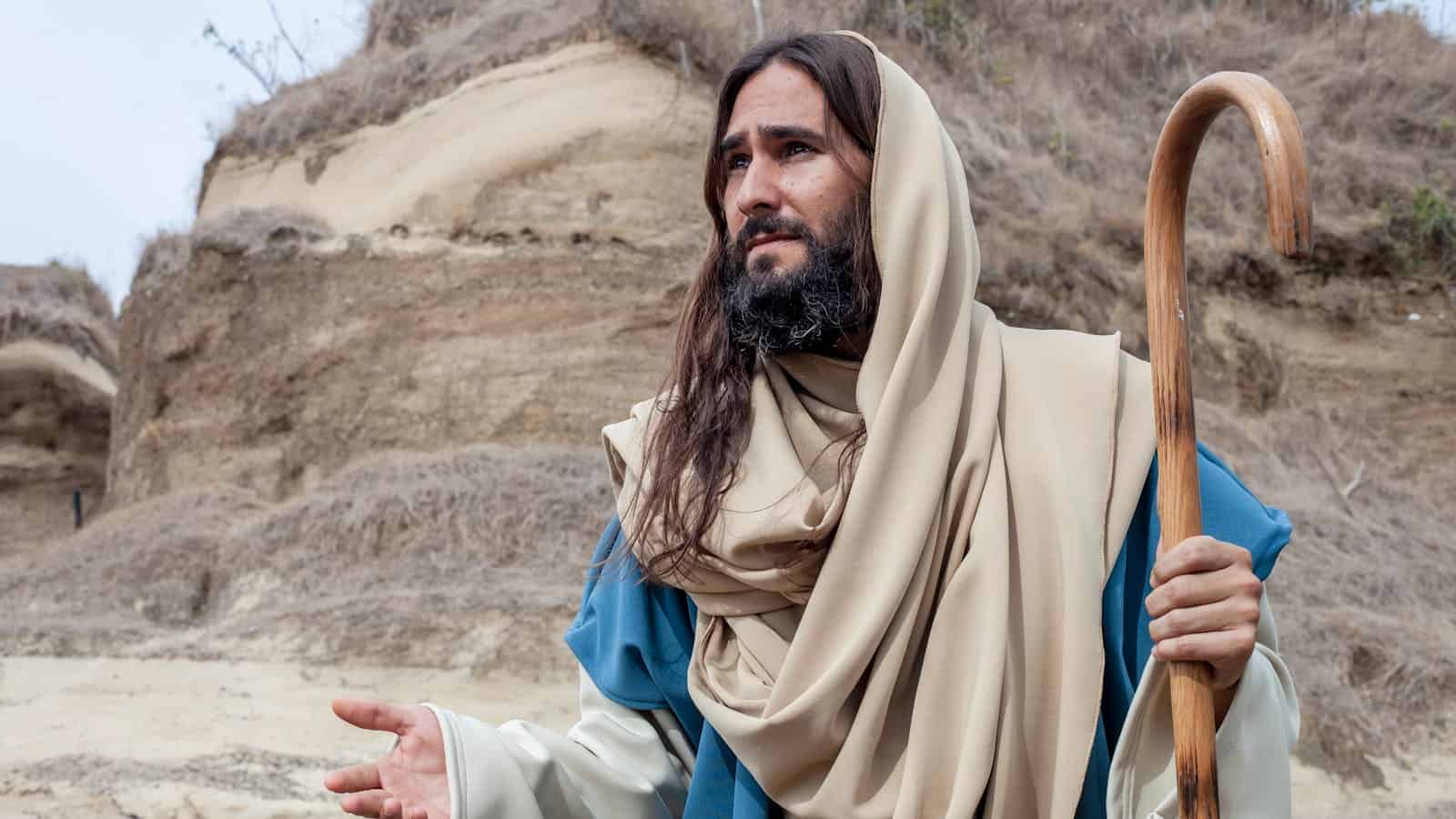
The Gospels provide very little information about Jesus between childhood and the beginning of His public ministry around age 30. Those “silent years” became one of Christianity’s most discussed mysteries because curiosity naturally fills informational gaps.
Various legends and speculative theories have emerged over the centuries, suggesting that Jesus traveled extensively during that period, though historical evidence remains limited. Mainstream scholars generally emphasize that ancient biographies often focused primarily on public ministry rather than on detailed childhood development.
The silence itself continues to fascinate readers because it leaves such a significant portion of Jesus’ earthly life undocumented.
The Identity of the Antichrist

The Antichrist remains one of Scripture’s most debated prophetic figures. Throughout history, political leaders, emperors, dictators, and global influencers have repeatedly been associated with Antichrist theories during periods of fear or upheaval.
The term appears in several New Testament passages, though descriptions vary considerably. Biblical scholars often emphasize that early Christian audiences associated antichrist behavior with deception, opposition to Christ, and spiritual corruption rather than solely with one future individual.
Public fascination persists because discussions of prophecy frequently intersect with geopolitical anxiety. Each generation tends to reinterpret apocalyptic warnings in light of current events, keeping the mystery culturally relevant.
The Timing of the End Times
Jesus Himself stated that no one knows the exact day or hour of the end times, yet predictions continue to appear. Failed prophecies, viral social media claims, and speculative timelines repeatedly capture public attention during wars, pandemics, economic crises, and natural disasters.
Religious historians note that end-times expectation existed throughout nearly every century of Christianity. Human beings naturally search for patterns during periods of uncertainty. Scripture contains symbolic prophetic language that invites multiple interpretations across denominations and theological traditions.
The enduring mystery surrounding timing may itself serve a purpose by encouraging spiritual readiness rather than date-setting obsession.
Key Takeaways

Many biblical mysteries persist because Scripture often combines symbolism, history, and theology.
Archaeology and historical research continue to shape modern biblical interpretation.
Prophetic passages generate wide debate due to symbolic language and cultural context.
Some mysteries involve missing historical details rather than contradictions.
Curiosity surrounding unexplained passages keeps biblical scholarship active globally.
Disclaimer: This list is solely the author’s opinion based on research and publicly available information. It is not intended to be professional advice.
Like our content? Be sure to follow us