12 reasons why top scholars integrate theology with science
Around 84% of the world’s population holds some form of religious belief, according to the Pew Research Center. That figure has remained stubbornly stable for decades, surviving the advent of the internet, the mapping of the human genome, and the Large Hadron Collider. And yet the loudest intellectual culture of the last century has insisted, with surprising confidence, that the relationship between theology and science is essentially a custody dispute – one side holding the truth, the other clinging to comfort.
The scholars profiled below are not interested in the old conflict narrative. They are researchers who followed the evidence to a point where the boundary between science and religion stopped looking like a wall and began to look like a shoreline.
A 2015 Pew Research Center survey found that 59% of Americans believe science and religion are often in conflict. The same survey found that only 30% said their own beliefs conflicted with science, meaning the perceived war is largely attributed to others. Interestingly, the most religiously observant respondents were the least likely to see any conflict. The scholars in this piece are working in that gap: between what the culture assumes and what the evidence actually says.
The warfare narrative was always more myth than history
For more than a century, the dominant framework used to describe the relationship between theology and science was called the conflict thesis – the idea that the two have been locked in permanent, zero-sum combat since the moment modern science arrived. It was proposed in two books: John William Draper’s History of the Conflict Between Religion and Science (1874) and Andrew Dickson White’s A History of the Warfare of Science with Theology in Christendom (1896). Both were polemical. Both have since been largely rejected by historians of science.
What replaced it was a messier but more accurate reality: science and religion have spent centuries in tension, collaboration, and mutual influence. Medieval universities, which created the West’s first organized systems of rational inquiry, were church institutions. The Jesuits alone produced generations of scientists, from Matteo Ricci’s work in Chinese cartography to the dozens of lunar craters named after Jesuit scholars. In 1933, Albert Einstein praised Belgian priest and physicist Georges Lemaître’s early Big Bang theory as “the most beautiful and satisfactory explanation of creation” he had heard.
The conflict thesis persisted not because the evidence supported it, but because it served cultural purposes – the positioning of secular science as the new authority, the casting of religion as its defeated ancestor.
The numbers show scientists are not nearly as secular as popular culture assumes

Rice University sociologist Elaine Howard Ecklund spent five years surveying more than 9,000 biologists and physicists across eight countries – France, Hong Kong, India, Italy, Taiwan, Turkey, the United Kingdom, and the United States – in what became the largest worldwide study of its kind.
In India, only 11% of scientists said they did not believe in God. In Turkey, the figure dropped to 6%. Even in France, one of the most secular countries studied, only 51% of scientists rejected belief in God – a bare majority, not the sweeping consensus the public imagines. When asked whether science and religion are in conflict, only 29% of American scientists and 32% in the United Kingdom said yes. Among scientists in Hong Kong, India, and Taiwan, between 23% and 27% said that science and religion could actively help each other.
In Ecklund’s earlier study of American universities, which surveyed 1,646 faculty at elite research institutions, 36% of scientists maintained at least some belief in God despite working in environments that skew secular.
The standard caricature (that science is a profession that selects for atheism) is a sociological myth. What the data actually shows is a community with wildly varied beliefs, many of whom see no contradiction between rigorous empirical work and religious or spiritual life.
Francis Collins mapped the human genome and found it did not disprove God

In June 2000, standing in the East Room of the White House beside President Bill Clinton, Francis Collins described the completed mapping of the human genome as catching the first glimpse of our own instruction book, previously known only to God.
As director of the International Human Genome Project, Collins oversaw 13 years of work that sequenced all three billion base pairs of human DNA. He later served as director of the National Institutes of Health under three consecutive presidents. By any measure, he sits at the uppermost tier of twentieth and twenty-first-century science. He is also an outspoken Christian who arrived at faith through the writings of C.S. Lewis after a period of committed atheism, and who has written extensively about the relationship between the two modes of knowing.
His core argument, developed in his book The Language of God and through the BioLogos Foundation he created, is not that science points to God the way a theorem points to a conclusion; he is careful about that. His argument is more epistemological: science answers the ‘how’, not the ‘why’. It describes the mechanism with extraordinary precision.
But the questions it cannot reach (why there is something rather than nothing, why human beings have a persistent moral intuition that cannot be fully reduced to evolutionary advantage, what consciousness ultimately is) do not disappear once you have sequenced a genome. They become, if anything, more pressing. Science and faith, in Collins’s framing, fortify each other like two pillars holding up a structure called truth, and the building only stands when both are intact.
The brain lights up in prayer, and theologians want to know what that means
In the late 1990s, neuroscientist Andrew Newberg began scanning the brains of Franciscan nuns in prayer and Tibetan Buddhist monks in deep meditation. The scans showed consistent changes in the parietal lobe, the region associated with spatial orientation and the perception of self-boundaries.
During intense prayer or meditation, activity in this area dropped significantly. Subjects described the experience as a dissolution of the boundary between themselves and the world, or between themselves and the divine. Newberg, now Director of Research at the Marcus Institute of Integrative Health at Thomas Jefferson University, has since published over 250 peer-reviewed articles on what he calls neurotheology, the field linking neuroscience with religious and spiritual phenomena.
For the reductionist, the finding confirms that religious experience is a product of brain function; neurons firing in particular patterns, nothing more. For the theologian, it raises a completely different set of questions: what does it mean that human beings are neurologically built for transcendence? Is the brain’s capacity for mystical experience evidence that it evolved to access something real, or evidence that it is capable of generating the feeling of reality where none exists? The answer does not come from neuroscience alone. The answer requires theology.
The fine-tuning of the universe keeps both parties in the same conversation
The physical constants that govern the universe are not random in any philosophically comfortable sense. The list of constants that must fall within an extraordinarily narrow range for a life-permitting universe to exist has been cataloged by physicists for decades, and it does not get shorter as physics advances.
Alister McGrath, who holds doctorates in both molecular biophysics and theology from Oxford, summarized the scientific consensus plainly: the phenomenon of fine-tuning is widely conceded, and all debates concern its interpretation.
Physicists respond to fine-tuning in roughly three ways:
- They posit a multiverse in which our universe is just one of an inconceivably large number with varying constants, making our life-permitting universe statistically inevitable;
- They argue that a future unified theory will show the constants were determined necessarily rather than contingently; or
- They follow the inference to design. None of these three responses is empirically testable in any clean sense.
All three require philosophical commitments that go beyond data.
Philosopher Alvin Plantinga, whose career at Notre Dame and Calvin College put him at the center of analytic philosophy of religion for five decades, argued that fine-tuning makes more sense given theism than given naturalism – not as proof, but as a matter of comparative probability.
Religious practice predicts health outcomes in ways epidemiologists can no longer ignore
VanderWeele et al. findings: women who attended religious services more than once per week had a 33% lower chance of dying during a 16-year follow-up period compared to those who never attended. More than 20 rigorous longitudinal studies have now examined the relationship, controlling for confounding variables, and the majority show the same protective effect.
VanderWeele has also presented evidence that these associations are causal rather than merely correlational. The methodology matters here: he draws on quasi-experimental designs and instrumental variable approaches from the economics literature to address the confounding problem that typically undermines religion-and-health research. Suicide rates, substance use, and depression all show protective associations with religious participation that survive rigorous statistical scrutiny.
This data does not tell theologians what to believe. But it does something important: it gives the humanities-trained theologian an empirical footing when making claims about the human good, suffering, community, and meaning – which are, after all, the central questions of theology.
The history of science is populated by people who saw no contradiction
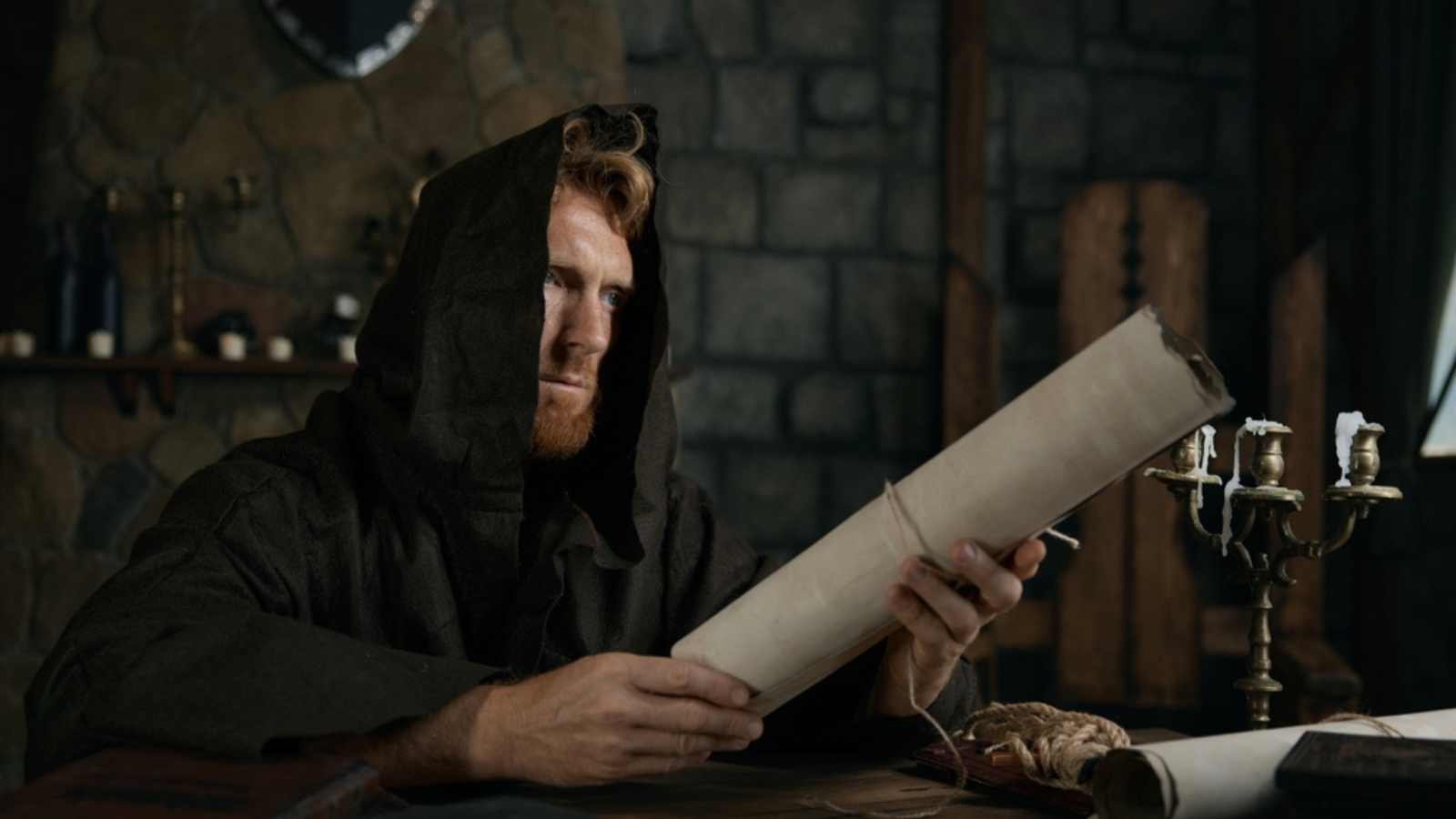
Johannes Kepler, whose laws of planetary motion helped build the foundation of Newtonian physics, described his work as “thinking God’s thoughts after Him.” Isaac Newton wrote more about theology than physics.
Blaise Pascal pioneered research in pressure and fluid mechanics, invented the mechanical calculator, and wrote the Pensées, a major defense of Christian belief. Gregor Mendel, the Augustinian friar whose pea-plant experiments founded modern genetics, saw no contradiction between his religious vows and his science.
The twentieth century continued the pattern. Max Planck, whose quantum theory reshaped physics, wrote that science and religion are engaged in a joint battle in an incessant, never-relaxing crusade against skepticism and dogma.
Georges Lemaître, as mentioned, held that the Big Bang was consistent with, though not required by, Christian theology. Arthur Eddington, the Quaker astrophysicist who confirmed Einstein’s general relativity by observing the bending of starlight during the 1919 solar eclipse, wrote extensively on the spiritual dimensions of physical science.
Evolutionary biology left a theological gap that trained biologists have spent decades filling

Francisco Ayala, the biologist and philosopher who trained as a Dominican priest before earning a PhD from Columbia under Theodosius Dobzhansky, spent his career arguing that natural selection actually resolves one of theology’s most persistent problems – the problem of natural evil.
If God directly designed every organism with all its parasites, birth defects, and predatory cruelty, the moral implications are troubling. If life evolved through an undirected process, then natural suffering is not evidence of divine malice or negligence – it is the statistical residue of a world running by its own laws. Ayala called this Darwin’s gift to theology.
The compatibility question runs even deeper at the genetic level. Kenneth Miller, the cell biologist and practicing Catholic who co-authored one of the most widely used biology textbooks in American universities, argued in Only a Theory that the evolutionary cosmology emerging from physics and biology describes a universe so vast, so precisely calibrated, and so strangely hospitable to complex life that it warrants more wonder, not less.
Consciousness is the problem that neither neuroscience nor theology can solve alone

The hard problem of consciousness (philosopher David Chalmers’s term for the question of why physical processes give rise to subjective experience at all) is, according to many philosophers of mind, the most stubbornly unsolved problem in science. It is not a gap in our knowledge of neural correlates. We can map which brain regions are associated with particular experiences. Why is there something it is like to see red, to feel grief, to hear music? Why doesn’t all that neural processing occur in the dark?
No current physical theory explains this. Materialism predicts that consciousness should be explainable in terms of matter, but the explanation does not arrive. Some philosophers have proposed panpsychism (the view that consciousness is a fundamental feature of reality rather than emergent from matter), which carries its own theological implications. Others have argued for property dualism, which posits that mental properties are real but non-physical. None of these positions is empirically settled.
This is exactly the kind of boundary problem that theologians have been trained to inhabit. Theology is, among other things, a discipline that reasons carefully about the nature of persons, the relationship between soul and body, and the metaphysics of mind.
Bioethics without a framework for human dignity is just preference management

Biotechnology is advancing faster than the ethical systems meant to govern it. CRISPR gene editing can now treat diseases like sickle cell anemia, but it also raises questions biology alone cannot answer: where is the line between healing and enhancement, who decides, and what does altering heritable DNA mean for identity and consent?
Francis Collins argued these questions require theological as well as scientific input. Religious traditions support alleviating suffering but also impose moral limits that can act as ethical restraints on biotechnology and AI. In 2025, the Vatican’s Antiqua et Nova addressed artificial intelligence as a theological and moral challenge, while Pope Leo XIV compared AI’s rise to the industrial revolution.
Secular bioethics can weigh harms and benefits, but without a deeper account of human dignity, it often collapses into preference management. It can explain consequences more easily than why some acts (like designing heritable traits for advantage or treating embryos as research material) feel fundamentally violating. Theology supplies language for those intuitions. Scholars working across both fields are not importing religion into science; they are applying multiple intellectual traditions to problems too large for one discipline alone.
Climate science raised eschatological questions
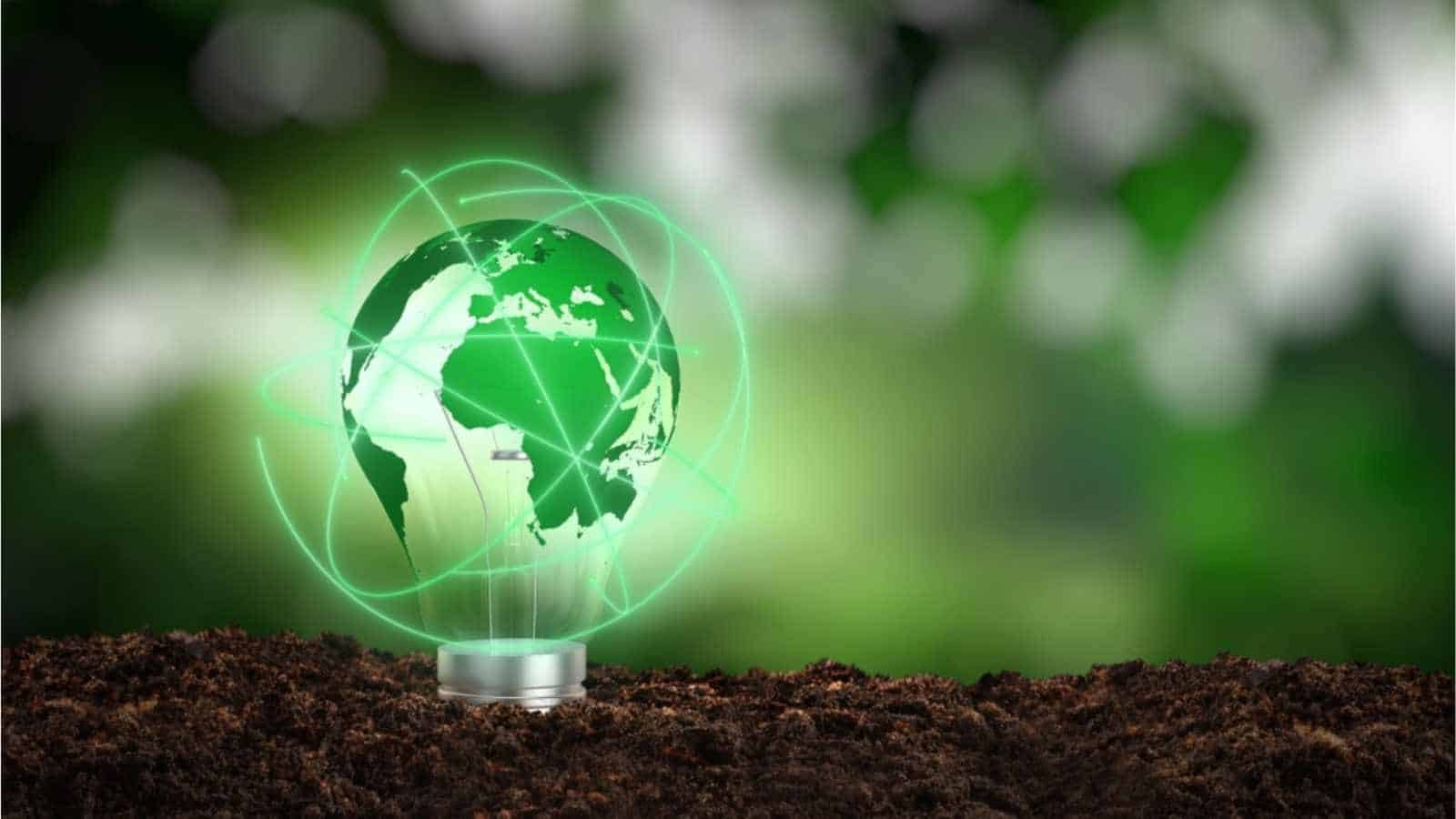
The book of Genesis positions humanity as charged with tending and keeping the earth. The Islamic concept of khilafah designates humans as vicegerents over creation. Buddhist teachings on the interconnectedness of all sentient beings have generated a rich body of environmental ethics literature. When climate science began producing consensus findings about anthropogenic warming and species loss, these traditions did not need to be retrofitted. They had frameworks ready, and the question was whether their communities would apply them.
By 2024, according to scholar Joanna Leidenhag writing in a peer-reviewed analysis of the field, hundreds of scholars and priests had been involved in science-engaged theology grants, reshaping their work to engage scientific literature and methods. The John Templeton Foundation, which by 2024 was distributing approximately $126.6 million annually across 401 projects, has been the primary financial engine driving this integration.
The convergence between climate science and theological ethics matters practically because religious communities still represent the largest organized networks of civic life in most of the world. Getting those communities to take climate data seriously requires translating scientific findings into the moral languages those communities already speak. That translation is precisely the work of scholars who integrate theology and science.
The questions science cannot ask are still questions

Science proceeds by operationalizing. To study something, you must be able to define it in measurable terms, isolate variables, and design experiments that can falsify your hypothesis. The method is extraordinarily powerful within its domain.
Outside that domain – the question of whether human life has inherent worth independent of its utility, whether forgiveness is a rational response to wrongdoing, whether there is a purpose embedded in the structure of reality – operationalization does not reach.
Scholars who integrate theology and science understand this not as a license to fill every explanatory gap with divinity, but as a recognition that complete intellectual honesty requires taking seriously the questions that cannot be dissolved by methodology.
The physicist Stephen Hawking ended A Brief History of Time with the line: if we find the answer to that, it would be the ultimate triumph of human reason – for then we would know the mind of God. He was using theology as a placeholder for the deepest possible question. The scholars who take that question seriously as theology, and not merely as a poetic flourish, are not retreating from science. They are refusing to pretend that science ended the conversation.
Key takeaways:
- The conflict between science and religion is largely a manufactured narrative – historically inaccurate, sociologically overstated, and increasingly rejected by the researchers who work across both fields.
- Belief in God among scientists worldwide is far more common than public perception suggests, with majorities in several countries and a significant minority even at elite Western institutions.
- The most consequential boundary questions of the current era exceed the scope of any single discipline, making integration a matter of intellectual necessity rather than personal sentiment.
- Rigorous public health data now links religious practice to measurably better outcomes in depression, suicide, and mortality, giving theology an empirical foothold in conversations about human flourishing it has not had before.
- The scholars who integrate theology and science are not softening either field – they are following their questions wherever the evidence leads, which turns out to be somewhere neither discipline fully owns.
Disclaimer – This list is solely the author’s opinion based on research and publicly available information. It is not intended to be professional advice.
Like our content? Be sure to follow us