How San Francisco’s retail theft problem became a national crime debate
The video did what numbers rarely do: it made people feel something before they had time to check the facts. A man walking out with a bag full of goods in broad daylight. A luxury store hit so fast it looked choreographed. Toothpaste and deodorant are locked behind plastic like museum pieces.
San Francisco did not become America’s retail theft symbol because of one stolen shampoo bottle or one shattered storefront. It became the symbol because the images were loud, simple, and built for the internet. They moved faster than police reports, faster than city dashboards, faster than nuance itself.
Soon, a local retail theft problem became a national fight over something much bigger: crime, poverty, punishment, politics, and what safety should feel like in 2026 America. The twist is that both sides can be expressed as real numbers.
PPIC reported that California shoplifting incidents were 47.5% higher in 2024 than in 2019, even as the state’s overall property crime rate fell to its lowest level in at least three decades. The Council on Criminal Justice found that San Francisco larcenies were down 56% in the first half of 2025 compared with the same period in 2019, but shoplifting was still up 20%.
That is the whole debate sitting on one sidewalk: real theft, real fear, real progress, real exaggeration. A city getting safer in some ways, more exposed in others, and turned into a national mirror for what Americans think has gone wrong.
What the Numbers Actually Show

For years, critics held up San Francisco as proof that retail theft had spun out of control. The Center on Juvenile and Criminal Justice pushed back hard in 2021, arguing that San Francisco’s overall crime rates, including shoplifting, had fallen near record lows during some of the loudest national coverage.
Brennan Center researchers Ames Grawert and Ram Subramanian later made a similar point about the national debate, writing, “the available crime data and industry figures cut against claims of a national increase in retail theft.” That does not erase what store workers saw. It does remind readers that viral footage is not the same thing as a full crime trend.
Then the numbers shifted again. PPIC’s 2024 analysis found that reported shoplifting in California was 28% higher in 2023 than in 2019, after jumps of 29% in 2022 and 39% in 2023. PPIC’s 2025 update found that shoplifting rose another 13.8% in 2024, leaving it 47.5% above 2019 levels.
When PPIC combined shoplifting with commercial burglary, retail theft was 22.8% higher than in 2019. The increase was not spread evenly. PPIC found that more than 90% of the 2019 to 2023 statewide increase came from Alameda, Los Angeles, Sacramento, and San Mateo counties, with Los Angeles alone accounting for about 55% of the increase.
San Francisco still mattered, especially since San Francisco and San Mateo had some of the highest increases in shoplifting among large counties, but the clean national story was already cracking.
At the street level, San Francisco’s hotspots were very real. A San Francisco District Attorney grant document filed with the Board of State and Community Corrections said the city recorded 13,540 reported retail theft incidents between 2019 and mid-2023, with 5,827 of them, or 43%, in the target area around Union Square. Another San Francisco Police Department evaluation noted that nearly 90% of retail thefts occurred between 8 a.m. and 8 p.m., and that many of those arrested were repeat offenders.
That detail matters. It moves the picture away from shadowy midnight crime and into the bright middle of the business day, where clerks, shoppers, guards, tourists, and commuters all become part of the atmosphere.
A City That Became a Symbol

San Francisco’s retail theft issue went national because the city already held deep cultural significance. To some viewers, it was proof that progressive cities had lost control. To others, it was proof that cable news could turn a few blocks into a national morality play.
CalMatters covered the 2021 Union Square thefts after social media videos showed masked looters leaving high-end stores with merchandise, and the images quickly became a shorthand for urban disorder. Around the same period, city leaders and police reported drops in several major crime categories, including robbery and larceny, which made the story harder to flatten into a single slogan.
The newer neighborhood data added another wrinkle. The San Francisco Chronicle reported that citywide crime hit historic lows in 2025, but SoMa and Mission Bay bucked the trend due to spikes in larceny theft tied to retail locations.
One area near Fourth and Mission saw a nearly 600% increase in reported larcenies between 2024 and 2025, while the Fourth and King area, where a Safeway is located, saw a 150% increase.
At the same time, The San Francisco Standard reported that larceny theft dropped 21.8% citywide in 2025, and the Council on Criminal Justice found that larceny in San Francisco was down 27% in the first half of 2025 compared with the first half of 2024. That is why the debate keeps burning. The city can be getting safer overall, while certain store corners feel worse.
From Shoplifting to a National Crime Narrative

Once San Francisco became the poster city, the debate quickly grew larger than the city itself. PPIC found that California’s violent crime fell 5.5% and property crime fell 10% in 2024 compared with 2023, but shoplifting still rose 13.8% that year. That split gave both political camps something to hold on to.
One side could say crime was down overall. The other could say retail theft was rising anyway. By the time voters approved Proposition 36 in 2024, which increased penalties for certain theft and drug crimes, the issue had moved from store aisles into statewide lawmaking.
The policy fight was also shaped by messy data. PPIC policy director and senior fellow Magnus Lofstrom told California lawmakers, “Recent trends in retail theft vary across the state and by type of offense.” That one sentence cuts through a lot of noise. San Francisco and San Mateo had high rates.
Los Angeles drove much of the statewide increase. Smaller counties often saw flat or falling trends. Brookings researchers Thea Sebastian and Hanna Love warned that “Existing data on retail theft is highly unreliable and imprecise,” since most police departments do not track retail theft as one clean category.
That is the uncomfortable middle: retail theft is real, but sweeping national claims often rest on uneven reporting, changing store practices, and headlines that reward the loudest clip.
What Experts Say Is Really Going On

The first split experts point to is organized retail theft versus everyday shoplifting. San Francisco’s own evaluation materials stress coordinated crews, repeat offenders, and fencing networks, not just one person slipping a deodorant stick into a pocket.
The city’s retail theft grant materials identify clothing, shoes, food, drinks, and hygiene products as common stolen goods, which tells a more complicated story than a pure luxury-theft panic. Some items are easy to resell. Some point to need. Some are both.
National retail groups have cited major losses from organized retail crime, but the Brennan Center noted that industry shrinkage includes more than theft, such as damaged goods, inventory problems, and employee theft.
The second split is perception versus data. CJCJ called the 2021 San Francisco shoplifting epidemic narrative phony because official data showed shoplifting near historic lows during part of the media storm.
The Brennan Center also noted that one San Francisco Target reported 154 shoplifting incidents in September 2021, about 10 times the prior month’s total, after a new reporting system made filing police reports easier. That kind of shift can make a real problem look suddenly massive, even if part of the increase comes from better reporting.
On the policy side, California and San Francisco responded with task forces, state grants, targeted blitzes, and Prop 36. SFPD reported 104 arrests and citations during a late-2025 retail theft blitz, while local stations reported that shoppers noticed a calmer Union Square. The risk is that quick crackdowns may lower visible disorder but still miss addiction, poverty, online resale markets, and organized fencing networks.
Three Expert Frames That Shaped the Debate

The first frame is concentration. PPIC’s work shows retail theft rose sharply in some places, but not everywhere. California shoplifting was 47.5% higher in 2024 than in 2019, yet PPIC also found that four counties drove more than 90% of the increase from 2019 to 2023.
That means a statewide panic can hide a local map. A policy that might make sense for a Union Square crew may not make sense in a rural county where retail theft is flat. The second frame is a measurement.
Brookings and Brennan Center researchers both warn that retail theft data can conflate shoplifting, burglary, robbery, shrinkage, and reporting changes into a single, blurry public debate. The third frame is a consequence.
Brookings points to research showing that harsher punishment for low-level offenses does not always deter future crime and can make reentry harder after jail. That does not mean businesses should be left to deal with theft on their own. It means punishment without precision can become its own expensive habit.
Niche Angles Often Missed

One overlooked detail is timing. San Francisco’s own retail theft evaluation found that nearly 90% of documented retail thefts occurred between 8 a.m. and 8 p.m. That changes the mood of the story.
This is not only a late-night safety issue. It is a daytime retail issue, unfolding while parents buy groceries, tourists browse, workers take lunch, and employees try to finish a shift without another confrontation.
Repeat-offender patterns also matter because a small group can create a large share of damage. SFPD’s 2026 retail theft announcements described suspects tied to multiple businesses and repeat incidents, including cases involving Safeway, Walgreens, and coffee shops.
Another missed angle is the product mix. Clothing, shoes, food, drinks, and hygiene items do not tell one tidy story. A stolen jacket can be resale inventory. A stolen meal can be hunger. A stolen basket of goods can be part of an organized pipeline. A locked shelf can protect a store while making regular shoppers feel punished. Local policy sits inside state and national politics, too.
San Francisco has to manage specific hotspots, California has to test laws like Prop 36, and national commentators want the city to prove a broader point about crime. That pressure can make quiet fixes harder. Better lighting, faster reporting, targeted prosecution, store design, treatment access, and fencing investigations rarely make viral clips, but they may matter more than another shouting match.
A Short Reflective Close
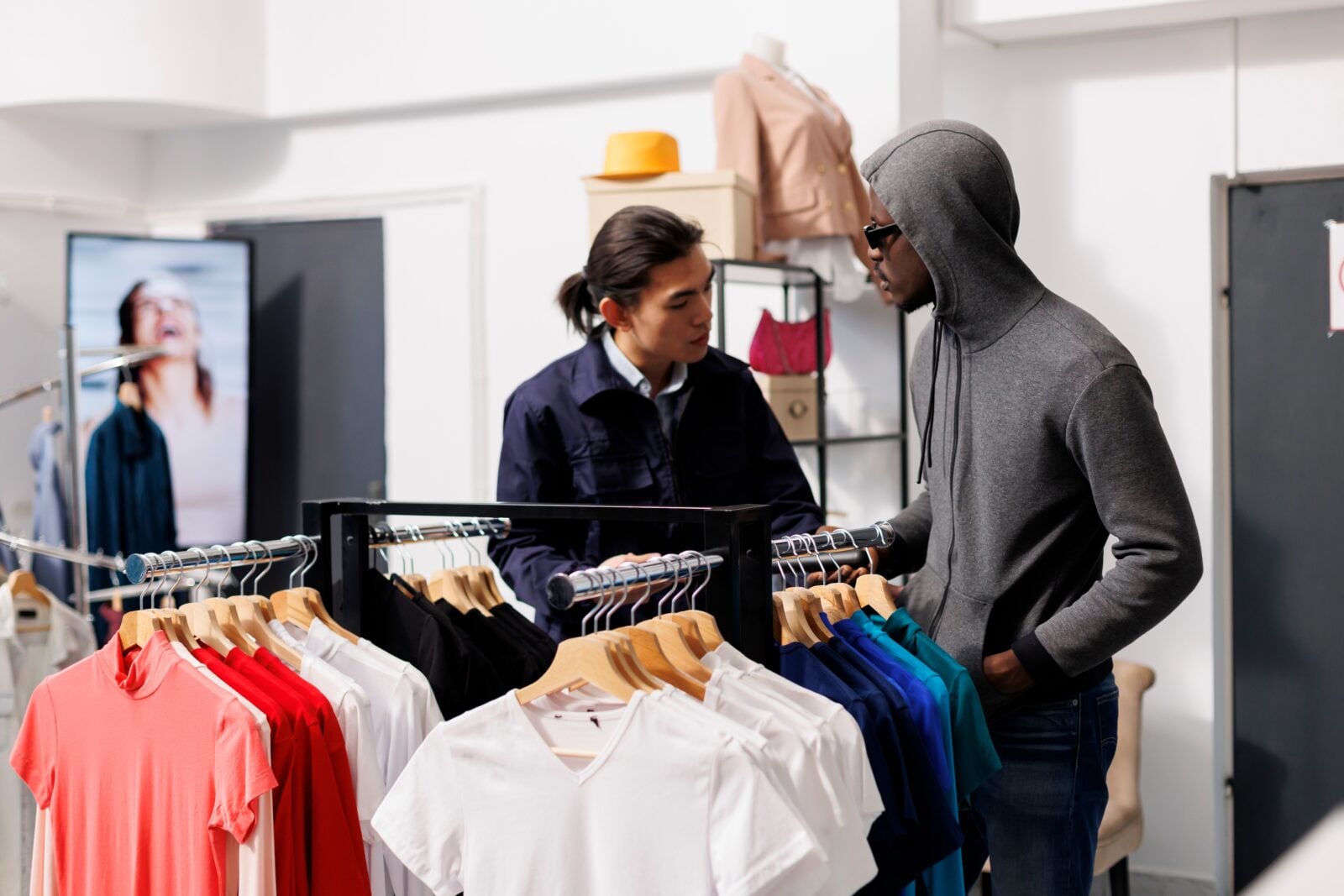
San Francisco’s retail theft story is not a fairy tale about a city falling apart, nor a neat debunking of public fear. It is something more human and more useful: a city where data and daily feeling do not always move in the same direction.
A neighborhood can be safer on paper and still feel tense at the cash register. A video can be real and still distort the whole picture. A crackdown can help and still leave the deeper machinery untouched.
That is why this debate went national. Retail theft became the small bright object Americans used to argue about bigger things: trust, fairness, punishment, poverty, politics, and what public order should cost.
Key Takeaways

- California shoplifting was 47.5% higher in 2024 than in 2019, according to PPIC, even though the state’s overall property crime rate hit a three-decade low.
- San Francisco’s crime picture is mixed: larceny fell sharply from 2019 levels, but shoplifting remained above pre-pandemic levels in the first half of 2025, according to the Council on Criminal Justice.
- San Francisco’s retail theft problem is highly concentrated, with city grant materials showing 43% of 13,540 reported incidents from 2019 to mid-2023 clustered around the Union Square target area.
- The national debate often runs ahead of the data because viral videos spread faster than crime reports, and reporting practices can change the numbers.
- Organized crews and repeat offenders are part of the problem, but so are poverty, resale markets, store reporting systems, and uneven enforcement.
- San Francisco became a national symbol because the city sits at the crossroads of America’s biggest arguments about crime, reform, inequality, and public trust.
Disclaimer – This list is solely the author’s opinion based on research and publicly available information. It is not intended to be professional advice.
Like our content? Be sure to follow us