Trump’s Washington makeover continues with plans for a world-class golf course
On Sunday morning, 28/6/2026, at East Potomac Park, President Trump toured a municipal golf course that has hosted weekend hackers and youth programs for more than a century, then announced on social media that work will begin September 1 on a complete renovation, despite a federal judge’s warning of “serious consequences” if the administration moves forward without giving the court advance notice.
Trump said the rebuilt course would be capable of hosting major golf tournaments, including The U.S. Open, The Ryder Cup, The PGA Championship, and other top PGA Tour events, and that it would be redesigned by golf architect Tom Fazio through a public-private partnership.
The announcement is not really about turf and tee boxes. It is the latest entry in a much larger project: Trump’s broader effort to reshape the nation’s capital through highly visible federal projects and public space overhauls, one that now spans a demolished White House wing, a repainted reflecting pool, a planned 250-foot arch, and a public golf course that has become an unlikely flashpoint in a months-long legal fight.
Why a municipal golf course became a presidential priority

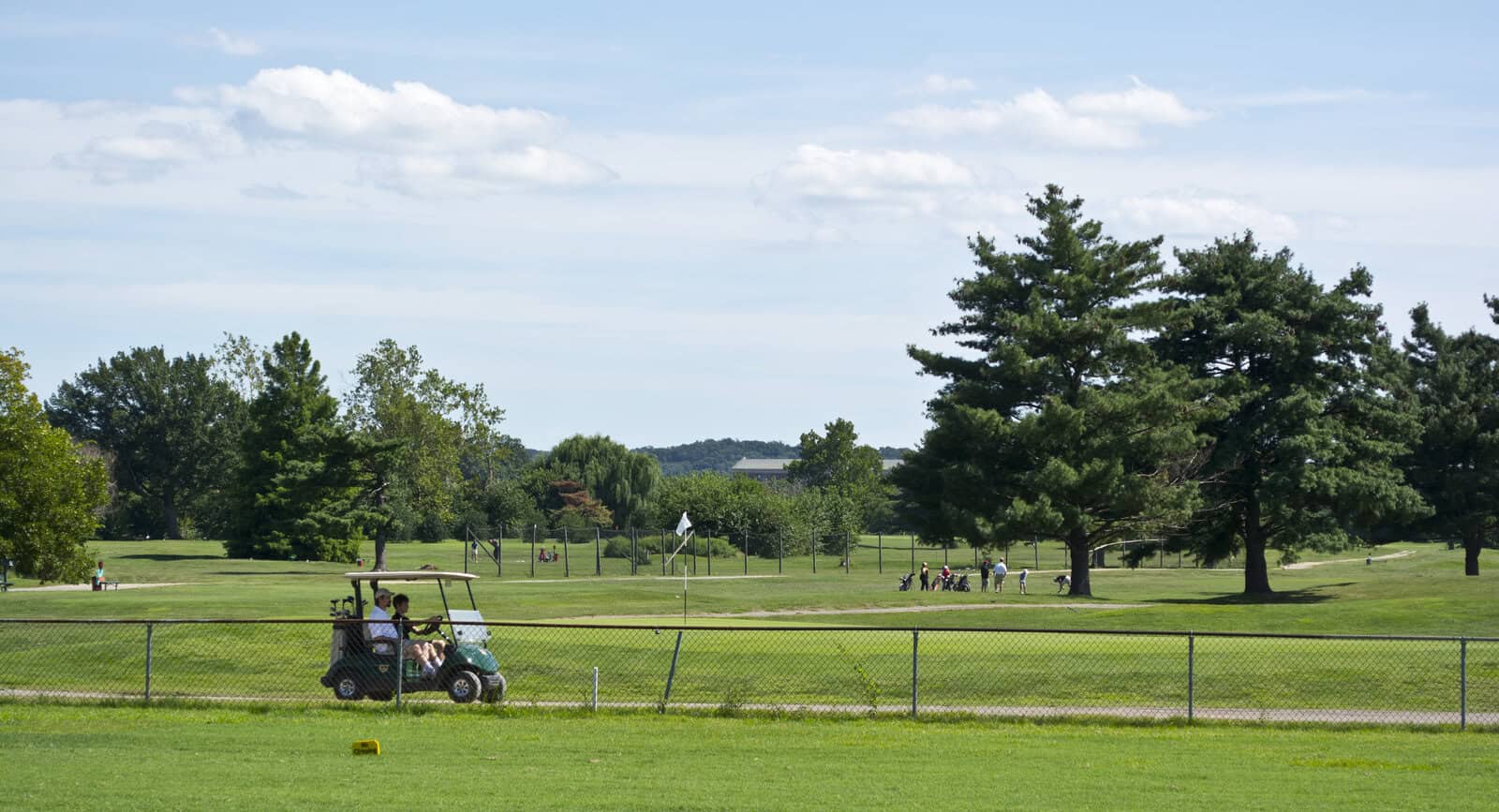
East Potomac is not a country club. It is the kind of course where a retiree can hit a bucket of balls for a few dollars and where local leagues have run for decades. That is precisely what makes the proposed transformation notable.
The administration’s plan would convert a link described by the National Links Trust as a community fixture into a championship-caliber venue, and the trust that has run it under a 50-year lease only got five years into that agreement before the lease was pulled.
The Trump administration terminated the National Links Trust’s lease on East Potomac, Langston, and Rock Creek Park golf courses in December, five years into a 50-year agreement. According to reporting from outlets following the dispute, sources told Golf Digest the president wants to convert East Potomac into a major championship or Ryder Cup venue, partly as a counterargument to the golf ball rollback debate roiling the sport.
A pattern of acting first and explaining later

The legal fight over East Potomac has followed a familiar script in Trump’s second term. The D.C. Preservation League and two local golfers sued in February, arguing the administration’s plans would violate the 1897 congressional act that created East Potomac Park.
Their complaint pointed to roughly 30,000 cubic yards of debris from the demolished White House East Wing that had been dumped on the course, a pile that attorneys later said had grown to at least 37,000 cubic yards, with testing detecting mercury and lead in the material.
U.S. District Judge Ana Reyes has been openly skeptical of the administration’s account of its own plans. She told government attorneys in May that fundraising pitches featuring renderings of a remade course meant “we’re pretty far down the road,” and that planning had likely advanced further than court filings indicated.
She also drew a direct line to the White House ballroom dispute, warning the government against trying to “ask forgiveness later” rather than seeking approval first. That warning resurfaced this week: Trump’s Sunday announcement of a September 1 start date came despite Reyes’ prior warning that major work would proceed without court notification.
The pattern recurs across nearly every Trump construction project in the capital. A nonprofit suing over the repainting of the reflecting pool argued that the project was “part of a pattern, epitomized most notably by the rush to destroy the East Wing, in which this administration willfully disregards legal limits established by Congress.
Whether or not that characterization holds up in court, the recurrence of the dispute, ballroom, arch, reflecting pool, now golf course, suggests a consistent operating style rather than a one-off controversy.
The scale of the broader makeover
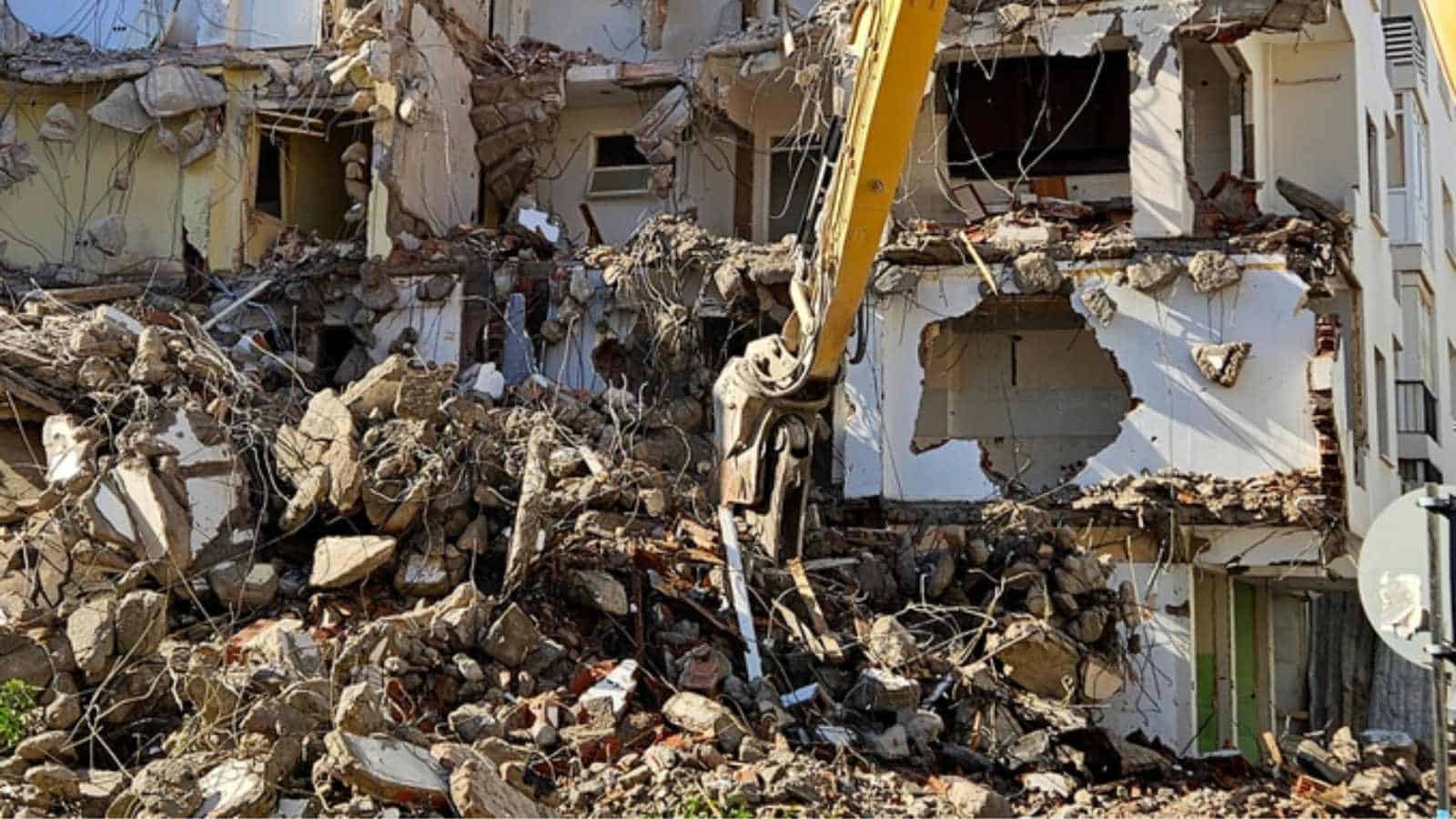
East Potomac fits into a wider remaking of Washington that has unfolded with unusual speed. The administration demolished the White House East Wing to build a 90,000-square-foot ballroom originally estimated at $200 million, though a project summary later put the cost closer to $600 million, with about half drawn from taxpayer-funded agencies including the Secret Service and the Executive Residence.
Trump has also pursued a 250-foot triumphal arch modeled on the Arc de Triomphe, which would stand nearly twice the height of the Lincoln Memorial and roughly equivalent to a 19-story building, in a city where federal law caps most structures around 13 stories to preserve sightlines to national monuments. When asked who the arch was for, Trump answered simply: “Me.”
That candor is part of why the golf course story resonates beyond sports pages. Trump has told associates that construction is central to how he wants his presidency remembered, telling reporters in May, “I’m a really good builder. The thing I do best in life is build”.
Polling has shown Americans broadly opposed to the ballroom and arch projects specifically, even as the administration continues to treat physical legacy-building as a parallel track to governing.
What the fight actually represents

Strip away the architecture, and the dispute over East Potomac is really about who public land is for. The course hosts more than 50,000 rounds a year and has been open to the public since 1921. The National Links Trust employs roughly 200 workers across its three D.C. courses, who, as one longtime employee put it, see their job as making golf accessible rather than exclusive.
What comes next
A preliminary injunction hearing is expected in the coming weeks, and the September 1 start date Trump announced is itself contingent on satisfying the court’s notice requirements.
Whatever happens at East Potomac will likely set a precedent for how much latitude the administration has to convert other federal land, not just golf courses, into projects branded as world-class while sidestepping the review processes designed to slow exactly this kind of unilateral change.
For a city built around the idea that no single person should leave too large a mark on it, that question now stretches from the Lincoln Memorial Reflecting Pool to a public driving range on Hains Point.
Disclaimer – This list is solely the author’s opinion based on research and publicly available information. It is not intended to be professional advice.
Like our content? Be sure to follow us.