A USDA viral muffin warning has people worried
Imagine biting into a warm, delicious poppy seed muffin, only to realize those tiny black crunchies have legs.
That nightmare became a reality when the government decided to drop a digital jump scare right into everyone’s social feeds. The USDA Forest Service shared a viral photo of a poppy seed muffin crawling with five hidden ticks, and it has completely ruined breakfast for the internet. While the image is deeply unsettling, it highlights a massive, creeping public health problem across the country.
The day the government ruined breakfast

It all started when officials wanted to show just how microscopic these little blood-suckers can be.
The agency posted a picture of a seemingly normal lemon poppy seed muffin. But a closer look revealed five actual ticks hanging out among the seeds. People on Instagram and Twitter handled the news about as well as one would expect.
One horrified user commented that the post clearly showed how to ruin a poppyseed muffin forever.
Another declared they would immediately switch their breakfast order to blueberry muffins. This actually isn’t the first time a federal agency has traumatized pastry lovers for science. Back in May 2018, the CDC posted a nearly identical warning on Twitter.
That post triggered over 900 angry, disgusted, and hilarious replies. One famous response joked that potlucks at the CDC must be a real hoot. The backlash was so intense that the CDC had to issue a tongue-in-cheek apology. They tweeted, “Sorry we ticked some of you off! Don’t let a tick bite ruin your summer.“
But behind the internet’s collective gag reflex lies some incredibly vital health data.
The scary truth about tick trends
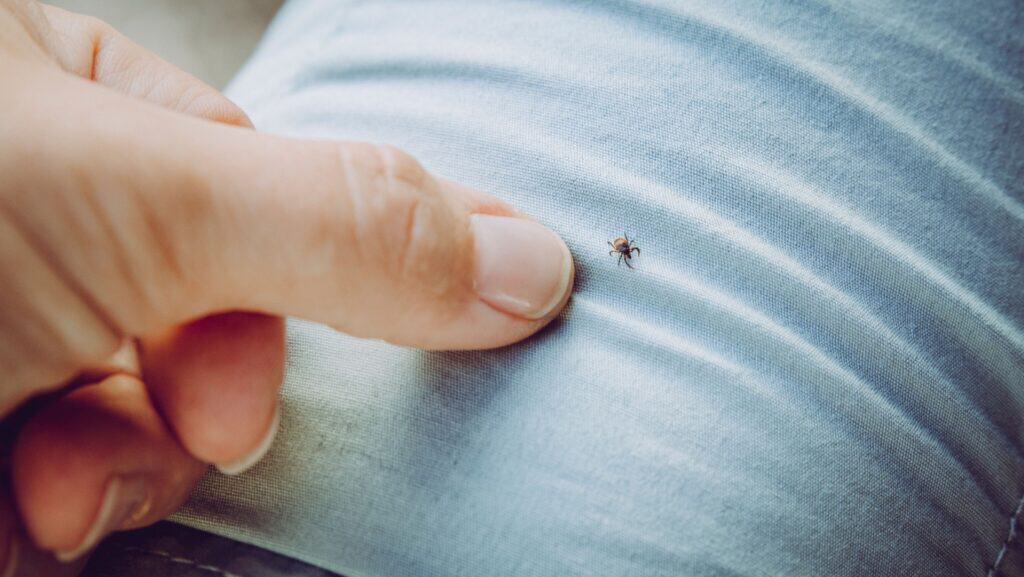
Tick-borne illnesses are skyrocketing in the United States, and the problem is getting worse every year.
According to older CDC data, illnesses from mosquito, tick, or flea bites tripled over a thirteen-year span. Warm winters are giving these tiny parasites the perfect conditions to thrive and multiply. Experts at the CDC warn that tick populations are expanding rapidly into new areas.
In fact, a study found that Lyme-carrying ticks are now present in nearly half of all U.S. counties. Peak tick season starts in May and runs through the hot summer months. During this three-month window, Americans suffer more tick bites than at any other time of the year. Over 89,000 cases of Lyme disease were reported to the CDC by state health departments and the District of Columbia in 2023.
However, the real number of people suffering is estimated to be ten times higher than official reports. Recent medical records suggest that roughly 476,000 Americans are diagnosed and treated for Lyme disease annually.
Why baby ticks are the ultimate stealth monsters

The real danger doesn’t come from the big, obvious ticks folks can easily spot crawling on their legs.
Most humans catch Lyme disease from immature ticks, known as nymphs, because they are incredibly tiny. These baby ticks are literally the exact size of a poppy seed. Anna Perea, a communications lead at the CDC, confirmed this terrifying reality.
She explained that the ticks most responsible for biting people and spreading Lyme are as small as a poppy seed. Because they are so small, their bites are completely painless and don’t even itch. This means a nymph can easily feast on a human for days without being noticed. Phyllis Mervine, the founder of the California Lyme Disease Association, once put a nymph tick next to real poppy seeds. She was astonished to find that the actual tick was even smaller and harder to see than the seeds.
Unlike dark, rounded poppy seeds, these nymphs are flat, translucent, and blend perfectly with skin. If left untreated, a bite can lead to severe arthritis, heart issues, or neurological damage.
How artificial intelligence passed the muffin test

While human eyes struggled to find the five ticks on the muffin, artificial intelligence didn’t blink.
Tech enthusiasts recently decided to test Google Gemini with the viral USDA photo. They uploaded the image and asked a simple question: “Should I eat this?” The AI immediately flagged the image and warned the user to throw the muffin away.
Gemini noticed several dark specks with microscopic legs and segmented bodies. It did all of this in seconds without any prior hints about ticks or the government warning. This shows that AI vision can easily spot tiny details that completely escape human eyes. In fact, medical professionals are already using this type of superhuman machine vision to catch early skin cancers.
Saving skin without losing an appetite

Thankfully, bakery muffins aren’t actually crawling with disease-carrying parasites.
The USDA and CDC just wanted to show how easily these critters hide on clothes and skin. But if folks are planning to go hiking, camping, or gardening, simple precautions are key. Experts recommend wearing light-colored clothes to make it easier to spot dark ticks.
Tucking pants into socks and treating gear with permethrin provide a strong protective barrier. Showering and checking your body within 2 hours of coming indoors is the best way to wash away any loose ticks. Hikers should look closely in warm, dark areas like armpits, behind knees, and around ankles. If a tick is found, fine-tipped tweezers are the best tool to pull it straight out of the skin.
The ultimate breakfast safety brief

The government’s muffin warning was definitely gross, but it successfully got millions of people talking about tick safety.
Nymph ticks are microscopic stealth agents, about the size of poppy seeds, and highly dangerous. With tick populations on the rise due to warmer weather, taking a few seconds to check skin after a hike can prevent a lifetime of chronic illness.
Disclaimer – This list is solely the author’s opinion based on research and publicly available information. It is not intended to be professional advice.
Like our content? Be sure to follow us