Yes, Your ChatGPT Conversations Could Come Up in a Lawsuit
Millions of people use ChatGPT and other artificial intelligence tools for conversations that can become surprisingly personal. People ask about relationships, money, health problems, work disputes, divorce, taxes and legal questions—sometimes sharing details they would never post publicly.
That can create an understandable sense that a conversation with an AI assistant is private. Other people cannot simply open your ChatGPT account and read your conversations. But there is an important legal distinction many users may not realize: a private conversation is not necessarily a legally privileged conversation.
In U.S. litigation, relevant AI conversations could potentially be sought during discovery. Whether they must be produced depends on the applicable law, the circumstances and any valid protections or objections.
Private does not mean legally protected
Certain communications receive special protection under the law. Conversations between a lawyer and client, for example, may be protected by attorney-client privilege when the legal requirements for that privilege are met.
A conversation with ChatGPT generally does not receive attorney-client privilege simply because you are discussing a legal problem or asking the AI for legal information.
That distinction can matter during a lawsuit.
Civil cases commonly include a process called discovery, during which each side can request relevant information from the other. Discovery is no longer limited to paper documents. It routinely includes electronically stored information, which can include emails, text messages, photographs, electronic documents and other digital records.
An AI conversation could potentially fall into the same general category if it contains information relevant to the dispute.
A recent federal case illustrates the distinction.
In United States v. Heppner, U.S. District Judge Jed S. Rakoff ruled that a defendant’s exchanges with Anthropic’s Claude were not protected by attorney-client privilege or the work product doctrine under the circumstances presented. His written opinion was dated February 17, 2026.
“Because Claude is not an attorney,” Rakoff wrote, “that alone disposes of Heppner’s claim of privilege.”
According to the opinion, investigators had seized approximately 31 documents memorializing the defendant’s AI conversations. The defendant had used Claude to prepare material concerning possible defenses without direction from his attorneys and later shared the material with counsel. The court held that later sharing did not transform previously unprivileged material into privileged communications.
The case involved Claude rather than ChatGPT, and a criminal investigation rather than ordinary civil discovery. It therefore should not be described as a ruling that every AI conversation is discoverable in every lawsuit. It does, however, provide a concrete warning against assuming that discussing legal issues with a chatbot creates attorney-client privilege.
The opinion also does not resolve every possible use of AI within a lawyer-client relationship. Attorney-directed work, confidentiality arrangements and separate work product protections can raise different questions. Federal civil discovery rules separately recognize protections for certain materials prepared in anticipation of litigation.
For example, imagine someone involved in a divorce uses ChatGPT to discuss marital assets, hidden accounts, the value of a business or plans to move money before the divorce is completed. Those conversations could potentially become relevant to financial issues being litigated.
The same principle could apply outside divorce. Someone involved in an employment lawsuit might have AI conversations about the circumstances surrounding a firing. A person involved in a business dispute might have discussed the disputed transaction with an AI assistant.
That does not mean an opposing attorney automatically has a right to someone’s entire ChatGPT history. The information being requested generally must fall within the applicable rules governing discovery, and requests can be challenged for reasons including relevance, scope and proportionality.
How conversations enter discovery
Civil lawsuits commonly include discovery, the process through which parties seek information relevant to the case. In federal court, Rule 26 permits discovery of nonprivileged information that is relevant to a party’s claim or defense and “proportional to the needs of the case.”
Discovery includes electronically stored information. Rule 34 allows requests for designated digital records within a responding party’s “possession, custody, or control.” Depending on the circumstances, relevant AI conversations accessible through a person’s account could fall within that framework. State-court cases, including divorces, are governed by the applicable state rules.
Consider a hypothetical divorce in which someone uses ChatGPT to discuss marital assets, business valuations or plans to move money. Those exchanges might be relevant to disputed financial issues. Similarly, conversations about a firing or a disputed business transaction could become relevant in an employment or business lawsuit. These are illustrations of how discovery principles might apply, not accounts of confirmed cases.
That does not mean an opposing attorney automatically has a right to someone’s entire ChatGPT history. Relevance, proportionality, privilege and other protections still matter. Federal courts can also issue protective orders to restrict discovery or disclosure when the required showing is made.l
Discovery is not the same as admission at trial. Rule 26 expressly states: “Information within this scope of discovery need not be admissible in evidence to be discoverable.” Nor does producing a record during discovery necessarily make it publicly available.
Can a lawyer subpoena OpenAI?
Potentially, yes.
OpenAI publishes a policy for civil subpoenas and other requests for user data. It says the company reviews requests and produces information only as permitted under applicable law. Requests should identify the service, provide sufficient account-identifying information where applicable, describe the categories of records sought and specify the relevant time period.
“We carefully review all such requests, and will produce information only as permitted under applicable laws,” the policy states.
OpenAI also says incomplete or overly broad requests may be rejected or require clarification. When a request concerns an opposing party in litigation, the company says it may object if the requester has not exhausted efforts to obtain the information through discovery from that party.
There is another important qualification: the Stored Communications Act generally restricts covered service providers from disclosing the contents of stored communications, subject to statutory exceptions. Ordinary civil discovery is not itself an exception. An April 2026 article in Colorado Lawyer, published by the Colorado Bar Association, explains that these restrictions may affect attempts to subpoena AI chat logs directly from providers, while acknowledging uncertainty about how the statute applies to one-on-one chatbot exchanges.
Consequently, OpenAI’s willingness to accept valid legal process should not be read as a promise that a civil subpoena will produce a user’s chat transcripts. The type of information requested, applicable statutory restrictions, consent and other legal issues may affect the result.
OpenAI says it will notify users before disclosing their data “where legally possible and appropriate.” That qualification matters: notification is not an unconditional guarantee.
The user’s own records may be another source. Even if statutory restrictions prevent disclosure by a provider, they do not necessarily shield relevant records held or controlled by a party to the lawsuit.
Your own account may be another source
A subpoena to OpenAI is not the only way an AI conversation could enter a lawsuit.
A party to litigation can be required to produce relevant electronically stored information that is within that person’s possession, custody or control. Depending on the circumstances and applicable law, that could potentially include relevant conversations stored in the person’s ChatGPT account.
This is similar in principle to other forms of electronic discovery. If relevant information exists in email, text messages or electronic files, simply being stored digitally does not necessarily put it beyond the reach of discovery.
Whether a particular AI conversation must actually be produced depends on the circumstances, the issues in the lawsuit and the applicable law.
Does this mean your entire ChatGPT history could be exposed?
Not necessarily.
Imagine someone has used ChatGPT for five years to discuss everything from vacation planning and recipes to medical questions, family problems and finances.
A lawsuit involving one business transaction would not automatically entitle the opposing party to every unrelated conversation that person ever had with an AI.
OpenAI’s civil-request policy specifically says requests should describe the information sought with particularity and identify the relevant time period. The company also says it may object to requests that are invalid, overly broad or disproportionate.
A narrowly defined request for conversations concerning a particular financial transaction during a specified period is therefore very different from demanding a person’s complete ChatGPT history.
Courts and attorneys may have to determine where those boundaries lie as AI conversations increasingly become part of modern litigation.
What happens when you delete a ChatGPT conversation?
OpenAI’s chat-retention guidance says regular and archived conversations remain saved until the user deletes them or an applicable workspace retention policy removes them. Archiving a conversation does not change its retention period.
When a saved chat is deleted, it disappears from the account view immediately and is scheduled for permanent deletion from OpenAI’s systems within 30 days. Exceptions include information already de-identified and disassociated from the account, and circumstances requiring longer retention for security or legal obligations.
OpenAI’s privacy policy gives a specific legal example: “If we are legally required to retain your data (for instance, we receive a lawful subpoena) then we may retain it for the duration of the relevant legal or regulatory obligation.”
Temporary Chat has different rules. While a conversation remains temporary, it does not appear in chat history and is not used to improve OpenAI’s models. OpenAI may retain a copy for up to 30 days for safety purposes; its privacy policy also allows longer retention when safety or legal reasons require it.
These settings should not be treated as a way to avoid evidence-preservation obligations.
Deleting conversations after a lawsuit begins can create another problem
This is one of the most important points for anyone who is already involved in a legal dispute.
Once litigation has begun—or in some circumstances when litigation is reasonably anticipated—people may have a legal obligation to preserve information relevant to the dispute.
Deleting relevant emails, texts, documents or other electronic information after that obligation arises can potentially lead to allegations of spoliation, the destruction or failure to preserve evidence.
Federal Rule 37(e) addresses electronically stored information that should have been preserved “in the anticipation or conduct of litigation.” If relevant information is lost because a party failed to take reasonable preservation steps and cannot be restored or replaced, a court may impose measures or sanctions when the rule’s additional requirements are met. Not every deletion automatically warrants sanctions.
Someone involved in, or reasonably anticipating, litigation should consult their attorney before deleting potentially relevant AI conversations or other electronic records. Depending on the situation, preservation may require addressing automatic deletion settings as well as deliberate deletion.
Turning off AI training does not make conversations undiscoverable
ChatGPT users can choose whether their conversations may be used to improve OpenAI’s models. OpenAI explains this option in its Data Controls information.
But that setting addresses model improvement—not legal discovery or data retention.
OpenAI’s Data Controls guidance states: “Turning off Improve the model for everyone does not delete or hide saved chats.”
A conversation can remain in a person’s ChatGPT history even when the user has turned off model training. Therefore, disabling model improvement should not be interpreted as making conversations legally protected or inaccessible through valid legal process.
What AI users should understand
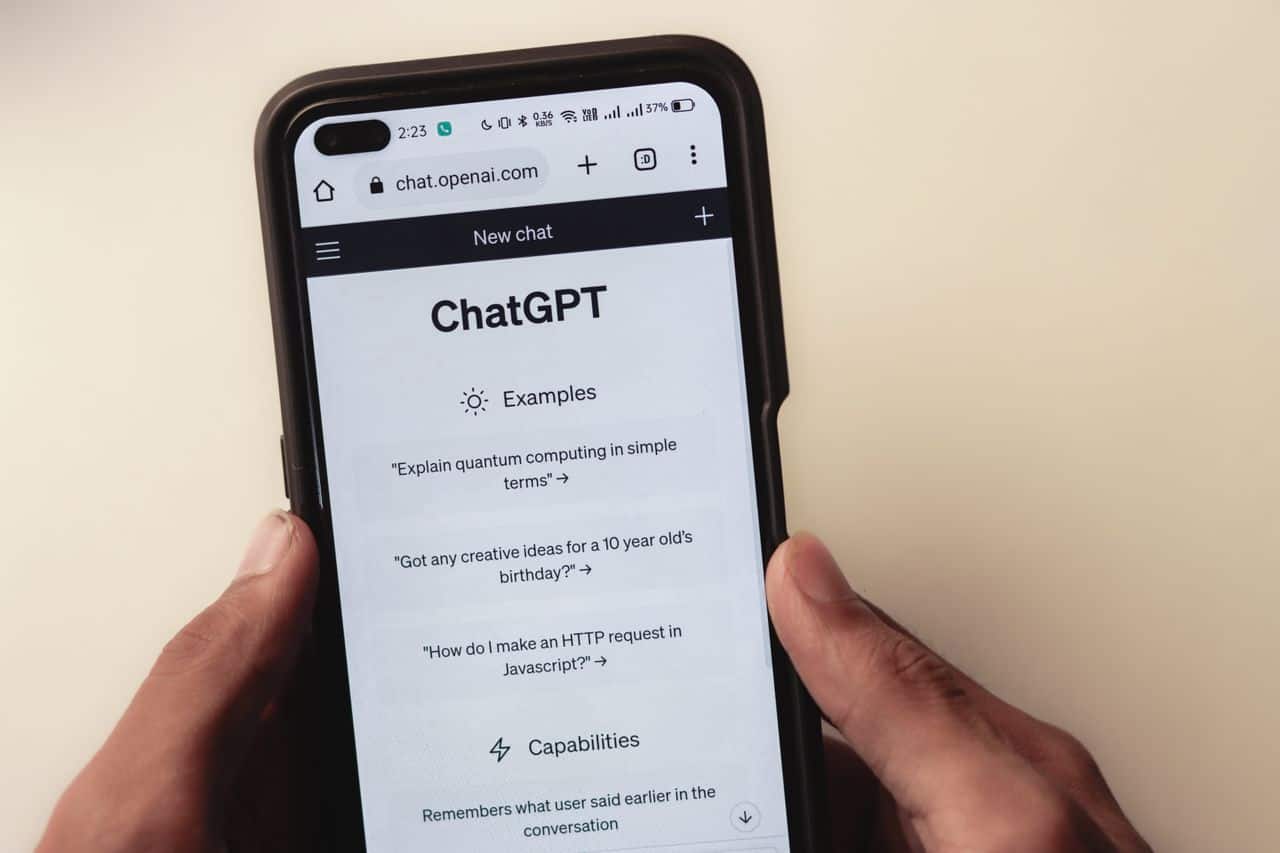
The simplest way to think about AI conversations is to distinguish privacy from privilege.
Your ChatGPT conversations are not publicly available for strangers, employers, spouses or attorneys to browse. OpenAI also says it evaluates legal requests before providing user information.
But conversations with an AI system generally should not be assumed to carry the special legal protection that may apply to certain communications with an attorney.
For most people, that distinction will never matter.
For someone involved in a divorce, employment dispute, business lawsuit or other litigation, however, it could become important. Information entered into an AI system about the subject of a dispute may potentially become relevant evidence, just as an email, text message or electronic document can.
The practical lesson is not that people should stop using AI for personal or complicated questions. It is that users should understand what kind of communication they are creating.
A ChatGPT conversation may feel like a private conversation, and ordinarily it is private from the public. But private and legally privileged are not the same thing.
Reader question: Have you ever shared personal, financial, relationship or legal information with ChatGPT, and does knowing those conversations could potentially become part of a legal case change what you would be comfortable sharing?
READ MORE:
- Can Florida blame ChatGPT for murder?
- Nearly half of Harvard seniors admit to cheating, even before ChatGPT
- 11 apps that may be recording you—and how to stop them