
10 Religious Traditions That Are Much Older Than Most People Realize
Some religious traditions feel so familiar that it’s easy to assume we know where they came from.
Christmas must have always looked something like Christmas. Monks must have always lived in monasteries. Pilgrimage sounds like something organized religions invented after they became large enough to have famous holy sites.
Then you start looking at the dates. People were making religious pilgrimages thousands of years ago. Ritual fasting appears in ancient civilizations. Prayer beads have predecessors stretching deep into antiquity. Sacred fire was already important long before Christianity or Islam existed, and some religious customs practiced today connect believers with traditions far older than the religions many of us know best.
That doesn’t mean every modern practice has survived unchanged for thousands of years. Usually it hasn’t. Traditions evolve, absorb new meanings, disappear, return, and sometimes emerge independently in completely different cultures. But the underlying religious impulses can be astonishingly old.
Here are 10 traditions whose histories reach much further into the past than many people realize.
1. Religious Pilgrimage Was Ancient Long Before the Famous Pilgrimages of Today
Millions of Muslims travel to Mecca for the Hajj. Christians have traveled to Jerusalem, Rome, Santiago de Compostela, and countless shrines. Hindus journey to sacred rivers and cities, while Buddhists visit places associated with the Buddha’s life. Pilgrimage can seem like one of the characteristic practices of the world’s major organized religions, but people were traveling to sacred places long before several of those religions existed.
Ancient Greeks traveled to sanctuaries such as Delphi to consult Apollo’s oracle and to Epidaurus seeking healing associated with Asclepius. Egyptians journeyed to important temples and festival centers, while Mesopotamian religious life also involved sacred cities and temples that attracted worshippers from beyond their immediate communities. The exact line between pilgrimage, festival travel, and visiting a sanctuary wasn’t always the same as it is today, but the underlying idea is unmistakable: some places were believed to bring human beings unusually close to divine power.
That impulse has proved extraordinarily durable. Religions disagree radically about God, gods, salvation, revelation, and the afterlife, yet believers separated by thousands of years have repeatedly reached the same conclusion: sometimes faith requires going somewhere.
2. Fasting Is Far Older Than Lent or Ramadan
Ask someone to name a religious fast and Ramadan or Christian Lent will probably come to mind. Both have deep histories, but fasting as a spiritual practice is much older than either Christianity or Islam.
Ancient religious cultures used fasting in connection with mourning, purification, preparation, repentance, and encounters with the sacred. The Hebrew Bible contains numerous examples of fasting, including communal fasts during moments of crisis and individual fasting associated with grief or supplication. Ancient Greek religious practices also included forms of abstinence connected with particular rites and mystery traditions.
What makes fasting so persistent is that it turns one of the body’s most basic demands into a religious act. Hunger becomes a reminder. The believer voluntarily interrupts the ordinary rhythm of eating in order to focus on something considered more important than immediate physical satisfaction. Different religions explain that sacrifice differently, but the mechanism is ancient.
Modern fasting practices therefore belong to a much longer human story. Long before anyone was giving up chocolate for Lent or checking the sunset time during Ramadan, people were discovering that refusing food for a period could make religion intensely physical.
3. Sacred Fire Has Been Burning in Religious Imagination for Thousands of Years
Candles flicker in churches. Jewish families light candles for Shabbat and festivals. Hindu ceremonies may center on sacred fire. Zoroastrian worship is so closely associated with fire that outsiders have sometimes inaccurately called Zoroastrians “fire worshippers.”
The connection between fire and religion reaches extraordinarily far back. Fire provides warmth, light, protection, and the transformation of food, but it also behaves unlike almost anything else humans encounter. It moves, consumes, changes matter, produces light from darkness, and can be both life-preserving and terrifyingly destructive. It’s not difficult to understand why ancient people saw religious significance in it.
In Vedic religion, Agni was the divine fire associated with sacrifice and acted as a mediator carrying offerings toward the gods. Zoroastrianism developed a profound reverence for fire as a symbol connected with purity and divine truth, although Zoroastrians worship Ahura Mazda rather than the physical flame itself. Ancient Greeks and Romans likewise maintained sacred fires, including Rome’s famous flame tended by the Vestal Virgins.
The religions aren’t practicing one continuous universal “fire tradition.” Their beliefs are very different. What they reveal instead is something perhaps more interesting: across civilizations that developed distinct religious systems, humans repeatedly looked into fire and saw something sacred.
4. Prayer Beads Didn’t Begin With the Christian Rosary
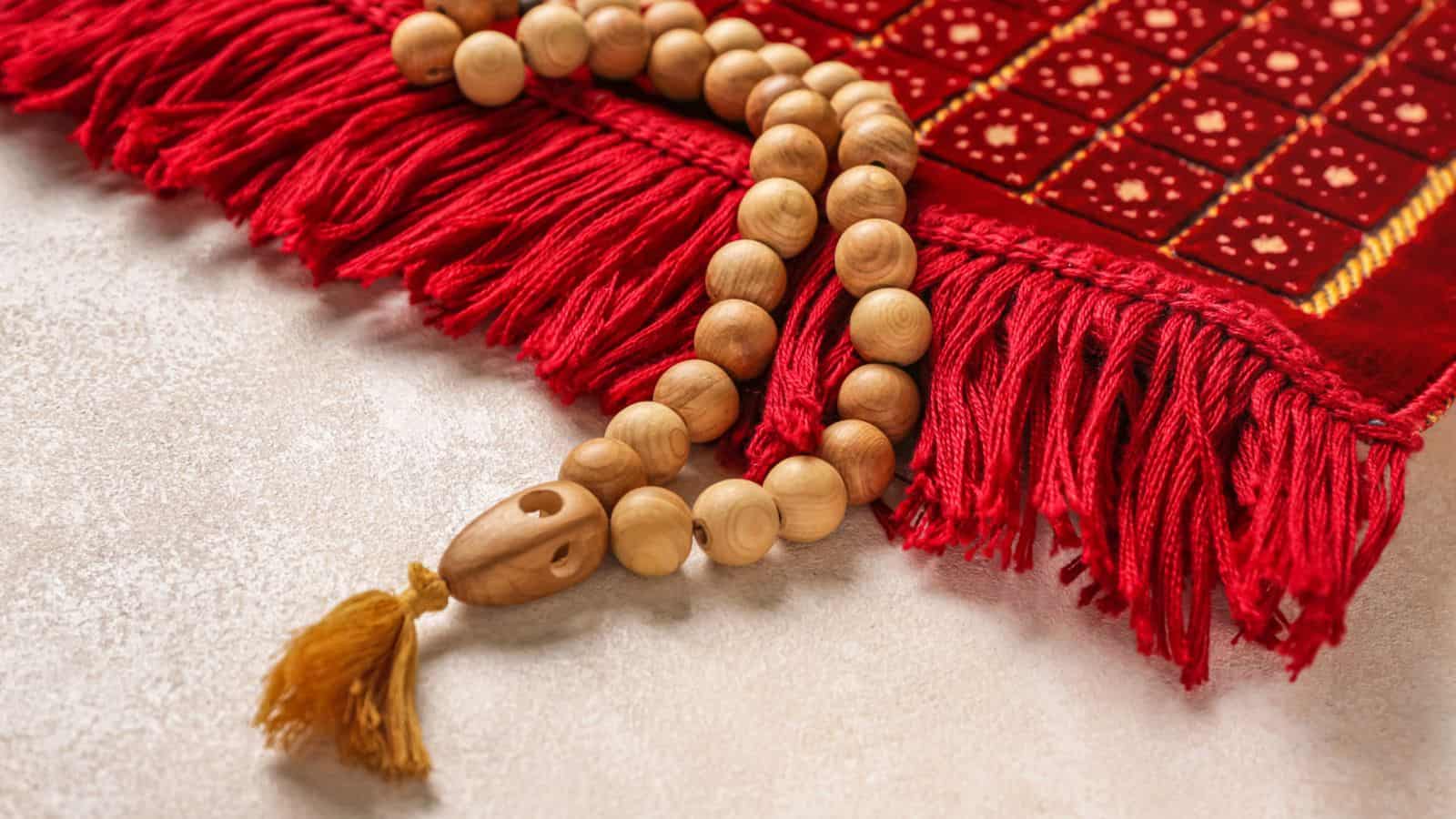
For many Western readers, prayer beads immediately suggest the Catholic rosary. But using physical objects to count repeated prayers or devotional recitations appears across multiple religious traditions and reaches beyond medieval Catholicism.
Buddhist and Hindu traditions use malas, commonly containing 108 beads or related numbers, to count mantras, names, or prayers. Islamic misbaha or tasbih beads are commonly used in devotional recitation, particularly in remembering and praising God. Christianity developed its own bead traditions, with the rosary becoming especially important in Catholic devotion.
Pinning down a single inventor of prayer beads is difficult, and historians shouldn’t assume that every bead tradition descended neatly from one original practice. Objects used for counting prayers could arise for an obvious practical reason: repetition is easier to track when your fingers can count for you.
That practicality is exactly what makes the tradition fascinating. Something as simple as a string of beads can turn an invisible act of prayer into something physical. The hands keep count while the mind focuses on words repeated dozens or hundreds of times, connecting touch, memory, rhythm, and devotion.
You may want to read: 10 Ancient Religions That Once Flourished but Nearly Disappeared
5. Monastic Life Has Roots Older Than Many People Expect
The word “monk” may conjure a medieval Christian monastery, complete with stone cloisters, manuscripts, robes, and chanting. Christian monasticism is ancient, but religious renunciation didn’t begin in medieval Europe.
Indian religious culture produced renunciant traditions centuries before Christianity became established. Buddhist monastic communities trace their origins to the time of the Buddha, traditionally dated to roughly the fifth century BCE, although the precise chronology of his life remains debated. Jain traditions likewise developed demanding forms of ascetic and monastic discipline with ancient roots.
Christian monasticism emerged later, particularly through ascetics and communities in Egypt and the eastern Mediterranean during the first centuries of Christianity. Figures such as Anthony of Egypt became enormously influential, and monasteries eventually spread throughout the Christian world.
The details differ profoundly. Buddhist monks, Jain ascetics, and Christian monks aren’t pursuing identical theological goals. Yet each tradition confronted a similar question: what happens if someone stops treating ordinary social life—possessions, family expectations, status, comfort, and career—as the default way a human being must live?
For thousands of years, some religious people have answered by walking away from much of it.
6. Covering the Head for Religious Reasons Is Much Older Than Today’s Debates
Religious head coverings often enter modern conversation through arguments about the Muslim hijab, Sikh turbans, Jewish kippot, or the veils worn by some Christian women. That can make head covering seem tied primarily to current religious identity and politics, but the practice has ancient precedents.
Head coverings have carried many meanings across history: modesty, marital status, social rank, ethnic identity, ritual respect, authority, and religious commitment. Ancient Near Eastern and Mediterranean cultures had complex customs governing hair and veiling. Biblical texts themselves preserve evidence that head covering could carry religious and social meaning, although customs varied considerably by period and community.
Early Christianity inherited and debated such practices. Paul’s First Letter to the Corinthians discusses men and women covering or uncovering their heads during prayer and prophecy, a passage Christians have interpreted in very different ways ever since. Jewish head-covering customs likewise developed through long histories rather than appearing fully formed in one moment.
Modern head coverings shouldn’t be treated as interchangeable; a hijab isn’t a kippah, and a Sikh turban has a distinct history and religious significance. What is ancient is the larger human instinct to make the head and hair part of religious identity.
You may want to read: 10 Bible Stories Christianity, Judaism and Islam Tell Surprisingly Differently
7. Vegetarianism as a Religious Practice Is More Than 2,000 Years Old
Vegetarianism can feel surprisingly modern, especially when discussed in connection with climate change, animal welfare, or personal health. But people were avoiding meat for explicitly religious and philosophical reasons long before the modern vegetarian movement.
Ancient Indian traditions provide some of the strongest examples. Jainism developed an extraordinarily rigorous commitment to ahimsa, or nonviolence, extending concern toward living beings in ways that profoundly shaped diet. Hindu and Buddhist traditions also developed important vegetarian currents, although neither can be reduced to a single universal dietary rule followed by all believers.
Ancient Greece had vegetarian traditions too. Followers associated with Pythagoras became famous for avoiding animal flesh, although reconstructing precisely what Pythagoras himself practiced is difficult. Ideas about the soul, reincarnation, purity, and the kinship of living beings could make killing animals morally or spiritually troubling.
The motivations aren’t identical to those of a modern vegan choosing oat milk at a supermarket. Yet the underlying ethical question would sound surprisingly current: if animals are living beings capable of suffering—or connected with us in a deeper spiritual way—what right do humans have to kill them for food?
People were arguing about that more than two millennia ago.
8. Religious Bathing and Purification Predate Baptism
Christian baptism is one of the world’s best-known water rituals, but the idea that water can mark spiritual purification is far older than Christianity.
Ancient religions repeatedly connected physical washing with ritual readiness. Jewish tradition developed detailed forms of ritual immersion, with the mikveh becoming an important institution for purification in particular circumstances. Archaeologists have uncovered numerous stepped ritual baths from the Second Temple period, including examples associated with ancient Jewish communities.
Hindu traditions developed extensive practices involving sacred water, perhaps most famously bathing in the Ganges. In Shinto, purification with water remains important, while many other religions have incorporated washing before prayer, sacrifice, initiation, or entrance into sacred spaces.
These practices shouldn’t be collapsed into one generic ritual. Christian baptism carries meanings involving initiation, repentance, death and rebirth, and incorporation into the Christian community that aren’t simply equivalent to Jewish ritual immersion or Hindu sacred bathing.
Yet water’s religious appeal crosses enormous cultural boundaries. It removes dirt from the body, so humans have repeatedly used it to represent something harder to see: the removal of impurity, sin, disorder, or whatever separates a person from the sacred.
9. Lighting Incense Is an Ancient Religious Technology
Walk into certain churches, Buddhist temples, Hindu temples, or East Asian religious sites and you’ll smell the religion before anyone explains it to you.
Incense has been used in religious settings for thousands of years. Ancient Egyptian temples burned aromatic substances, while the Hebrew Bible describes a special incense associated with sanctuary worship. Greek and Roman religious practices likewise incorporated incense and fragrant offerings.
Across parts of Asia, incense became deeply embedded in Buddhist, Hindu, Daoist, and other ritual traditions. Smoke could accompany prayer, offerings, purification, remembrance, or reverence before sacred images and ancestors.
There was also an obvious practical dimension. Ancient sanctuaries involved crowds, animals, sacrifices, oil lamps, and environments without modern sanitation. Pleasant aromas mattered. But reducing incense to ancient air freshener misses its religious power.
Scent behaves strangely. You can’t hold it, yet it can fill an entire room. Smoke rises and disappears. A fragrance can remain after its source is gone. Those qualities made incense an almost perfect physical metaphor for prayer, offering, presence, and the invisible.
10. Remembering the Dead With Food and Offerings Is Older Than Most Modern Religions
Leaving something for the dead can look strange when viewed from outside the tradition. Food appears on an altar even though no living person is expected to eat it. A drink is poured out. Incense burns before an ancestor’s image. A family visits a grave carrying objects the deceased once enjoyed.
Humans have been doing versions of this for an extraordinarily long time. Ancient Egyptians placed food and goods in tombs and maintained offering practices for the dead. Greeks and Romans brought offerings to graves and commemorated ancestors through household and civic rituals. Ancient Chinese traditions developed elaborate practices of ancestor veneration that continue in transformed forms today.
Modern traditions still preserve echoes of this ancient relationship between the living and the dead. Día de los Muertos observances may include food and objects associated with deceased relatives. East Asian ancestor traditions maintain offerings and memorial rites. Many religions that reject the idea that the dead literally consume physical food nevertheless maintain meals, candles, prayers, or acts of charity in their memory.
The practice reveals something remarkably persistent about human beings. Death may end someone’s physical participation in the family, but communities repeatedly resist the idea that it must erase the relationship entirely. Religion gives the living ways to keep talking, remembering, honoring, and offering.
Some Religious Instincts May Be Older Than the Religions Carrying Them
None of this means all religions are secretly the same. They aren’t. A Muslim fasting during Ramadan, a Catholic abstaining during Lent, and an ancient Greek preparing for a religious rite can perform superficially similar acts while understanding them in completely different ways.
That’s precisely what makes these traditions interesting. Again and again, human beings separated by centuries and continents have turned ordinary things—food, water, fire, smoke, clothing, travel, silence, and even hunger—into ways of reaching toward something beyond ordinary life.
Religions change. Gods disappear from temples. Empires collapse. Sacred languages become unreadable. New faiths replace older ones, and old practices acquire meanings their earliest practitioners might not recognize.
Yet some religious impulses are remarkably difficult to kill. People still travel enormous distances to stand in sacred places. They still fast, light flames, count prayers, wash before worship, leave ordinary life for monasteries, and remember their dead with physical acts of devotion.
The names have changed.
The human impulse behind some of them is ancient.
You may want to read: 10 Things People Get Wrong About Heaven, Hell and the Afterlife in Different Religions