Why Some Religions Bury the Dead, Others Cremate Them—and Some Do Neither
When someone dies, what should happen to the body?
Bury it beneath the earth? Burn it? Preserve it? Leave it exposed to nature? Return it as quickly as possible to the elements?
Most of us grow up around one answer, which can make every other answer feel unusual. But the way a religion treats a dead body can reveal what it believes about the soul, resurrection, purity, nature, attachment, and even the meaning of the body itself.
That’s why the world’s funeral traditions differ so dramatically. Muslims and traditional Jews generally bury their dead. Cremation became deeply associated with Hindu traditions. Buddhists can cremate or bury depending on culture and school. Tibetan communities developed sky burial under particular religious and environmental conditions. Traditional Zoroastrian practice historically avoided both burial and cremation.
The differences aren’t simply practical.
What people do with the body often tells you what they think death means.
1. Judaism Traditionally Wants the Dead Returned to the Earth
Traditional Jewish practice strongly favors burial, generally as soon as reasonably possible after death.
The body is treated with dignity because the person was created in the image of God. Traditional preparation can include ritual washing, simple burial garments, and practices designed to avoid unnecessary display or distinctions between rich and poor.
The biblical phrase “for dust you are, and to dust you shall return” captures part of the symbolism. Jewish law and tradition developed burial practices that emphasize respect for the dead and the return of the body to the earth.
The funeral isn’t supposed to turn the body into a spectacle. Simplicity itself becomes part of the religious message.
Jewish denominations and individuals differ today over questions such as cremation, and contemporary practice isn’t uniform. But traditional Jewish law strongly preferred burial, making the grave an important expression of both human dignity and mortality.
2. Islam Also Places Enormous Importance on Burial
Islamic funeral practice likewise emphasizes respectful and generally prompt burial.
The deceased is ordinarily washed, shrouded, prayed over, and buried. Elaborate coffins and displays are often discouraged in favor of simplicity, although actual customs differ across cultures and countries.
Cremation is generally prohibited in Islam. The human body retains dignity after death and should be treated respectfully rather than deliberately destroyed by fire.
Death strips away many of the differences people spend their lives creating. Wealth, professional status, fashion, and social prestige become much less important when the deceased is wrapped in a simple shroud and placed in the earth.
Islamic burial also takes place within a larger belief in bodily resurrection and final judgment. The grave is therefore not necessarily imagined as the end of the person’s story.
It is a waiting place in a story that isn’t finished yet.
3. Christianity Began With Burial—but Cremation Became Increasingly Accepted
Christianity emerged from a Jewish environment in which burial was normal, and the New Testament describes Jesus himself as being placed in a tomb.
Early Christians also buried their dead, including in the famous catacombs associated with Rome. Belief in bodily resurrection gave burial powerful symbolism: the body placed in the earth could be compared with a seed awaiting resurrection.
For centuries, cremation was often viewed suspiciously in Christian societies, partly because it could be associated with pagan practices or with deliberate rejection of resurrection.
That changed.
Today many Christian denominations permit cremation, although attitudes vary. The Catholic Church, for example, permits cremation provided it isn’t chosen for reasons contrary to Christian teaching, while still expressing a preference for burial of the body. The interesting change is that most Christians no longer believe God requires an intact corpse in order to resurrect someone.
After all, bodies buried for centuries also decompose.
4. Hindu Traditions Commonly Use Fire to Release the Dead
Walk along the ghats of Varanasi and you can encounter a funeral practice that looks dramatically different from burial traditions.
Cremation has deep roots in many Hindu communities. Fire—Agni—has ancient ritual significance, and cremation can be understood as helping return the physical body to its elements while the deeper spiritual journey continues.
The body isn’t generally viewed as something that must remain intact forever. Within traditions shaped by karma and rebirth, death is part of a larger cycle rather than the permanent end of personal existence.
The body that mattered so much during one lifetime is ultimately temporary.
That helps explain why cremation can carry a meaning very different from the one it historically had for Christians who sometimes associated burning the body with denying resurrection.
Same fire.
Completely different theology.
READ: Sacred Places Where More Than One Religion Claims the Same Ground
5. Varanasi Turns Cremation Into Sacred Geography
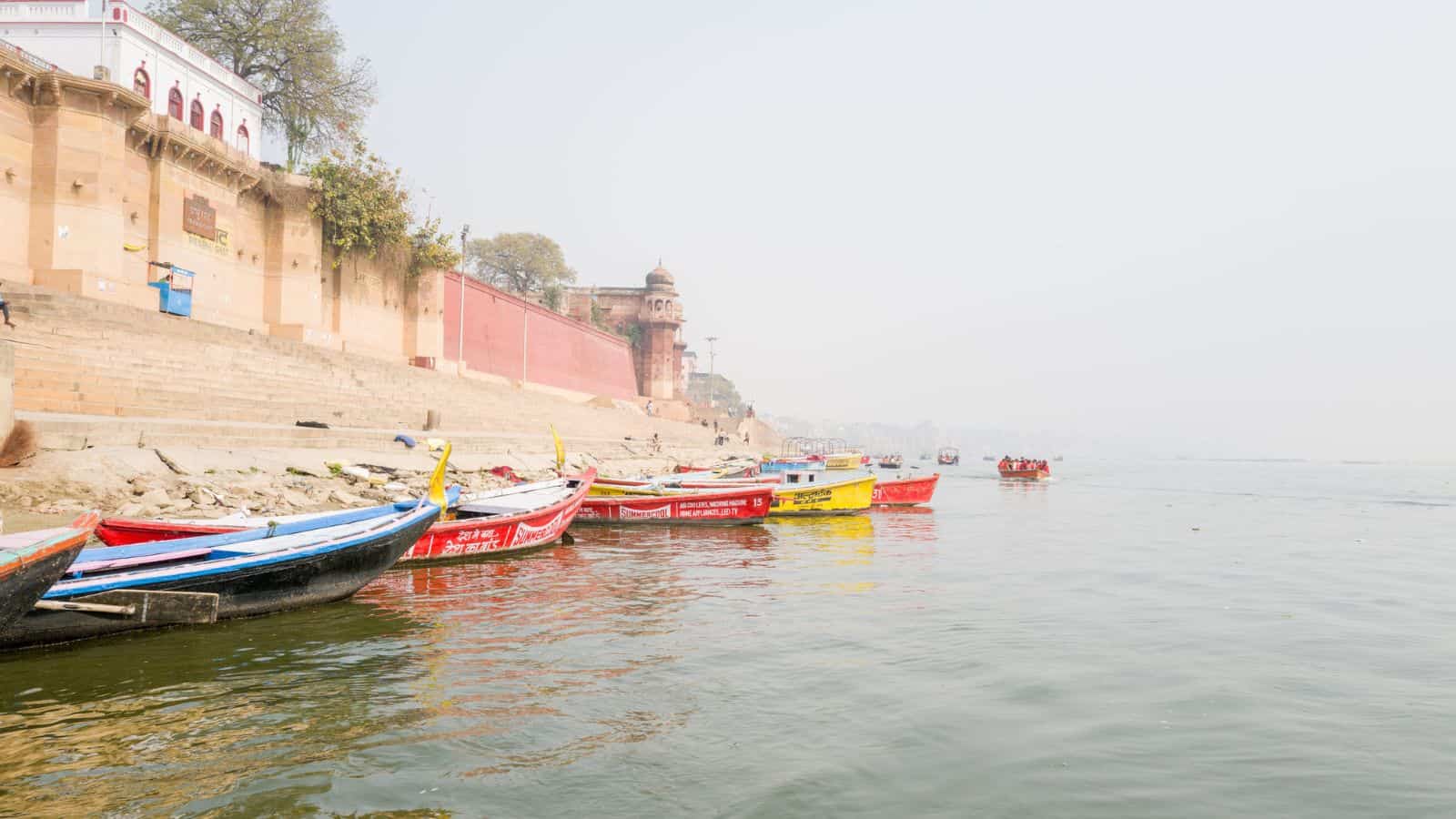
Hindu cremation becomes especially powerful in Varanasi, one of India’s holiest cities.
Funeral pyres have burned for generations along the Ganges, and families bring the dead there because dying or being cremated in the sacred city is traditionally associated with profound spiritual significance and liberation from the cycle of rebirth.
The sight can be startling to visitors accustomed to hiding death behind hospital doors and funeral-home walls. Bodies are carried through public streets. Fires burn beside the river. Mourning and ordinary city life exist side by side.
Varanasi doesn’t hide death from life. It places death directly beside one of the most sacred rivers in Hinduism.
That physical closeness changes the emotional atmosphere. Death isn’t removed from the community and placed behind cemetery walls.
It becomes part of the landscape.
6. Buddhists Don’t Have One Universal Funeral Method
Because the Buddha was cremated according to Buddhist tradition, people sometimes assume Buddhism universally requires cremation.
It doesn’t.
Buddhism spread across an enormous geographic area and adapted to very different cultures. Cremation became common in many Buddhist societies, while burial and other forms of disposal also developed.
The body itself isn’t generally treated as an eternal vessel that must remain intact for a future physical resurrection. Buddhist teachings about impermanence make death a particularly powerful reminder that all conditioned things change and pass away.
A funeral can therefore become one final lesson in impermanence.
The person whose body once seemed inseparable from their identity is gone, while the physical form itself changes, burns, decays, or returns to nature.
7. Tibetan Sky Burial Can Be Shocking Until You Understand the Logic
One of the world’s most misunderstood funeral practices is Tibetan sky burial.
Traditionally, a body may be taken to a designated location, ritually prepared, and offered to vultures. To outsiders accustomed to burial or cremation, the practice can initially appear disturbing.
Inside its religious and cultural context, the meaning is very different.
Once consciousness has left, the body is no longer the person in the ordinary sense. Offering it to other living creatures can become a final act of generosity. Tibetan geography also matters: high-altitude landscapes can make burial difficult, while wood suitable for cremation has historically been limited in many areas.
What looks from the outside like destruction of the body can be understood from within the tradition as letting go of something the person no longer needs.
The vultures aren’t necessarily desecrating the deceased.
They’re completing the body’s return to the living world.
8. Traditional Zoroastrian Practice Tried to Avoid Both Burial and Cremation
Zoroastrian funeral tradition creates an entirely different problem.
Earth is sacred.
Fire is sacred.
Water is sacred.
A dead body, however, was traditionally regarded as a source of ritual pollution. That creates an obvious question: how do you dispose of a corpse without contaminating the sacred elements?
Traditional Zoroastrian communities developed a remarkable answer. Bodies could be placed in raised structures commonly known in English as Towers of Silence, or dakhmas, where they were exposed to the sun and scavenging birds rather than buried or burned.
The practice wasn’t based on indifference toward the dead. It came from precisely the opposite concern: protecting creation from pollution associated with death. Encyclopaedia Iranica’s discussion of Zoroastrian corpse disposal explains how rules surrounding the corpse were tied to concepts of purity and the protection of earth, fire, and water.
For traditional Zoroastrianism, both burial and cremation could create religious problems. Exposure offered another solution.
9. Ancient Egyptians Wanted the Body to Last
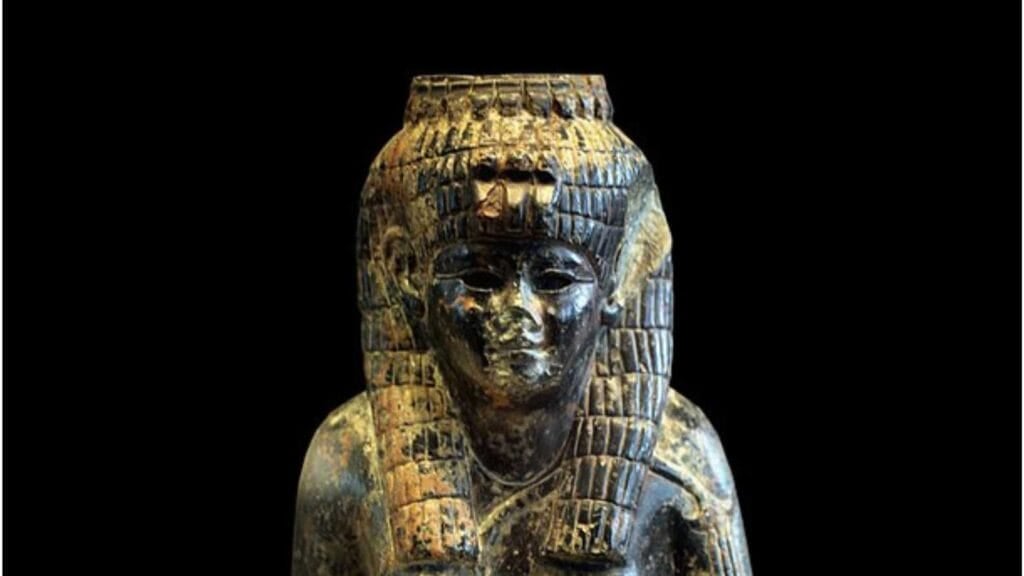
If Hindu cremation emphasizes the body’s temporary nature, ancient Egyptian mummification seems almost to move in the opposite direction.
Egyptians developed extraordinarily elaborate methods for preserving bodies after death. Organs could be removed and treated separately. The body was dried using natron, wrapped, protected with amulets, and placed inside coffins and tombs.
This wasn’t merely an obsession with corpses.
Ancient Egyptian ideas about personhood and the afterlife were complex, involving different aspects of the individual and the need for continued identity after death. Preservation of the body became connected with successful existence in the next world.
Where one religion burns the body because it is temporary, another preserves it because the body’s continued identity matters after death.
That contrast is one of the clearest examples of how funeral practices reveal theology without anyone saying a word.
READ: Religions That Don’t Have a Single Founder—and How They Began Instead
10. Modern Funeral Choices Are Changing Faster Than Religious Traditions
For much of history, funeral practices were constrained by religion, geography, law, economics, and local custom.
Modern life has disrupted all of them.
Cremation has increased dramatically in countries where burial was once overwhelmingly dominant. Urbanization makes cemetery space expensive. Environmental concerns have generated interest in natural burials and newer forms of body disposition. Migration places religious communities in countries where traditional funeral infrastructure may not exist.
Zoroastrian communities provide a striking example. Traditional exposure practices aren’t feasible everywhere, and modern communities have had to debate alternatives. Encyclopaedia Iranica notes that some Zoroastrian communities have adopted burial using methods intended to prevent direct contamination of the earth.
Religious traditions may be ancient, but death keeps presenting them with modern problems.
The question is how much a practice can change while preserving the belief that originally gave the practice meaning.
What We Do With the Dead Says a Lot About What We Think a Person Is
Place these funeral traditions side by side and the differences are enormous.
One family lowers a body into the earth. Another watches it burn. Another preserves it. Another offers it to birds. Each action can seem incomprehensible when viewed through the assumptions of a different religion.
But underneath them are surprisingly consistent questions.
Is the body still sacred after death? Will it rise again? Is it merely temporary? Can it become ritually dangerous? Should it return to nature? Does consciousness continue? Does the deceased need the body? And what obligations do the living still have toward someone who is gone?
Funerals aren’t really about disposing of a body. They’re about answering what may be the hardest question death leaves behind: What was this body once the person who inhabited it was no longer there?
Different religions came to radically different answers.
And then they built rituals around them.
READ NEXT: What Happens After Death? How the World’s Religions Give Surprisingly Different Answers