Is private school really better than public school? 13 things parents should know
Private school can cost a family thousands—or tens of thousands—of dollars every year. But does paying tuition actually guarantee your child a better education?
It’s a question many parents wrestle with, particularly when their local public school has large classes, budget problems or programs they don’t love. Private schools can offer smaller classes, specialized curricula, distinctive cultures and more control over the educational environment. Public schools, meanwhile, can offer broader course selections, extensive extracurriculars, greater diversity and services that some private schools simply cannot provide.
And there’s an important complication behind comparisons of the two: children don’t arrive at public and private schools under identical circumstances. Family income, parental education, previous academic performance, neighborhood, available resources and the ability of private schools to select students can all influence outcomes.
So instead of asking whether public or private school is universally “better,” parents may want to ask a different question: Which school is better for this particular child?
Here are 13 differences worth understanding before making one of the biggest educational—and financial—decisions a family can face.
Private school students often have impressive academic results—but there’s more to the story
Look only at test scores or college admissions and some private schools can appear to have a substantial academic advantage.
But comparisons aren’t as simple as putting two sets of scores side by side. According to the National Center for Education Statistics, private and public school populations differ in important demographic and socioeconomic ways, and those differences can influence academic outcomes.
A child whose parents have the resources to pay tuition, provide tutoring, supervise homework and carefully select a school may arrive with advantages that have little to do with what happens inside the classroom.
That doesn’t mean strong private-school outcomes aren’t real. It means parents should ask how much students actually grow after they arrive, rather than judging a school solely by the accomplishments of the students it admits.
Smaller classes can be an advantage—but they’re not everything
One of the biggest attractions of private education is the promise of individual attention.
A smaller class can make it easier for teachers to notice when a child is struggling, provide detailed feedback and adapt instruction. A shy student may also find it harder to disappear in a room of 15 students than in one with 30.
But pupil-teacher ratios don’t tell you how good the teaching is.
A phenomenal teacher with 24 students can be far more effective than a mediocre teacher with 12. Ask how teachers actually use those smaller classes. How much individual feedback do students receive? How quickly are learning problems identified? What happens when a child is far ahead—or behind?
Related to Read: 12 things to consider before sending your child to private school
Public school comes with one enormous financial advantage
Public school tuition is already supported through public funding. Private-school tuition can become one of the largest expenses in a family’s budget.
And tuition isn’t necessarily the whole bill.
Uniforms, transportation, technology fees, field trips, athletics, fundraising expectations, after-school programs and annual tuition increases can substantially increase the actual cost.
For families with multiple children, the numbers become even more significant.
That creates a question parents don’t always ask: What else could we do for our child with the money we’re spending on private school?
Tuition might absolutely be worth it for the right school. But families should compare it with alternatives: college savings, tutoring, music lessons, travel, sports, summer programs or simply greater financial stability at home.
A school shouldn’t be evaluated in a financial vacuum.
Children with disabilities can have very different rights
This may be one of the most important differences in the entire decision.
Eligible children with disabilities enrolled in public schools are entitled to a free appropriate public education under the federal Individuals with Disabilities Education Act, commonly known as IDEA. That can include an Individualized Education Program and necessary special education and related services.
The rules change when parents independently enroll a child in private school.
The U.S. Department of Education makes clear that a child with a disability placed in private school by their parents does not have an individual right to receive all of the special education and related services the child would receive in public school.
Some private schools provide extraordinary learning support. Others have limited specialists, counseling, speech services or accommodations.
If your child has dyslexia, ADHD, autism, a physical disability, speech or language needs, or another learning difference, don’t assume “smaller classes” automatically means better support. Ask exactly what services exist, who provides them, what they cost and what happens if your child’s needs increase.
Private schools may have more freedom to create their own educational culture
Private schools can often build an identity around a particular educational philosophy or set of values.
That might mean Montessori, classical education, religious instruction, project-based learning, intensive arts education or a particularly rigorous academic approach.
For some families, that’s precisely the attraction.
Public schools have obligations to serve the broader community and generally operate under more state and district requirements. That can limit flexibility, but it also creates public accountability.
Neither system automatically produces the better culture. Parents should look beyond mission statements and ask what everyday life actually feels like.
How do teachers speak to students? How is discipline handled? What happens when children disagree? Are students encouraged to question ideas? Does your child feel comfortable being themselves?
The school culture your child experiences every day may matter far more than the philosophy printed on the website.
Public schools can offer a much broader world
One advantage of many public schools is scale.
Larger schools may offer more sports, clubs, advanced courses, languages, music programs, career and technical education, specialized electives and student organizations than a small private school can realistically support.
They may also expose children to a wider range of classmates.
That diversity can include race and ethnicity, but also religion, family income, disability, family structure, political viewpoint and life experience.
Private schools can certainly be diverse, and public-school demographics often reflect residential segregation. But parents shouldn’t assume a smaller, carefully selected environment automatically prepares children better for the world they’ll eventually enter.
Learning how to live and work with people who aren’t like you is an education too.
Private schools can offer community—but sometimes at a social cost
A close-knit private school can create an extraordinary sense of belonging.
Families may know one another. Teachers may know every child. Students may remain together for years. That consistency can feel wonderfully secure.
But small communities can also become socially intense.
If a child struggles to find their group in a class of 40 students, there may not be another group waiting down the hall. Friendship conflicts can feel enormous when everyone knows everyone. And in affluent schools, differences in family income can sometimes become surprisingly visible to children.
Don’t just ask whether the school has a strong community.
Ask whether your child can find a place within it.
Technology doesn’t automatically make a school better
Schools increasingly advertise laptops, smartboards, digital curricula, AI tools and sophisticated technology as evidence that they’re preparing students for the future.
But more technology isn’t necessarily better education.
What matters is how it’s being used.
Parents should ask whether students are still writing, reading deeply, solving problems independently and learning to evaluate information rather than simply accessing more of it.
Schools also need clear policies around phones, artificial intelligence, privacy, plagiarism and appropriate technology use.
A school with fewer flashy devices but excellent teachers may provide a far richer education than one filled with screens.
Related to Read: The dark side of AI in classrooms: 12 things parents should know
Teacher qualifications can differ
Public-school teachers generally must meet state licensing or certification requirements.
Private-school requirements vary considerably by state and school. Some private schools employ extraordinarily accomplished teachers with advanced degrees and deep subject expertise. Others may have more flexibility in whom they hire.
That flexibility isn’t necessarily bad. A gifted scientist, artist or writer might be a wonderful teacher without following the traditional public-school certification route.
But parents should ask.
What qualifications do teachers have? How experienced are they? How long do they stay? What professional development do they receive? How does the school evaluate teaching quality?
A beautiful campus tells you very little about what happens when the classroom door closes.
Discipline can look very different
Private schools often have greater latitude in establishing behavioral expectations and determining whether a student remains enrolled.
For some families, stricter discipline and clearly defined expectations are major attractions.
But parents should understand exactly what that means.
What happens when a child repeatedly breaks rules? How does the school address bullying? Is discipline primarily punitive, restorative or somewhere in between? What protections exist when parents disagree with a disciplinary decision?
Public schools operate under constitutional and legal requirements that don’t necessarily apply in the same way to private institutions.
The larger question isn’t whether a school is “strict.” It’s whether its approach to discipline matches what you believe helps children learn responsibility, accountability and self-control.
Related to Read: 11 old-school parenting rules your kids might actually benefit from today
Transportation and logistics can quietly take over family life
A fantastic school 45 minutes away may stop feeling fantastic somewhere around the 300th commute.
Public schools frequently provide transportation within established rules. Private-school transportation varies enormously, and some families end up responsible for getting children back and forth every day.
Then add sports practices, rehearsals, clubs, parent meetings and weekend activities.
A long commute doesn’t just cost gas. It can mean earlier mornings, less sleep, later dinners, reduced family time and hours each week spent in the car.
Before enrolling, try the actual drive during school traffic.
The best school academically may not be the best school for your family’s daily life.
Private school doesn’t guarantee admission—or continued enrollment
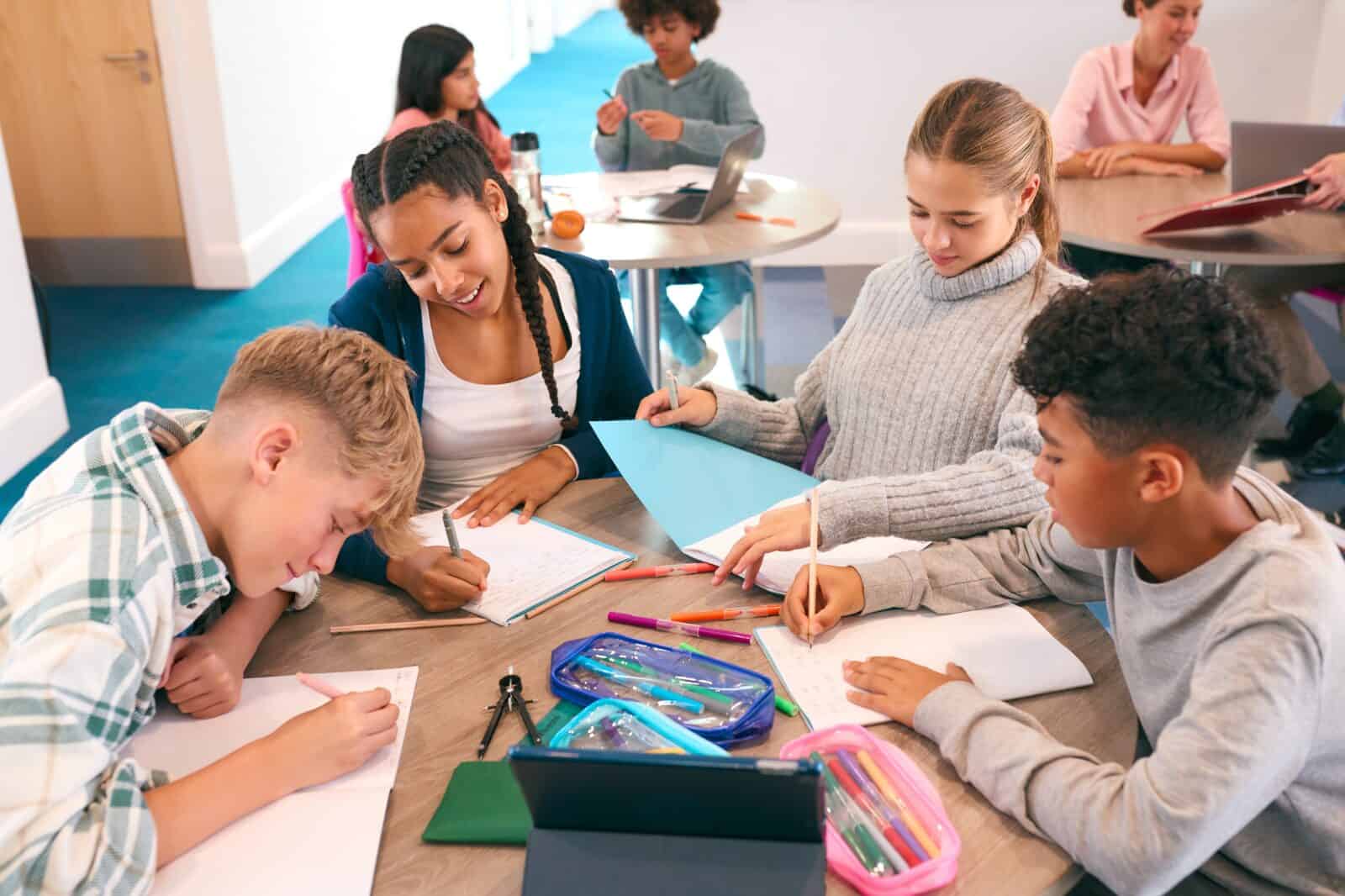
Public schools generally have an obligation to educate children living within their jurisdiction.
Private schools can establish admissions requirements and may consider academic records, interviews, recommendations, testing, behavior or whether a student appears to fit the school’s program.
That selectivity can help create a particular educational environment. But it also makes comparisons with public schools more complicated.
A school permitted to choose its students isn’t doing precisely the same job as a school required to educate nearly everyone who arrives at its door.
Parents should also understand enrollment contracts, withdrawal policies and circumstances under which a student can be asked to leave.
You aren’t merely evaluating whether the school wants your child today. Ask what happens if your child struggles tomorrow.
The individual school matters more than the label
This may be the most important point of all.
There are exceptional public schools and struggling ones. There are extraordinary private schools and disappointing ones.
And two children in the same family may need completely different environments.
One child might flourish in a large public high school with 25 AP courses, a marching band, robotics team and hundreds of potential friends. A sibling might become overwhelmed there and thrive in a private school where every teacher knows their name.
Another child may desperately need the special-education services available through the public system. Another may finally come alive in a small private school built around art, science or experiential learning.
You’re not really choosing between “public” and “private.” You’re choosing between actual schools for an actual child.
The takeaway
Private school can offer smaller classes, distinctive educational philosophies, close-knit communities and opportunities that make tuition entirely worthwhile for some families.
Public schools can offer extensive academic programs, extracurricular choices, diversity, transportation, legal protections and special-education services that can be difficult for some private schools to match.
And the impressive academic outcomes associated with some private schools don’t automatically prove that private education caused them. The students entering those schools may differ substantially from the students they’re being compared with.
So tour the schools. Sit in classrooms if they’ll allow it. Talk to parents whose children are thriving—and parents whose children left. Ask about teacher turnover, learning support, discipline, technology, advanced classes, counseling, transportation and what happens when a student struggles.
Most importantly, watch your child.
Prestige matters less than people think. A beautiful campus matters less than people think. And the word “private” on a school brochure is no guarantee that a child will receive a better education.
The best school is the one where your child is challenged without being crushed, supported without being sheltered, known without being confined—and given the opportunity to become more capable, curious and confident over time.