More people arrested over the reflecting pool case than the Epstein files
It is a bizarre reality of modern American justice when dipping a hand into a public pool triggers more police handcuffs than a global elite sex-trafficking ring.
Federal law enforcement agencies recently mobilized with startling speed to protect a botched $14.2 million park renovation. Meanwhile, a massive vault of evidence exposing wealthy predators continues to sit largely untouched by prosecutors.
The stark contrast in arrest statistics reveals a deeply unbalanced system of institutional priorities. This analysis examines how a localized property issue quickly became a militarized zone while systemic elite crimes faced ongoing bureaucratic delays. It’s a tale of two very different investigations that expose where power truly lies.
The green pool and the rapid-fire arrests
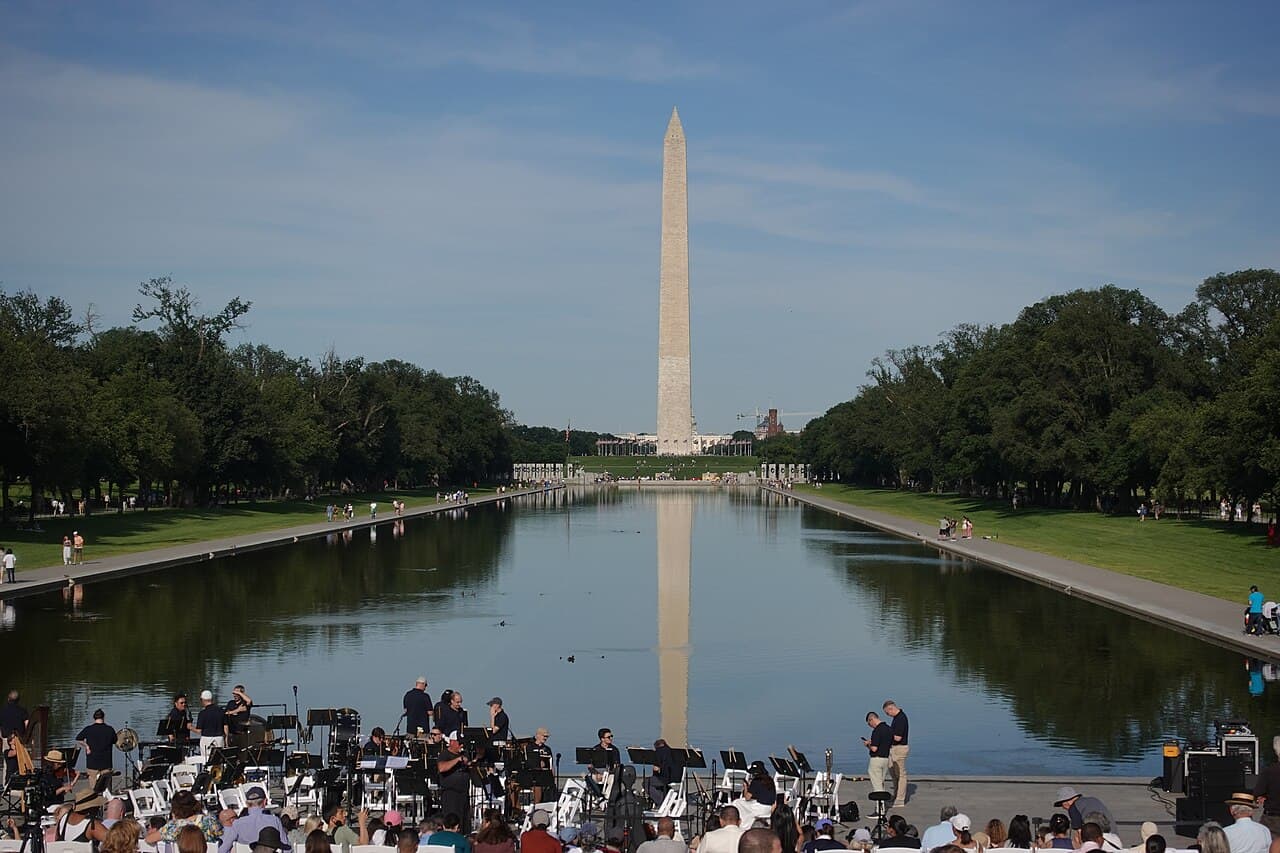
The drama began when a $14.2 million federal project to paint the Lincoln Memorial Reflecting Pool “American flag blue” quickly turned into a muddy green nightmare. The brand-new coating began peeling off in huge, rubbery chunks. Instead of admitting a basic engineering failure, officials blamed political saboteurs.
The response from federal authorities was swift and intensely punitive. Armed National Guard troops and U.S. Park Police quickly swarmed the deck. They ended up executing six arrests over the peeling liner.
One of those arrested was David Hearn, a 67-year-old former Olympic canoeist who was just cycling by. He noticed the loose blue material, reached in, and was promptly detained for five hours by troops. “I’m a curious citizen,” Hearn later explained, emphasizing that he did not destroy or vandalize anything.
The mountain of Epstein evidence yields near-zero handcuffs

While curious tourists face immediate arrest in D.C., the sprawling Jeffrey Epstein database tells a completely different story. The Department of Justice has published over 3.5 million pages of files, including 2,000 videos and 180,000 images. Yet, this mountain of evidence has led to almost no new arrests.
As of early 2026, only three public figures have faced active arrests or criminal investigations from their ties to these files. These are former British politician Peter Mandelson, former Norwegian Prime Minister Thorbjørn Jagland, and Prince Andrew. This incredibly low arrest count stands in sharp contrast to the massive web of wealthy figures documented in the files.
Many ultra-wealthy individuals who paid Epstein massive sums remain unprosecuted. Billionaire Leon Black paid Epstein $158 million, prompting Senator Ron Wyden to call for a deeper House investigation. “I knew Jekyll. I didn’t know Hyde,” Black later defended, illustrating how easily the ultra-wealthy deflect legal accountability.
Breaking down the numbers

Comparing these two investigations side by side highlights a massive gap in how federal laws are enforced. The data shows a system that punishes ordinary citizens instantly while moving at a glacial pace against the powerful.
Six arrests were made over paint peeling off a D.C. pool. Yet, a massive human trafficking database containing millions of pages has yielded fewer active arrests globally.
Why administrative embarrassment gets fast-tracked

George Derek Musgrove, a prominent history expert, noted that the project quickly took on the “stink of corruption.” The administration bypassed standard competitive bidding to award a $1.8 million water-cleaning contract to a donor. When the project failed publicly, the easiest escape was to invent a phantom enemy.
The Department of the Interior quickly blamed “leftist activists” without showing a single shred of proof. By turning a maintenance failure into a national security issue, the state managed to divert attention from its own incompetence. This tactic allowed officials to pretend they were defending a monument rather than hiding a botched paint job.
The shield of systemic wealth

On the flip side, the slow-walking of the Epstein files shows how wealth protects itself. High-profile figures have the legal resources to drag out investigations for years. This institutional hesitation creates a dual-track justice system where the powerful are coddled.
Even with over three million pages of documents made public, the legal system struggles to hold elite actors accountable. The contrast isn’t just a political talking point—it’s a measurable reality. Until the justice system targets systemic abuse with the same energy it uses to guard peeling paint, public trust will continue to erode.
A reality check on modern justice

The numbers don’t lie: minor property incidents trigger swift state violence, while elite networks escape largely unscathed. The federal system made arrests to cover up a botched $14.2 million pool renovation. Meanwhile, the millions of pages in the Epstein files have led to a mere three arrests globally, leaving systemic elite crimes unpunished.
Disclaimer – This list is solely the author’s opinion based on research and publicly available information. It is not intended to be professional advice.
Like our content? Be sure to follow us