Trump declines to extend major trade deal with Canada, Mexico
The United States has entered a new phase of trade uncertainty after the Trump administration confirmed it will not renew the United States–Mexico–Canada Agreement (USMCA) in its current form.
Instead, the deal will remain temporarily in force while Washington pushes for renegotiation with both neighbors, setting the stage for months of tense economic diplomacy across North America.
The decision marks a significant shift in the future of one of the world’s most influential trade frameworks and signals a broader push by the administration to reshape cross-border commerce as part of its second-term economic agenda.
A Trade Pact Left in Limbo

The USMCA, originally negotiated during Trump’s first term as a replacement for NAFTA, was designed to modernize North American trade rules and rebalance economic relationships between the United States, Canada, and Mexico. Now, that framework is effectively in limbo.
U.S. Trade Representative Jamieson Greer confirmed that, while the agreement will remain active for now, the administration will not extend it without changes. Instead, Washington is opting for continued negotiations focused on what it describes as structural imbalances in the agreement.
The treaty itself does not expire until July 1, 2036, but its automatic 16-year lifecycle includes a mandatory review process. Without consensus for renewal, the agreement now enters annual review cycles that could reshape its long-term stability.
Washington’s Push to Reshape North American Trade
At the heart of the administration’s position is a long-standing argument: that existing trade arrangements have contributed to persistent U.S. trade deficits with both Canada and Mexico.
Recent figures cited by officials show a $46 billion goods trade deficit with Canada and a significantly larger $197 billion deficit with Mexico. These numbers have become a central justification for Washington’s renewed pressure on its trading partners.
The administration argues that the USMCA, while an improvement over NAFTA, has not gone far enough to correct what it views as structural disadvantages to American manufacturing and export competitiveness.
As part of its broader economic strategy, the White House has already implemented tariff measures targeting both neighbors to rebalance trade flows and incentivize domestic production.
Negotiations Set to Intensify

Despite the refusal to renew the agreement, diplomatic channels remain open. U.S. officials confirmed that a new round of talks with Mexico is scheduled for late July, focusing on strengthening “rules of origin” requirements and enhancing economic security alignment.
These discussions are expected to center on how much of a product must be manufactured within North America to qualify for tariff-free trade benefits, a key issue for industries such as automotive manufacturing, agriculture, and energy.
Canada’s position appears more complex. While Ottawa initially pushed for a straightforward extension of the agreement, U.S. officials have signaled dissatisfaction with Canada’s response to prior tariff actions, complicating efforts to reach consensus.
Rising Trade Tensions Across the Continent

The breakdown in renewal talks reflects broader tensions in North American economic relations. The USMCA was once seen as a stabilizing force after years of uncertainty under NAFTA renegotiations, but its future now appears increasingly fragile.
The current administration has emphasized reshoring manufacturing and reducing reliance on foreign supply chains. This approach has reshaped trade priorities and introduced a more confrontational tone in negotiations with traditional allies.
Canada and Mexico, both deeply integrated into U.S. supply chains, face economic pressure as Washington recalibrates its trade posture. For industries dependent on cross-border production networks, even incremental changes in tariff structures or sourcing rules could have significant consequences.
Economic Stakes for the United States, Canada, and Mexico
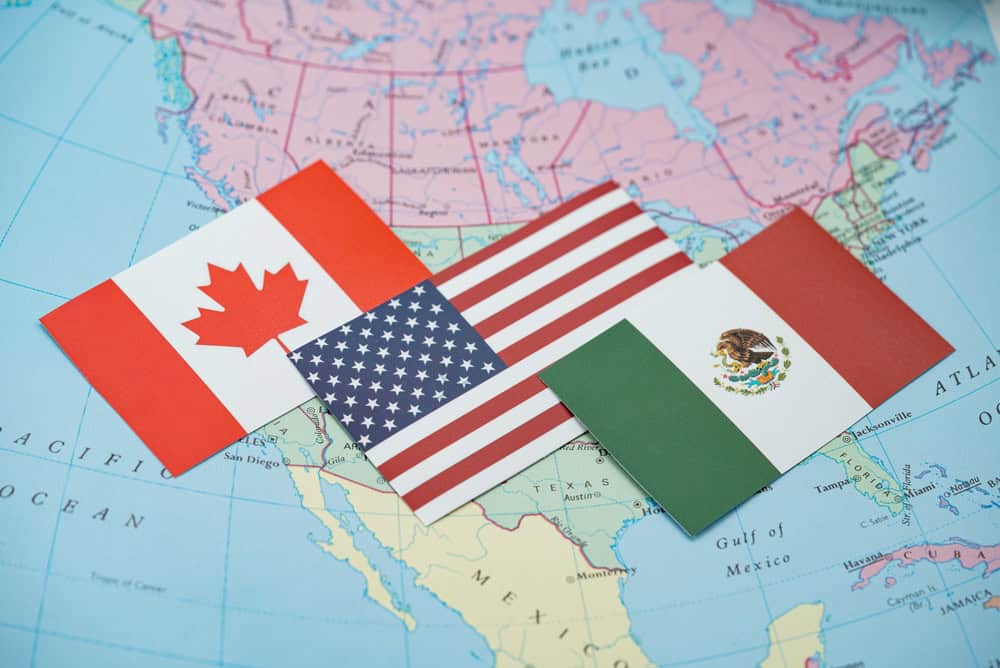
The economic implications of this shift extend far beyond diplomatic negotiations. The USMCA underpins hundreds of billions of dollars in annual trade, supporting deeply interconnected supply chains that span automotive manufacturing, agriculture, energy, and technology sectors.
Any disruption or prolonged uncertainty could impact investment decisions, currency stability, and employment in export-dependent regions.
For the United States, the administration argues that renegotiation is necessary to address trade imbalances and strengthen domestic industry. Critics, however, warn that prolonged uncertainty could raise costs for consumers and businesses alike.
For Canada and Mexico, the stakes are equally high. Both economies rely heavily on access to the U.S. market, and any shift in trade terms could force structural adjustments across key industries.
What Comes Next for North American Trade

As negotiations resume, the future of USMCA will depend on whether the three countries can bridge fundamental differences in economic priorities.
The United States is pressing for stricter trade rules and reduced deficits. Canada is seeking stability and predictability. Mexico is focused on maintaining export access while navigating both political and economic pressures.
The outcome will determine not only the fate of the agreement but also the direction of North American economic integration for years to come.
For now, the USMCA remains in force, but its long-term future is no longer guaranteed.
Disclaimer – This list is solely the author’s opinion based on research and publicly available information. It is not intended to be professional advice.
Like our content? Be sure to follow us