
Why Catholics Need Priests but Muslims Don’t
If you grew up Catholic, you probably associate religious leadership with priests who celebrate Mass, hear confessions, and perform sacraments. If you grew up Jewish, a rabbi might occupy a familiar position in your community. Walk into a Buddhist monastery, however, and you’ll encounter an entirely different understanding of religious life. Visit a Quaker meeting, and you may discover that nobody is standing at the front leading worship at all.
One of the biggest differences between religions is whether believers need another person to perform certain sacred acts on their behalf. Some traditions believe religious leaders possess special authority through ordination. Others place greater importance on knowledge, spiritual discipline, or the ability to interpret sacred texts. A few deliberately avoid establishing a professional clergy because they believe spiritual authority shouldn’t belong exclusively to a religious elite.
These differences shape everything from weddings and funerals to forgiveness, prayer, and the way religious communities make decisions. Here are 10 surprisingly different ways the world’s religions understand spiritual leadership.
1. Catholic Priests Can Perform Sacred Acts Ordinary Believers Cannot
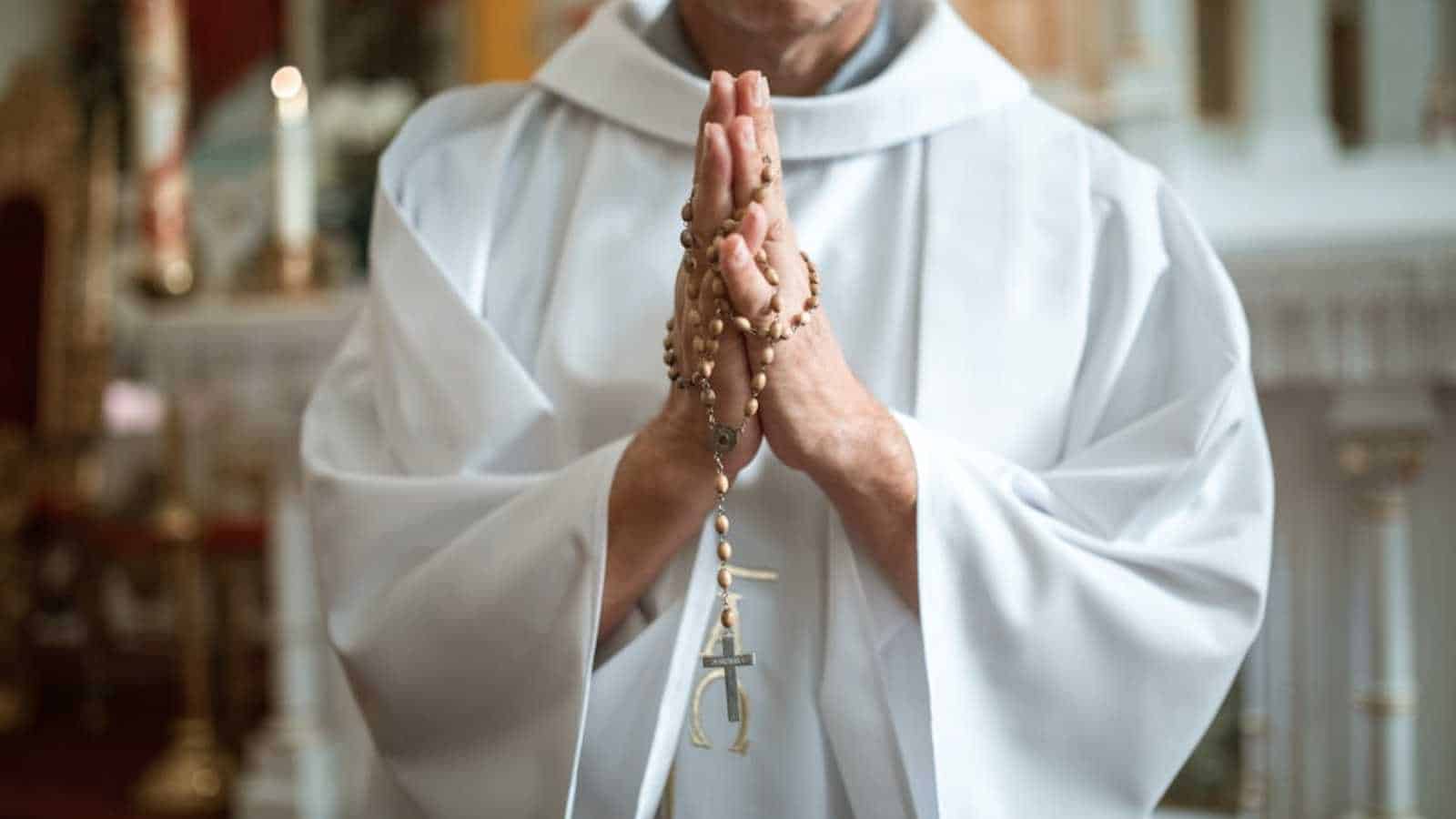
In Roman Catholicism, becoming a priest involves much more than studying theology and learning how to deliver a sermon. Through the sacrament of Holy Orders, priests receive authority to perform certain religious functions that lay Catholics cannot ordinarily perform, including celebrating the Eucharist and granting sacramental absolution.
Catholic theology understands the priest as acting in a distinctive relationship to Christ during these sacred responsibilities. This helps explain why a Catholic congregation cannot simply ask its most knowledgeable member to step forward and celebrate Mass when a priest is unavailable. Education and personal devotion alone do not confer the necessary sacramental authority.
In Catholicism, a priest’s religious authority comes from ordination, not simply from being exceptionally knowledgeable or spiritually impressive. That distinction also explains why the shortage of priests in some regions creates challenges beyond finding someone capable of leading a congregation. Without priests, communities may struggle to maintain regular access to sacraments that occupy a central position in Catholic religious life.
2. Protestant Christianity Challenged the Idea That Believers Need Priestly Mediation
One of the major transformations of the Protestant Reformation was a reconsideration of the relationship between ordinary Christians, religious leaders, and God. Reformers such as Martin Luther emphasized what became known as the priesthood of all believers, drawing attention to the spiritual standing of every Christian rather than treating ordained clergy as the only people with privileged access to God.
That doesn’t mean Protestantism eliminated religious leadership. Protestant churches have pastors, ministers, bishops, elders, and other officials who teach scripture, lead worship, offer pastoral care, and administer religious rites. Anglican and some Lutheran traditions even retain the title of priest, although their theological understanding of priesthood may differ from Catholic teaching.
What changed was the understanding of what religious leaders are necessary for. Many Protestants believe individuals can confess their sins directly to God without requiring sacramental absolution from a priest. Different Protestant denominations nevertheless maintain very different structures of authority, which helps explain why churches sharing much of the same Bible can operate in remarkably different ways.
You may also want to read: AI Jesus Might ‘Listen’ to Your Confession, But It Can’t Absolve Your Sins − a Scholar of Catholicism Explains
3. Jewish Rabbis Aren’t Priests in the Christian Sense
A rabbi leading a synagogue may appear to occupy roughly the same position as a priest leading a church. But the historical origins and religious responsibilities of these roles are quite different. The word rabbi is associated with the role of a teacher, and rabbinic authority traditionally rests heavily on knowledge of Jewish scripture, religious law, and interpretation.
Ancient Judaism did have a hereditary priesthood associated with the Temple in Jerusalem. After the destruction of the Second Temple in 70 CE, however, Jewish religious life developed in ways that no longer depended on the Temple’s sacrificial system. Rabbinic scholarship, communal prayer, religious law, and household observances became central to maintaining Jewish life.
A rabbi’s importance comes primarily from teaching and interpreting religious tradition rather than acting as an indispensable intermediary between God and ordinary believers. Many Jewish religious activities can take place without a rabbi present. Jewish communities also preserve distinctions associated with ancient priestly ancestry, including certain responsibilities of people known as kohanim. The coexistence of these traditions reveals how Judaism adapted to the loss of its ancient sanctuary without abandoning its connection to the past.
4. Muslim Imams Lead Prayer Without Possessing Priestly Powers
In many mosques, worshippers follow an imam who leads the congregation in prayer. Imams may also deliver sermons, teach religious principles, provide counseling, and help guide their communities. To someone accustomed to Christian churches, the role might look familiar, but its theological basis is substantially different.
In Sunni Islam, the imam leading ordinary congregational prayers does not require sacramental ordination comparable to Catholic priesthood. A suitably qualified person can lead the prayer, and Muslims do not generally believe a religious official must act as an intermediary when they seek God’s forgiveness. Religious scholars may possess considerable authority because of their training and knowledge, but that authority is different from priestly power over sacraments.
A Muslim can pray directly to God without needing another person to establish that connection. The picture becomes more complex within Shi’a Islam, where the term Imam has additional theological significance, particularly in relation to the recognized successors of Muhammad in Shi’a traditions. Shi’a religious scholars and clerical institutions can also play substantial roles in religious life. The differences remind us that the same religious title doesn’t necessarily carry the same meaning across communities.
5. Buddhist Monks Follow a Religious Path Rather Than Serve as God’s Representatives
_leonovo via 123RF
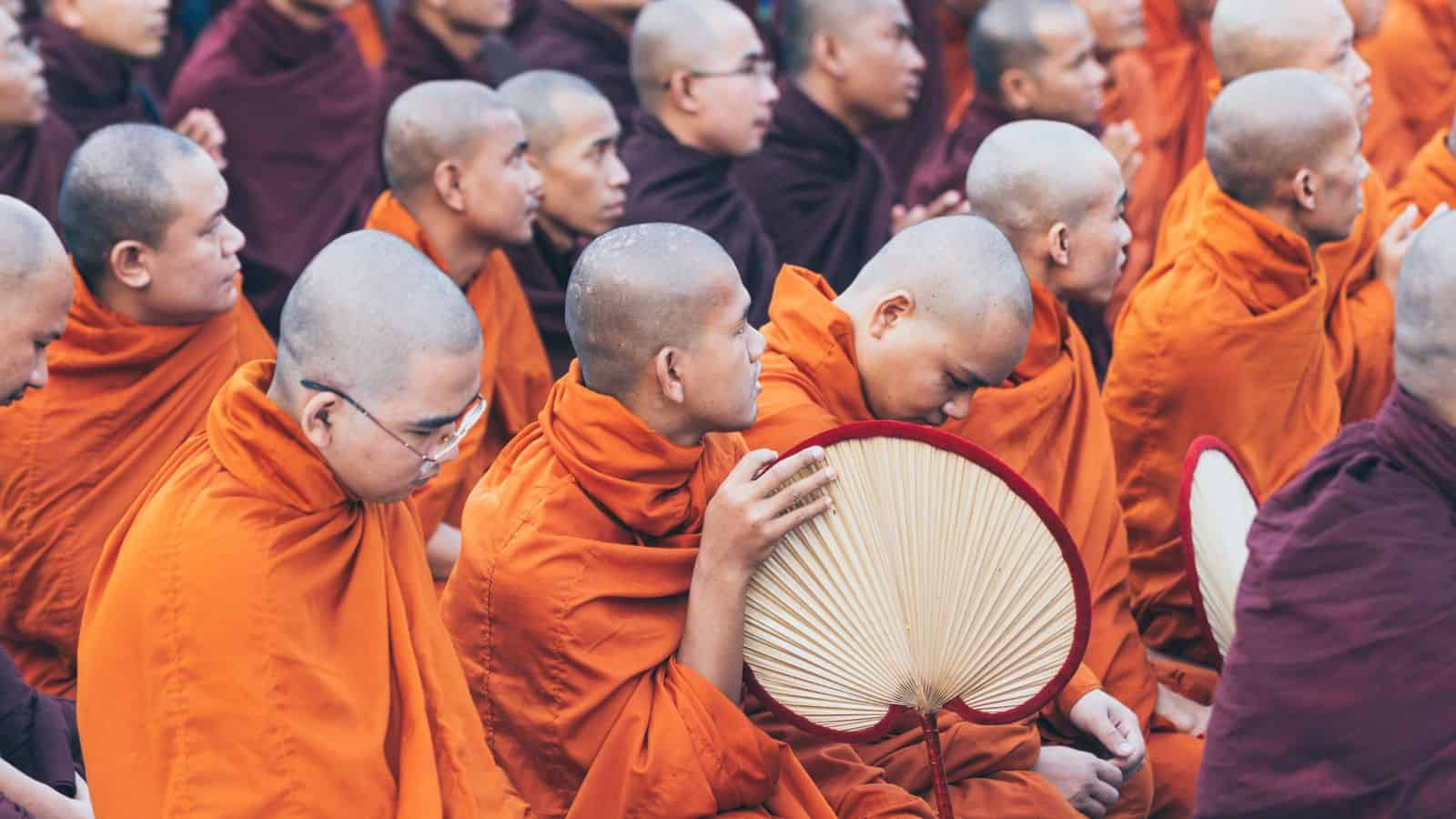
Buddhist monks and nuns are among the world’s most recognizable religious figures, but describing them as Buddhist priests can obscure what monastic life actually involves. Buddhism developed communities of ordained practitioners dedicated to ethical discipline, study, meditation, and the pursuit of liberation from suffering.
In many Theravada Buddhist societies, monks receive material support from laypeople, who provide food and other necessities. Monastics, in turn, preserve religious teachings, offer instruction, and conduct ceremonies. This relationship between householders and renunciants has helped sustain Buddhist religious life for centuries.
The monk’s authority isn’t based on representing a creator God. It comes from religious training, ordination, discipline, knowledge, and participation in a monastic lineage. Buddhist religious leadership nevertheless varies considerably. Some Japanese Buddhist traditions have clergy who marry and maintain families, while Tibetan Buddhism includes distinctive systems of spiritual teachers and lineage transmission. Buddhism contains many approaches to religious authority, and not all Buddhist leaders live the secluded monastic lives outsiders might imagine.
6. Hinduism Has Both Ritual Priests and Spiritual Teachers—and They Aren’t Necessarily the Same
Hindu religious life includes temple priests, household ritual specialists, gurus, monks, renunciants, and numerous other kinds of spiritual leaders. Some perform elaborate ceremonies involving sacred images, offerings, mantras, and religious festivals. Others devote themselves primarily to teaching philosophy, providing spiritual guidance, or practicing forms of renunciation.
The distinction between a priest and a guru is particularly interesting. A temple priest may possess specialized training in the correct performance of rituals, while a guru may guide followers through a particular spiritual tradition or discipline. Although an individual can occupy overlapping roles, being skilled in ritual does not automatically make someone a spiritual teacher in every Hindu tradition.
A religion can have elaborate priestly rituals without teaching that every believer needs a priest for every encounter with the divine. Hindu worship frequently takes place in homes, where individuals and families make offerings, recite prayers, and observe religious customs independently. Different Hindu communities also have different requirements concerning priestly eligibility and training. Rather than one centralized hierarchy, Hinduism contains a rich variety of religious relationships and forms of authority.
You may also want to read: You’ve Seen These Religious Practices—but Do You Know What They Actually Mean?
7. Sikhism’s Eternal Guru Isn’t a Human Religious Leader
Imagine belonging to a religion whose ultimate living spiritual guide isn’t a priest, bishop, prophet, or monk, but a sacred scripture. That’s one of Sikhism’s most distinctive features. The Guru Granth Sahib holds the position of eternal Guru, following the decision traditionally associated with Guru Gobind Singh, the tenth human Sikh Guru.
Sikh places of worship, known as gurdwaras, have individuals called granthis who care for the scripture, recite its teachings, and carry out important religious responsibilities. Other individuals lead devotional singing, teach Sikh history, or help manage community affairs. These roles can require considerable knowledge and dedication, but they do not constitute a priesthood with exclusive access to God.
Sikhism places the authority of the Guru’s teachings above the spiritual status of any ordinary religious official. Qualified Sikhs can participate in numerous religious functions, and communal worship emphasizes the congregation’s shared relationship with the divine. Although Sikh institutions and leadership structures are important, they are not based on the belief that ordained priests must mediate between believers and God. The distinction makes Sikh religious leadership fundamentally different from sacramental priesthood.
8. Quakers Can Gather for Worship Without Anyone Leading the Service
Imagine attending a religious service where nobody delivers a prepared sermon, conducts a formal ceremony, or tells the congregation when to pray. Participants sit together in silence, sometimes for much of the gathering, and someone may eventually stand to speak if they feel spiritually moved to do so.
That’s a familiar form of worship among unprogrammed Quakers, members of the Religious Society of Friends. Quaker traditions emerged in seventeenth-century England with a radical emphasis on the possibility of direct spiritual experience. Rather than assuming divine guidance must come through ordained clergy, Friends emphasized the availability of spiritual illumination to ordinary people.
In an unprogrammed Quaker meeting, someone who has never attended a theological school may have something spiritually valuable to say to the entire congregation. Not all Quaker communities worship this way; some have pastors, prepared sermons, music, and organized services. Nevertheless, the absence of a designated minister in unprogrammed meetings demonstrates that religious communities can maintain meaningful worship and collective spiritual discipline without a conventional clergy. It also raises a fascinating question about how people recognize spiritual authority when nobody automatically possesses it.
9. The Bahá’í Faith Deliberately Avoids a Professional Clergy
Many religions developed professional religious leadership gradually, but the Bahá’í Faith established a different approach to spiritual organization. Its founder, Bahá’u’lláh, did not establish a conventional priesthood, and Bahá’í religious life operates without an ordained clergy responsible for interpreting divine truth on behalf of ordinary believers.
Instead, Bahá’í communities are organized through elected administrative institutions at local, national, and international levels. Community members participate in devotional gatherings, education, consultation, charitable activities, and collective decision-making. Spiritual education remains important, but individuals are encouraged to investigate religious truth and develop their own understanding of the faith’s teachings.
A worldwide religion can maintain organized institutions without giving a professional priesthood exclusive control over religious life. That doesn’t mean the Bahá’í Faith lacks authority or formal religious structures. Its sacred writings and elected institutions occupy important positions, including the Universal House of Justice. The difference is that spiritual responsibilities are distributed in ways that depart significantly from the traditional distinction between clergy and congregation found in many other religions.
10. Shinto Priests Help Maintain Relationships Between Communities and the Sacred
In Japan, Shinto priests perform rituals associated with shrines, purification, offerings, festivals, and the reverence of kami, the sacred presences central to Shinto religious traditions. Their responsibilities can include ceremonies marking significant moments in people’s lives as well as observances connected with local communities and the changing seasons.
Unlike religious leaders whose primary role involves preaching a universal doctrine of salvation, Shinto priests are particularly associated with maintaining ritual practices and sacred spaces. Their work helps sustain relationships between communities, shrines, traditions, and the kami associated with them. Religious training and ritual knowledge therefore occupy an important place in their profession.
A religious leader doesn’t always need to tell people what to believe; sometimes the role is primarily concerned with what people do. Visitors can also pray and make offerings at Shinto shrines without requiring a priest to accompany them. That combination of specialized ritual leadership and individual participation illustrates another possibility: a religion can maintain a priesthood without organizing everyday spiritual life around sermons, conversion, or formal declarations of belief.
Do People Really Need Someone Between Themselves and the Divine?
The title of a religious leader often tells us much less than we imagine. A Catholic priest, Jewish rabbi, Muslim imam, Buddhist monk, Hindu guru, and Shinto priest may all be respected religious figures, but their responsibilities emerge from profoundly different understandings of spiritual life. Some perform sacred acts that ordinary believers cannot. Others preserve teachings, interpret religious law, maintain sacred spaces, or demonstrate a particular way of living.
Traditions such as unprogrammed Quakerism and the Bahá’í Faith challenge the assumption that organized religion necessarily requires a professional clergy. Sikhism offers another distinctive possibility by placing ultimate spiritual guidance in sacred scripture rather than a succession of human Gurus. None of these approaches eliminates the need for learning, community, or religious guidance, but they distribute authority differently.
Perhaps the most revealing question isn’t whether a religion has priests. It’s what that religion believes a priest—or any spiritual leader—can provide that people cannot obtain for themselves. The answer reveals something fundamental about how a religious tradition understands knowledge, divine authority, spiritual experience, and the relationship between individuals and their faith.
You may also want to read: Why Some Religions Want You to Convert—and Others Rarely Ask
Reader question: Do you think religious leaders are essential to maintaining a faith, or would religion be more meaningful if individuals took greater responsibility for their own spiritual lives? How has your experience with religious leaders shaped your opinion?