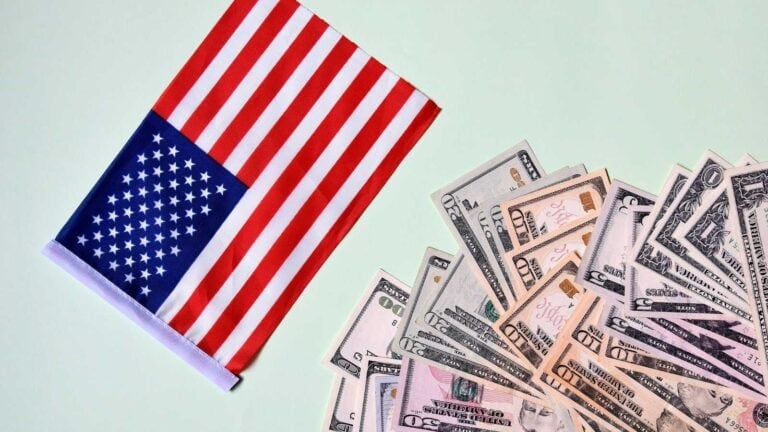
America’s Real Defense Against Hyperinflation
The Bipartisan Policy Center reports that the US deficit was approximately $1.78 trillion for fiscal year 2025, a slight decrease from FY 2024.
Reducing deficit spending can reduce inflation, but only partly and only under certain economic conditions, mainly when inflation is driven by excess demand in a near-full-capacity economy. It is not a universal or complete solution. Demand, supply, expectations, global pricing, and monetary policy influence inflation. Fiscal tightening is simply one lever among many.
If deficit cuts are always necessary, why do many governments run sustained deficits without economic collapse? The U.S. faces higher borrowing costs and greater scrutiny. Those costs make deficits less comfortable to run, prompting political pressure for restraint.
Who Really Controls Inflation?

The core wisdom, championed by Nobel laureate Milton Friedman, is that inflation is “always and everywhere a monetary phenomenon.” Simply put, governments are the only entities with a printing press; therefore, they are the only ones who can cause sustained inflation.
Friedman argued that excessive money supply growth, often used to fund politically easy deficits, outpaces real economic output. This is why the Federal Reserve (FOMC), while government-mandated, operates with political independence, attempting to fix the fiscal spending problems caused by the very government that authorized its existence. The Fed’s job is the unenviable task of withdrawing the liquidity that the political process pumped into the system.
The Reserve Currency Shield
America’s structural defense against financial ruin isn’t a policy; it’s a privilege. The U.S. Dollar (USD) remains the world’s primary reserve currency and the currency for most global trade, including commodities like oil. This dominance creates constant, massive international demand, absorbing vast amounts of dollars that might otherwise flood the domestic market.
IMF data shows the dollar’s share of global reserves remains high, acting like a huge sponge that sops up excess money supply. This global appetite for the dollar means the U.S. can borrow and spend without suffering the immediate, catastrophic currency collapse that dooms less privileged nations.
Interest Rates as the Ultimate Behavioral Tool
The Fed’s primary weapon, raising the Federal Funds Rate, doesn’t directly control the price of eggs or gasoline. Instead, it is an aggressive psychological tool designed to induce collective behavioral change in the market. By raising borrowing costs, the Fed systematically destroys aggregate demand and chills hiring, thereby reducing the flow of new money.
The central mission is to “anchor inflation expectations,” convincing millions of consumers and businesses that prices will stop rising. If the market believes the Fed is serious, people stop demanding massive wage increases and hoarding goods, which is when the policy actually starts working.
The Market’s Self-Correction

Ultimately, central bank policy is just a catalyst for the real cure: the market’s self-correction. Inflation is only truly beaten when production capacity (supply) catches up with the amount of money being spent (demand). Economists argue that a reduction in consumer spending, fueled by higher interest rates and economic uncertainty, is the essential component.
When the American shopper finally closes their wallet and delays that new car purchase, market pressure eases. Sustainable relief requires policymakers to step back and facilitate producers’ ability to increase supply, removing unnecessary regulatory friction from their path.
Why Official ‘Soft Landing’ Narratives Fail the Market Test
A deep schism exists between official government pronouncements and what financial markets are signaling. While the government often touts strong employment data to claim a “soft landing” the official NBER recession designation, investors remain highly skeptical.
This “credibility gap” is driven by a visible divergence: concentrated growth in a few sectors masks genuine stagnation or contraction in many others. When the economy feels bad to the average person, no amount of positive government rhetoric about GDP growth can alleviate the anxiety.
Gold’s Alarm: Signal of Asset Liquidation

The sustained surge in gold prices, often soaring past previous records, is not just a trade; it’s a panic button. Gold serves as a classic safe-haven asset, meaning its price rise reflects a flight from paper currency and debt (such as U.S. Treasuries).
Historical data confirms that gold has consistently outperformed equities during periods of high geopolitical tension and recessionary fears, such as the 2008 financial crisis. This capital rotation signals that sophisticated investors fear currency debasement and are seeking insurance outside the banking system.
Post-Bubble Correction
The recent volatility in high-growth, high-debt sectors like Fintech and select areas of technology is a necessary, painful market correction. These “over-treated sectors” thrived on years of nearly free capital.
The Fed’s rate hikes directly ended this era, forcing asset liquidation and a re-evaluation of unsustainable business models. This sectoral pain is evidence that the supply-demand imbalance is being ruthlessly resolved by the market, as capital is pulled from speculative ventures and redirected toward more efficient, productive uses.
Rome’s Lesson Revisited: Danger of Debasing Debt
History offers a chilling parallel: governments have an inherent, powerful incentive to inflate their currency. By inflating, the government automatically erodes the real value of its massive national debt, effectively paying back creditors with cheaper dollars.
The economist John Maynard Keynes called inflation a hidden “tax.” This self-serving mechanism was evident when the Roman Empire debased its silver coinage to pay for military spending. This historical tendency is why high debt levels will always tempt governments to choose inflation over the politically difficult path of spending cuts or tax hikes.
Betting on Productivity to Outrun Debt
The hope for escaping the current debt spiral without austerity rests on an unprecedented leap in productivity, and Artificial Intelligence (AI) is the singular bet. As technology mogul Elon Musk claims, AI-driven automation is “the only thing” that can solve the debt crisis by dramatically increasing the output of goods and services.
If AI can boost GDP growth faster than the $38 trillion national debt grows, the debt burden becomes manageable. The challenge is whether AI’s productivity gains can scale across the entire economy fast enough to offset government spending.
Path to Sustainable Price Stability
Long-term price stability depends on a fundamental shift in policy focus. The current approach relies heavily on continuous, reactive Government Intervention (Fed rate hikes). A more sustainable path demands fostering Market Incentive, which means slashing unnecessary regulations and speeding up infrastructure development.
Creating conditions that allow businesses to easily and cheaply increase supply is the ultimate structural defense. Only by removing impediments to production can the economy truly rebalance the money supply with goods and services.
Key Takeaways
- The Paradoxical Defender: The Fed, America’s chief inflation fighter, is primarily correcting the government’s fiscal spending habits, demonstrating the core conflict.
- The Global Anchor: The U.S. Dollar’s reserve status is America’s most reliable structural defense, acting as a perpetual global sponge for excess liquidity.
- Gold’s Signal: Rising gold prices are a clear, non-negotiable sign of deep market anxiety and a fundamental lack of faith in the long-term stability of the fiat currency system.
- AI: The Great Hope: The ultimate non-inflationary fix for the debt crisis hinges on AI-driven productivity, creating an abundance of goods that outstrips the growth of the money supply.
- The Real Cure: Sustainable stability requires shifting from central bank demand destruction to market-driven supply creation.
Disclosure line: This article was developed with the assistance of AI and was subsequently reviewed, revised, and approved by our editorial team.
20 Odd American Traditions That Confuse the Rest of the World

20 Odd American Traditions That Confuse the Rest of the World
It’s no surprise that cultures worldwide have their own unique customs and traditions, but some of America’s most beloved habits can seem downright strange to outsiders.
Many American traditions may seem odd or even bizarre to people from other countries. Here are twenty of the strangest American traditions that confuse the rest of the world.