Big Tech’s projected $517M Pennsylvania tax break just took a major hit
The cloud has a tax bill now, and Pennsylvania lawmakers are finally reading it line by line. A data center incentive that once sounded like a small way to attract tech investment is now projected to cost the state $517 million a year by 2030.
The House voted 197–5 to repeal the sales-tax break, and the Senate followed with a 44–6 vote on related repeal language, according to City & State Pennsylvania. That kind of bipartisan vote does not happen often in Harrisburg.
It happens when a quiet line in the tax code starts looking like a half-billion-dollar question for schools, roads, transit, utility bills, and local communities.
What happened to the tax break
Pennsylvania’s Computer Data Center Equipment Incentive Program lets qualifying data centers avoid the state’s 6% sales tax on servers, networking gear, and other equipment used in certified facilities.
The House bill, HB 2198, would repeal that program, while HB 1667 includes parallel repeal language as part of the Senate’s broader tax-code work. The politics are striking because this is not a small symbolic protest.
City & State Pennsylvania reported that the exemption is projected to cost $188.4 million in the 2026–27 fiscal year and $517 million by 2030. Spotlight PA has reported that the Shapiro administration’s estimates put the longer-term revenue loss at about $2 billion by mid-2031.
The tax break that grew too big
The program did not start as a giant giveaway. It began in 2016 as a capped refund meant to help Pennsylvania compete for data center investment. It was later expanded and, in the 2021 budget deal, changed into a broader, uncapped exemption that took effect in 2022.
That technical shift matters because uncapped tax breaks grow with the industry. As demand for AI and cloud services exploded, the state’s exposure grew too. A tool designed to lure development became a budget risk that lawmakers could no longer ignore.
Spotlight PA reported that 12 data center projects currently receive the exemption, based on a state Revenue Department report. The lesson is simple: a cap is a brake. Remove it, and the cost can drop quickly.
Why the budget math changed the mood

The backlash is landing during a tough budget season. Spotlight PA reported that Gov. Josh Shapiro’s proposed $53.3 billion budget would spend about $5 billion more than expected revenue, while the state’s cash reserves have fallen from roughly $14 billion two years ago to about $7 billion.
That makes a data center exemption projected to reach $517 million a year harder to defend. To residents, the question is not abstract. If Pennsylvania gives up hundreds of millions in sales-tax revenue, someone has to explain what gets less money later.
A tax break for servers starts competing, on paper at least, with classrooms, aging transit systems, property tax relief, and local services that people can see.
The Big Tech accountability question

State Rep. Greg Vitali, the Democrat behind HB 2198, gave the repeal push its sharpest line. “We’re giving these sales tax exemptions to companies like Amazon, Microsoft, Alphabet — companies that have net incomes in excess of $100 billion a year,” he said, according to City & State Pennsylvania. “This is not right. This is not needed. This is not what our constituents want.”
That quote cuts through the normal economic-development language. Pennsylvania is not debating a struggling local shop. It is debating a public subsidy tied to some of the richest companies on Earth, at a time when AI demand is already pushing them to build more servers, more power connections, and more massive sites.
Why data centers still have defenders

The industry case is not nonsense. Data centers power banking apps, hospital systems, cloud storage, streaming, cybersecurity, online shopping, and the AI tools now spreading through schools and offices.
Dan Diorio, vice president of state policy at the Data Center Coalition, told WHYY that data centers are essential to modern life, economic growth, national security, cloud computing, and cybersecurity.
Supporters also point to construction jobs, union work, growth in the local tax base, and the fear that projects could move to states with more favorable incentives. That is the honest tension.
Pennsylvania wants investment. It also wants proof that the public is not paying too much to attract companies that may have come anyway because they need land, power, and proximity to customers.
The local backlash is no longer quiet

For many Pennsylvanians, the fight is not about tax theory. It is about a project near town, a substation down the road, a water question at a public meeting, or the hum of industrial equipment near homes.
Emerson College polling released in December found that 42% of Pennsylvania residents did not want a data center in or near their community, while 34% supported one nearby. The same survey found that 71% were concerned about electricity use, 70% about water use, and 48% believed AI would negatively impact Pennsylvania’s economy.
That is a serious warning for state leaders: the sales-tax exemption is increasingly tied to a broader sense that residents are being asked to absorb the costs of a tech boom they did not design.
Shapiro’s alternative is guardrails, not a blank check
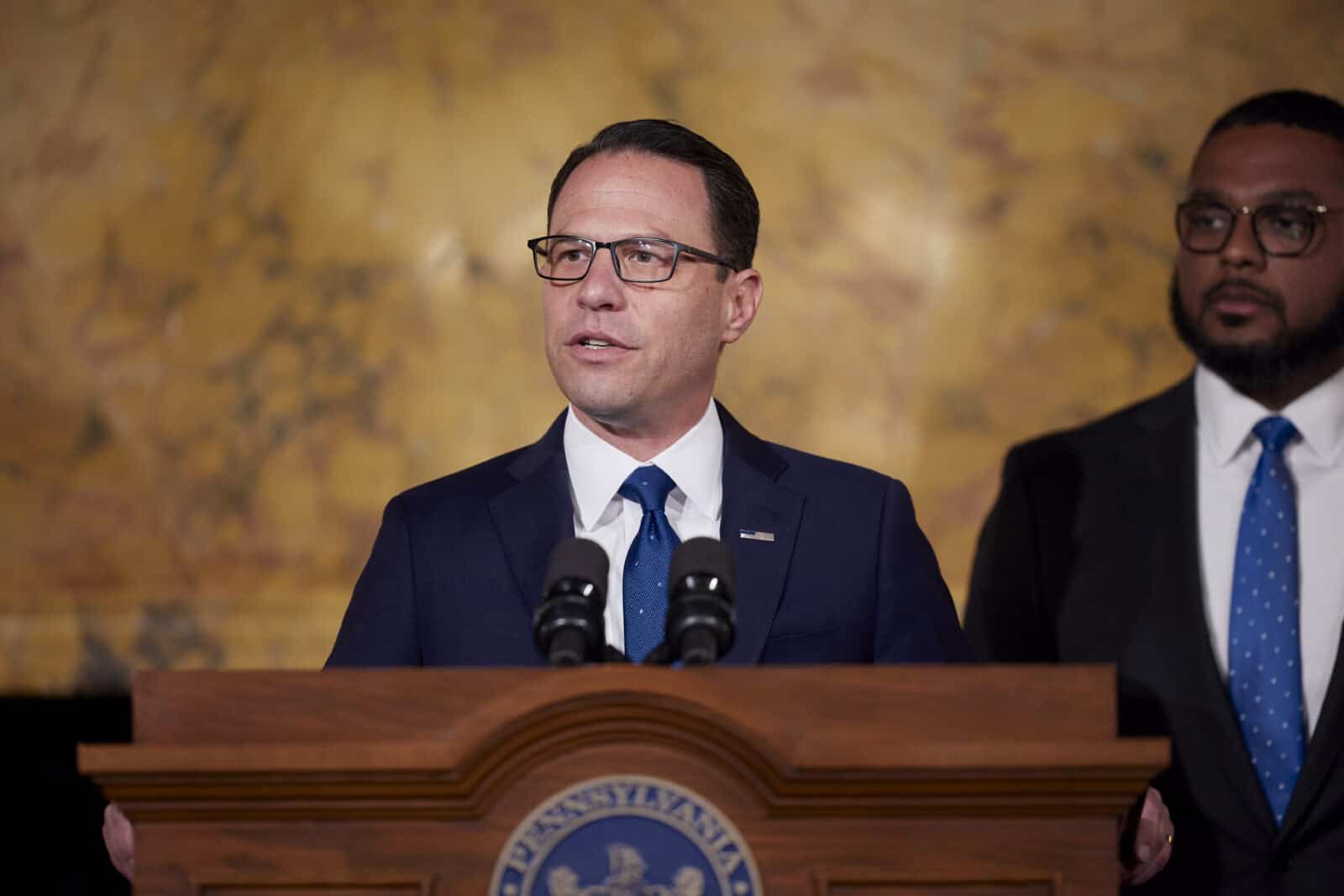
Gov. Shapiro has tried to offer a middle path through his GRID standards, short for Governor’s Responsible Infrastructure Development.
His office says the plan would require data center developers seeking state benefits to meet strict standards tied to energy affordability, community support, job creation, and environmental protection.
“I’ve heard directly from Pennsylvanians who are concerned about what data center development could mean for their communities, and I share those concerns,” Shapiro said in announcing the framework.
His approach does not treat every incentive as bad. It argues that public help should come with public conditions. For a state trying to attract AI investment without writing a blank check, that may become the compromise lane.
A bigger fight over taxing tech
Pennsylvania’s data center debate sits within a broader push to make tech companies pay more for public systems.
Spotlight PA reported that lawmakers are also considering extending the state’s 5% gross receipts tax to digital advertising companies, a move supporters say could bring in hundreds of millions of dollars.
State Rep. Elizabeth Fiedler, a Democrat from Philadelphia, framed that proposal around record tech profits, saying the companies making extraordinary gains should pay the tax. The state already narrowed the data center break in 2024 by blocking cryptocurrency mining operations from using it.
That earlier move now looks like a preview. Pennsylvania is sorting digital infrastructure into categories and asking which projects deserve help, which should pay more, and which need tougher rules.
What happens next
The tax break has taken a major hit, but the final answer still depends on budget negotiations and how lawmakers reconcile repeal language with Shapiro’s GRID proposal.
A full repeal could save future revenue but anger developers, trade groups, and unions that benefit from construction work. A narrower replacement could keep Pennsylvania competitive while forcing companies to meet tougher standards on power, labor, transparency, and environmental effects.
A weak compromise could satisfy no one. The next 6 to 12 months will show if Pennsylvania is truly changing its approach or simply trimming one program under budget pressure. The votes already show one thing: Big Tech incentives no longer pass quietly just because “innovation” is printed on the label.
What readers can take away
This fight matters because it shows how the AI boom has entered everyday public life. It is no longer just a story about chatbots, stock prices, or futuristic offices. It is also a story about sales taxes, utility grids, water use, local hearings, and state budgets.
Pennsylvania lawmakers are asking a question other states may soon face: if Big Tech needs vast physical infrastructure to power AI, how much should the public pay to host it?
The old pitch was simple: offer the tax break and get the project. The new mood is tougher. Bring the jobs, show the numbers, protect the community, and explain why taxpayers should help foot the bill.
Disclaimer – This list is solely the author’s opinion based on research and publicly available information. It is not intended to be professional advice.
Like our content? Be sure to follow us