Failing to unplug these appliances could damage your entire electrical system
Power surges can quietly wreck your wiring and appliances long before anything actually catches fire. The National Fire Protection Association reports that home electrical distribution and lighting equipment are the fourth-leading cause of home fires involving electrical failure or malfunction, and that roughly 1.3 billion dollars in property damage occurs every year.
Leaving certain appliances plugged in all the time increases the number of devices a surge can hit and, in a worst-case scenario, can overload circuits or damage your entire electrical system.
Here are the main devices experts recommend unplugging whenever possible, especially during storms or outages, to protect your home wiring and avoid costly damage.
Televisions And Home Entertainment Systems

Modern TVs, soundbars, and receivers are packed with integrated circuits that are extremely sensitive to overvoltage. Consumer electronics are among the top categories damaged by surges, as even a relatively small spike can overstress those chips, killing the unit or causing intermittent faults.
We recommend unplugging televisions and home theater setups during electrical storms or when the power is unstable, since point-of-use surge strips cannot guarantee protection from a major spike
Desktop Computers, Laptops, and Game Consoles

Computer consoles and networking gear are designed around delicate power supplies and motherboards, making them prime targets for surges. Spikes can instantly destroy processors, storage drives, or memory, and can even corrupt data without obvious physical damage.
Multiple electrical and tech sources advise shutting down and physically unplugging PCs, laptops, and consoles during storms or extended outages, rather than just switching them off, to prevent surges from riding in on power or signal lines.
Wi Fi Routers, Modems, and Smart Hubs

Your router, modem, and smart home hub are connected directly to your incoming line, so they are often the first devices to detect a spike on the line. When a surge occurs, they can be damaged, disrupting connected devices, and, in some cases, they can pass damaging voltage down Ethernet and coax cables into other equipment.
Routers, smart speakers, and hubs are among the top items to unplug during severe storms or when power flickers, to avoid cascading failures and costly replacements.
Microwave Coffee Makers And Countertop Appliances

Small kitchen appliances draw power from high-demand circuits, and many newer models use electronic control boards rather than purely mechanical switches. The National Institute of Standards and Technology has warned that appliances with electronic controls are especially vulnerable because surges can damage those boards, even if the main motor or heating elements survive.
Microwaves, coffee machines, and similar devices are easy to unplug and are frequent casualties after lightning or utility events, so they are smart priorities when a storm is coming or the power company is working on your line.
Refrigerators And Freezers With Electronic Controls

Refrigerators and freezers often stay plugged in for years, but their control systems are not invincible. Alpine Intel reports that large appliances such as refrigerators and dryers are commonly reported as lightning losses, and that indirect surges are especially likely to damage units with electronic rather than mechanical controls.
A severe spike can damage the control board or compressor start components, which can, in turn, overload circuits or repeatedly trip breakers until the underlying damage is addressed. When practical, experts recommend unplugging fridges and freezers during severe lightning activity or after a power outage until service has stabilized to avoid a damaging restart surge.
Air Conditioners And Heat Pumps

Air conditioners and heat pumps contain motors, compressors, and control boards, all of which are sensitive to overvoltage and brownouts. Breaker Hunters note that motors can overheat or short out during voltage spikes, while control boards can partially fail, causing repeated hard starts that stress both the equipment and the branch circuit.
Switch off and, if possible, unplug window units and portable ACs during storms, and use whole-home surge protection for central systems, since a surge on those high-draw circuits can affect the rest of your panel.
Washing Machines And Clothes Dryers
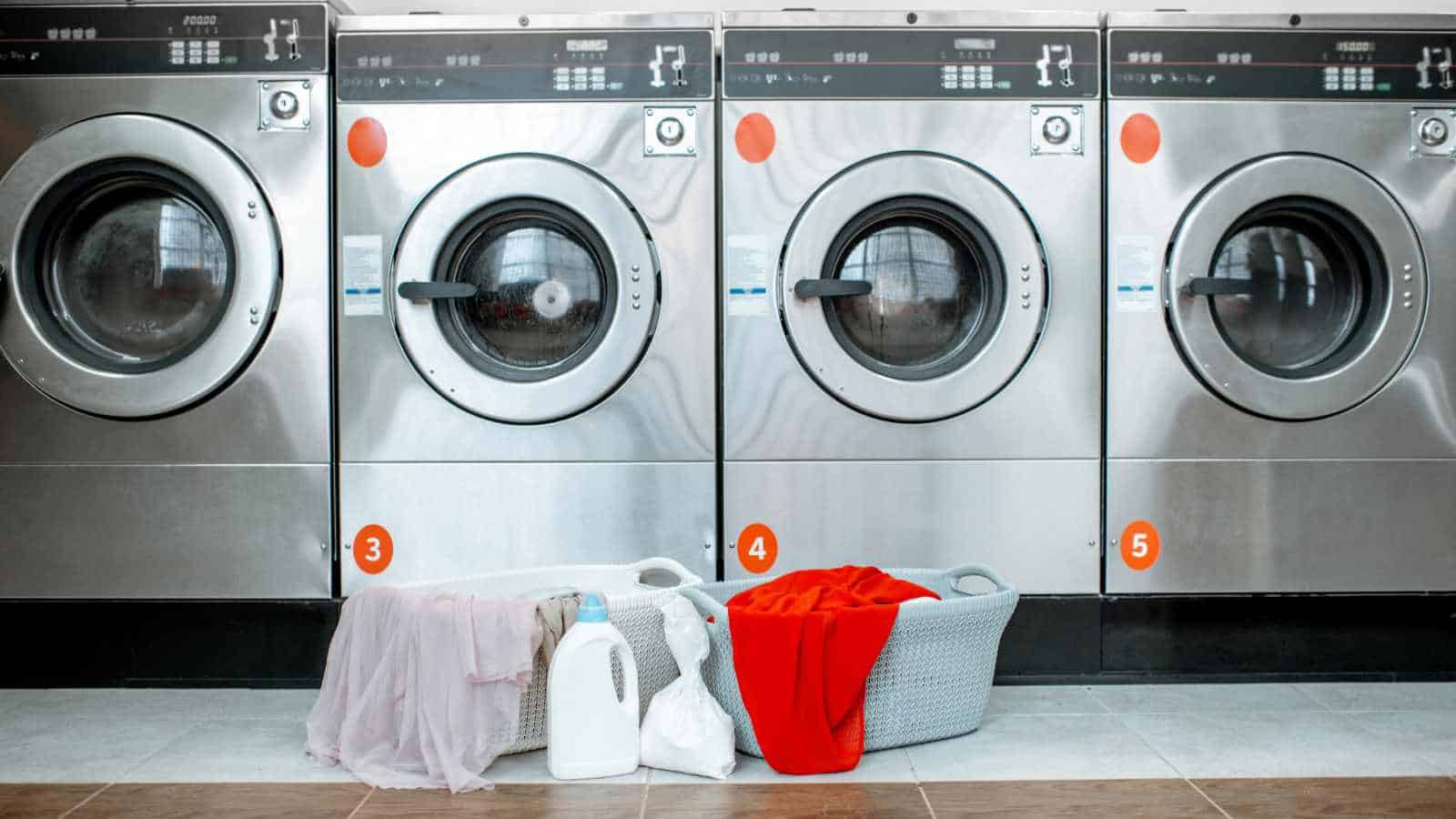
Washers and dryers are often connected to dedicated circuits, yet newer models rely heavily on electronic boards, sensors, and digital displays that are all vulnerable to surges. NFPA data show that electrical distribution and lighting equipment, as well as appliances such as dryers, contribute significantly to residential electrical fires when they fail or malfunction.
Use quality surge protection on laundry circuits and turn off the machines at the breaker or unplugged portable units if you expect violent storms or repeated power flickers, so surges do not arc inside motors or connectors.
Smart TVs, Smart Speakers, and Always-On Standby Devices

Many modern devices live in standby mode, constantly sipping power and remaining connected to both electrical and data lines, making them continuous points of entry for surges. Even when “off,” a connected power supply can still deliver a spike to the device’s internal circuitry if it remains plugged in.
Home safety experts therefore group smart TVs, smart speakers, streaming sticks, and similar gadgets with computers and routers as must-unplug items when lightning is near or when grid reliability is poor.
Phone Chargers, Laptop Chargers, and Power Strips

Chargers and power strips are inexpensive, so people forget that they serve as bridges between the mains supply and their expensive phones or laptops. An Anker article explains that overloaded or cheap power strips are known ignition sources in residential electrical fires, and that surge-only devices have limits that strong spikes can exceed.
Electricians recommend unplugging chargers when not in use to reduce standby energy use, eliminate potential surge paths, and replace any warm, damaged, or daisy-chained strips before they become a hazard to devices and wiring.
Older Extension Cords And Multi-Plug Adapters
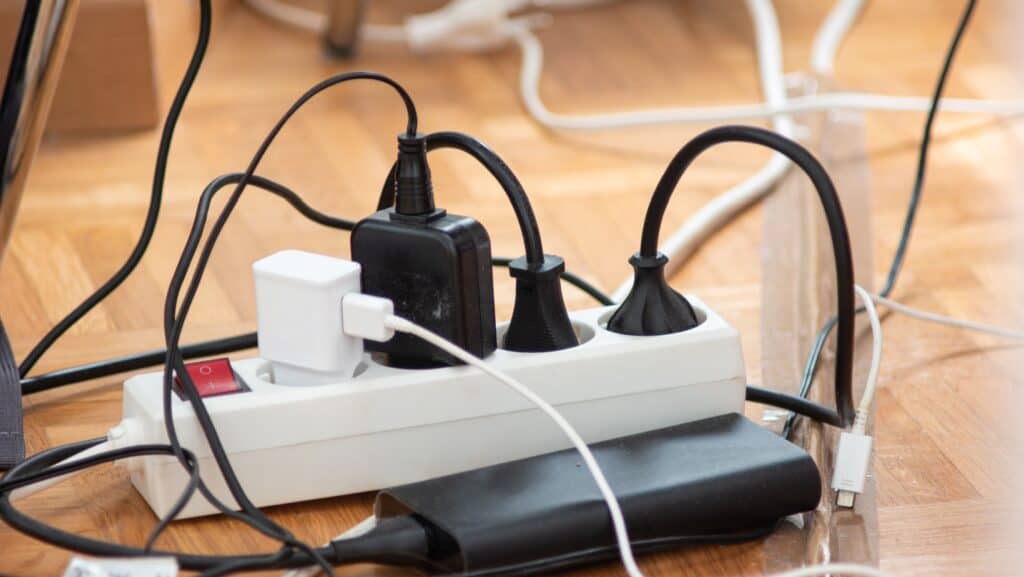
U.S. fire data show that extension cords, outlets, and branch circuits are among the leading equipment types involved in residential electrical fires caused by electrical failure or malfunction. Worn cords and overloaded plug adapters can overheat or arc, potentially damaging the devices plugged into them, igniting nearby materials, or damaging wall receptacles and wiring.
Trade Safe advises unplugging extension cords when not in use, avoiding permanent use, and replacing any cord that is cracked, hot to the touch, or discolored to prevent a single bad cord from compromising an entire circuit.
Devices Plugged In After A Power Outage

When power returns after an outage, there is often a brief surge or series of fluctuations as the grid stabilizes. The U.S. Fire Administration notes that “heat from powered equipment,” especially electrical arcing, accounts for the vast majority of residential electrical fires that originate in electrical equipment.
We advise unplugging smaller appliances and turning off larger ones at their switches during an outage, then plugging them back in one by one once power is stable to avoid a high inrush current that can trip breakers or damage already stressed wiring and devices.
How Unplugging Protects Your Entire Electrical System

Power surges are extremely fast overvoltage spikes that can damage, degrade, or destroy electronic equipment and, in severe cases, damage branch circuits, outlets, and panels. Lightning-induced surges can reach millions of volts, compared with the 120 volts a typical home outlet supplies, and they often enter through service lines and spread across multiple circuits.
Whole-house surge protection and quality point-of-use protectors are important, but experts from electrical safety organizations and science outlets still advise physically unplugging high-value, sensitive, and non-essential devices whenever a strong storm approaches or power is unstable, because a direct or very close surge can bypass or overwhelm most protective devices.
Making unplugging part of your storm and outage routine can save thousands of dollars on electronics and help prevent electrical stress and arcing that can later show up as hidden damage, flickering circuits, or even fires.
Disclosure line: This article was developed with the assistance of AI and was subsequently reviewed, revised, and approved by our editorial team.
20 Odd American Traditions That Confuse the Rest of the World

20 Odd American Traditions That Confuse the Rest of the World
It’s no surprise that cultures worldwide have their own unique customs and traditions, but some of America’s most beloved habits can seem downright strange to outsiders.
Many American traditions may seem odd or even bizarre to people from other countries. Here are twenty of the strangest American traditions that confuse the rest of the world.
20 of the Worst American Tourist Attractions, Ranked in Order

20 of the Worst American Tourist Attractions, Ranked in Order
If you’ve found yourself here, it’s likely because you’re on a noble quest for the worst of the worst—the crème de la crème of the most underwhelming and downright disappointing tourist traps America offers. Maybe you’re looking to avoid common pitfalls, or perhaps just a connoisseur of the hilariously bad.
Whatever the reason, here is a list that’s sure to entertain, if not educate. Hold onto the hats and explore the ranking, in sequential order, of the 20 worst American tourist attractions.