Grandparents have become modern families’ unsung heroes: 12 ways they matter most
The expectation, or the entitlement, that grandparents must participate in raising their grandchildren is increasingly out of step with reality. We are no longer in an era when one parent could stay home while the other worked, when a single income could support a household, or when grandparents lived nearby and had the energy to keep up with toddlers.
Modern families contend with dual-income pressures, expensive childcare, long commutes, and scattered communities, while grandparents face their own challenges: extended retirement, health limitations, and financial responsibilities that stretch decades beyond traditional expectations. Being a grandparent today is neither automatic nor simple; it requires choice, energy, and adaptability.
Yet, despite these hurdles, many grandparents show up in ways that quietly but profoundly shape family life, offering care, guidance, stability, and wisdom that younger generations rely on more than ever. Their contributions, often invisible and underappreciated, make them the unsung heroes of modern households, demonstrating that involvement is not owed but earned through commitment and love.
They Are the Backbone of America’s Informal Childcare System
In 2022, the U.S. Census Bureau estimated that about 6.7 million grandparents lived with at least one grandchild under 18, and roughly 2.3 million were responsible for meeting those grandchildren’s basic needs.
That figure alone reframes grandparenting from sentimental support to economic infrastructure. Pew Research Center reported in 2018 that nearly one in four children under age five receives regular care from a grandparent.
Meanwhile, the U.S. Department of Labor’s Women’s Bureau found in 2023 that average childcare costs exceed $10,000 annually in many states, surpassing in-state tuition at public universities in some regions. In effect, grandparents operate as an unpaid stabilizing force within a childcare system strained by cost inflation and workforce shortages.
When policymakers debate daycare deserts and labor participation gaps, the quiet labor of grandparents rarely appears in official economic accounting, yet it measurably sustains household employment and financial continuity.
They Choose Presence When It’s No Longer Required

Unlike in past eras, today’s grandparents are not bound by obligation or geographic necessity to participate in daily family life. Yet many deliberately choose to remain deeply involved, shaping family routines, relationships, and values by sheer intention.
Whether it’s moving closer to grandchildren, adjusting work or social schedules, or simply showing up consistently for birthdays, school events, and everyday moments, their presence reflects choice rather than duty. This voluntary commitment transforms ordinary involvement into extraordinary contribution. It highlights the conscious effort required to nurture relationships across generations in a world where independence is valued and logistical barriers are real.
By intentionally investing time, attention, and energy, grandparents demonstrate that love, mentorship, and guidance are not just inherited privileges; they are active, living choices that quietly shape the fabric of modern families.
They Quietly Subsidize the Rising Cost of Modern Childhood

Grandparents often provide critical financial and in-kind support that eases the modern cost of raising children, a reality many parents navigate with dual incomes and high living expenses. Their assistance can range from covering daycare gaps and extracurricular activities to helping with medical bills, school supplies, or even housing-related costs.
Beyond direct spending, grandparents contribute economically through childcare, allowing parents to maintain employment or advance careers in highly competitive labor markets. With U.S. daycare, where a single child can cost more than $10,000 annually, this support is substantial.
It may not appear in government budgets or official economic statistics, but the practical effect is clear: grandparents function as a hidden financial buffer, absorbing both predictable costs and sudden emergencies, and enabling families to maintain stability in a society where formal childcare and support networks are often insufficient. Christmas is often at grandparents’ house, and they gladly give gifts too.
Their contributions quietly underpin the modern family structure, making them essential yet frequently overlooked allies in child-rearing.
They Stabilize Families During Divorce and Economic Shock

A large‑scale study of 1,478 adolescents aged 11–16 in England and Wales found that grandparents are far more than background figures in young people’s lives: “more frequent contact, greater grandparent involvement, and better parent–grandparent relationships predicted adolescents’ reports of higher levels of emotional closeness, perceived importance, and respect for their closest grandparent.”
Even as teens navigate peer networks and identity formation, the presence of involved grandparents offers an emotional anchor that complements parental support. When parents encourage or facilitate these relationships, emotional closeness is especially strong, underscoring grandparents’ essential role as buffers in family cohesion and adolescent development.
In moments when economic systems falter or relationships dissolve, grandparents frequently absorb the spillover. Their homes become temporary refuges; their presence restores predictability. The resilience they provide is often invisible until a crisis exposes how essential it has always been.
They Bridge the Generational Timing Gap
In 1960, the median age of first-time mothers in the United States was approximately 21, according to data from the National Center for Health Statistics. By 2022, the median age had risen to around 27, with many women in urban centers having children well into their 30s.
This demographic shift means grandparenthood now begins later, often in the late 50s or early 60s, rather than in the early 40s. Yet the Stanford Center on Longevity argues that increased life expectancy, roughly 19 additional years at age 65, per CDC estimates, has expanded the active grandparent phase.
Rather than reducing involvement, delayed fertility has restructured it. Grandparents today may enter the role later, but they often remain engaged longer, compressing generational overlap in early childhood while extending relational continuity into adolescence and adulthood.
They Redefine Retirement Around Family, Not Withdrawal

Mid-20th-century retirement often followed a predictable arc: exit the workforce around 65 and enter a relatively short post-work phase. Today, that model is dissolving. Bureau of Labor Statistics data shows rising labor-force participation among adults aged 65 and older, reflecting both financial necessity and longer health spans.
Yet even as careers extend, many grandparents recalibrate schedules around school pickups, summer visits, and caregiving needs. A significant share of working grandparents adjust their employment decisions to remain available to their families.
Retirement is no longer a clean break; it is a negotiated transition shaped by economic realities and relational priorities. In choosing to integrate work and grandparenting rather than retreat from either, older adults demonstrate a flexibility that challenges outdated assumptions about aging.
They Carry Cultural Memory in a Rapid-Change Society

Sociologist Vern L. Bengtson’s decades-long Longitudinal Study of Generations at the University of Southern California, launched in 1971, demonstrated that intergenerational solidarity strengthens identity continuity.
In multicultural households, especially among immigrant families, grandparents frequently act as custodians of language, ritual, and historical narrative. In a society defined by rapid technological and social change, children encounter few living links to the pre-digital world. Grandparents embody that continuity.
Through stories of migration, economic hardship, civil rights struggles, or religious practice, they situate young people within a broader historical arc.
They Nurture Themselves While Nurturing Others
Grandparenting is rarely a one-way street; caring for grandchildren often brings unexpected benefits to the older generation. Playing games, helping with homework, or simply sharing daily routines keeps grandparents physically active, mentally engaged, and emotionally connected.
In the laughter of children, the questions they ask, and the trust they place in older adults, grandparents find a renewed sense of purpose. These interactions can spark joy, curiosity, and patience, reinforcing cognitive sharpness and emotional resilience.
Even simple routines, walking a child to school, preparing a meal together, and reading bedtime stories, become exercises in attentiveness and vitality. In supporting the next generation, grandparents often discover they are also enhancing their own well-being, creating a cycle in which giving and receiving care become inseparable, and the family’s health extends across generations.
They Offer Emotional Refuge From Intensive Parenting Culture
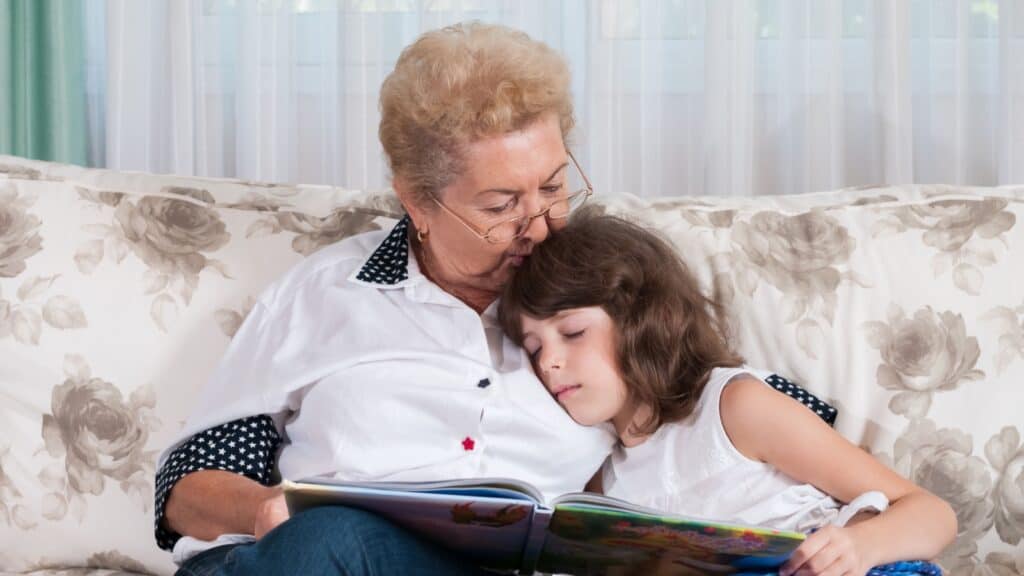
In 1996, sociologist Sharon Hays coined the term “intensive mothering” to describe the growing expectation that parents devote extraordinary time, money, and emotional labor to child-rearing. That pressure has intensified in the age of social media comparison and academic hyper-competition.
Grandparents often provide a relational space free from performance metrics. Emotionally supportive intergenerational ties benefit both grandchildren and older adults, improving life satisfaction for both.
Unlike parents navigating career evaluations and school rankings, grandparents typically engage without institutional scrutiny. Their presence can reduce anxiety not through instruction but through steadiness, a reminder that childhood is not a résumé.
They Expand the Family’s Emotional Bandwidth During Crisis

When illness, unemployment, or bereavement strike, emotional capacity within nuclear families narrows. Grandparents often widen it.
During the COVID-19 pandemic, multigenerational households once again drew attention, as Census Bureau data showed millions of families consolidating living arrangements. While the pandemic also highlighted health risks for older adults, it also reinforced the centrality of grandparents to family resilience.
Their ability to provide counsel, childcare, or simply attentive listening distributes emotional labor more evenly across generations. In crises, resilience is rarely dramatic; it is logistical and relational. Grandparents frequently supply both.
They Model Longevity With Purpose
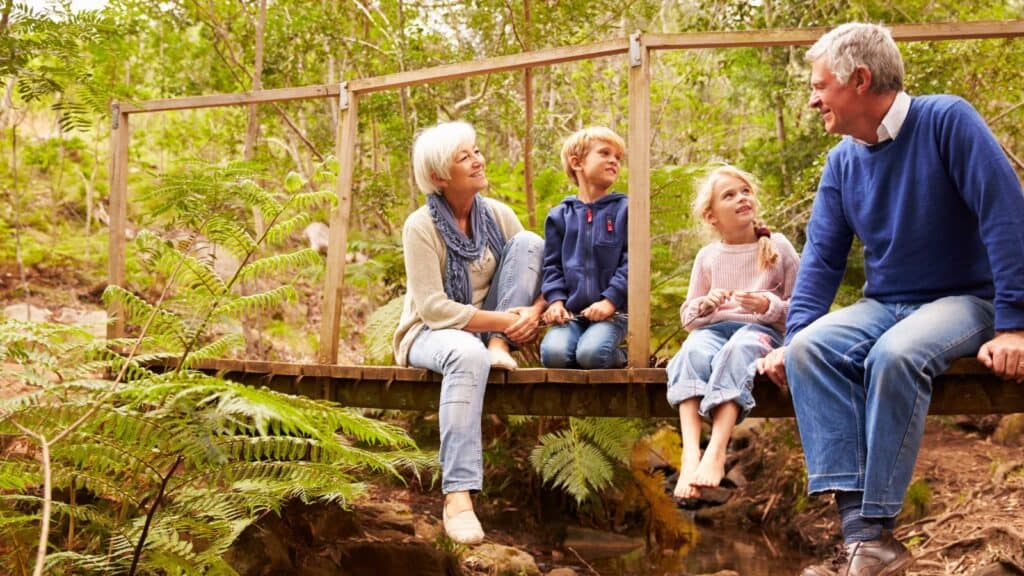
Grandparents today often live longer and remain active well into later life, offering children a living example of what it means to age with vitality and intention. Their presence shows that growing older does not require stepping away from meaningful engagement or stepping back from family life.
Through daily routines, shared hobbies, stories, guidance, or simple companionship, grandparents demonstrate resilience, curiosity, and adaptability, teaching lessons that formal education cannot. By participating actively in family life, they turn what might once have been a quiet retirement into a dynamic period of contribution, reinforcing values of responsibility, patience, and intergenerational connection.
This presence helps grandchildren see aging not as decline but as a continuing opportunity for growth, learning, and meaningful relationships across generations, creating a model for life that blends experience with ongoing purpose and involvement.
They Anchor Multigenerational Households in a Volatile Housing Market

In the United States, a growing share of families now live in homes where grandparents, parents, and children share space, and this arrangement often reflects more than preference. Co-residence with grandparents can reduce housing vulnerability for younger families by providing additional financial and material resources, easing housing cost burdens, and freeing up funds that might otherwise be spent on rent or mortgage payments.
Grandparents can provide housing assistance and transfer material resources to their adult children and grandchildren, helping to make costly urban housing more manageable for households that would otherwise struggle to afford it.
In households where grandparents live with younger generations, the distribution of responsibilities and support helps the family cope with high housing costs, childcare challenges, and fluctuating employment conditions, making the household more resilient. Whether it’s offering a spare room, contributing to shared expenses, or providing continuity when economic circumstances change, grandparents help families adapt to a housing market that often feels stacked against them.
Key takeaways

- Grandparent involvement is no longer a social guarantee; it exists within a modern system shaped by dual-income households, mobility, financial strain, and longer life expectancy.
- Many families quietly rely on grandparents for childcare, emotional stability, housing support, and intergenerational continuity, even as older adults face their own economic and health challenges.
- Unlike previous eras, today’s grandparents often participate by choice rather than obligation, making their presence a deliberate act of commitment rather than a default expectation.
- Multigenerational dynamics now function as resilience strategies, helping families navigate housing costs, childcare shortages, and unpredictable employment conditions.
- Grandparents are not relics of a traditional family model; they are adaptive contributors whose influence strengthens family cohesion, emotional well-being, and long-term stability across generations.
Disclosure line: This article was written with the assistance of AI and was subsequently reviewed, revised, and approved by our editorial team.
Like our content? Be sure to follow us