What’s really behind the decline in college enrollment? 12 forces at play
The decline in college enrollment only became a national crisis once the gender gap reached a 60/40 tipping point. For decades, the rising tide of female enrollment was hailed as the ultimate success story of modern academia, a data point that suggested the system was finally working.
But as we move through 2026, a quieter, more unsettling trend has forced an emergency market correction. The higher education complex didn’t start sounding the alarm when women began outnumbering men; it only hit the panic button when men started disappearing from the social and economic pipeline entirely.
Now, as the system grapples with a 17% plunge in global talent and a $1.7 trillion debt stigma, the realization has set in that you cannot maintain a functional society, or a solvent university, by losing half the population.
The 2026 Demographic Cliff

The birth dearth triggered by the 2008 Great Recession is no longer a theoretical projection. According to Western Interstate Commission for Higher Education data, the pool of high school graduates is contracting by roughly 15% in the Northeast and Midwest.
This, famously championed by economist Nathan Grawe in Demographics and the Demand for Higher Education, which posits that the decrease in fertility rates, dropping from 2.12 in 2007 to roughly 1.6 today, creates a permanent supply-side shortage.
Skeptics like Bryan Caplan, author of The Case Against Education, argue that this contraction is a necessary market correction for educational inflation, suggesting that the system was artificially bloated. However, for regional public universities, this is a solvency crisis.
The loss of tuition-dependent students is forcing institutions to compete for a shrinking demographic, leading to a predatory poaching environment where elite schools pull from the middle, and the middle pulls from the bottom, leaving local colleges hollowed out.
The ROI Crisis and the Debt Stigma

The social contract of the degree-led life is fracturing under the weight of a $1.7 trillion national student debt load. Only 36% of Americans have a great deal of confidence in higher education, down from 57% a decade ago. This shift is driven by the debt stigma, a psychological barrier in which Gen Z views loans not as an investment but as a predatory financial product.
Expert Douglas Belkin notes in his reporting that the college wage premium is narrowing for non-STEM degrees. While a Georgetown University Center on Education and the Workforce study confirms that degree holders still out-earn non-degree holders over a lifetime, the break-even point, the age at which the degree finally pays for itself, has climbed into the late 30s for many.
This delay in wealth building (home ownership and family formation) has created a contrarian movement in which getting a job right away, advocates argue, is a cost many 18-year-olds can no longer justify.
Missing Men: The Great Male Disengagement

A quiet revolution is occurring in the gender makeup of the American campus, where women now constitute nearly 60% of all undergraduates. Richard Reeves, author of Of Boys and Men, identifies a structural maladjustment where the modern K-12 and university systems often fail to engage male learning styles.
Stats from the National Student Clearinghouse show that male enrollment has dropped nearly 10% faster than female enrollment since 2020. This is partly fueled by the manosphere and digital vocationalism, which encourage young men to bypass politicized campuses for high-margin trades or autonomous digital careers.
The bureaucratic and safe-space culture of modern universities is fundamentally alienating to certain masculine temperaments. The gap is gravitating toward sectors like construction and logistics, which have seen a 22% wage spike since the pandemic, offering a viable alternative to the academic path.
FAFSA’s Long Shadow
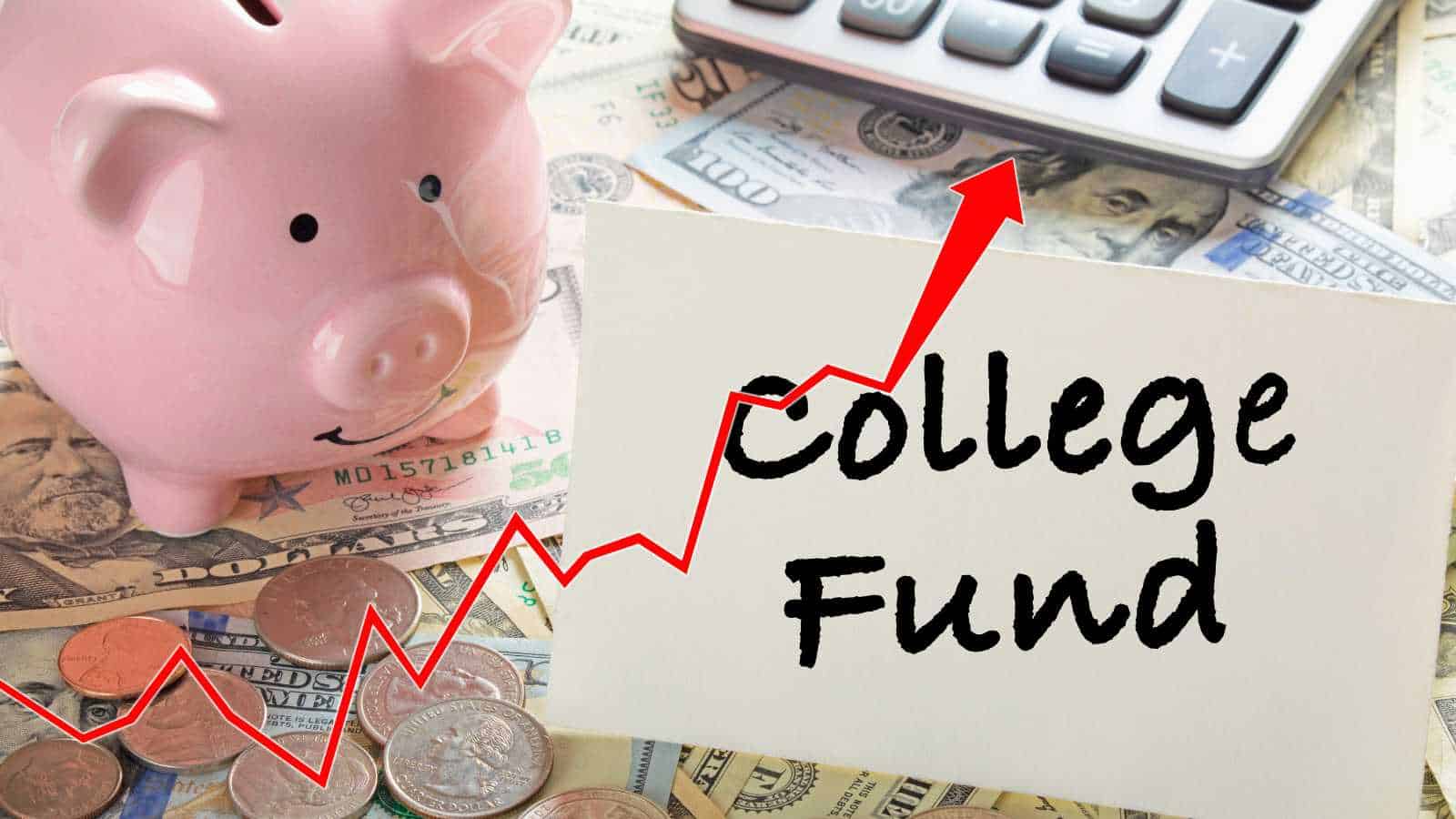
The 2024-2025 FAFSA Fiasco: the botched rollout of the simplified Federal Student Aid form served as a masterclass in institutional friction, permanently derailing the applications of thousands of low-income applicants.
Under the FAFSA Simplification Act, the goal was to streamline aid, but technical glitches led to a 40% drop in completion rates in high-poverty school districts during the critical spring window. As Bill DeBaun of the National College Attainment Network pointed out, for a first-generation student, a broken website is a stop sign from the universe.
This administrative incompetence acted as a de facto gatekeeper, disproportionately affecting Black and Latino students who lack the hidden curriculum or parental guidance to navigate bureaucratic failures. Laws designed to help, like the Better FAFSA initiative, ended up creating a lost cohort of students who, once they entered the workforce during the delay, never returned to the application portal.
The Ghost Departments vs. the Crowded Labs

A two-tier campus reality has emerged, characterized by extreme concentration of enrollment in safe-bet majors.
This has created a structural tenure lag, where universities are top-heavy with tenured faculty in History and Philosophy but lack the capacity to meet the 15% growth demand for Nurse Educators.
While Computer Science labs are overflowing, many institutions are forced to implement departmental consolidation or sunset clauses for low-enrolled majors.
This unbundling will eventually lead to universities operating like vocational hubs, where the prestige of the institution is eclipsed by the utility of the specific lab. The result is a campus aesthetic of extremes: brand-new, high-tech engineering wings standing in stark contrast to aging, under-maintained Liberal Arts halls.
The 17% Plunge: A Hostile Market for Global Talent

A 2025 NAFSA: Association of International Educators report revealed a 17% decline in new international student enrollment, contributing to a direct revenue loss of over $1.1 billion and the elimination of 23,000 education-related jobs.
This decline is rooted in record-breaking visa denial rates, which the Cato Institute reported reached an unprecedented 41% in 2024, far surpassing the pandemic-era highs.
The welcoming gap is exacerbated by specific legal hurdles like the Section 214(b) denials, which assume every applicant is a de facto immigrant, and recent social media vetting policies that have created a climate of fear.
While the U.S. remains the top destination for PhD-level research, competitor nations like Australia and Canada are aggressively marketing more streamlined post-study work visas. For regional private colleges, which rely on international tuition to subsidize domestic aid, this drop represents an existential threat to their operating margins.
Skill-Based Hiring: The Degree’s Fading Monopoly

LinkedIn data confirms that 19% of U.S. job postings now explicitly state that no degree is required. This shift is codified in laws like those passed in Maryland and Pennsylvania, which opened thousands of state government roles to non-degree holders.
Corporate giants like Google, Blackstone, and Walmart have pivoted to skills-first hiring, utilizing AI-driven assessments to measure competency rather than pedigree. This trend is a direct antithesis of the 20th-century credentialism theory, as argued by Peter Cappelli in Will College Pay Off?
When a six-month certification in Data Analytics or Cybersecurity offers a starting salary competitive with a four-year BA, the opportunity cost of traditional college becomes a deterrent. This vocationalization of the workforce is forcing universities to integrate stackable credentials into their core curricula just to maintain a value proposition for the bottom 50% of earners.
The Mental Health Stop-Out Pandemic

While the 2025 Healthy Minds Study noted a slight dip in clinical depression rates from pandemic peaks, the flourishing metric, a measure of student optimism and purpose, has dropped to a record low of 36%.
This has led to a surge in stop-outs, where students leave mid-degree due to burnout or financial paralysis.
The Right to Pause movement, gaining traction in state legislatures, seeks to make it easier for students to take mental health leaves without losing their financial aid status. Expert Jonathan Haidt, in The Anxious Generation, points to the always-on nature of digital learning platforms as a contributor to this fatigue.
Universities are responding by hiring retention coaches to replace traditional academic advisors, but the structural reality remains: a student body that is more technically capable but emotionally more fragile than any cohort in the history of American higher education.
Regional Winners and Losers
The 2026 enrollment crisis is a matter of location, defined by growth in the South and West and decline in the Northeast and Midwest.
Data from the Western Interstate Commission for Higher Education confirms that while states like Texas, Florida, and Arizona are seeing localized growth driven by domestic migration, the Northeast and Midwest are experiencing a compounding contraction. In states like Ohio and Pennsylvania, the number of high school graduates has plummeted by nearly 14%, leading to the quiet hollowing out of regional public campuses.
Flight to quality, where students bypass local state schools in favor of prestigious national brands or southern universities with lower cost-of-living profiles. This shift is not just demographic but fiscal; as tax bases in the North shrink, state appropriations for higher education have failed to keep pace with inflation in 21 out of 50 states, leaving regional “anchor” institutions with massive infrastructure they can no longer afford to heat or staff.
The Rise of Stackable Alternatives

As of early 2026, the Modern Campus report shows that 85% of institutions have now integrated industry-aligned badges into their catalogs, up from 55% in 2021.
Students are increasingly opting for stackable credentials, earning a certification in Data Analytics or Project Management first to secure a job, then stacking those credits toward a degree later. This just-in-time education model challenges the traditional just-in-case four-year degree.
This creates gig qualifications for the gig economy, potentially stripping students of the foundational theoretical knowledge required for long-term career adaptability.
Nevertheless, the 17% Compound Annual Growth Rate of the digital badge market through 2026 suggests that students now care more about what they can actually do than how many years they spent in a classroom. Fundamentally disrupting the four-year residency model that has sustained university budgets for a century.
Culture Wars and the Institutional Trust Gap

Americans’ trust in higher education has split along political lines, with many now viewing college through a partisan lens rather than as a neutral public good. Both liberal and conservative students are now willing to pay thousands of dollars more to avoid campuses they perceive as ideologically misaligned.
This has led to the emergence of red and blue campuses, where institutional reputation is tied more to political climate than academic output. Governors in states like Florida and Texas have codified this skepticism into law, proposing the redistribution of funding from traditional liberal arts programs to conservative blueprints such as the New College of Florida.
This ideological sorting reduces viewpoint diversity, making campuses less effective at fostering the critical thinking skills they claim to provide. For many rural families, the university is no longer seen as a ladder for social mobility but as an alienating environment, leading to a permanent opt-out that transcends purely economic reasoning.
The Survival Mergers

The Federal Reserve Bank’s 2026 predictive model suggests that as many as 80 colleges could close each year if current enrollment trajectories hold.
Recent high-profile closures, such as Siena Heights University and Lourdes University, highlight a merger-or-die ultimatum. Laws like the Tertiary Education Placement and Funding initiatives are emerging to help streamline these transitions, but the human cost remains high: only 47% of students who experience an abrupt college closure successfully re-enroll elsewhere.
For small private institutions, the choice is no longer between growth and stagnation, but between an orderly merger (where legacy and accreditation are preserved) and a liquidation that leaves faculty displaced and campuses vacant.
Key Takeaways

- The Demographic Cliff is Real: A sharp drop in birth rates following 2008 has moved from a future threat to a current reality, leaving campuses with fewer students to recruit.
- The Gender Gap is the Breaking Point: The education system only began treating enrollment as a crisis once the disappearance of men from classrooms reached a tipping point that threatened social and economic stability.
- Skills Over Degrees: Both employers and students are moving toward a skills-first model, where immediate job experience and short-term certificates are valued more than a four-year commitment.
- The Geography of Decline: Higher education is splitting into two worlds, with southern and western schools growing while institutions in the Northeast and Midwest face closures and empty departments.
- Trust and Debt Stigma: Rising costs and political polarization have changed the public perception of college from a necessary investment into a risky financial burden to be avoided.
Disclosure line: This article was written with the assistance of AI and was subsequently reviewed, revised, and approved by our editorial team.
Like our content? Be sure to follow us