
He Was Shot With Projectiles, Shackled and Flown to Africa. A Federal Judge Has Ordered His Return
A federal judge has ordered the U.S. government to bring a Minnesota man back from the Central African Republic after Immigration and Customs Enforcement arrested him outside his home, detained him for more than seven months and ultimately deported him to an African country where he had never lived and had no known ties.
The October 30 order from U.S. District Judge Jeffrey M. Bryan directs federal officials to return Kenis Adalberto Lopez Gonzalez to Minnesota and restore him, at least while his case proceeds, to the immigration status he held before his arrest.
The circumstances documented in the case are extraordinary.
Lopez had no criminal record. He had authorization to work in the United States and was living under an ICE Order of Supervision. An immigration judge had previously determined that he could not be returned to his native Nicaragua because he faced a risk of torture there.
After ICE arrested him in January, Lopez spent months moving among detention facilities. In August, while his attorneys were challenging his detention, federal officials put him on a flight to the Central African Republic.
Before he was forced onto that plane, Lopez says federal officers fired pepper balls or rubber projectiles at him at close range inside a bus, leaving bruises and welts on his body. Agents then placed him in a full-body restraint and carried him onto the aircraft.
He arrived in Bangui after a journey of roughly a day and a half, shackled at his wrists, waist and ankles.
Now the federal judge overseeing his case has ordered the government to bring him back.
An immigration judge had already found he faced danger in Nicaragua
Lopez fled political persecution in Nicaragua and entered the United States in October 2022, surrendering himself to U.S. immigration authorities at the border.
In August 2024, an immigration judge granted him withholding of removal after determining that he faced a risk of torture if returned to Nicaragua.
That order protected Lopez specifically from removal to Nicaragua; it did not itself grant permanent U.S. residency or categorically prohibit removal to another country.
Lopez subsequently settled in Shakopee, Minnesota, started a construction business and paid taxes. He had a valid work permit, Minnesota identification and no criminal record.
He was also subject to an ICE Order of Supervision, which allowed him to remain outside immigration detention while complying with federal requirements.
On January 15, 2026, during the federal immigration enforcement operation known as Operation Metro Surge, eight federal agents approached Lopez outside his home while he was preparing to leave for work.
Lopez showed the agents his REAL ID, employment authorization and the immigration court paperwork documenting his protection from removal to Nicaragua.
The agents took the documents, handcuffed him and placed him in a van.
Over the following months, ICE transferred Lopez through detention facilities in Minnesota, Texas and Louisiana.
By April, an attorney had filed a federal habeas corpus petition challenging the legality of his continued detention.
RELATED READ: Deported to a Country You’ve Never Been To? ICE’s New Rule Raises Grave Questions and Leaves Immigrants With Few Answers
Lopez says he wasn’t told where ICE was taking him
On August 28, Lopez and dozens of other detainees were shackled at their wrists, ankles and waists and placed on a bus in Texas.
Lopez later said he believed he was being transferred to another detention facility in Mississippi.
Instead, the bus drove onto an airport tarmac.
Only then, Lopez said, did he learn that the plane waiting for him was headed to the Central African Republic.
The officers ordered the detainees off the bus.
Lopez refused.
He said he attempted to explain that an immigration judge had granted him protection, that his habeas corpus case remained pending and that he feared being sent to the Central African Republic.
According to Lopez, officers responded by firing pepper balls or similar projectiles at detainees inside the bus at close range.
Lopez said he had difficulty breathing and suffered wounds and rapidly developing bruises and welts on his legs, chest and arms. Photographs of his injuries were subsequently submitted as exhibits in federal court.
Agents removed Lopez from the bus and placed him into what he described as a “wrap,” a full-body restraint resembling a straitjacket. He was carried onto the aircraft.
The wrap was eventually removed, but Lopez said he remained shackled at his hands, feet and waist throughout the approximately day-and-a-half journey to Africa.
He said he received a sandwich and bottle of water three times during the trip.
The United States sent him to a country it warns Americans not to visit
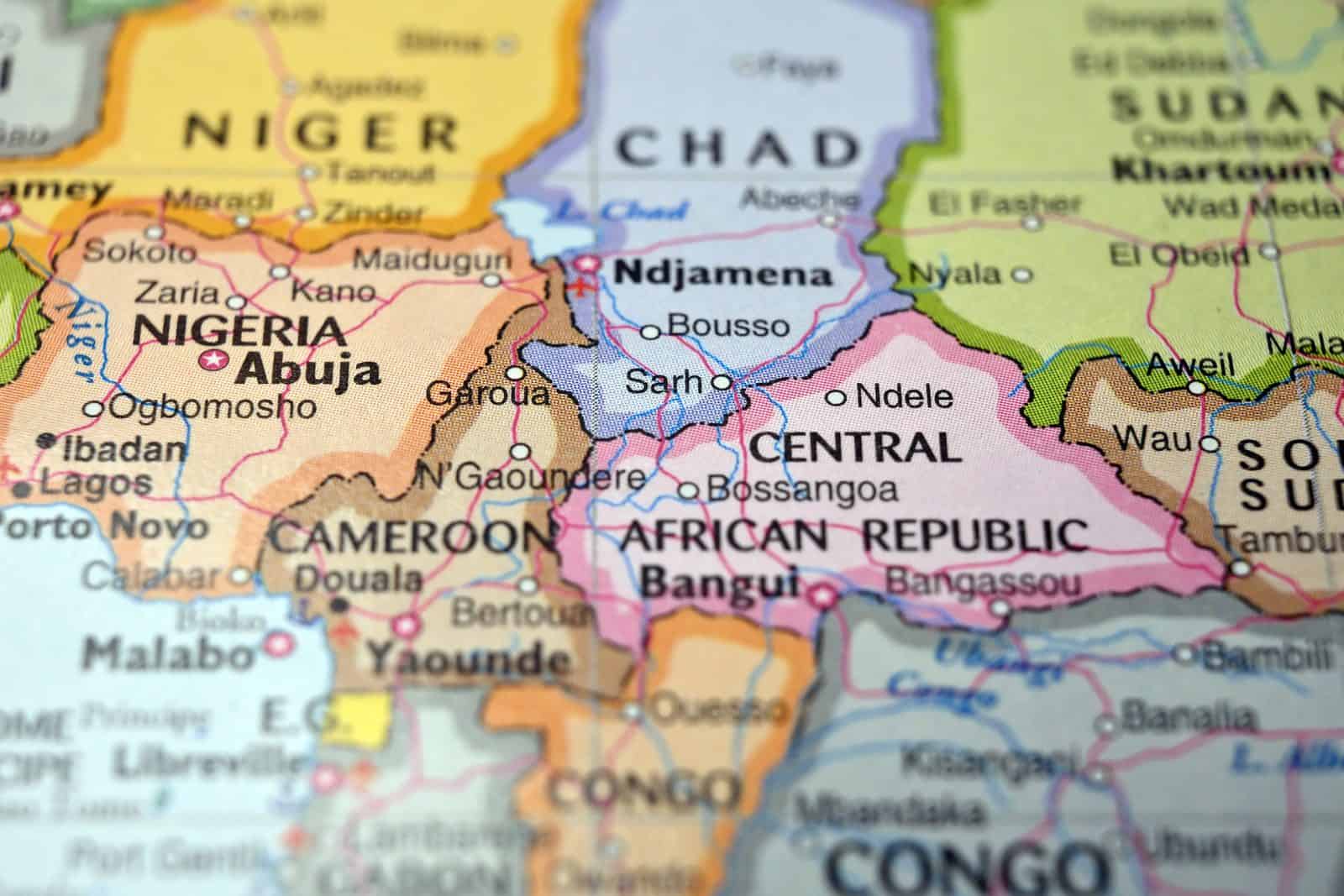
Lopez arrived in Bangui, the capital of the Central African Republic, on August 29.
The country has experienced years of political instability and armed conflict. Armed groups control large portions of its territory, and the United States has extremely limited ability to provide emergency assistance there.
The U.S. State Department classifies the Central African Republic as Level 4: Do Not Travel, citing unrest, crime, kidnapping, terrorism, health risks and landmines.
That contradiction became an issue during Lopez’s October 30 federal court hearing.
The government relied in part on diplomatic assurances from Central African Republic officials that people transferred there would be treated in accordance with international law.
Judge Bryan questioned how those assurances could be reconciled with the State Department’s own assessment of conditions inside the country.
Assistant U.S. Attorney David Fuller acknowledged during the hearing that he had not reviewed the State Department’s reports on the Central African Republic.
Bryan’s subsequent order extensively cited those reports.
The government’s agreement with the Central African Republic was supposed to remain out of public view
Court documents also shed light on how the third-country deportation arrangement was established.
In a May letter submitted as evidence in Lopez’s case, Deputy Secretary of State Christopher Landau told then-acting ICE Director Todd Lyons that the Central African Republic had provided assurances that third-country nationals transferred from the United States would not be subjected to persecution and would be treated consistently with international law.
Landau said the State Department considered those assurances “credible and reliable.”
But he added another instruction.
He asked DHS to “refrain from publicly discussing our cooperation with CAR on this matter.”
Bryan addressed that request directly in his order.
The judge wrote that the court was left to presume why the government wanted the arrangement kept from the public, suggesting one possible reason was that officials did not want Americans to know they had agreed to forcibly relocate people to a country where foreign nationals faced known and serious dangers.
The federal government began sending third-country deportees to the Central African Republic after providing $85 million to the United Nations’ International Organization for Migration for operations there. The IOM oversees the Bangui facility where Lopez has been living.
RELATED READ: When “Show Your Badge” Fails: What Citizens Can Legally Do if a Plainclothes “Agent” Is Forcing Someone Into a Car
The government argued that deporting Lopez put him beyond the court’s reach
After Lopez arrived in the Central African Republic, federal attorneys argued that his removal from the United States limited the relief the Minnesota court could provide.
Bryan rejected that position.
Although Lopez was no longer being held in a conventional ICE detention center, the judge found that his circumstances in Bangui remained highly restrictive.
Lopez lacks legal status allowing him to work or freely establish a life in the Central African Republic. He relies on outside assistance for his survival and has said he fears being attacked if he leaves the facility.
Bryan found that Lopez faces the prospect of irreparable harm if he remains there while his legal claims proceed.
When government attorneys argued that Lopez did not face significant danger in the Central African Republic, Bryan called the position “plainly disingenuous.”
“The threat of irreparable harm to Lopez of remaining in the Central African Republic while his claims are pending is self-evident,” Bryan wrote.
The judge added that the danger was known to federal officials before they forced Lopez — already developing bruises and welts — onto the flight.
The court found Lopez is likely to succeed in his case against ICE
Bryan did not use Lopez’s case to decide the broader question of whether the Trump administration may legally deport people to third countries.
That question is separately before the U.S. Supreme Court, which is scheduled to hear arguments in December.
Instead, Bryan focused on what ICE did to Lopez specifically.
The court found that Lopez is likely to succeed on his claim that federal officials violated his rights when they revoked his supervised status and detained him without following the government’s own regulations.
That distinction could prove important.
The administration had asked Bryan to delay Lopez’s case while the Supreme Court considers the legality of third-country removals.
Bryan declined.
His ruling instead rests substantially on ICE’s obligation to follow its own procedures when revoking an individual’s Order of Supervision and returning that person to custody.
ICE violated 210 court orders during Operation Metro Surge
Lopez’s case also unfolded against an unusual record of conflict between federal immigration authorities and Minnesota’s federal courts.
During approximately two and a half months of Operation Metro Surge, federal immigration authorities violated 210 court orders in 143 cases, according to findings by Minnesota’s federal judiciary.
In some other cases, federal officials have also been slow to return immigrants after courts ordered them brought back to the United States.
Bryan’s October 30 order consequently lays out a detailed process for facilitating Lopez’s return rather than simply directing the government to bring him home.
He ordered federal agencies to take the necessary steps to return Lopez to Minnesota expeditiously and restore the status he held before his January arrest while the litigation proceeds.
And the final provision of Bryan’s order is striking.
Federal officials are prohibited from shooting Lopez with rubber bullets or other projectiles — at close range or otherwise — during the process of returning him to the United States.
RELATED READ: Know Your Rights: Official Hotlines to Report ICE or DHS Abuse
Lopez’s case is part of a much larger third-country deportation program
The Central African Republic is one of a growing number of countries accepting people deported from the United States who are not their citizens.
A recent Human Rights Watch investigation documented the transfer of hundreds of third-country nationals from the United States to African nations, including people who had previously received protection from return to countries where they feared persecution or torture.
The organization documented deportees being sent to countries including Eswatini, South Sudan, Ghana, Rwanda and the Central African Republic.
The legality of the administration’s broader third-country removal policy will soon be considered by the Supreme Court.
Lopez’s case presents a different and more immediate issue: what happens when federal immigration authorities fail to follow the legal procedures governing an individual already under their supervision and then remove that person from the United States while his challenge to his detention is pending.
For Lopez, Judge Bryan has now provided an answer.
His removal from the United States did not end the federal court’s authority to address what happened to him.
And the government has been ordered to bring him back.
Additional information on third country deportations can be found here: Third Country Deportation Watch
You may also want to read:
- ICE arrest of nun walking to Mass in Texas ends with her release
- ICE is siphoning billions while American families struggle to afford the basics
- New ICE Facility for Migrant Children Raises Alarm Over Trafficking Risks