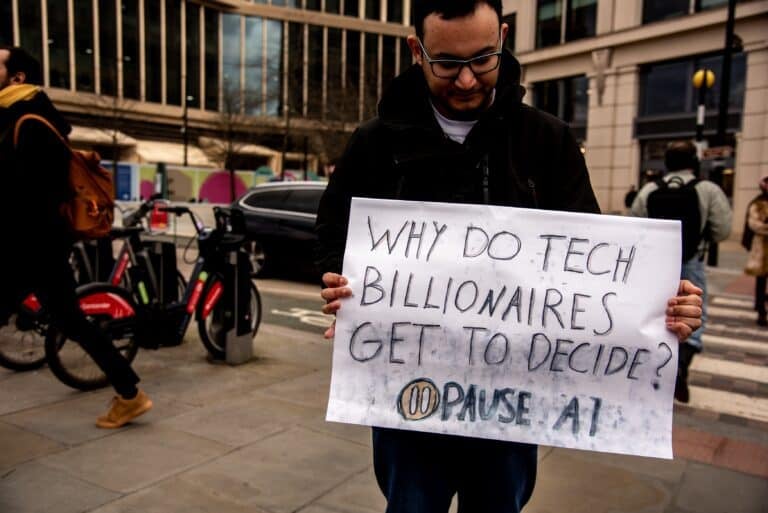
How taxing the rich could help save the world
Imagine a world where fewer than 60,000 people hold three times as much wealth as four billion people combined. It sounds like a wild dystopian movie, but it is actually the state of the global economy right now.
A growing movement called “tax the rich and save the world” is taking over social media and political debates. The core message is simple: taxing the ultra-wealthy is the most direct way to fund the fight against climate change and rebuild society.
The mind-boggling numbers behind global wealth

The latest World Inequality Report paints a grim picture of where the money is flowing. The authoritative report, co-authored by French economist Thomas Piketty and led by Ricardo Gómez-Carrera, argues that global inequality has reached extremes requiring urgent action. A simple 3% global tax on the wealthiest centimillionaires and billionaires would raise $750 billion annually, enough to cover the entire education budgets of low- and middle-income nations.
Meanwhile, billionaire wealth hit a record-breaking $18.3 trillion in 2025. According to Oxfam, their fortunes grew over 16% in just one year, three times faster than the average rate over the past five years.
This isn’t just about money; it is about saving the planet. Ecological economist James K. Boyce points out that extreme wealth concentration blocks the public investments needed to solve the environmental crisis. The super-rich have the money to protect themselves from climate change, so they use their political power to resist green reforms.
Debunking the classic trickle-down fairy tale

Corporate giants love to claim that the top 1% already pays 40% of all taxes. Billionaires repeat this number constantly to make themselves look like the good guys. But that statistic is wildly misleading because it only counts federal income taxes.
In reality, regular workers get hit hard by other hidden costs. The Congressional Research Service shows that 63% of Americans pay more in payroll taxes than in federal income taxes.
The secret trick for billionaires is keeping their wealth in unsold stocks. When they need cash, they borrow against those stocks at super-low interest rates without paying a dime in income tax.
The double standard in global tax advice
Even international financial organizations struggle to give fair tax advice. An Oxfam analysis of over 1,000 recommendations reveals that only 3% of the International Monetary Fund’s tax guidance focuses on taxing wealth. Worse, over half of the advice given to low-income countries is regressive, forcing the poorest families to carry the heaviest tax burden.
Real laws on the table to make it happen

Tired of the loopholes, lawmakers are finally pushing some aggressive bills. For example, California’s Billionaire Tax Act proposes a 5% tax on billionaire wealth. This single state-level initiative would pull in about $100 billion to rebuild healthcare and social programs.
On the national stage, Senator Elizabeth Warren is pushing the Ultra-Millionaire Tax Act. It would slap a 2% annual tax on households worth over $50 million. And to stop them from running away, it includes a massive 40% exit tax on anyone trying to renounce their citizenship.
Other cool proposals include the ROBINHOOD Act. By targeting the “buy, borrow, die” strategy, this law would slap a 20% excise tax on asset-backed loans.
Why the rich won’t actually run away

The biggest argument against these laws is that billionaires will just pack up and move to Florida. But top economists have already done the math on this threat. Even if every single billionaire fled California, it would take 25 years of lost tax revenue to equal the cash raised by a one-time wealth tax.
Surprisingly, a lot of rich folks actually want to be taxed more. The Patriotic Millionaires, a group of over 200 rich investors and heirs, are actively lobbying Congress to raise their taxes. Morris Pearl, the group’s chair, says they aren’t being altruistic; they’re just greedy for a better, safer country with less inequality.
Even working-class voters across the political spectrum are on board. Over 53% of white working-class Americans support taxing the rich to fund schools and roads.
The bottom line

Taxing the super-rich isn’t about punishment; it’s about survival. By taking a tiny slice of billionaire wealth, society can fund the massive projects needed to save the planet.
This redistribution is the key to unlocking a future where essential services are no longer treated as luxuries. When we shift these resources, we can revitalize decaying infrastructure, replacing crumbling roads and bridges with modern, sustainable transport systems that connect communities and reduce our carbon footprint.
Education, the bedrock of any thriving democracy, would see a transformation. Funding could eliminate the burden of student debt and provide every child, regardless of zip code, with access to world-class facilities and teachers. This isn’t just an investment in individuals; it’s an investment in the collective brainpower needed to solve the next generation’s challenges.
Furthermore, a robustly funded healthcare system would ensure that medical breakthroughs are accessible to all, not just the highest bidders. By prioritizing the health of the many over the hoarding of the few, we create an equitable society where survival is guaranteed. In this new economy, the wealth generated by the few serves the well-being of all, proving that true prosperity is measured by how well we care for our most vulnerable citizens.
Disclaimer – This list is solely the author’s opinion based on research and publicly available information. It is not intended to be professional advice.
Like our content? Be sure to follow us