If you know 12 of these facts, your intelligence is above average
Most adults miss basic scientific facts that separate headline readers from people who actually understand how the world works.
Knowing random trivia doesn’t automatically make someone a genius, but being curious enough to dig past myths and headlines is strongly linked to higher reasoning skills and better scientific literacy. In one Pew survey, American adults averaged just 66% on a 12‑question basic science quiz, and 22% confused astronomy with astrology.
If you genuinely understand a dozen of the facts below (and why the common misconceptions are wrong), you’re already ahead of most people.
The Earth Is Not a Perfect Sphere

Business Insider notes that because Earth spins at over 1,000 miles per hour at the equator, centrifugal force makes it bulge slightly in the middle and flatten at the poles. That shape is called an oblate spheroid, not a perfect ball. The bulge is big enough that the equatorial diameter is about 27 miles larger than the pole‑to‑pole diameter.
Scientists think melting ice and shifting mass are now slightly increasing that bulge, which is one way climate change literally reshapes the planet. Knowing this pushes you past textbook cartoons and into how physics and rotation actually work.
Lightning Doesn’t Directly “Cause” Thunder the Way People Think

People often say “lightning causes thunder,” but the real mechanism is subtler. Lightning is a rapid flow of electrons that superheats the air into a plasma channel that’s hotter than the surface of the sun. According to the Library of Congress, superheated air expands and contracts violently, creating the pressure wave we hear as thunder, not electrons making sound.
Understanding this means you’re tracking cause and effect at the physical level, not just memorizing a slogan, and that kind of explanation‑level thinking is what separates rote learners from strong reasoners.
Your Blood Is Never Blue

Many people think veins look blue because “low‑oxygen blood turns blue,” but human blood is red whether it’s oxygen‑rich or not; it just gets darker when deoxygenated. The blue appearance comes from how light penetrates and reflects off your skin and tissue, not from the blood itself changing color.
This is one of those “school‑hallway facts” almost everyone hears and repeats. Correcting it shows you’re willing to revise beliefs when biology and optics say otherwise.
Most of the Heat from Global Warming Is in the Oceans

Headlines often focus on air temperature, leading many to believe Earth’s warming “paused” in the early 2000s. But Business Insider notes that 70% of the planet is covered by water, and roughly 90% of the excess heat trapped by greenhouse gases is stored in the oceans rather than in the air.
That hidden heat has already caused thermal expansion of seawater, which is a major driver of sea‑level rise alongside melting ice. Knowing this means you’re tracking systems, not just surface numbers; a hallmark of more sophisticated scientific thinking.
We Haven’t Found Life on Mars (Yet)
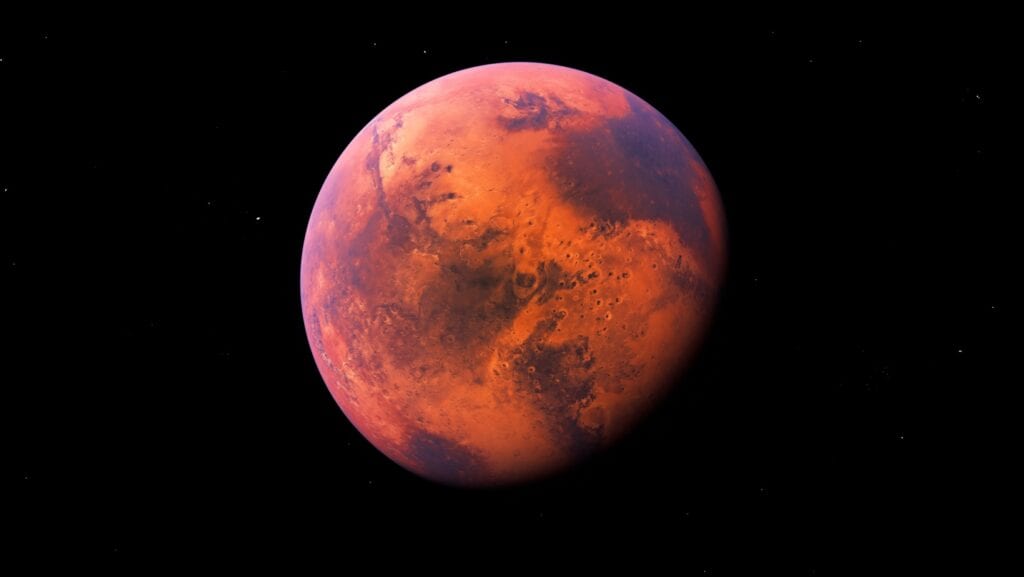
In an astronomy‑literacy study at a Philadelphia science museum, 30% of adults incorrectly answered that scientists have found life on Mars. In reality, we’ve found evidence of past liquid water and complex chemistry, but no confirmed life, past or present.
Distinguishing between “evidence that conditions might support life” and “we have actually found life” shows you’re paying attention to scientific nuance, not just sci‑fi headlines or wishful thinking.
Scientists Can Estimate the Age of the Universe
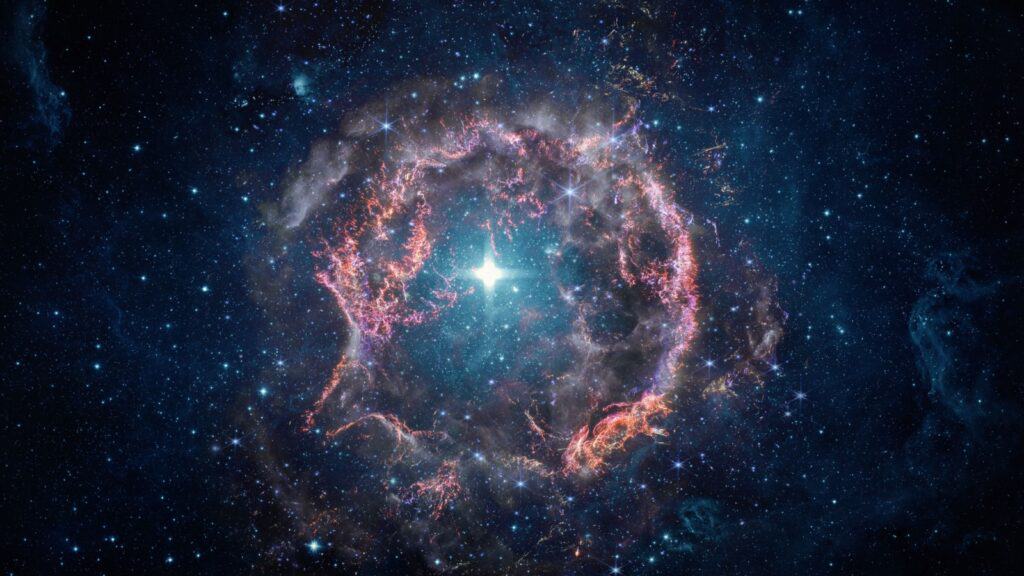
In the same survey, most participants knew that scientists can calculate Earth’s age, but only a few knew we can also estimate the age of the universe (~13.8 billion years, according to AAU, based on cosmic background radiation and expansion).
If you understand that the universe’s age comes from measuring the expansion rate (Hubble’s law) and relic radiation, you’re engaging with cosmology at a level most people never reach, even if you can’t recite all the equations.
The United States has no official language at the federal level

The United States has no official language at the federal level, even though many people assume English holds that status by default. The Constitution never names a national language, and Congress has never passed a law declaring one.
This was intentional. Early American leaders sought to avoid excluding immigrants and minority groups and believed that cultural freedom included the choice of language. While individual states may designate official languages, the federal government operates without an official language, allowing legal documents, voting materials, and public services to be available in multiple languages.
Common “Science Facts” Are Often Wrong

A surprising number of widely repeated science tidbits are false or oversimplified. Examples debunked by science writers include:
- “There’s no gravity in space” (there is; astronauts are in free fall, not zero gravity)
- “Mount Everest is the tallest mountain on Earth” (Mauna Kea is taller base‑to‑peak; Everest is the highest above sea level)
- “Bees shouldn’t be able to fly” (based on misapplied aerodynamics).
Lists of misconceptions show how easily catchy stories beat messy reality in people’s minds. Not only knowing the correct versions but also understanding why the myths spread is a strong indicator of critical‑thinking ability.
You can legally refuse a police search even if you have nothing to hide

You can legally refuse a police search even if you have nothing to hide, and doing so does not automatically make you suspicious. Under the Fourth Amendment, police generally need a warrant, probable cause, or your consent to search you, your car, or your home.
Many people unknowingly give up this protection by agreeing out of politeness or fear. Calmly refusing consent is a legal right, not an admission of guilt, and exercising it shows an understanding of how personal freedoms actually work in practice.
Entropy and Probability, Not Just “Chaos,” Explain Why Some Things Never Happen

Many people casually describe entropy as “everything tends toward chaos,” but at a deeper level, entropy is about probability: there are vastly more ways for particles to be disordered than neatly ordered, so disordered states are overwhelmingly likely.
Understanding entropy as statistical (rather than mystical) helps explain why eggs don’t un‑scramble and why heat flows from hot to cold. Grasping these abstract, counterintuitive ideas is correlated with stronger abstract reasoning, another hallmark of higher‑than‑average cognitive ability.
Genes Don’t Work as “One Gene = One Trait.”

Many people still imagine genes as simple switches: one gene for eye color, one gene for height, and so on. In reality, the NIH notes that many genes produce multiple proteins depending on how their RNA is spliced, while others don’t code for proteins at all but regulate other genes.
Traits such as intelligence and personality are polygenic and heavily influenced by the environment. Knowing this, and resisting simplistic “it’s just in your DNA” explanations, suggests you’re comfortable with complexity and multicausal thinking.
Faster‑Than‑Light Isn’t as Simple as “Impossible, Full Stop”
You’ll often hear “nothing can go faster than light,” which is broadly true for matter in a vacuum according to relativity, but there are important nuances. Light slows down in media such as water or glass; in those media, particles such as electrons can move faster than light, producing Cherenkov radiation.
On cosmological scales, space itself can expand faster than light, which is how distant galaxies recede from us at superluminal speeds without breaking relativity. Picking up on these subtleties signals an ability to work with conditional statements rather than absolute slogans; another cognitive strength.
Why Knowing These Facts Actually Matters

On their own, these facts are just trivia. But:
- You outperform typical adults on science and astronomy literacy if you can answer questions about the universe’s age, Mars life, and basic physics correctly.
- You show stronger scientific reasoning if you understand why common myths are wrong, not just that they’re wrong.
- You demonstrate higher curiosity and information‑updating, traits linked to better problem‑solving and lifelong learning.
If a dozen of these concepts feel familiar and you can explain them in your own words, you’re not just memorizing “gotcha” facts; you’re thinking in exactly the way that makes people stand out in a world where most adults, statistically, are still mixing up astronomy and astrology.
Disclosure line: This article was developed with the assistance of AI and was subsequently reviewed, revised, and approved by our editorial team.
20 Odd American Traditions That Confuse the Rest of the World

20 Odd American Traditions That Confuse the Rest of the World
It’s no surprise that cultures worldwide have their own unique customs and traditions, but some of America’s most beloved habits can seem downright strange to outsiders.
Many American traditions may seem odd or even bizarre to people from other countries. Here are twenty of the strangest American traditions that confuse the rest of the world.
20 of the Worst American Tourist Attractions, Ranked in Order

20 of the Worst American Tourist Attractions, Ranked in Order
If you’ve found yourself here, it’s likely because you’re on a noble quest for the worst of the worst—the crème de la crème of the most underwhelming and downright disappointing tourist traps America offers. Maybe you’re looking to avoid common pitfalls, or perhaps just a connoisseur of the hilariously bad.
Whatever the reason, here is a list that’s sure to entertain, if not educate. Hold onto the hats and explore the ranking, in sequential order, of the 20 worst American tourist attractions.